Understand sequences Addition & Subtraction Worksheets for Ages 5-7
5 filtered results
-
From - To
Welcome to our "Understand Sequences Addition & Subtraction Worksheets" designed for ages 5-7! These engaging resources help young learners grasp the foundational concepts of addition and subtraction while exploring number sequences. Tailored to foster a love for math, our worksheets encourage critical thinking and enhance problem-solving skills. Through colorful visuals and interactive exercises, children will practice ordering numbers and recognizing patterns, empowering them to build confidence in their mathematical abilities. Ideal for classroom use or home learning, these worksheets are an essential tool for parents and educators looking to support early math development. Explore our collection and inspire your child's learning journey today!
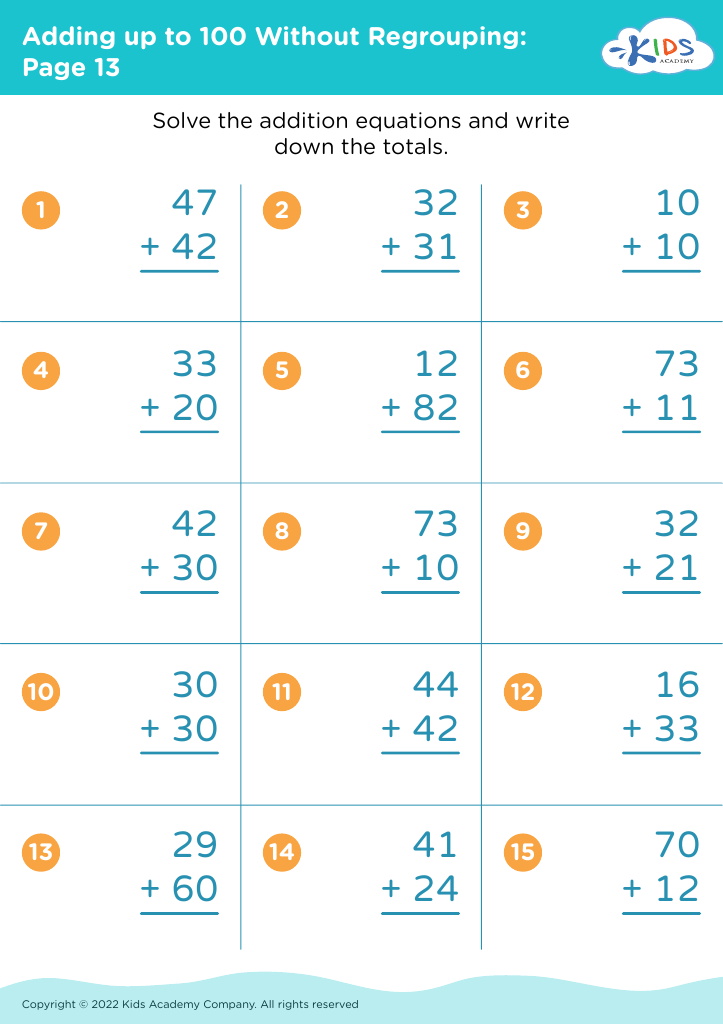
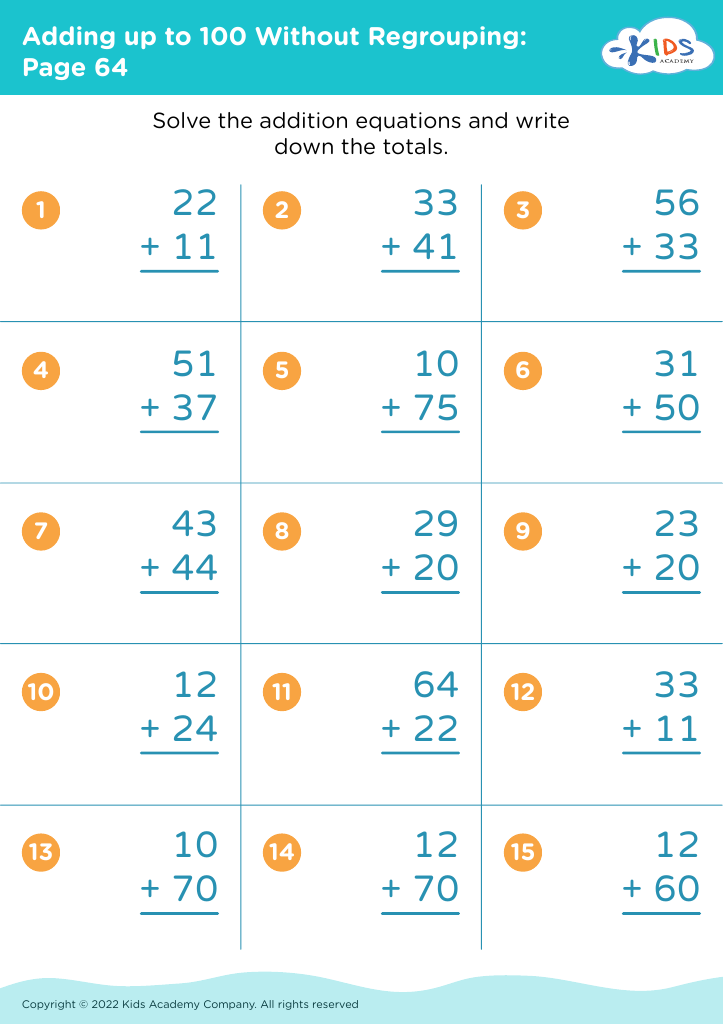
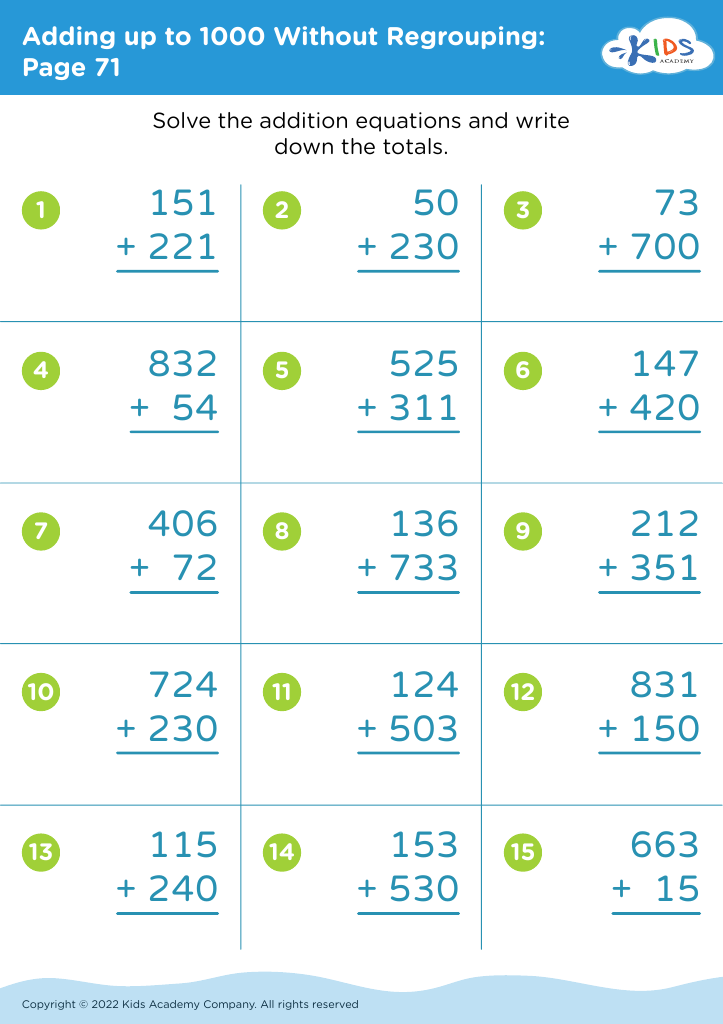
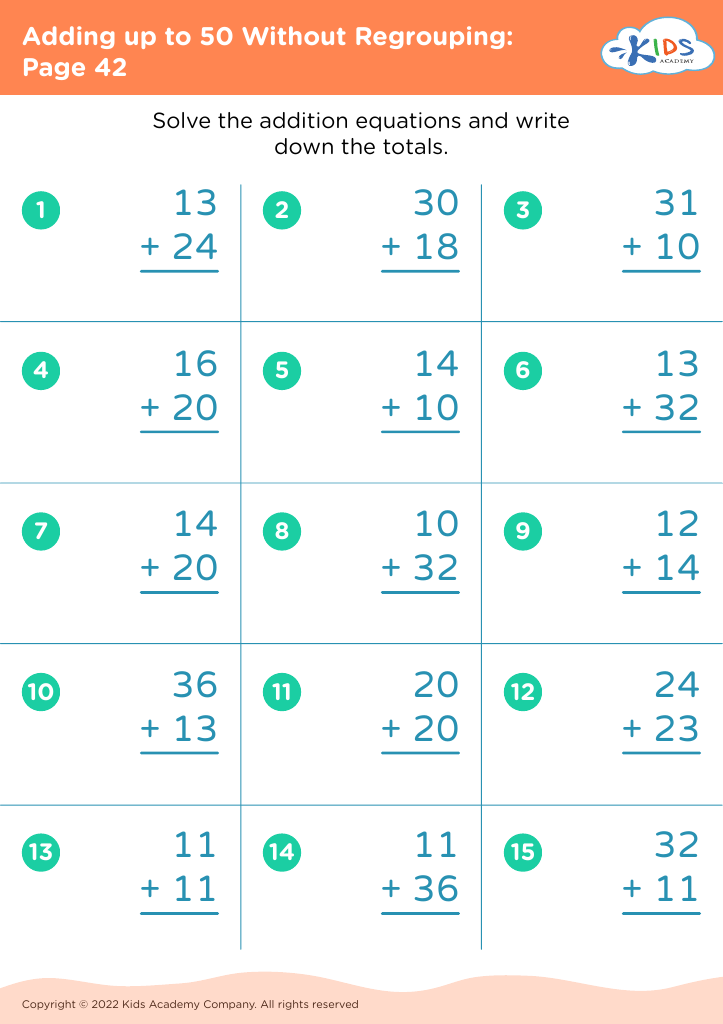
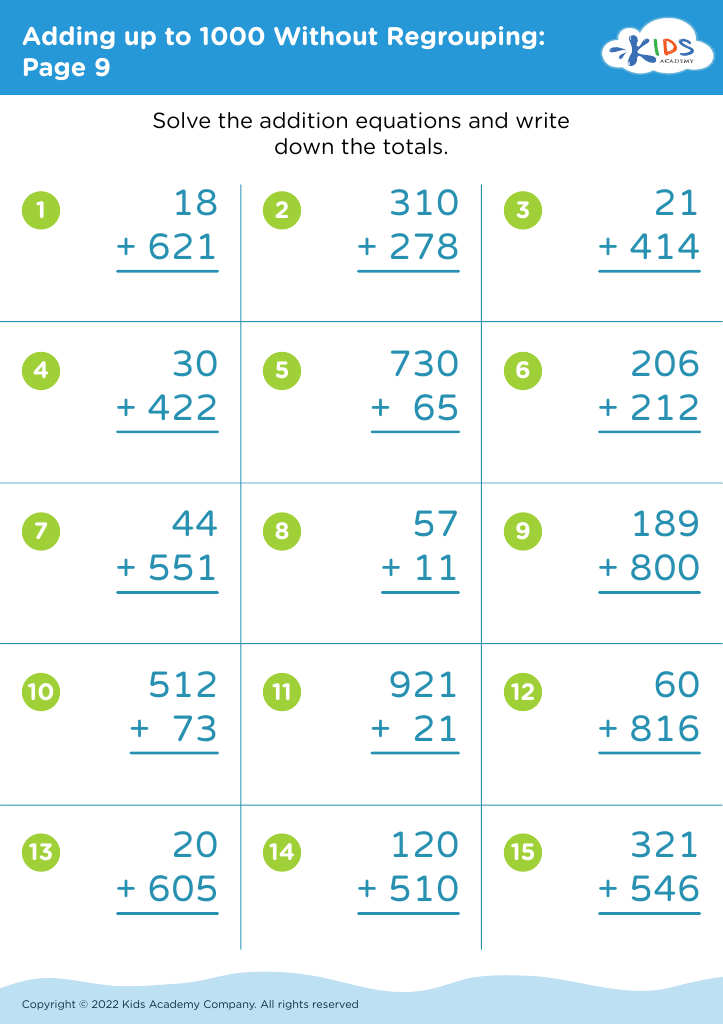








Understanding sequences in addition and subtraction is crucial for children aged 5-7 as it lays the foundation for their mathematical learning. At this age, children are developing their basic number sense, critical for future complexities in math. Recognizing patterns and sequences helps them to predict and infer outcomes, thereby honing their analytical skills.
Parents and teachers play a vital role in this process. When children grasp sequences, they can perform operations more efficiently, which enhances their confidence and encourages a positive attitude towards math. This understanding aids in connecting concepts; for example, recognizing that adding two numbers can also lead to understanding subtraction as "finding the difference."
Engaging children in sequence-related activities—such as counting up and down, simple rhythm games, or everyday scenarios like cooking—makes learning interactive and fun. This approach can also reveal individual learning styles, assisting educators in tailoring instructions to meet diverse needs.
Moreover, solid skills in addition and subtraction contribute to a child's success in real-world contexts, fostering critical life skills. By emphasizing the importance of sequences early on, we ensure that children are not only proficient in basic math but are also well-equipped for future academic challenges.








