Underwater animal identification Addition & Subtraction Worksheets for Ages 5-7
3 filtered results
-
From - To
Introduce young learners to the fascinating underwater world with our Underwater Animal Identification Addition & Subtraction Worksheets, specially designed for ages 5-7. These engaging activities merge math practice with marine biology, helping kids enhance their addition and subtraction skills while identifying colorful underwater creatures. Vibrant illustrations and fun exercises create an exciting learning experience, encouraging eager exploration and problem-solving. Ideal for classroom or at-home use, these worksheets support early math proficiency and nurture a love for marine life. Dive in and make learning an adventure with these captivating educational resources!
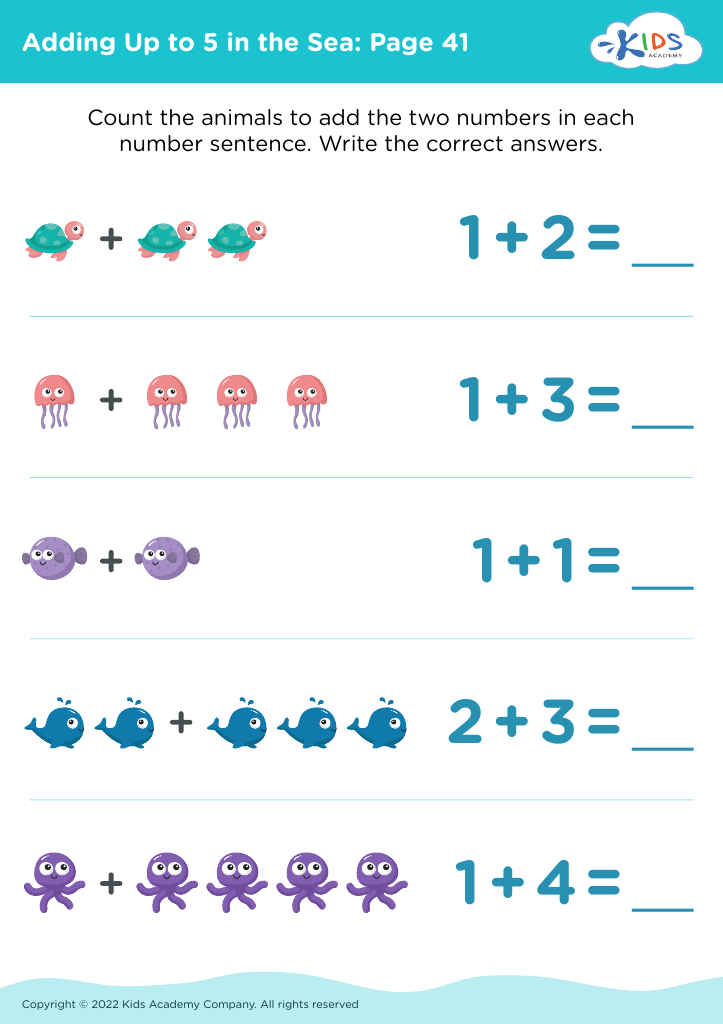
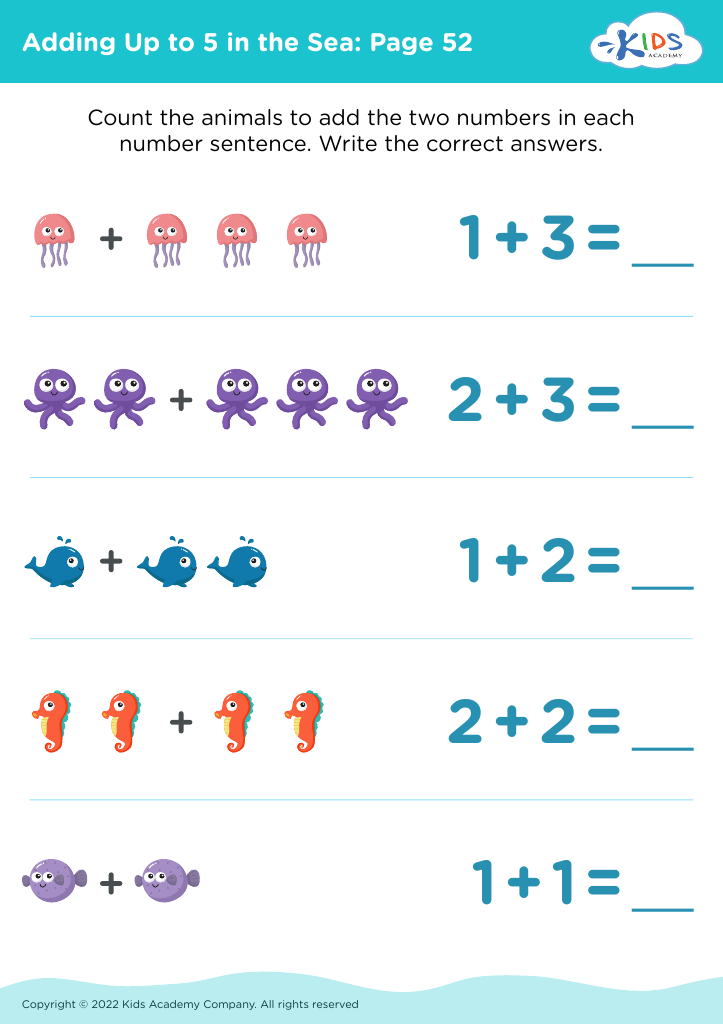
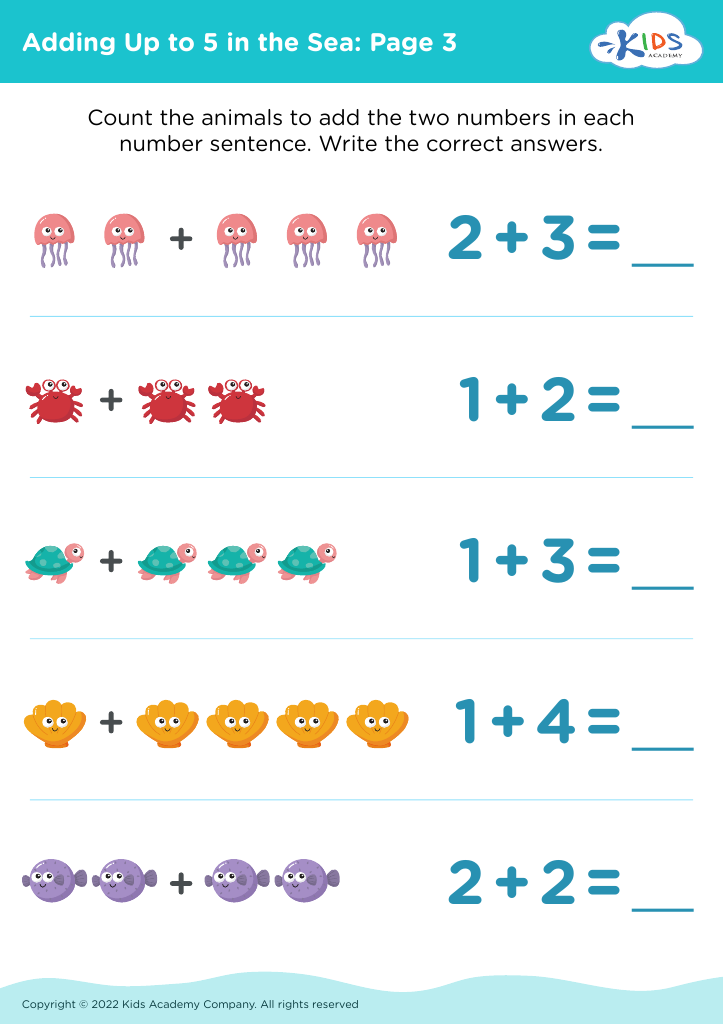








Parents and teachers should care about Underwater Animal Identification Addition & Subtraction for ages 5-7 because it combines fundamental math skills with curiosity about marine life, fostering both intellectual development and a love for learning. For young children, understanding addition and subtraction lays the groundwork for future math proficiency, a critical skill for academic success. Introducing these concepts through engaging, relatable themes like underwater animals captures children's imaginations, making learning enjoyable and motivating them to participate willingly.
The integration of underwater animal identification broadens the learning experience, nurturing a sense of wonder about the natural world. This dual approach not only develops cognitive skills through arithmetic problems but also enhances observational abilities and general knowledge about biodiversity and marine environments.
The captivating visuals and theme-based learning cater to different learning styles, especially visual and auditory learners, ensuring all children have the opportunity to grasp these foundational math concepts. Additionally, this form of learning helps children better retain information as it is tied to enjoyable and interesting content.
Overall, using an engaging and multidisciplinary approach helps establish a positive attitude towards learning, which is crucial in the early years and contributes to the holistic development of children. This ensures they are not only school-ready but also inspired and inquisitive about the world around them.








