Check out this FREE Trial Lesson on Addition & Subtraction for age 5-7!

Z

Favorites
With answer key
Interactive
  • 5-7
  • Visual Learning
  • Addition & Subtraction
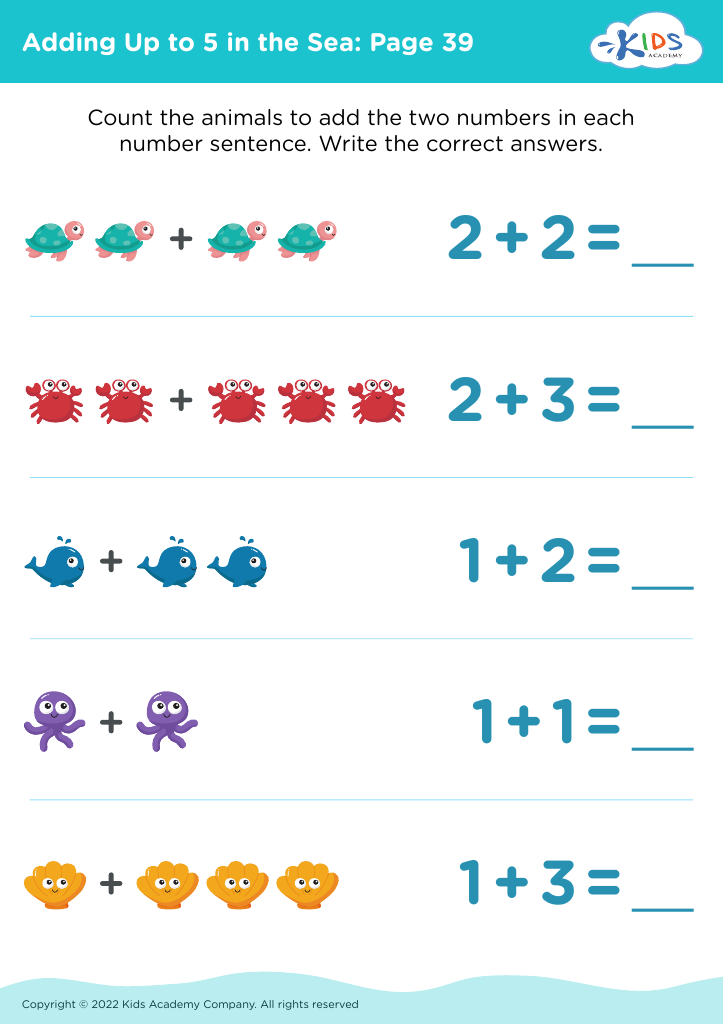
Adding Up to 5 in the Sea: Page 39
Worksheet
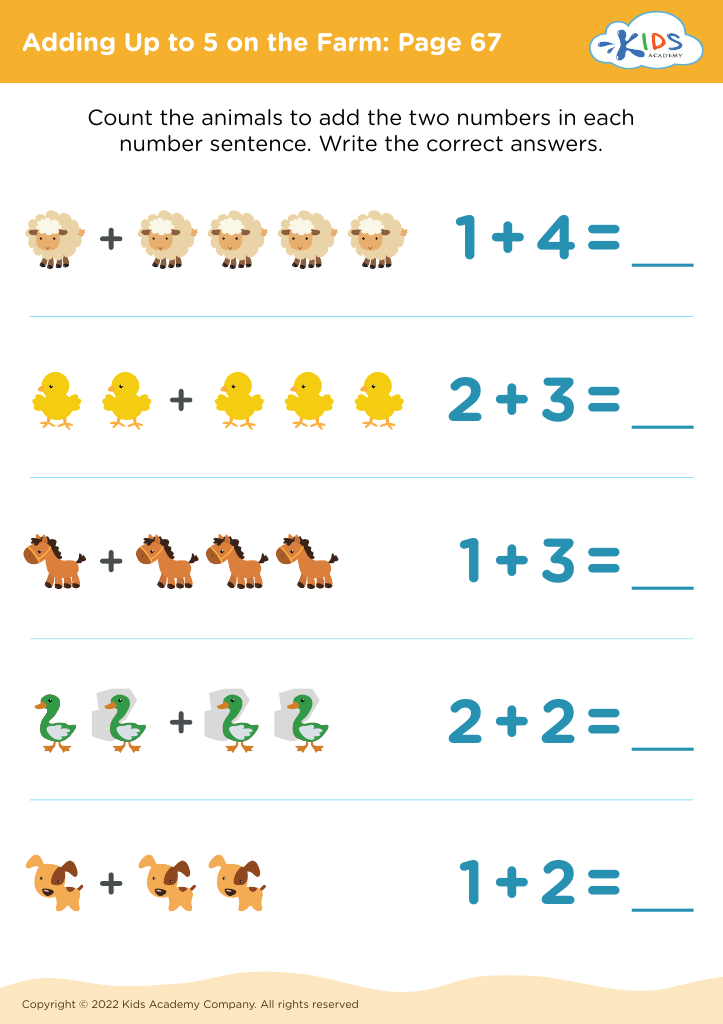
Adding Up to 5 on the Farm: Page 67
Worksheet
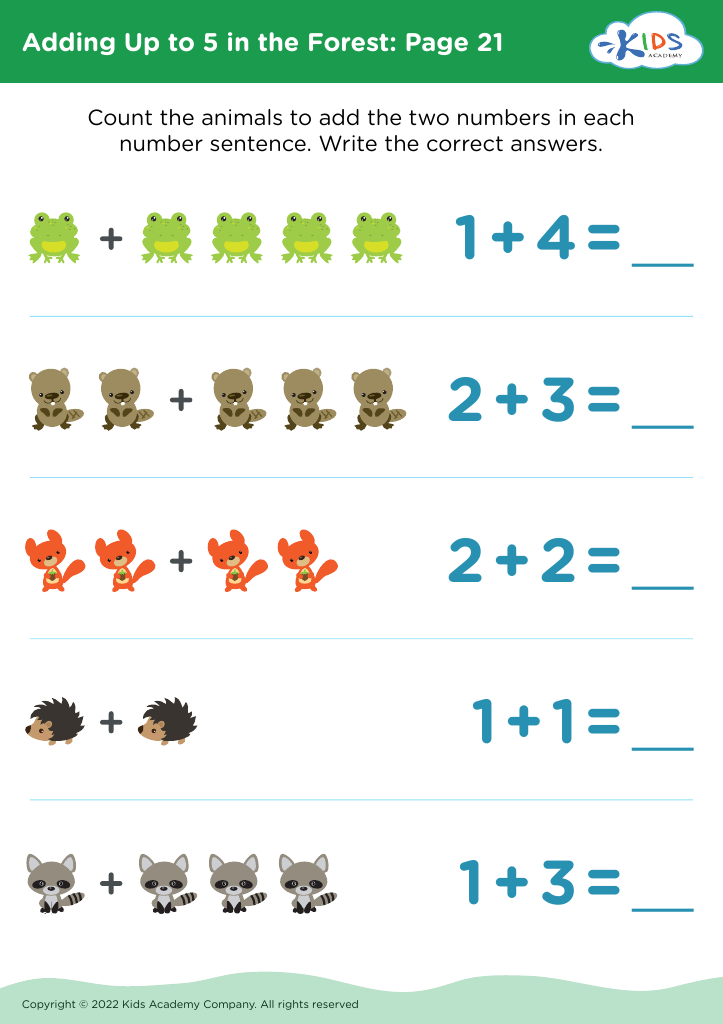
Adding Up to 5 in the Forest: Page 21
Worksheet
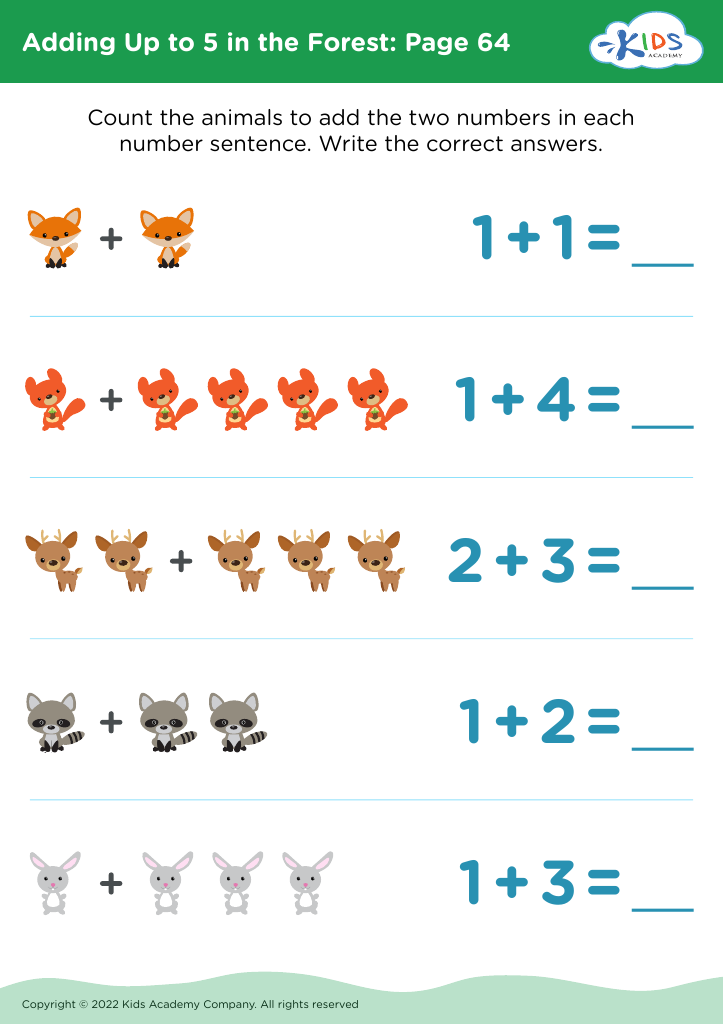
Adding Up to 5 in the Forest: Page 64
Worksheet
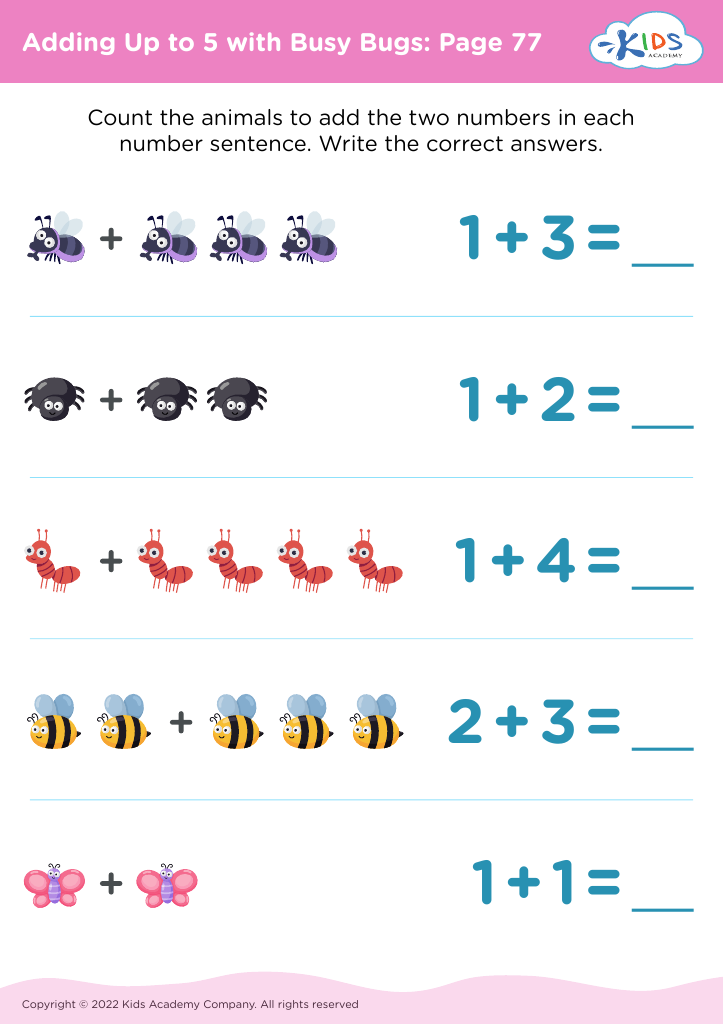
Adding Up to 5 with Busy Bugs: Page 77
Worksheet
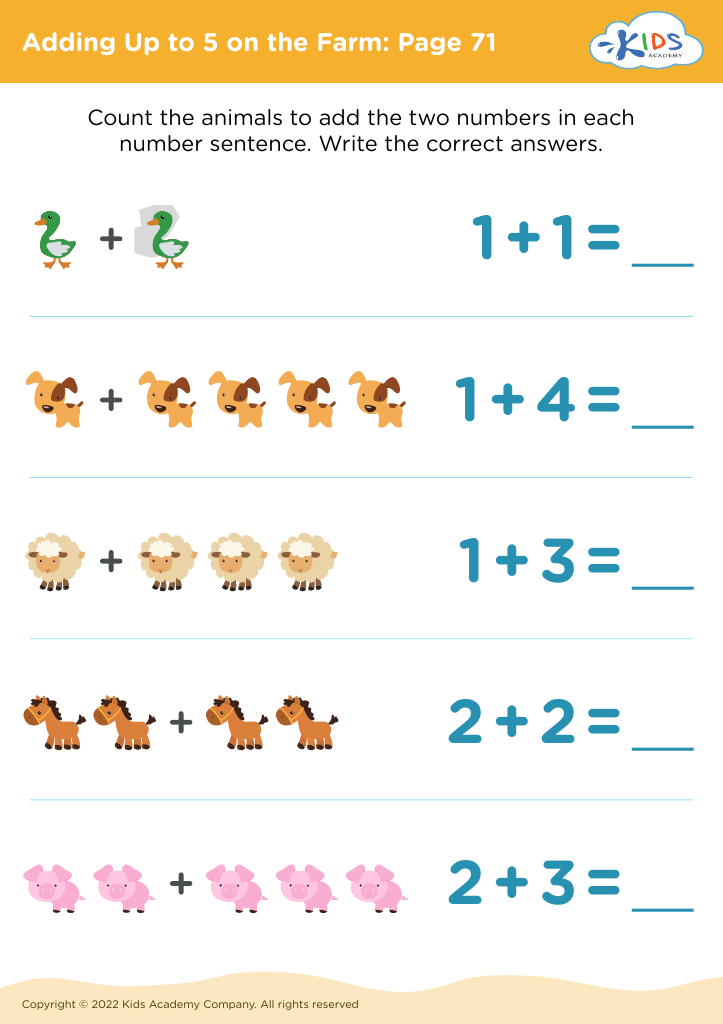
Adding Up to 5 on the Farm: Page 71
Worksheet
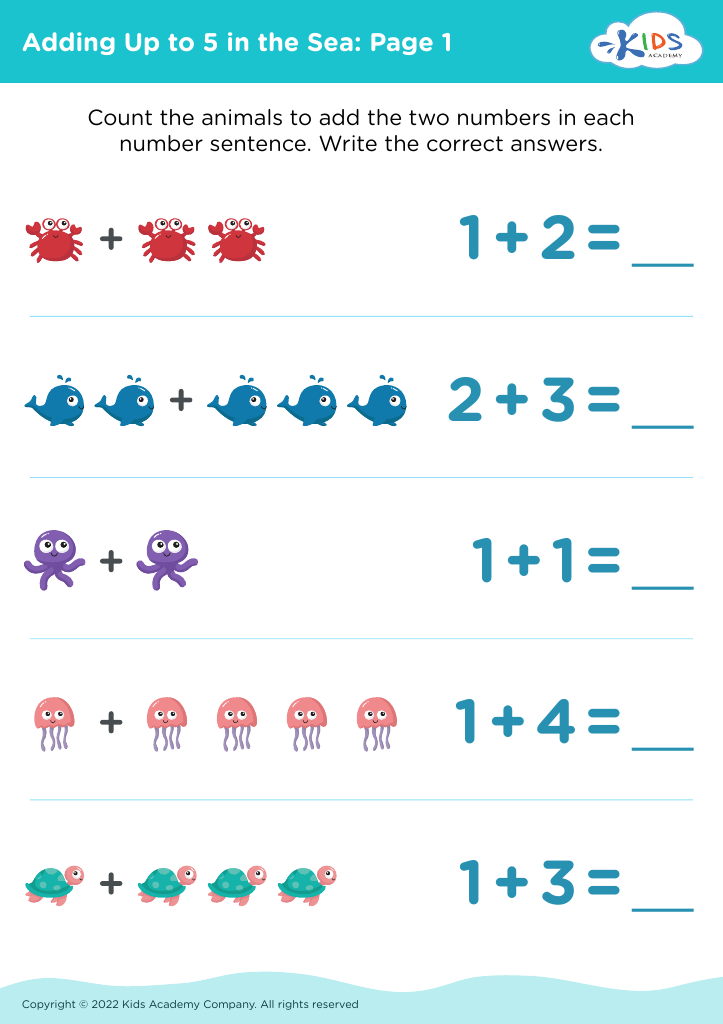
Adding Up to 5 in the Sea: Page 1

Adding Up to 5 in the Sea: Page 1

Adding Up to 5 in the Sea: Page 1
Worksheet
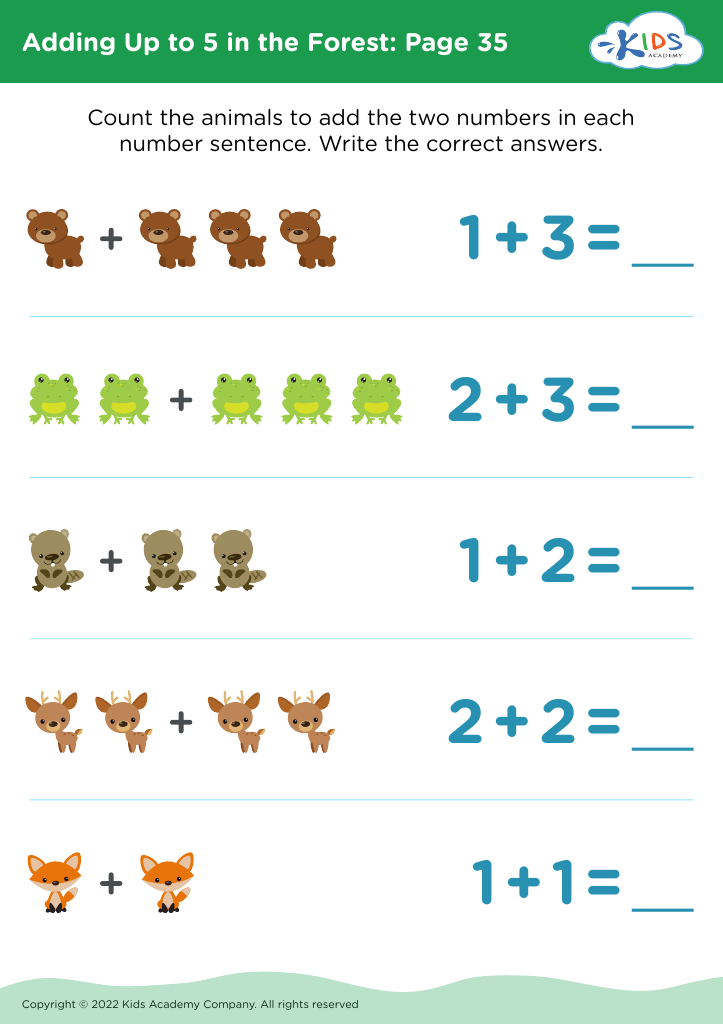
Adding Up to 5 in the Forest: Page 35
Worksheet
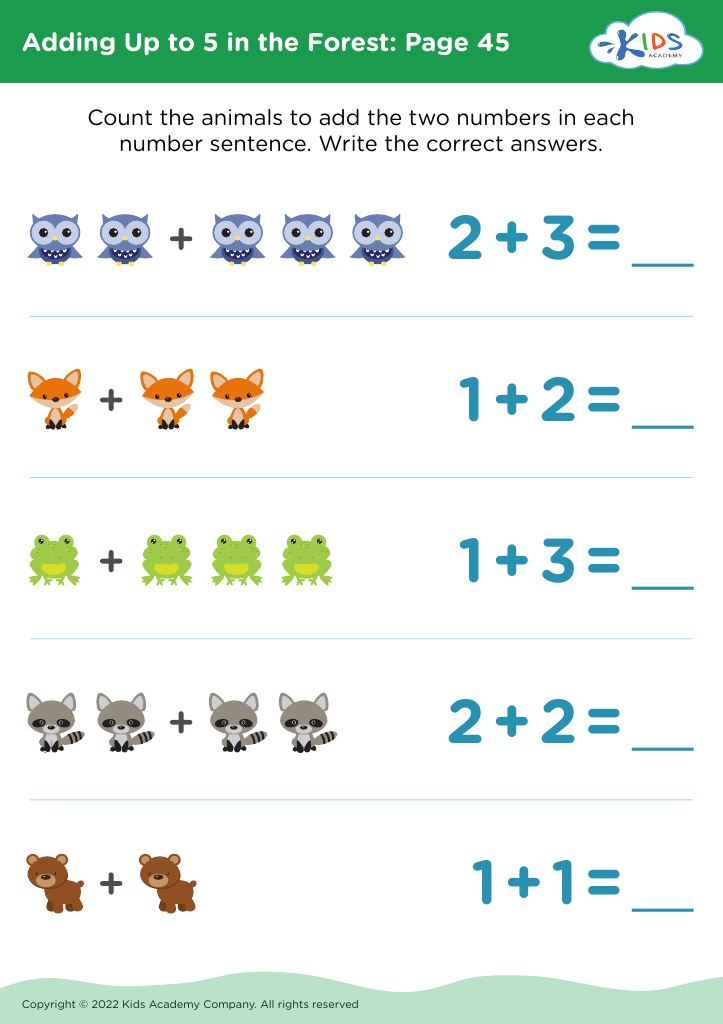
Adding Up to 5 in the Forest: Page 45
Worksheet
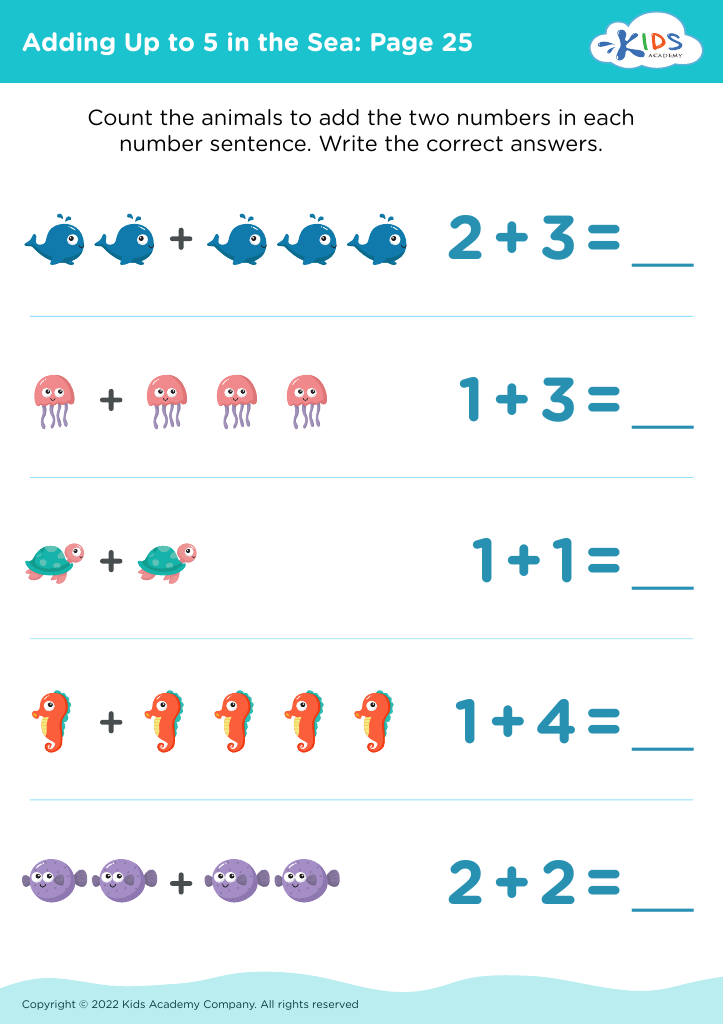
Adding Up to 5 in the Sea: Page 25
Worksheet
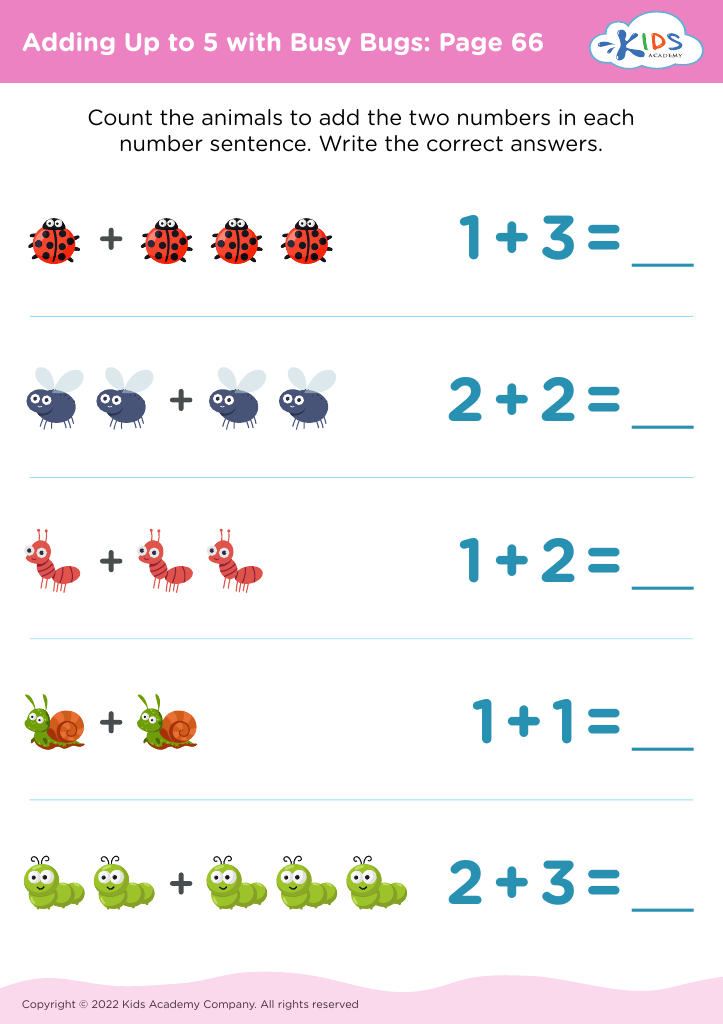
Adding Up to 5 with Busy Bugs: Page 66
Worksheet
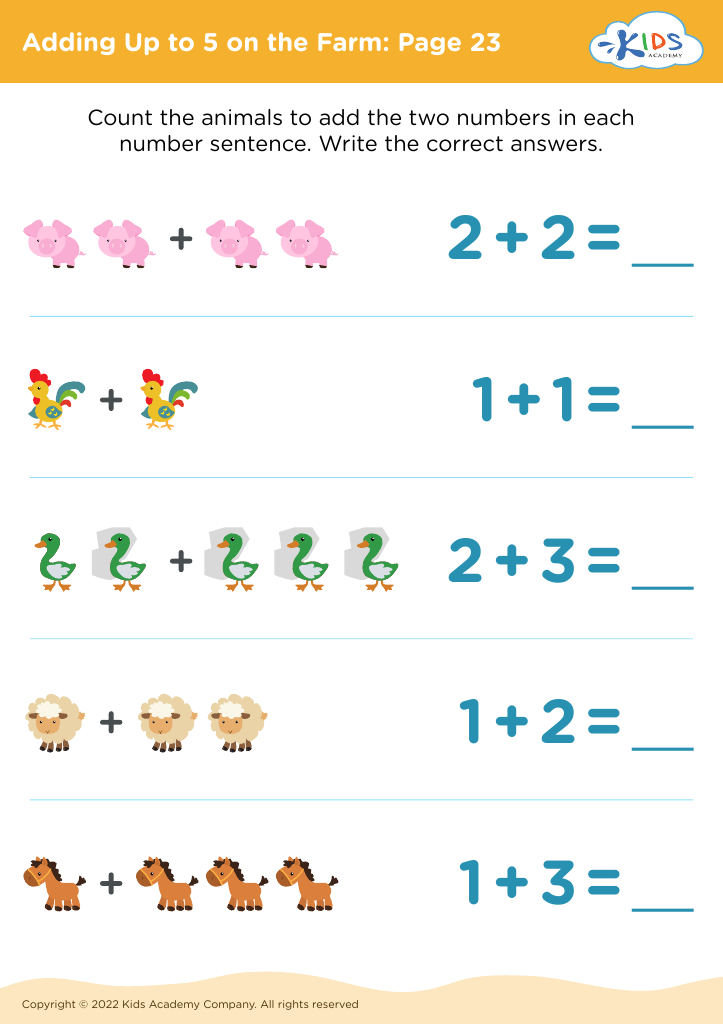
Adding Up to 5 on the Farm: Page 23
Worksheet
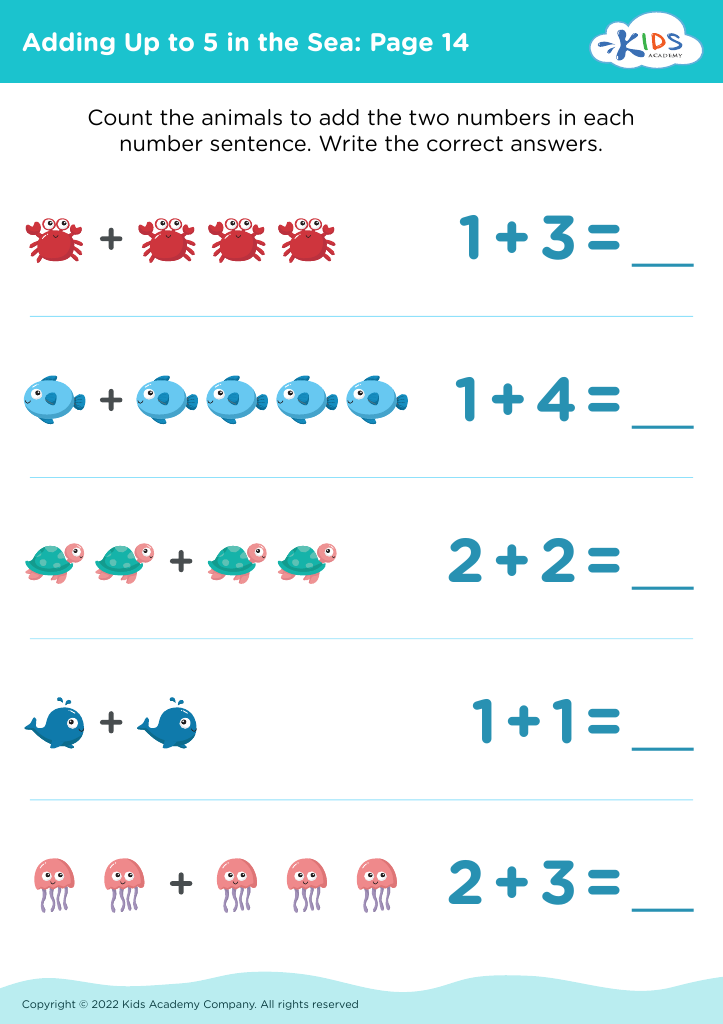
Adding Up to 5 in the Sea: Page 14
Worksheet
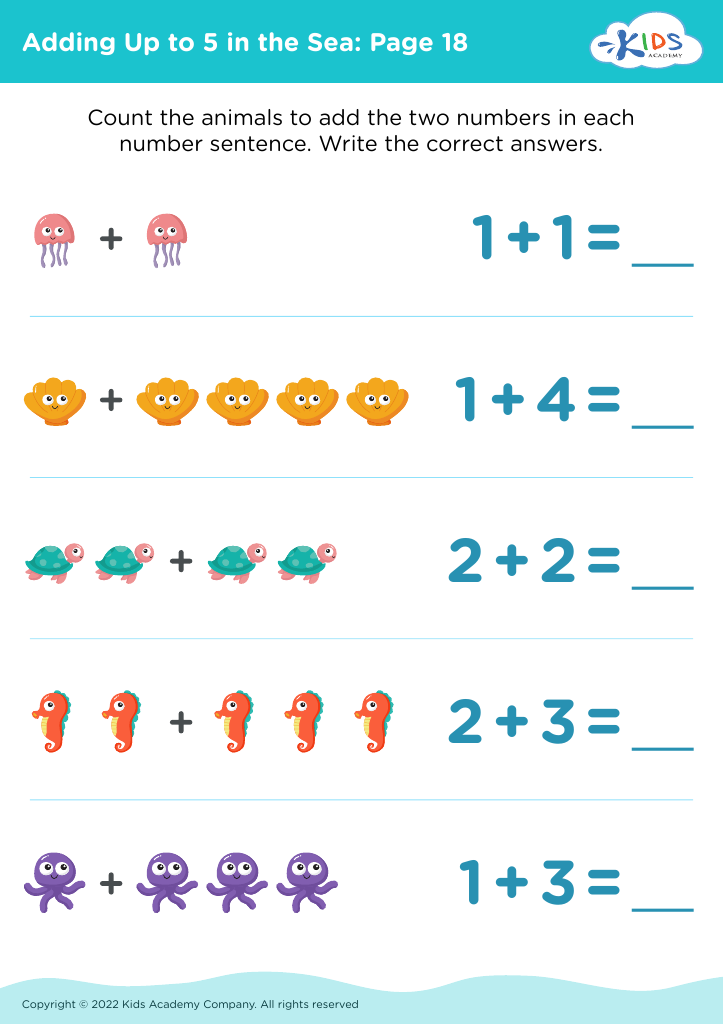
Adding Up to 5 in the Sea: Page 18
Worksheet
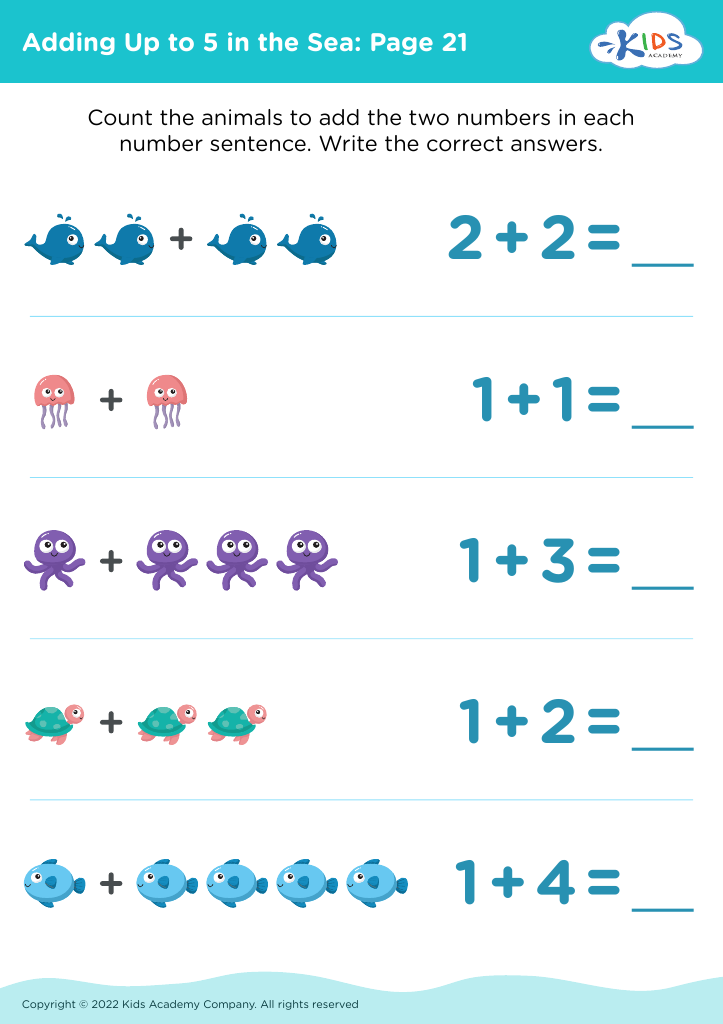
Adding Up to 5 in the Sea: Page 21
Worksheet
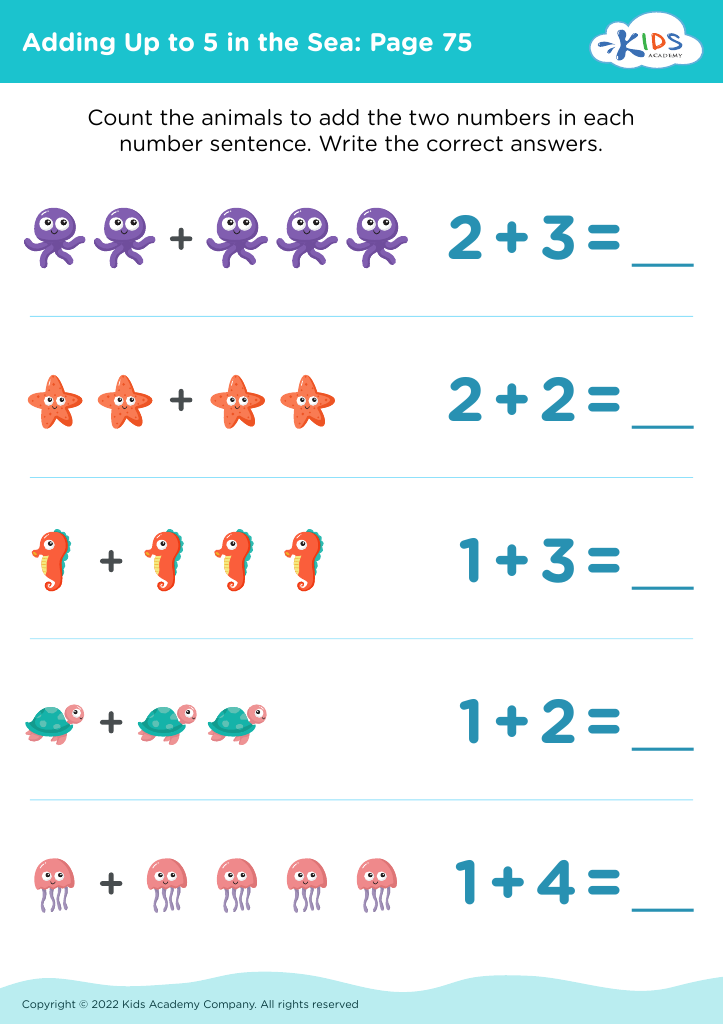
Adding Up to 5 in the Sea: Page 75
Worksheet
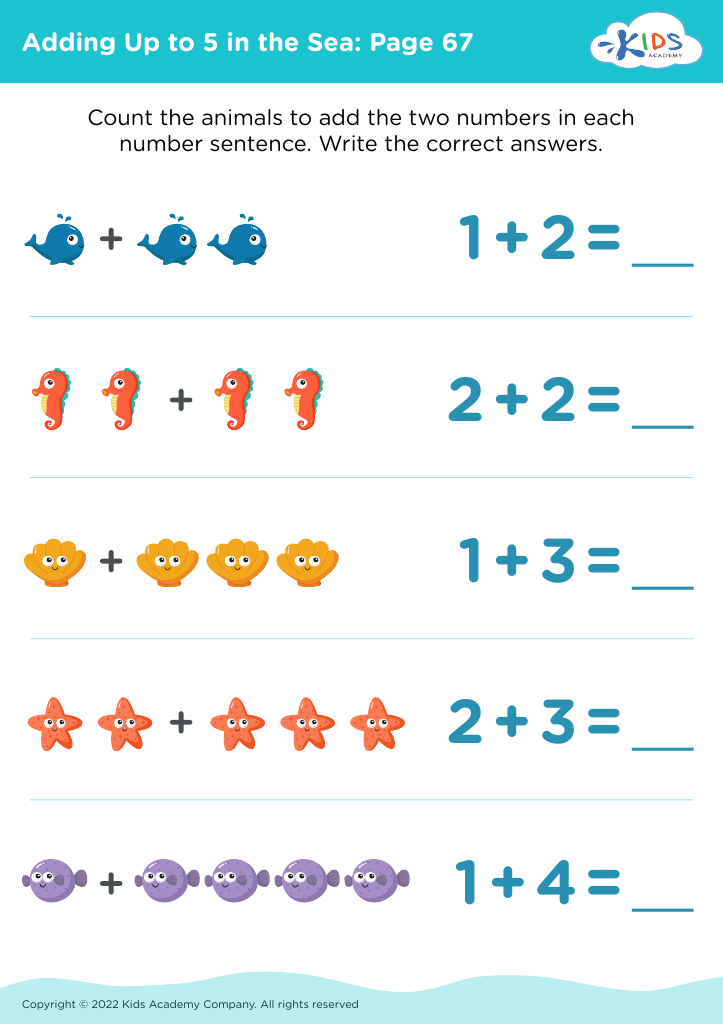
Adding Up to 5 in the Sea: Page 67
Worksheet
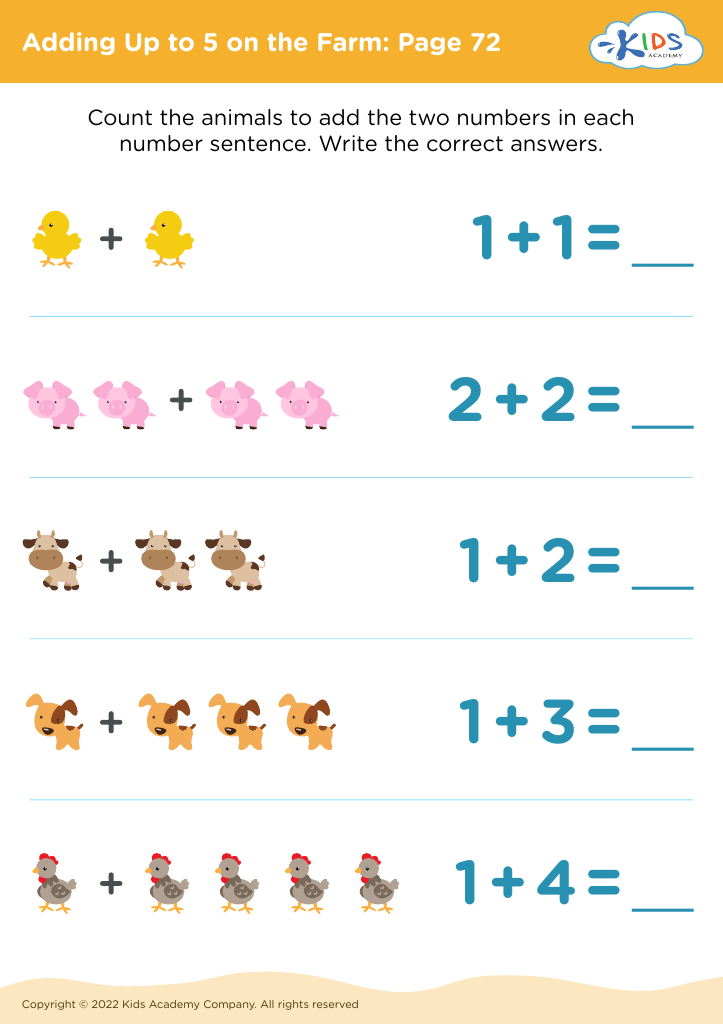
Adding Up to 5 on the Farm: Page 72
Worksheet
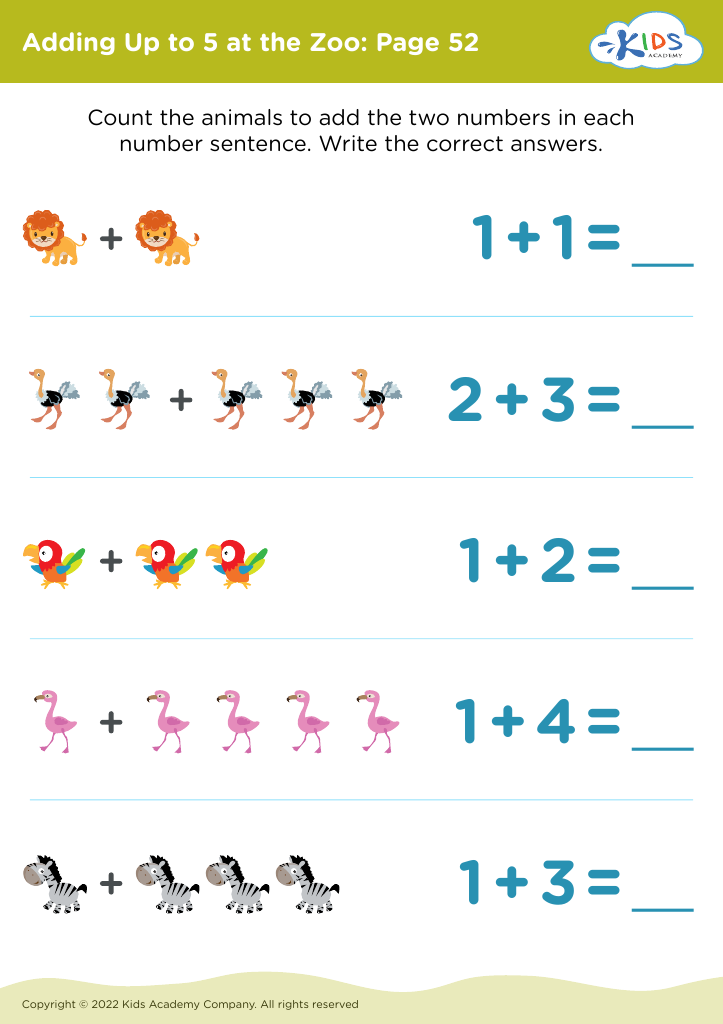
Adding Up to 5 at the Zoo: Page 52
Worksheet
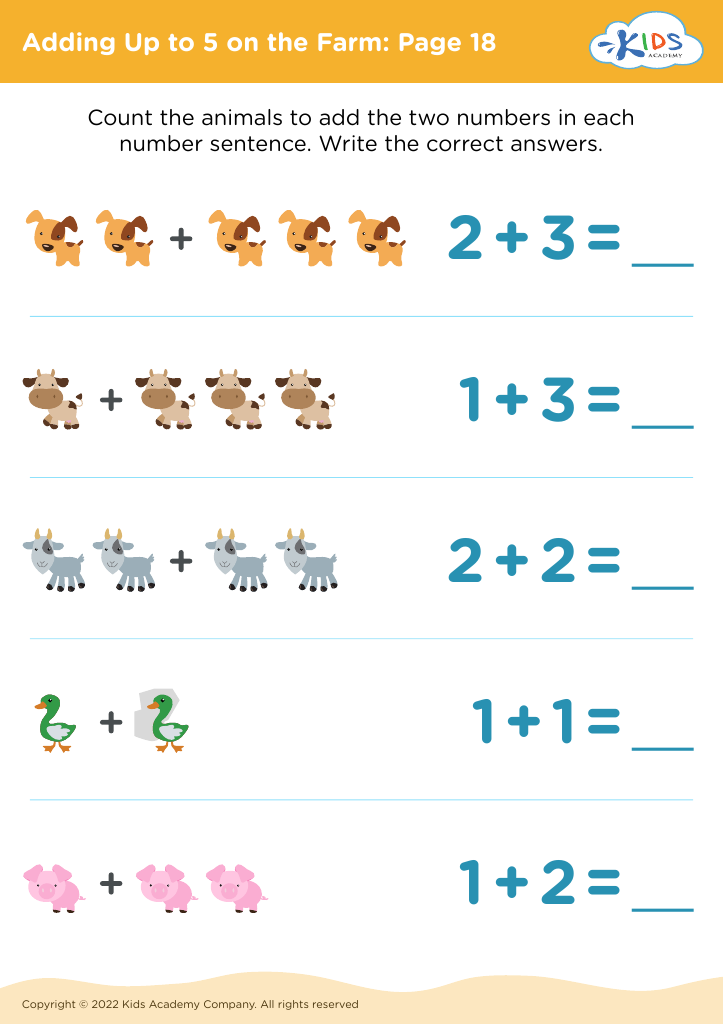
Adding Up to 5 on the Farm: Page 18
Worksheet
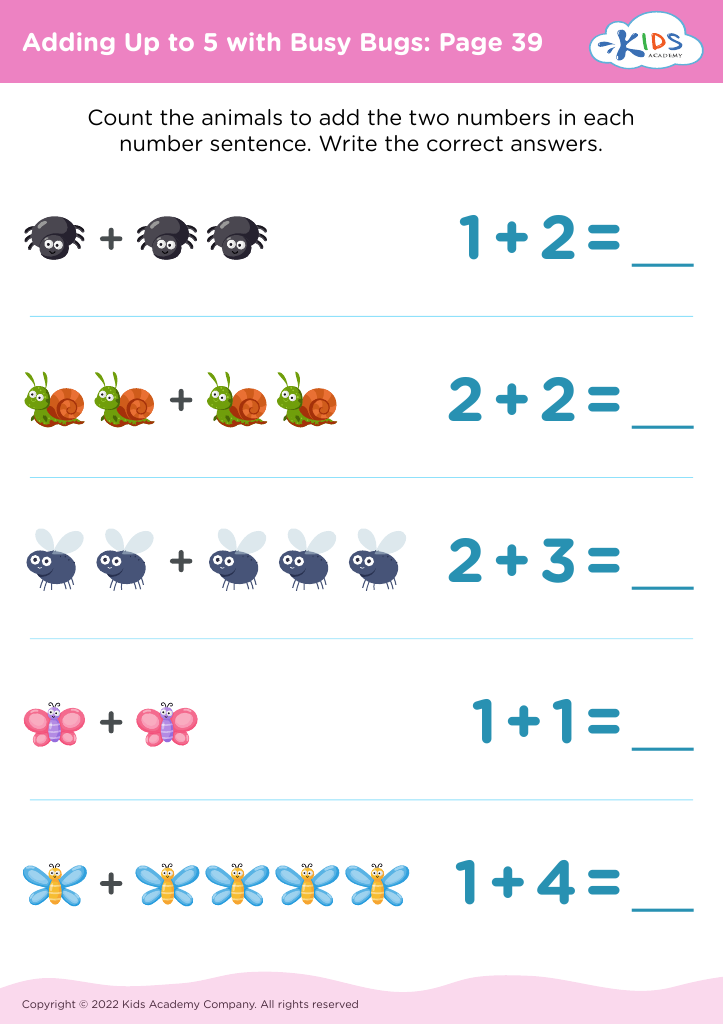
Adding Up to 5 with Busy Bugs: Page 39
Worksheet
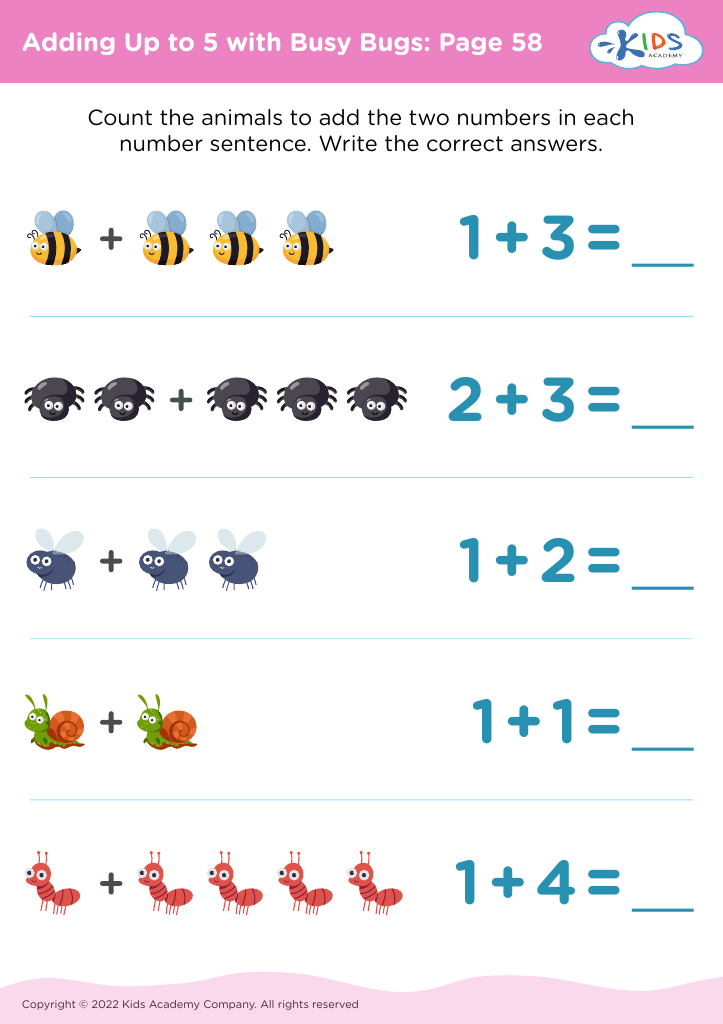
Adding Up to 5 with Busy Bugs: Page 58
Worksheet
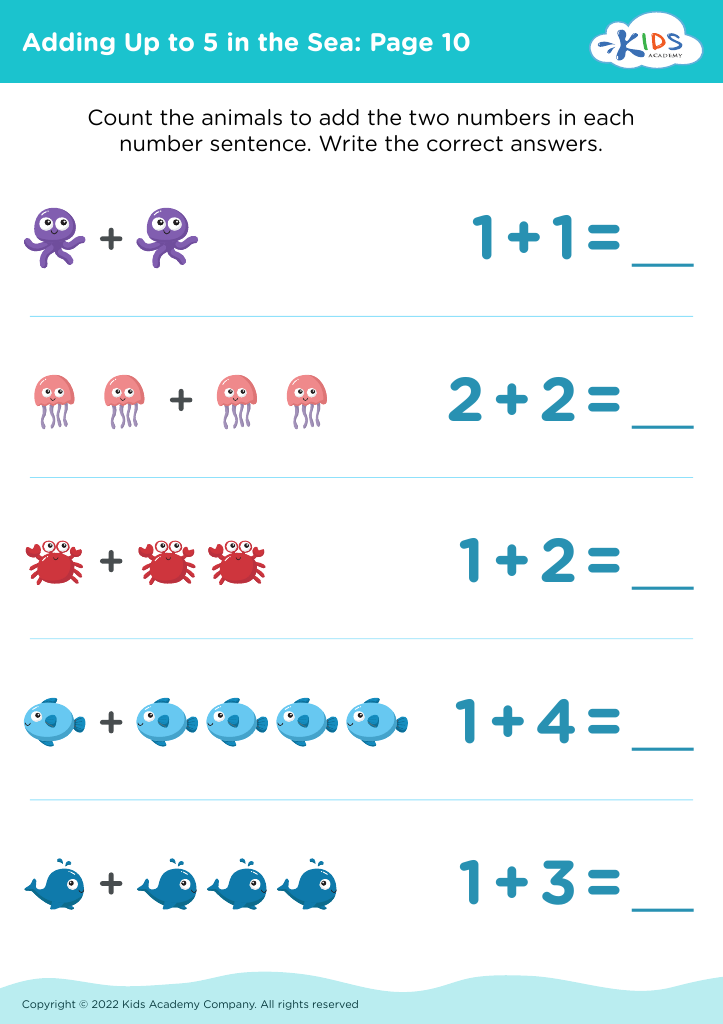
Adding Up to 5 in the Sea: Page 10
Worksheet
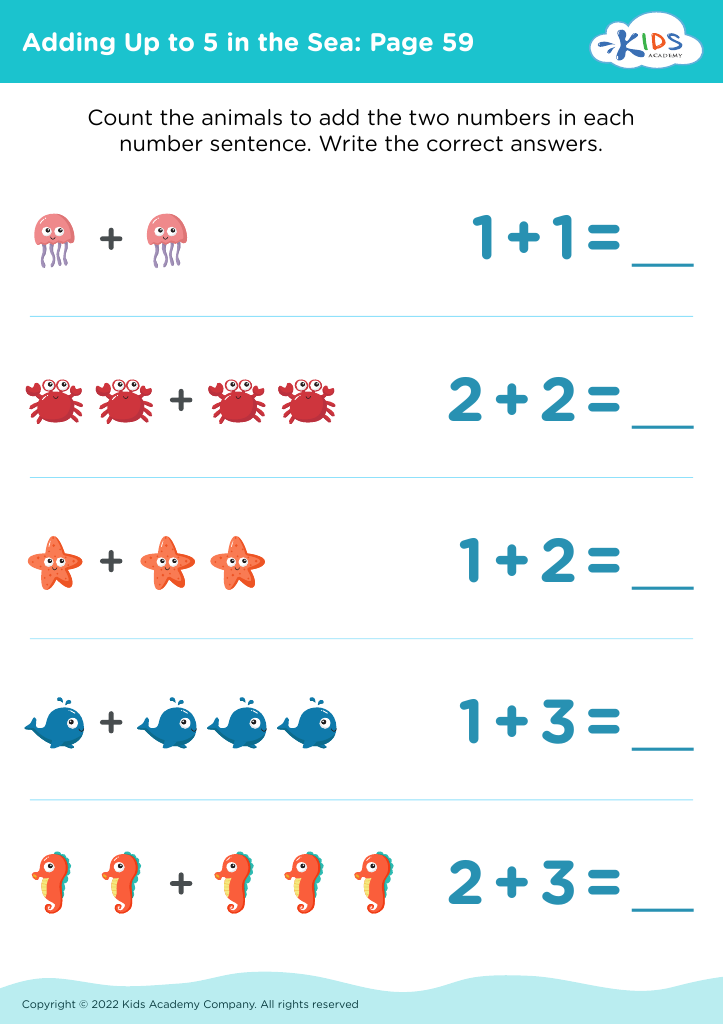
Adding Up to 5 in the Sea: Page 59
Worksheet


Visual learning addition and subtraction for ages 5-7 is crucial because it aids in the comprehension of fundamental math concepts that form the foundation for future learning. At this developmental stage, children often grasp abstract ideas more easily when they can visualize them. Using visual aids such as counters, number lines, and drawings helps to make these mathematical operations tangible and relatable.

By emphasizing visual learning, parents and teachers can cater to diverse learning styles, engaging children who may struggle with traditional methods. This approach not only makes learning enjoyable but also instills a sense of confidence in young learners. Visual strategies encourage children to explore problem-solving through pictorial methods, fostering independent thinking and resilience in math.

Moreover, mastering addition and subtraction through visual techniques sets the foundation for more complex topics such as multiplication and division. When children can conceptualize numbers visually, they enhance their memory retention and understanding, leading to long-term academic success.

Ultimately, equipping young learners with strong visual math skills prepares them for everyday life, promotes critical thinking, and establishes a positive relationship with numbers, benefitting their overall educational journey. Engaging in visual learning methods today will yield benefits for parents, teachers, and students alike.