Visual representation comprehension Addition & Subtraction Worksheets for Ages 5-7
5 filtered results
-
From - To
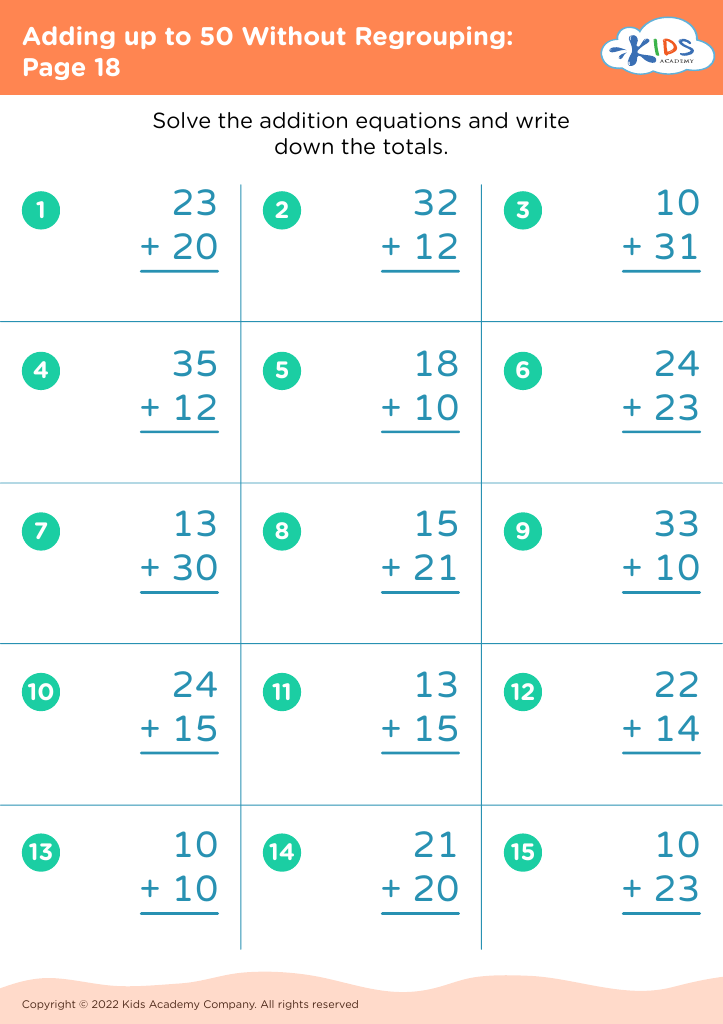
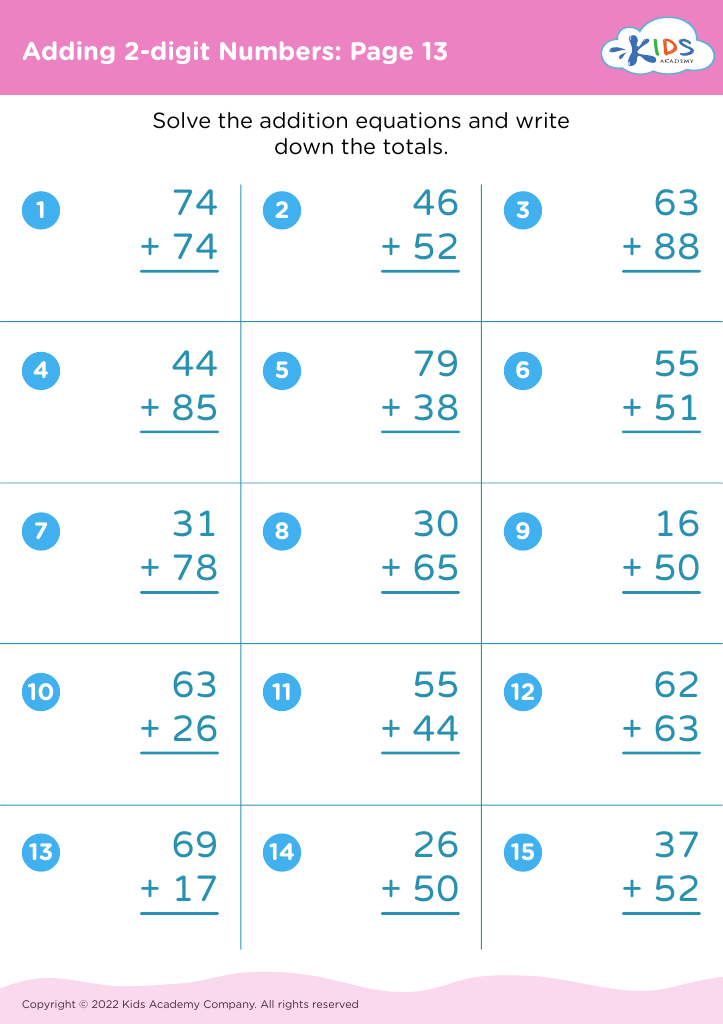
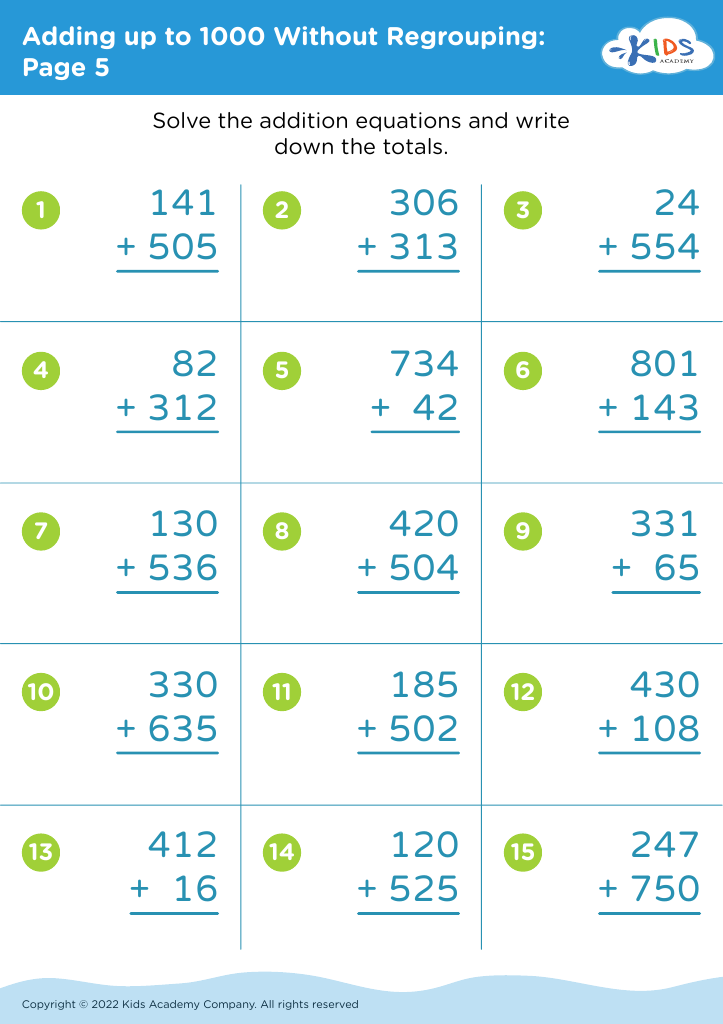
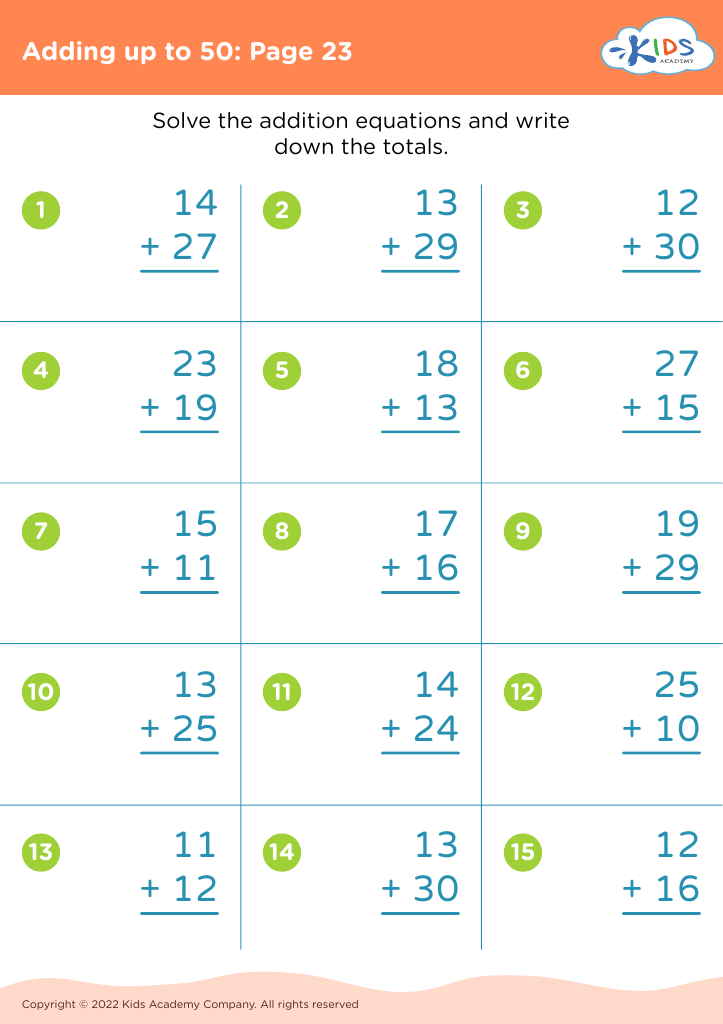
Our Visual Representation Comprehension Addition & Subtraction Worksheets for Ages 5-7 are designed to make learning math enjoyable for young children. These interactive worksheets use visual aids, such as pictures and diagrams, to help kids understand basic addition and subtraction concepts effortlessly. By engaging with these fun and educational exercises, children develop essential problem-solving skills and build a strong mathematical foundation. Perfect for both classroom use and at-home practice, these worksheets cater to different learning styles and significantly enhance number comprehension. Unlock your child’s potential with our accessible, expertly crafted learning resources.
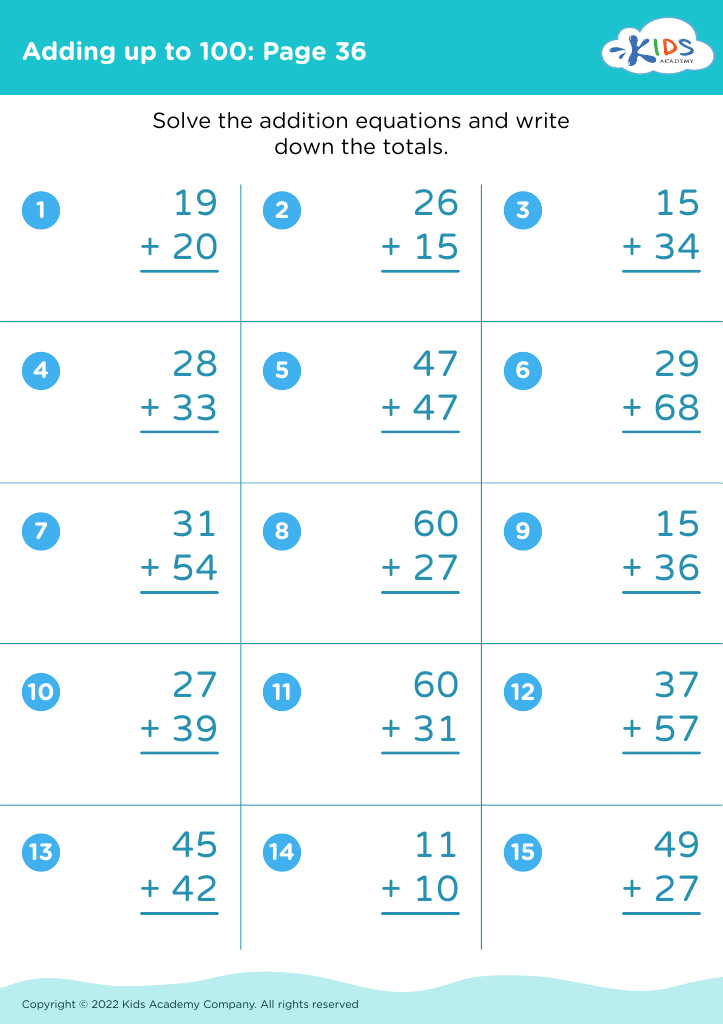








Parents and teachers should prioritize visual representation comprehension in addition and subtraction for children ages 5-7 because this foundational skill significantly enhances mathematical understanding. At this early developmental stage, children are typically transitioning from concrete manipulatives to more abstract thinking. Visual tools such as number lines, grids, and pictorial representations help bridge this gap by providing concrete visuals that make abstract concepts accessible.
Understanding visual representations aids in the development of number sense, enabling children to grasp the relationships between numbers and the concepts of “adding to” and “taking away.” When children visualize problems, they can better understand the operations and strategies needed to solve them. This also helps in building problem-solving skills and logical thinking.
Moreover, visual methods cater to different learning styles, especially for children who are visual or kinesthetic learners. Incorporating such techniques into the learning process supports inclusiveness and adaptive teaching. Real-world scenarios frequently require interpreting data visually—from reading graphs to recognizing patterns—so these skills have immediate practical value. By ensuring strong visual representation comprehension in early mathematics education, parents and teachers set up a solid foundation for future success in math and beyond, fostering confidence and long-term academic growth.








