Addition up to 5 Addition Worksheets for Ages 5-7
4 filtered results
-
From - To
Welcome to our Addition up to 5 Worksheets, designed specifically for children aged 5-7! These engaging and interactive worksheets provide a fun and effective way for young learners to master basic addition skills. Featuring colorful illustrations and age-appropriate exercises, your child will practice adding numbers up to 5 while developing essential mathematical concepts. Our resources encourage independent learning and enhance problem-solving abilities. Whether used at home or in the classroom, these worksheets make math enjoyable and accessible for early learners. Download now to simplify learning and foster a lifelong love for math with these foundational addition activities!
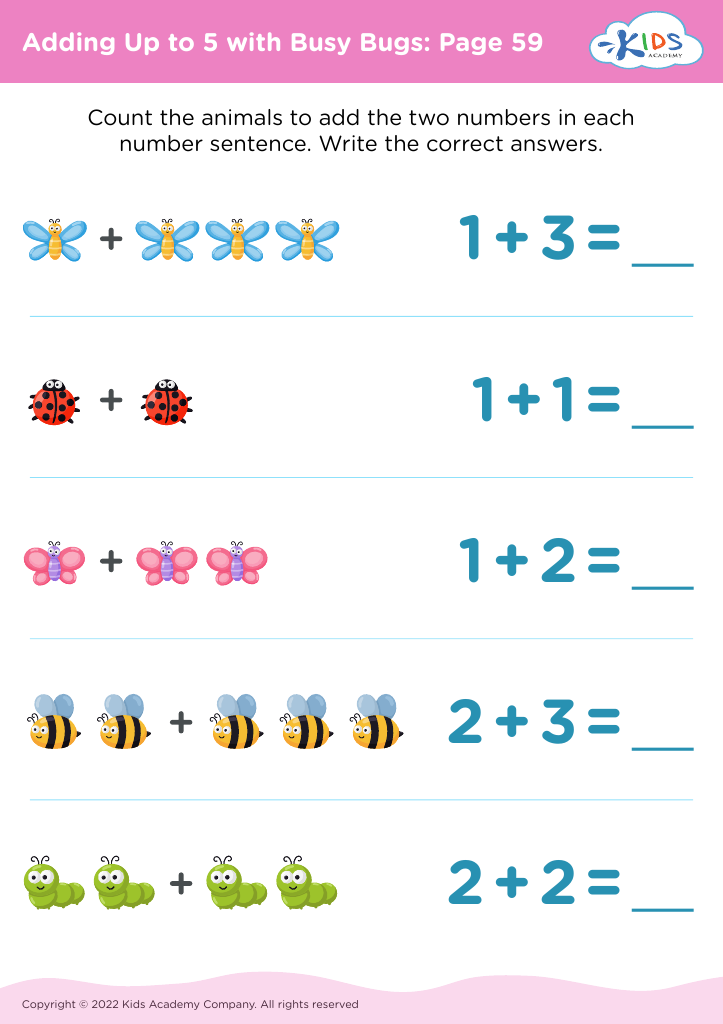
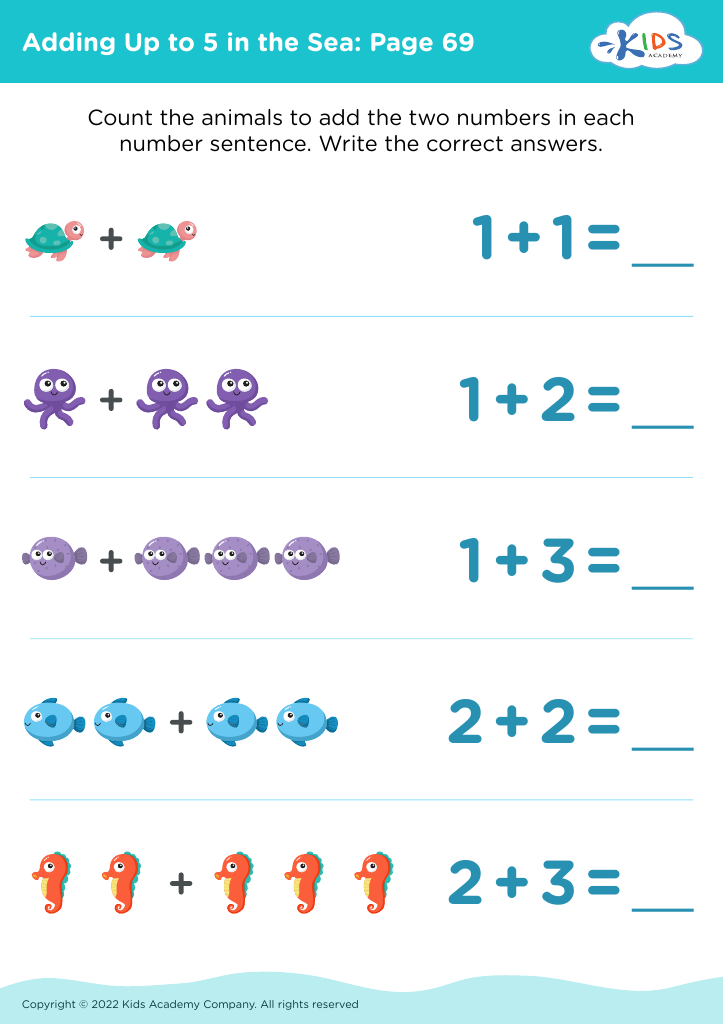
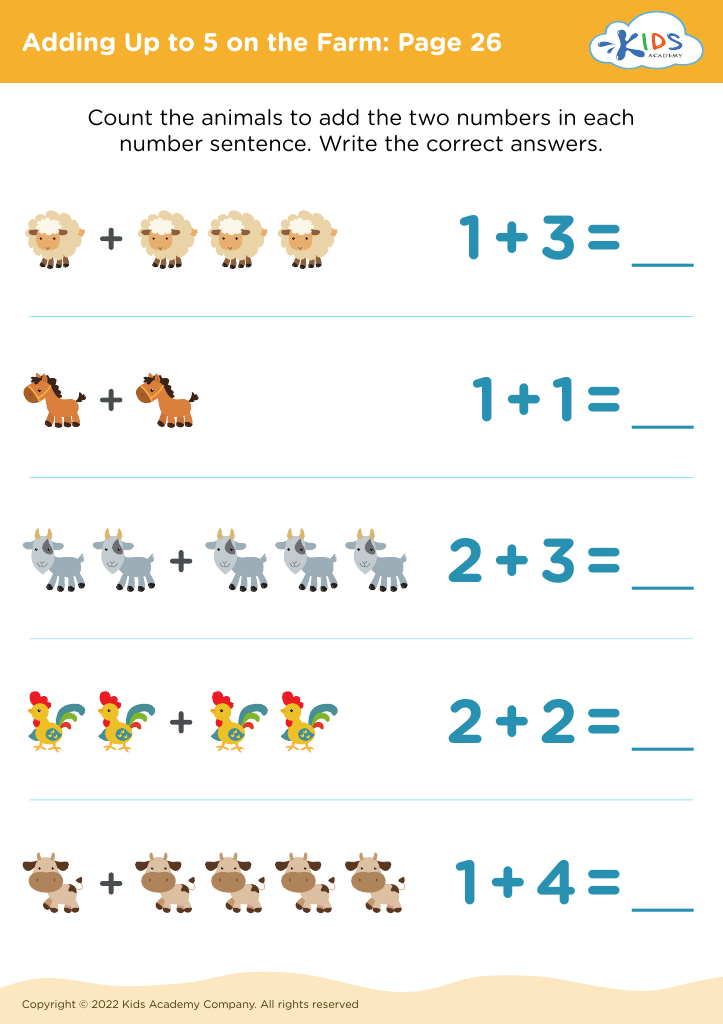
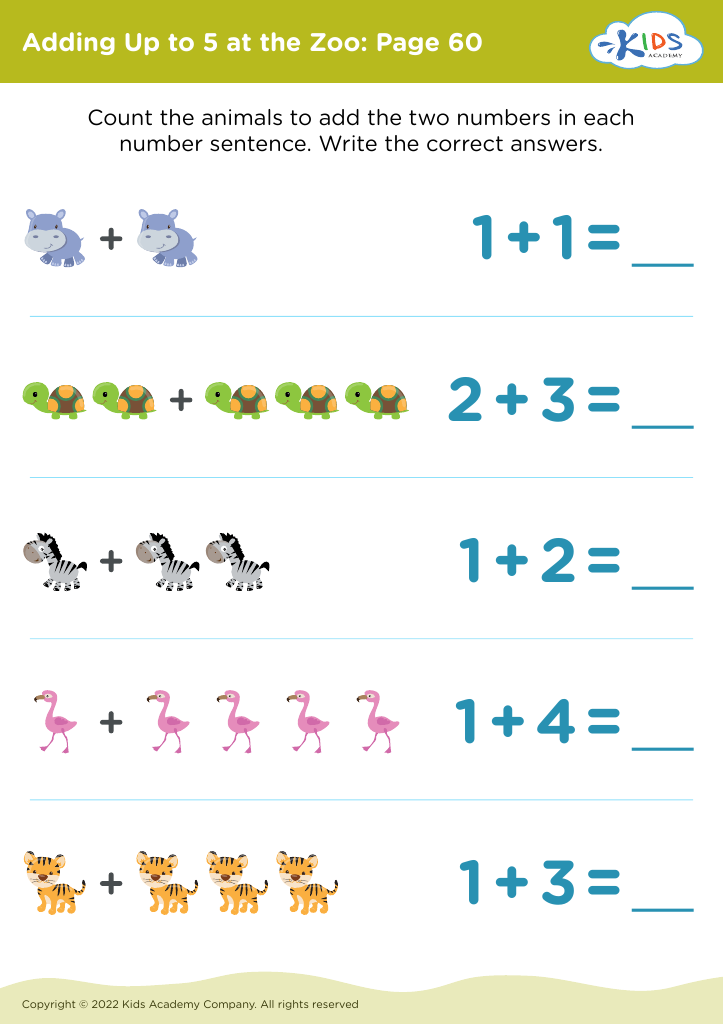








Addition up to 5 is a foundational skill crucial for children aged 5-7, forming the basis for their future mathematical understanding. Parents and teachers should prioritize this skill for several reasons.
Firstly, addition is one of the first mathematical concepts children encounter. Mastering it helps build confidence and encourages a positive attitude toward math. When kids can easily add small numbers, they develop a sense of achievement, fostering a love for learning.
Moreover, learning addition sets the stage for more complex mathematical operations. Once children grasp basic addition, they can more easily understand concepts like subtraction, multiplication, and division in later years. It also enhances their problem-solving skills, as they learn to manipulate numbers in various contexts.
Additionally, addition up to 5 can be contextualized through daily activities, making learning more engaging. Parents can incorporate math into shopping, cooking, or playing games, making the process fun and relevant.
Finally, this skill lays the groundwork for critical thinking and cognitive development. By building a strong mathematical foundation, children will be better prepared for academic success and everyday life skills, illustrating the importance for both parents and teachers to actively support their learning journey in this area.








