Basic arithmetic practice Addition Worksheets for Ages 5-7
12 filtered results
-
From - To
Enhance your child's early math skills with our engaging Basic Arithmetic Practice Addition Worksheets designed specifically for ages 5-7. These interactive worksheets focus on fundamental addition concepts, helping young learners build confidence and a solid foundation in math. Ideal for at-home practice or classroom use, each worksheet features colorful illustrations and age-appropriate problems that make learning enjoyable and effective. Your child will develop critical thinking abilities while practicing essential addition skills, setting the stage for future math success. Explore our collection today and watch your child's math proficiency soar with these fun and educational resources!
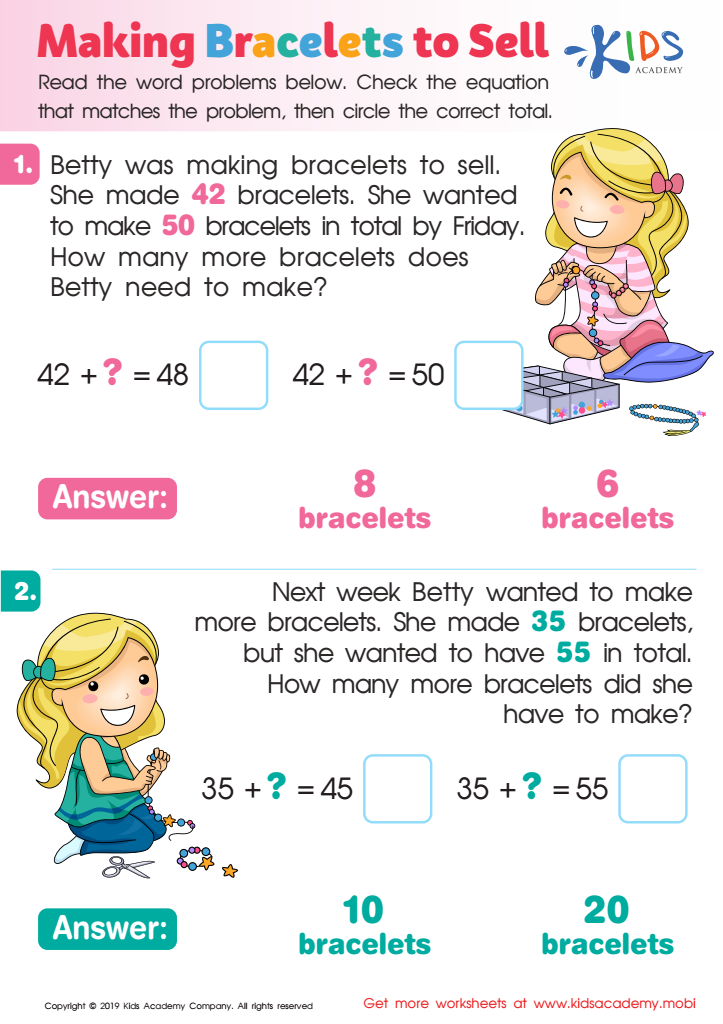
Making Bracelets to Sell Worksheet
 Assign to My Students
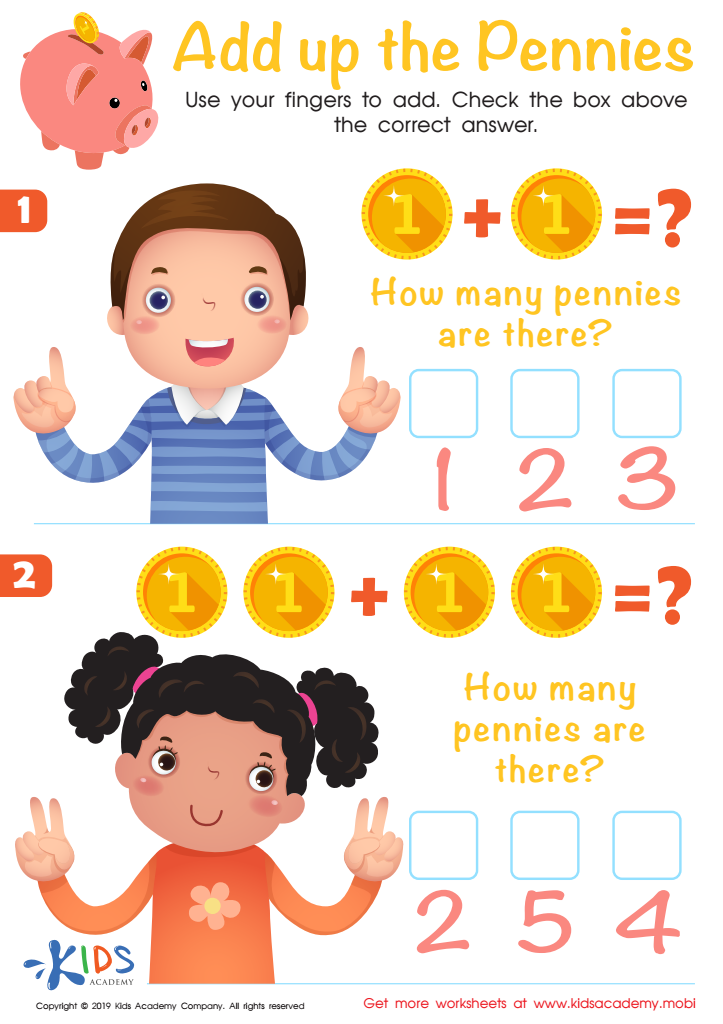
Add up the Pennies Worksheet
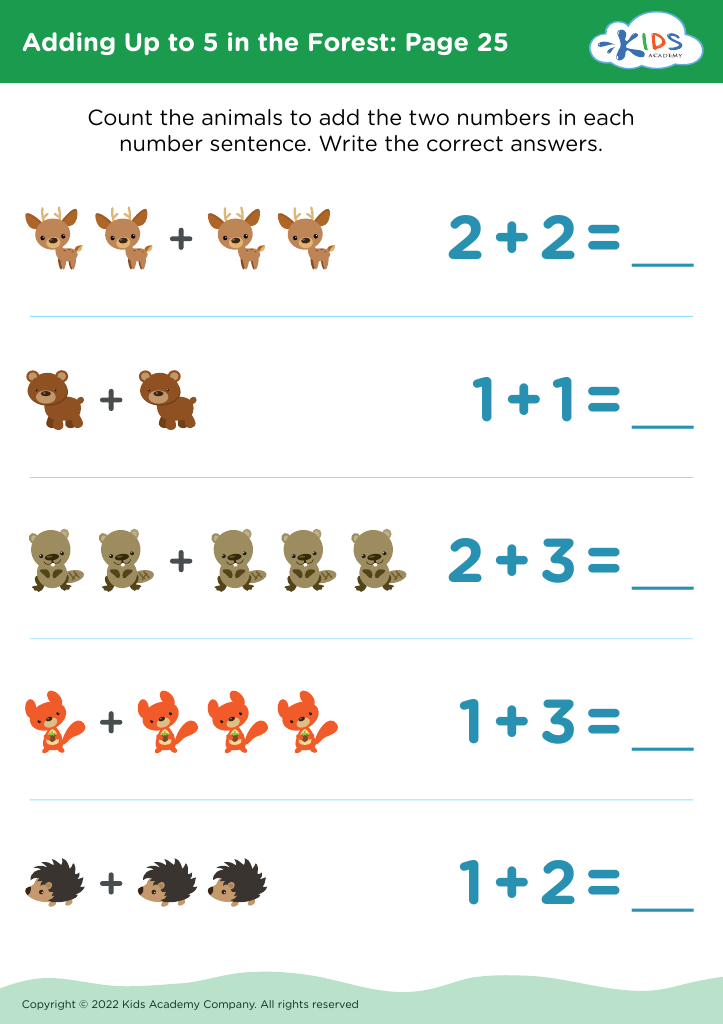
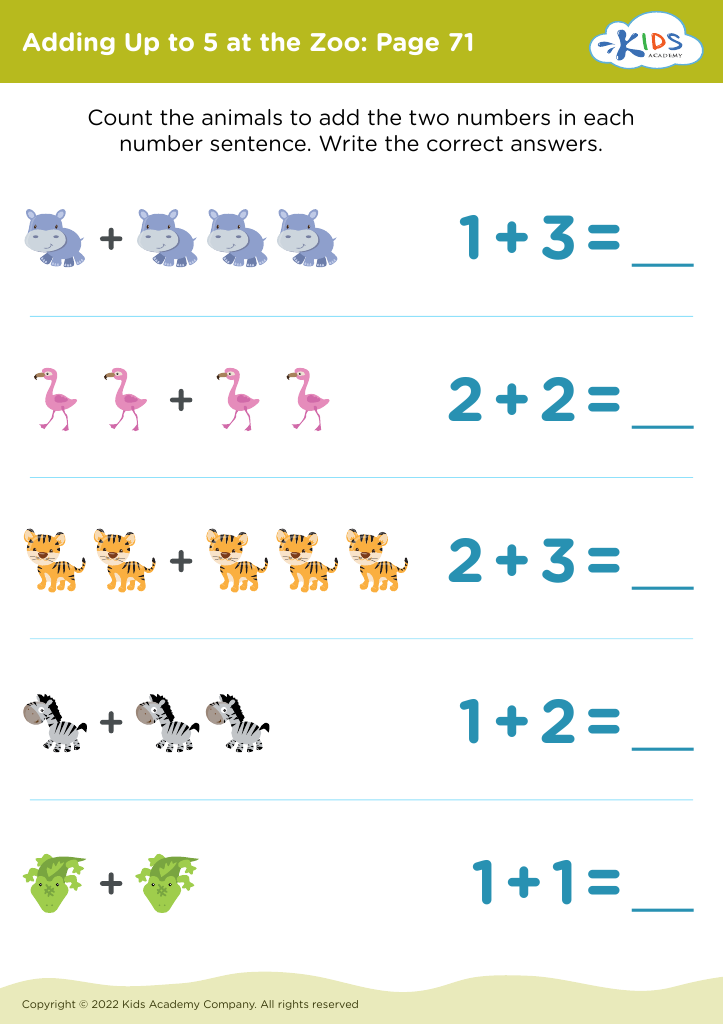
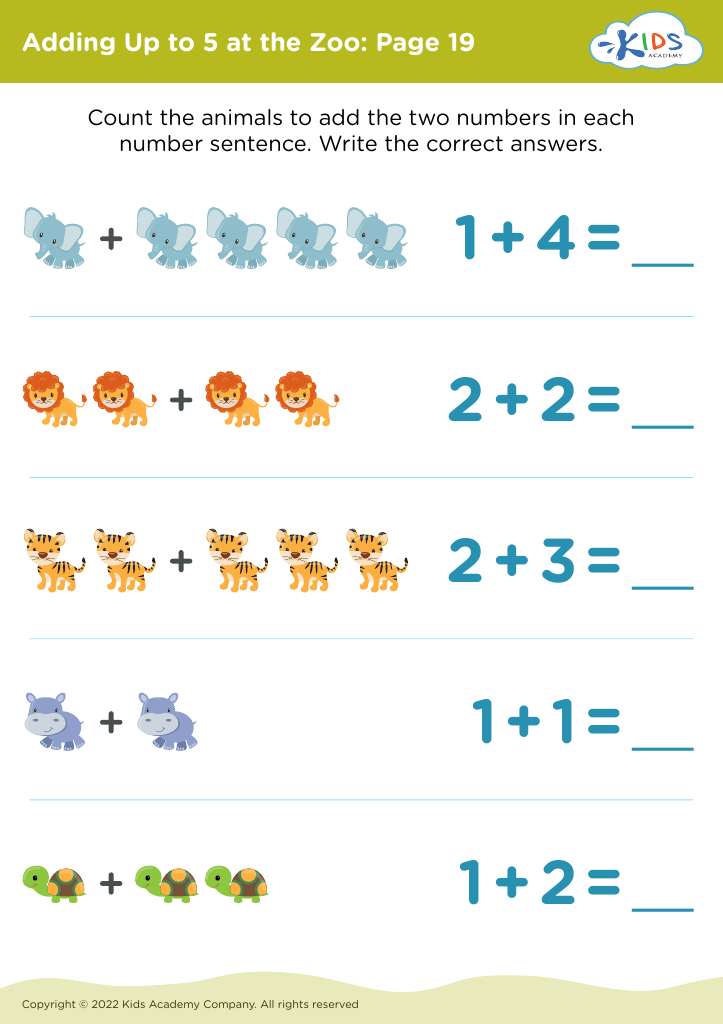
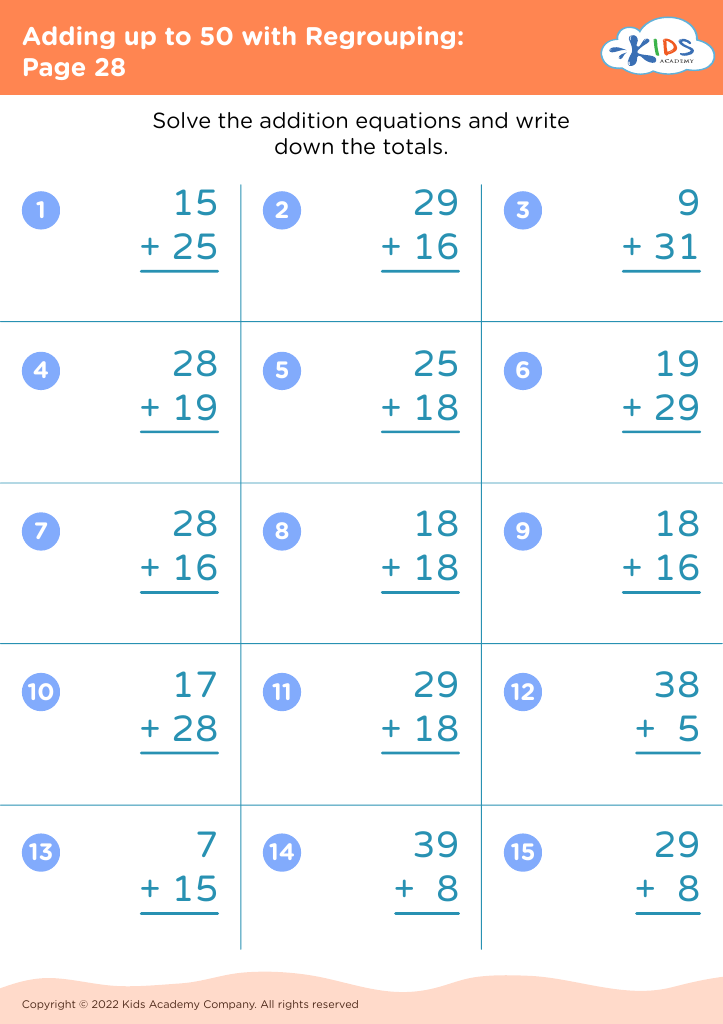
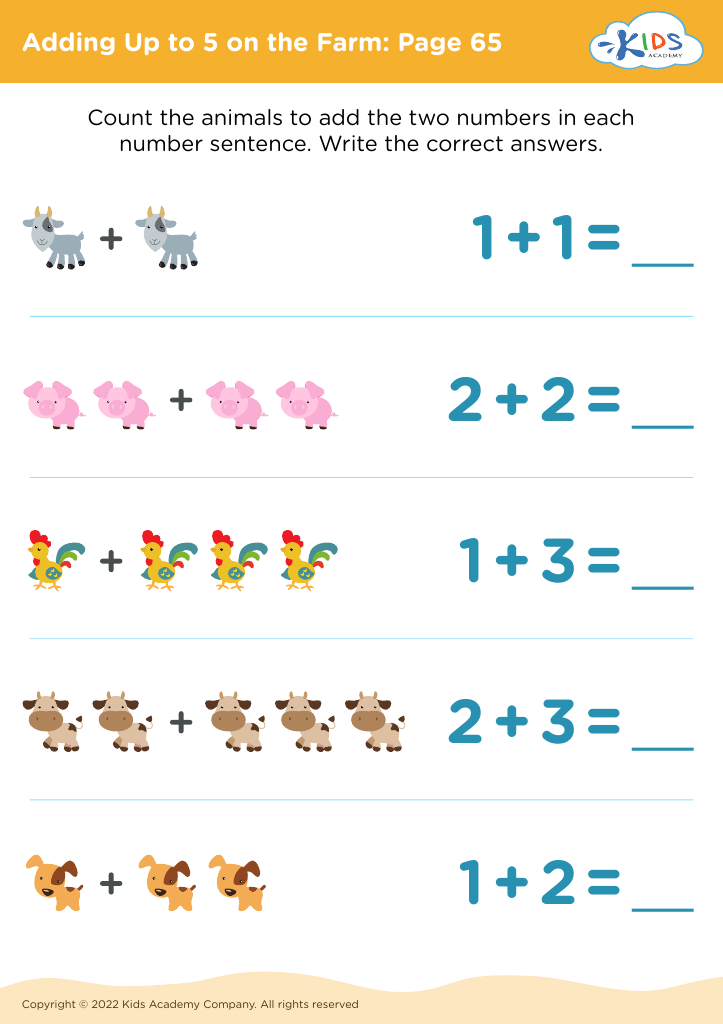
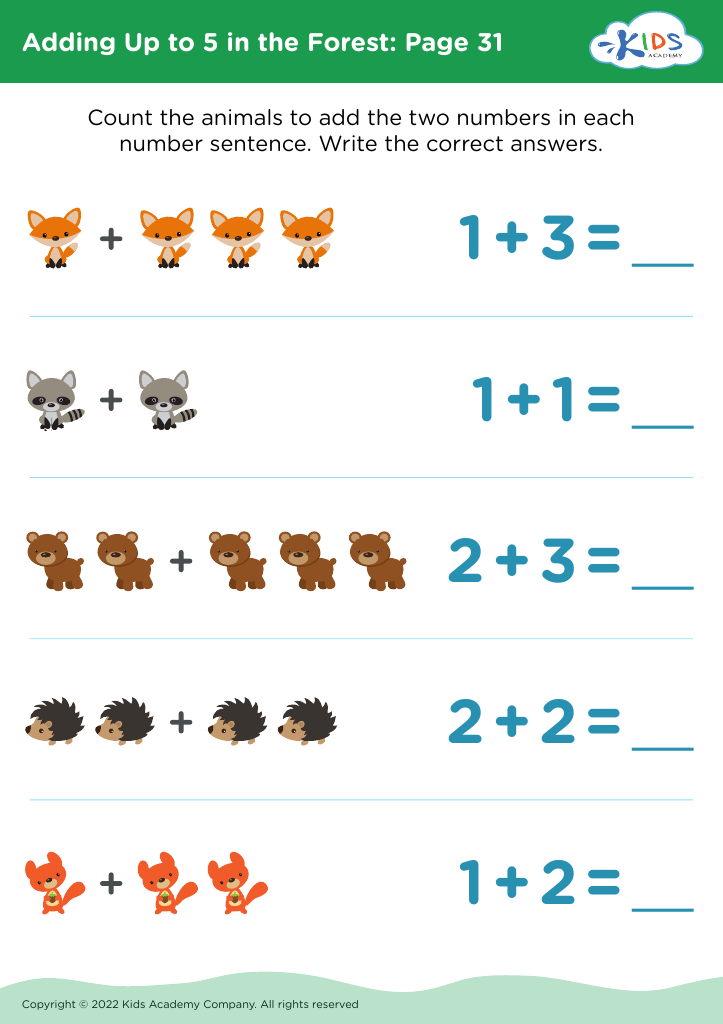
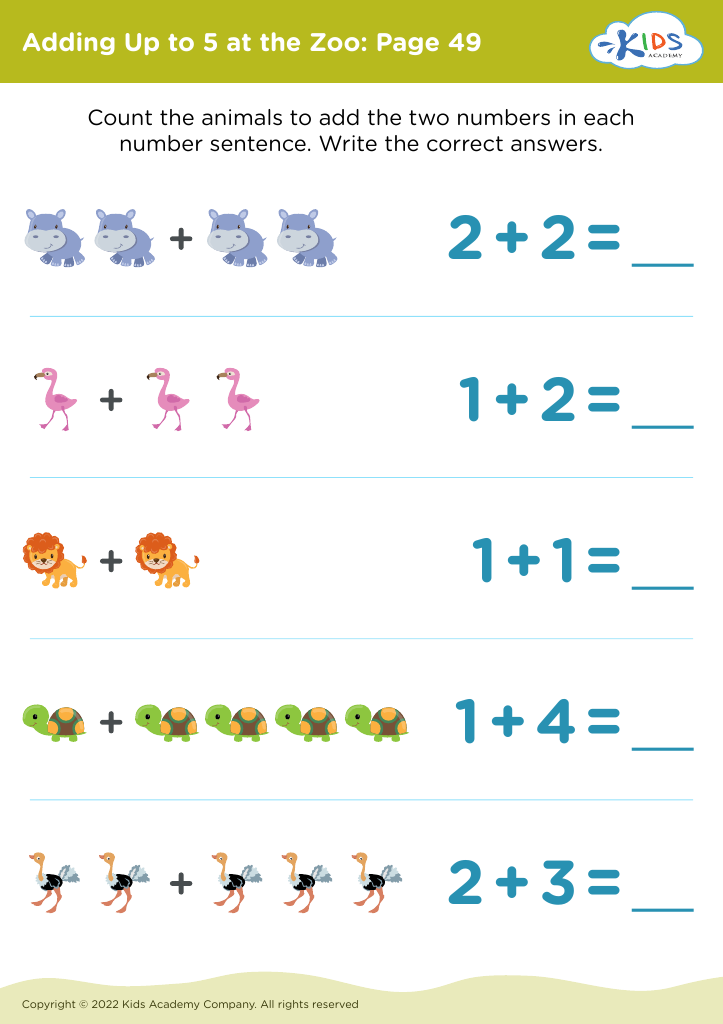
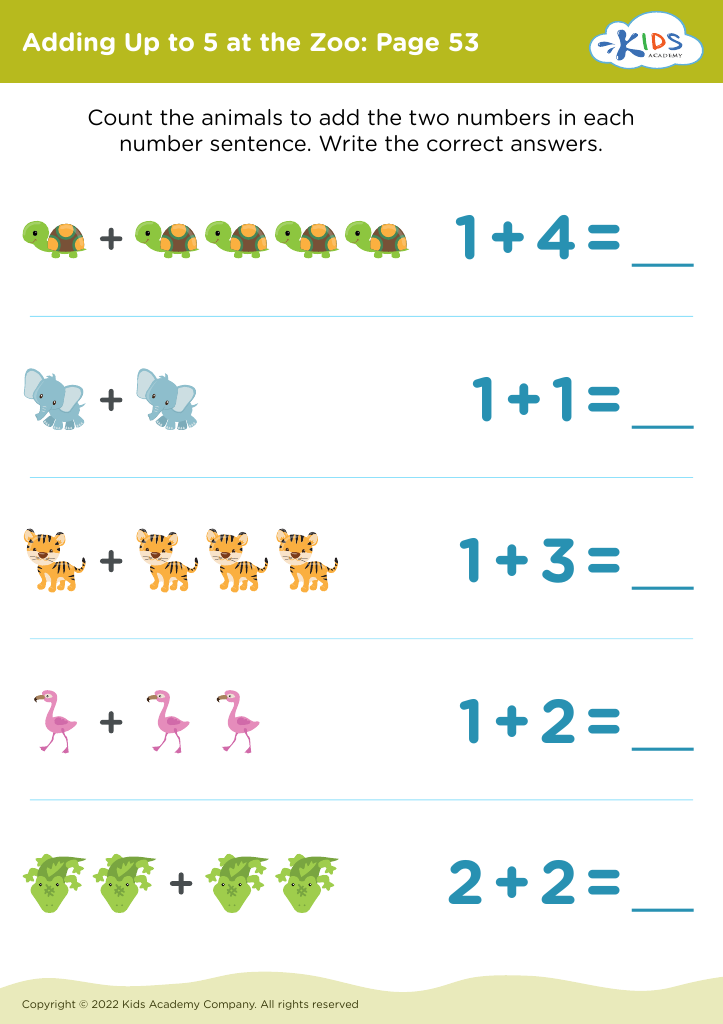








Basic arithmetic practice, particularly addition, is crucial for children aged 5-7 as it lays the foundation for their future mathematical skills. At this developmental stage, children are naturally curious and eager to explore new concepts, making it an ideal time to introduce fundamental math principles. Addition not only enhances their numerical understanding but also fosters critical thinking and problem-solving abilities.
For parents and teachers, promoting early addition skills can significantly impact a child's academic journey. Mastery of basic addition helps build confidence, encouraging children to engage more with mathematics. This skill is essential for a range of everyday activities, such as handling money, measuring ingredients for cooking, or understanding time, thereby reinforcing math as a practical life skill.
Furthermore, practicing addition can strengthen cognitive development, improving focus, memory, and attention. Engaging activities and games that involve addition make learning enjoyable and interactive, fostering a positive relationship with mathematics. Parents and teachers who support this practice can reinforce the idea that math is not only important but also fun, cultivating a lifelong appreciation for learning in their children. By prioritizing basic arithmetic, adults can ensure that children develop a strong foundation for future academic success and everyday problem-solving.








