Basic arithmetic understanding Addition Worksheets for Ages 5-7
4 filtered results
-
From - To
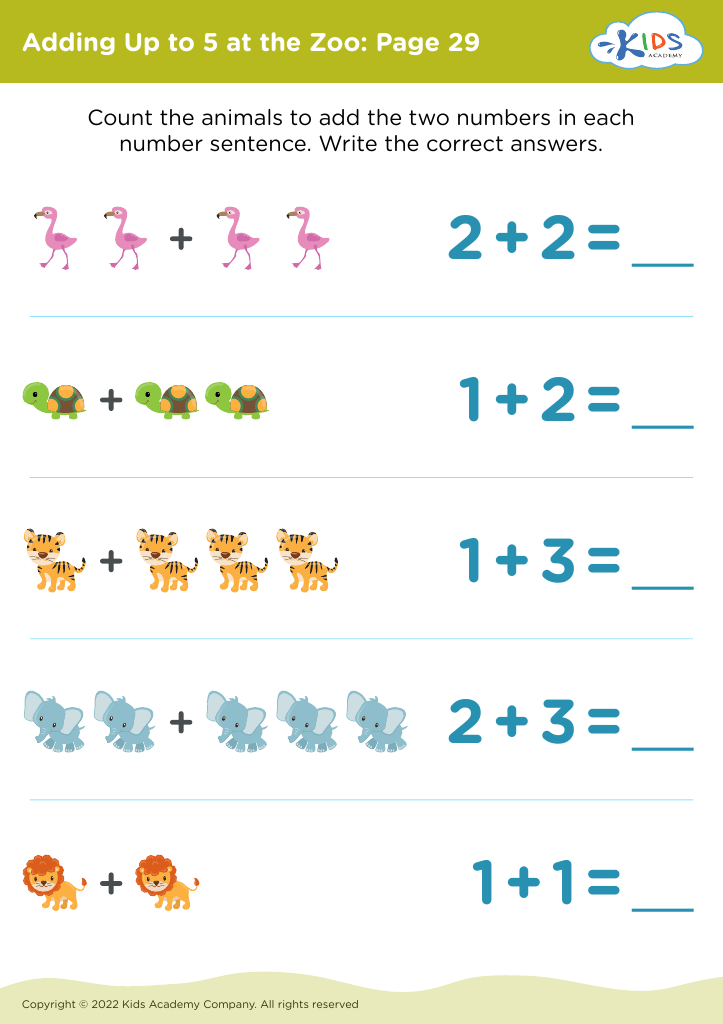
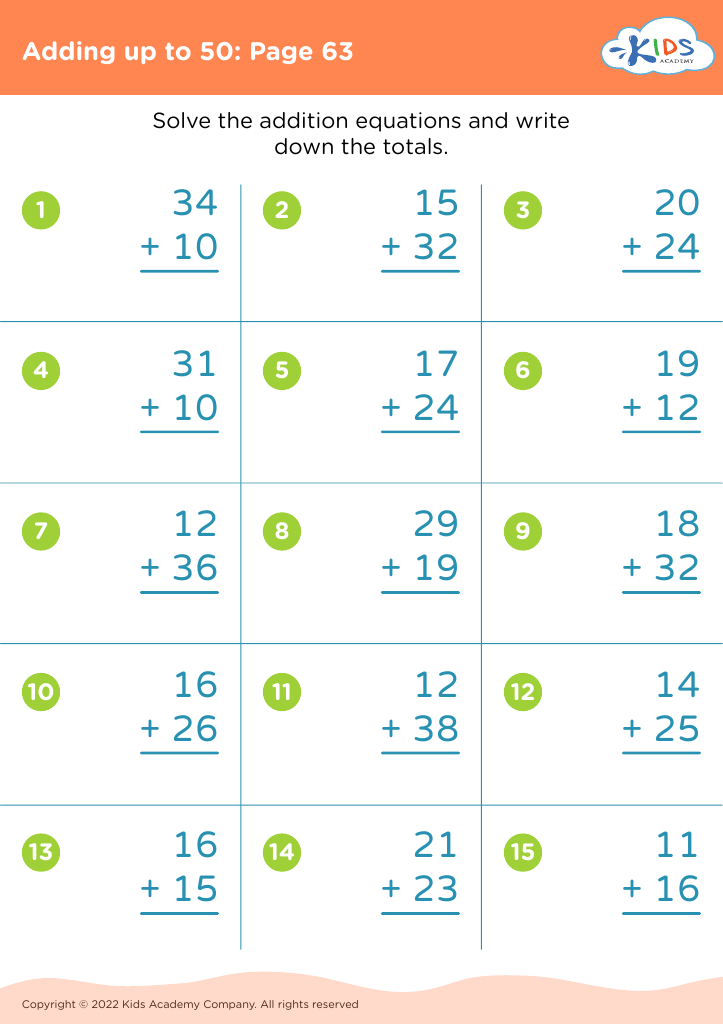
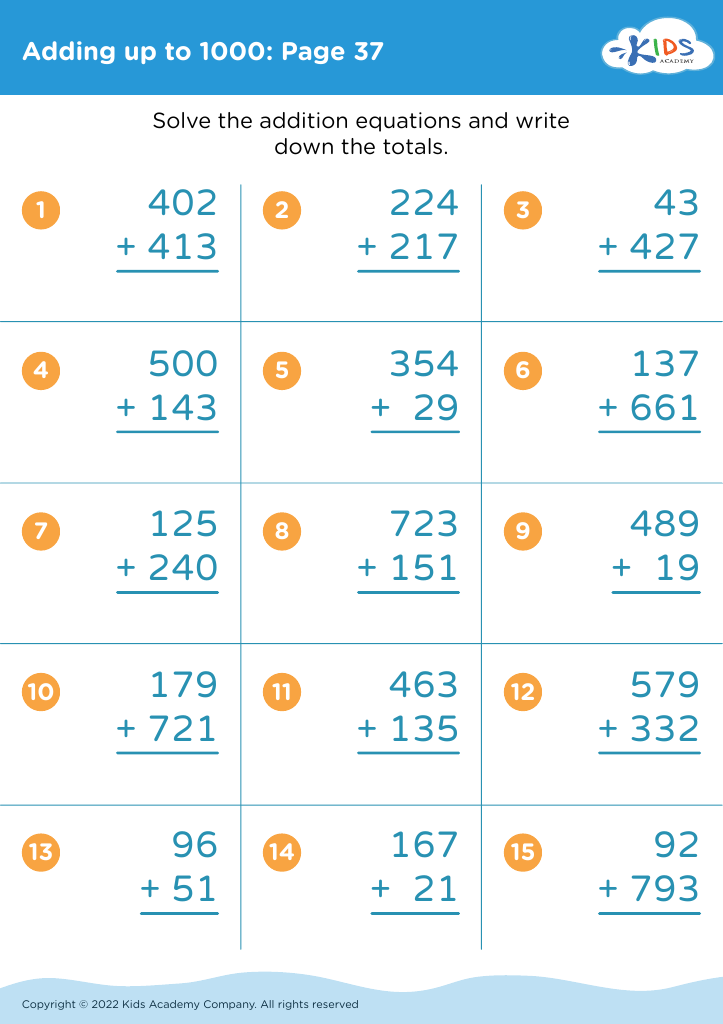
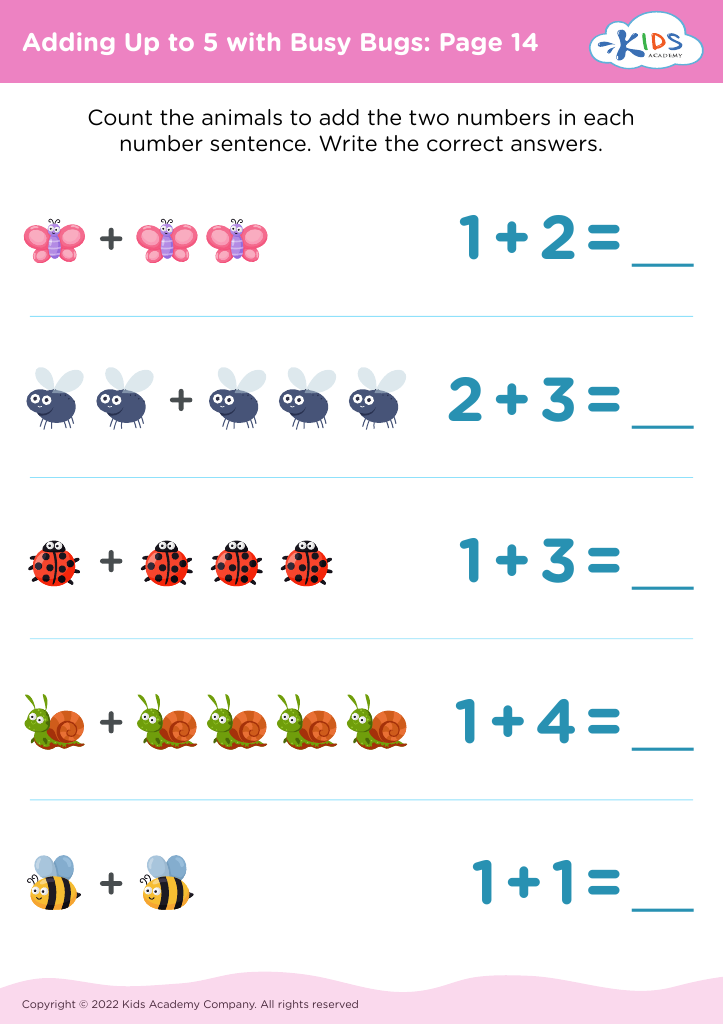
Enhance your child's mathematical foundation with our Basic Arithmetic Understanding Addition Worksheets, tailored for ages 5-7. These engaging, printable worksheets provide fun exercises that introduce young learners to essential addition concepts. With colorful illustrations and interactive activities, kids will develop critical skills while gaining confidence in their math abilities. Perfect for home or classroom use, our worksheets facilitate early arithmetic learning, helping children grasp the fundamentals of addition in a delightful way. Foster a love for math with our variety of exercises designed to encourage pattern recognition, problem-solving, and independent thinking. Start your child’s mathematical journey today!




.jpg)



Basic arithmetic, particularly addition, forms the foundational building block for a child's mathematical understanding and overall cognitive development. For children aged 5-7, grasping addition is more than just a skills checklist; it enhances critical thinking, problem-solving abilities, and logical reasoning. Early mastery of addition equips students with the ability to handle more complex math concepts, such as subtraction, multiplication, and division, as they progress through school.
Moreover, addition is integral in everyday life. Whether budgeting lunch money, understanding time, or measuring length, children must apply addition in practical scenarios. By fostering a robust understanding of this fundamental skill, parents and teachers help children develop confidence, perseverance, and positive attitudes toward learning.
Early engagement with addition can also stimulate a child's passion for math by exposing them to games, puzzles, and engaging activities. This multidimensional approach not only cultivates understanding but also ensures that children see math as enjoyable and approachable. Therefore, both parents and teachers play a crucial role in creating an enriching environment where children can thrive mathematically, ultimately setting them up for future academic success and comfort in real-world applications. Investing time and effort in teaching addition illustrates to children that math is essential and relevant.








