
Basic math practice Addition Worksheets for Ages 5-7
3 filtered results
Difficulty Level
Grade
Age
-
From - To
Subject
Activity
Standards
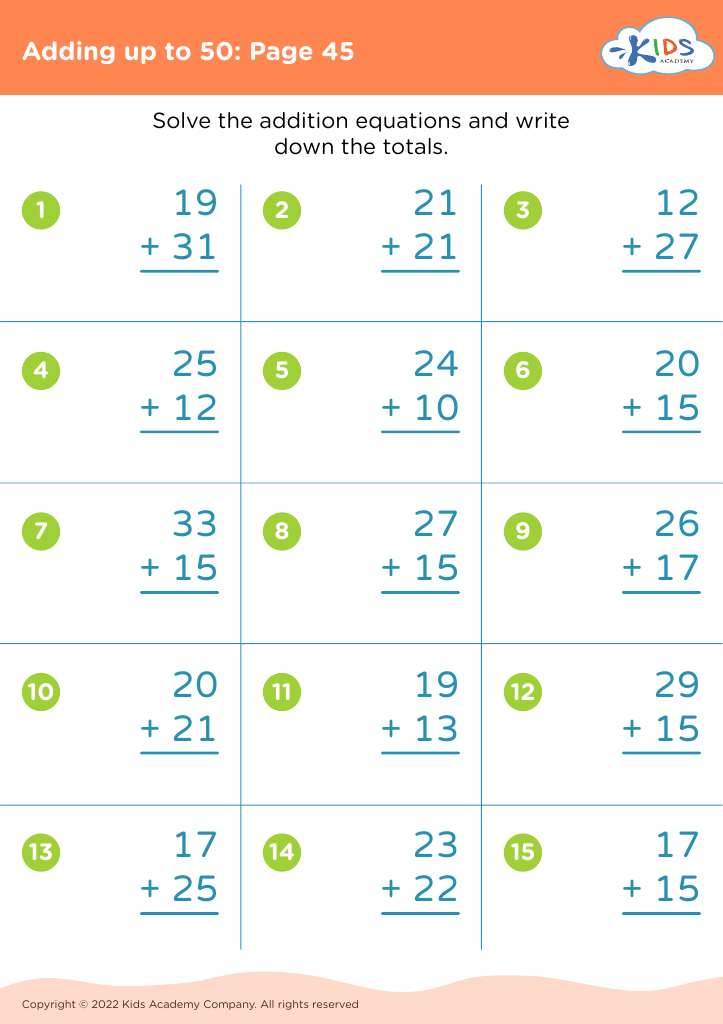
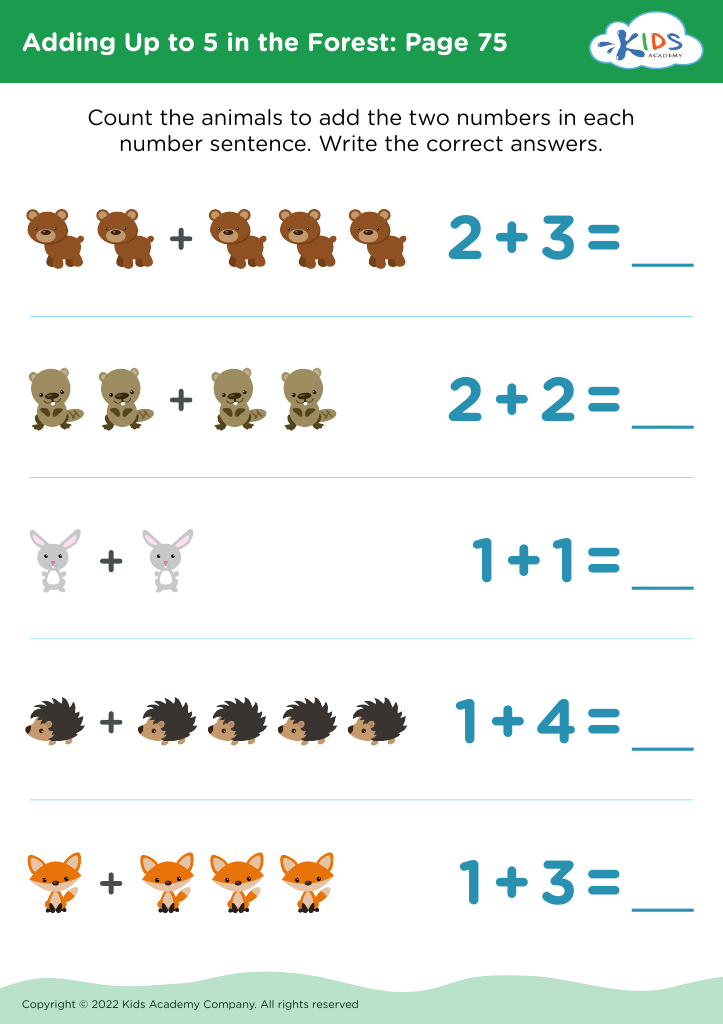
Discover our fun and engaging Basic Math Practice Addition Worksheets, designed specifically for children aged 5-7! Our printable resources help young learners build a solid foundation in addition through interactive exercises and colorful visuals. Each worksheet offers a variety of problems that cater to different skill levels, ensuring that every child can practice at their own pace. By enhancing their addition skills, kids will gain confidence in their math abilities, setting the stage for future success. Perfect for home learning or classroom use, these worksheets are a valuable tool for making math enjoyable and accessible for young students. Start practicing today!
Favorites
With answer key
Interactive
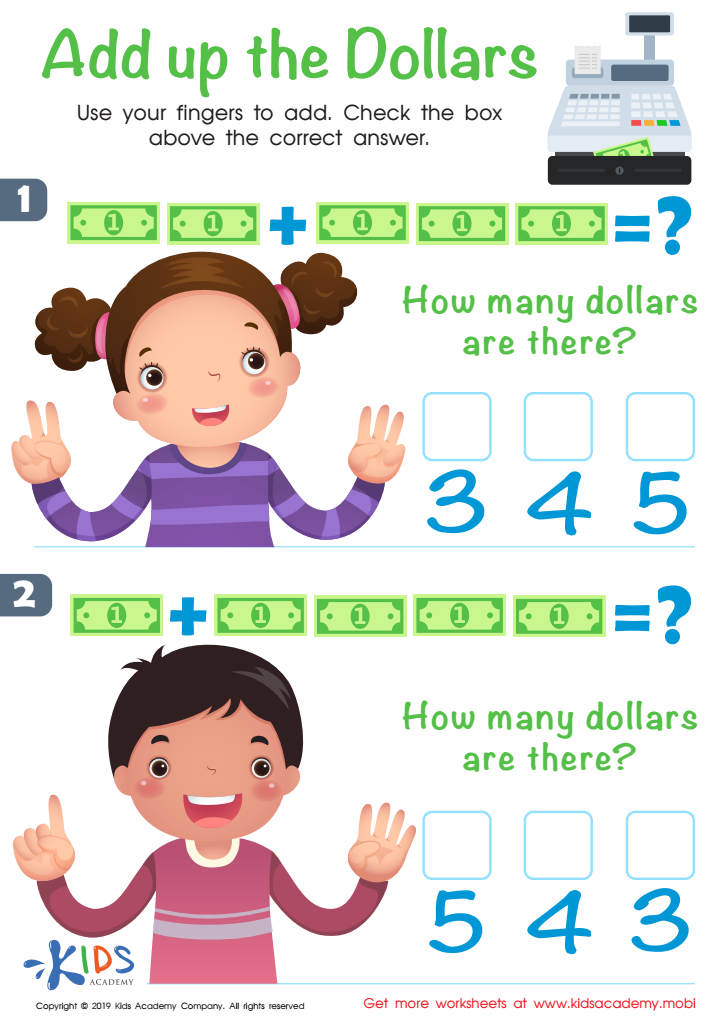
Add up the Dollars Worksheet
Money is key in life. It buys what we love and need. Get students to learn with exercises full of colour and familiar items like this worksheet. It shows two kids and some money. Ask pupils to use their fingers to add the money and check the box with the right answer.
 Assign to My Students
Add up the Dollars Worksheet
Worksheet
Join Kids Academy for Free
Who is primarily going to use this learning content?








Basic math practice, especially addition, is crucial for children aged 5-7 because this foundational skill sets the stage for future learning and cognitive development. During these early years, children's brains are rapidly developing, making it an optimal time to cultivate mathematical abilities. Mastering addition helps young learners develop problem-solving skills, logical reasoning, and critical thinking, which are essential in both academic settings and real-life situations.
Furthermore, early proficiency in addition builds confidence in children, encouraging a positive attitude toward math. This confidence fosters a lifelong appreciation for learning and if instilled early, can diminish math anxiety often seen in older students. Additionally, understanding basic addition enhances their ability to tackle more complex mathematical concepts, such as subtraction, multiplication, and fractions in later stages.
Moreover, incorporating basic addition practice into daily activities can enhance parent-child interaction and make learning enjoyable and engaging. Whether through interactive games, singing songs that involve counting, or using real-life scenarios for practice (like grocery shopping with their parents), these experiences can solidify kids’ understanding of numbers and quantities. In essence, focusing on basic addition during ages 5-7 nurtures essential skills that will influence a child's educational journey and overall intelligence.








