
Basic Mathematics Addition Worksheets for Ages 5-7
3 filtered results
Difficulty Level
Grade
Age
-
From - To
Subject
Activity
Standards
Explore our Basic Mathematics Addition Worksheets designed specifically for children aged 5-7. These engaging and colorful worksheets help young learners develop essential addition skills through fun, interactive exercises. With a variety of formats—including number lines, visual aids, and simple word problems—kids will gain confidence in their abilities while enhancing their arithmetic knowledge. Perfect for at-home practice or classroom use, our worksheets cater to various learning styles and ensure a well-rounded understanding of addition fundamentals. Empower your little mathematicians to start their journey towards mastering numbers and enjoy the adventure of learning through play! Access our resources today and spark their curiosity!
Favorites
With answer key
Interactive
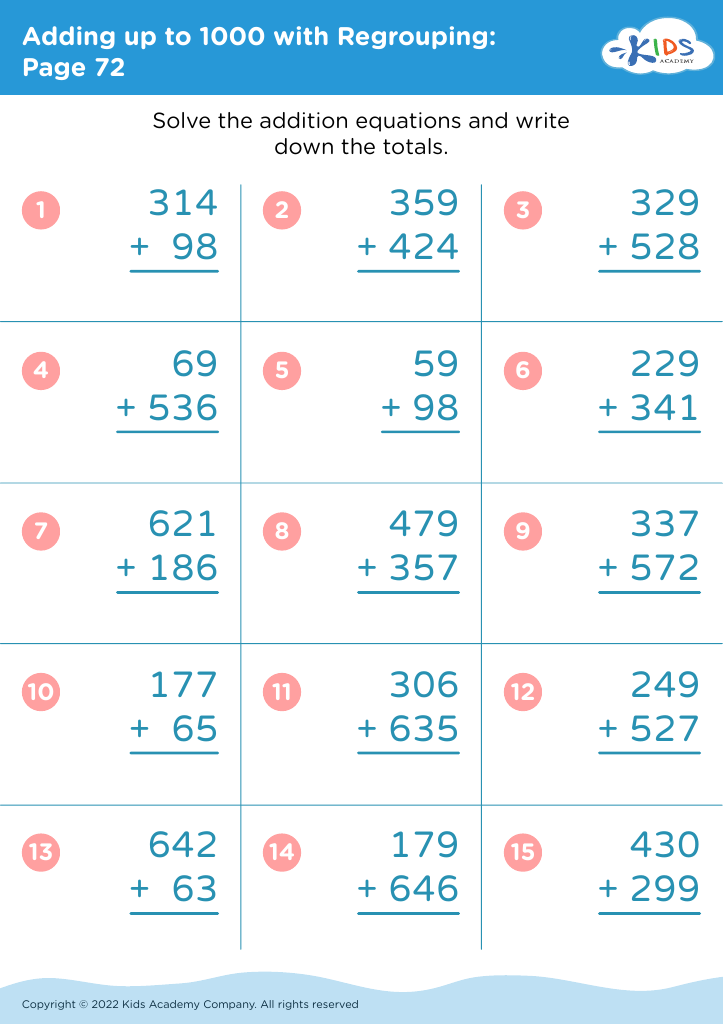
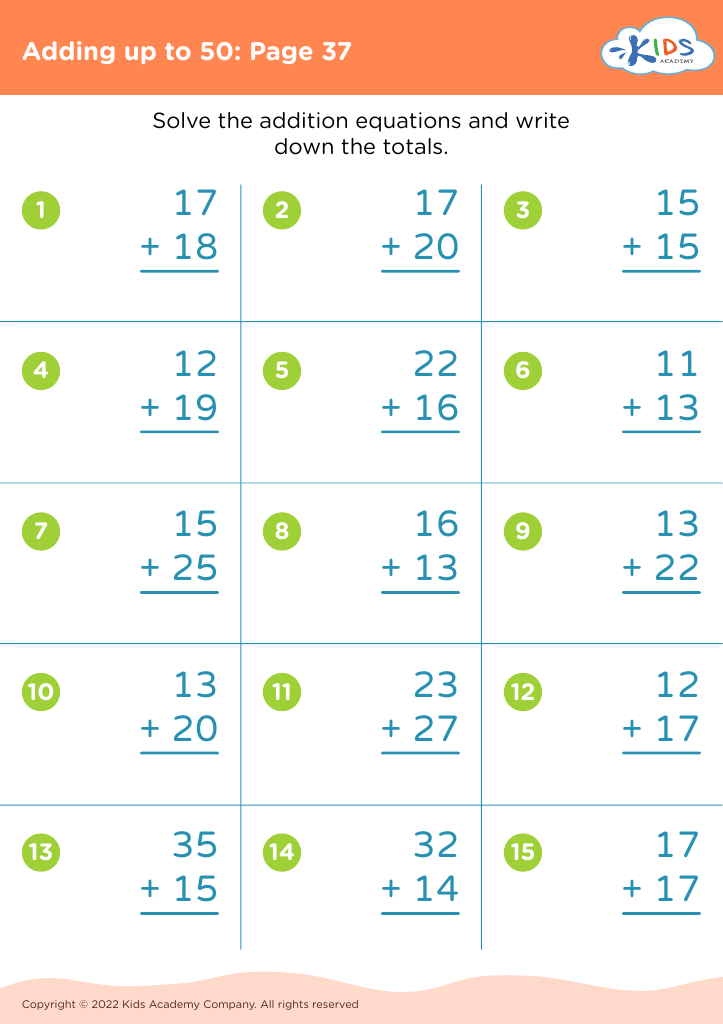
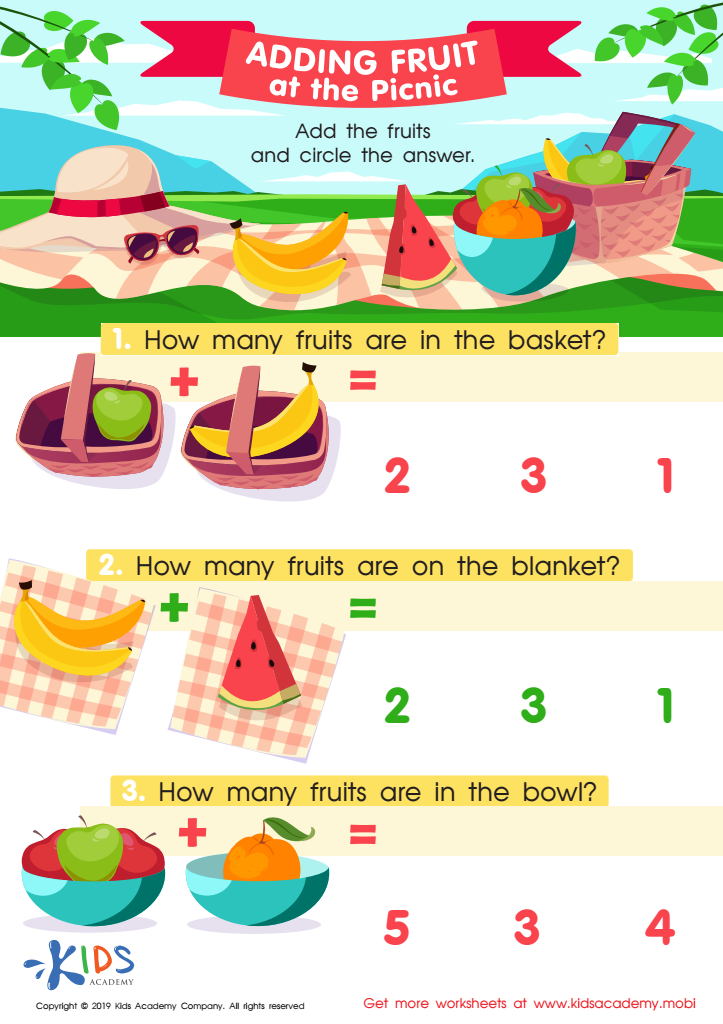
Adding Fruit at the Picnic Worksheet
Picnics are a great way for the family to enjoy a fun day in the sun! Get your kids involved by having them help load the picnic basket and do this worksheet to practice their math skills while they get ready. Identify the fruits in the picture, add them up, and circle the correct answer.
 Assign to My Students
Adding Fruit at the Picnic Worksheet
Worksheet
Join Kids Academy for Free
Who is primarily going to use this learning content?








Basic mathematics addition is a fundamental skill that lays the groundwork for a child's future academic success and everyday problem-solving. For children aged 5-7, this foundational concept not only develops cognitive abilities but also boosts their confidence. Learning to add enhances critical thinking, allowing kids to understand and manipulate numbers, which helps underlie more complex mathematical concepts they will encounter later.
Additionally, mastering addition fosters a sense of achievement; as children successfully solve simple problems, they build resilience and a positive attitude toward learning. Engaging with addition through games, visual aids, and real-life scenarios transforms a potentially mundane task into an enjoyable activity, ensuring greater retention and comprehension.
Moreover, neurodevelopment research suggests that early math skills are closely linked to overall literacy and problem-solving abilities. Parents and teachers who prioritize basic addition are essentially investing in their child’s comprehensive development. Ultimately, these skills not only prepare children for advanced math but also cultivate a strong educational foundation, enabling them to tackle other subjects with ease and curiosity. Encouraging a love for math at an early age can pave the way for lifelong learning and a positive attitude towards challenges in many areas of life.








