Color matching Addition Worksheets for Ages 5-7
3 filtered results
-
From - To
Introducing our Color Matching Addition Worksheets designed for children aged 5-7! These engaging worksheets help young learners practice basic addition while honing their color recognition and matching skills. Each worksheet features vibrant, color-centric activities that make learning fun and interactive. Perfect for preschool and early elementary students, our worksheets aim to build foundational math skills in a playful and effective way. Available for effortless download, they are ideal for both at-home practice and classroom use. Foster a love for math in your child today with our playful and educational color matching addition worksheets.
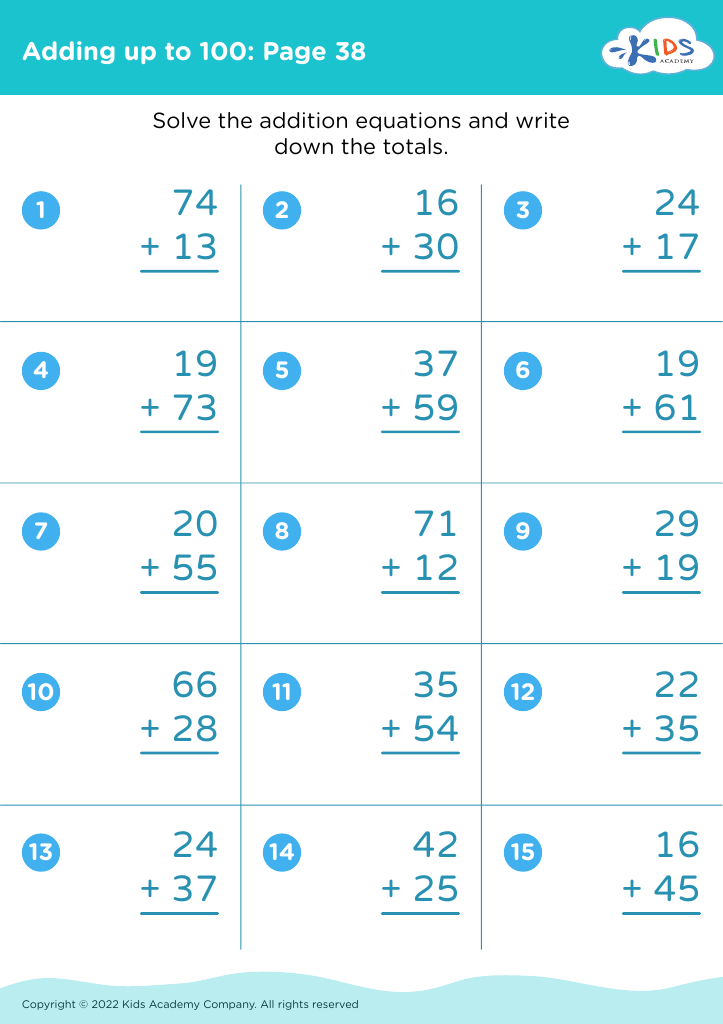
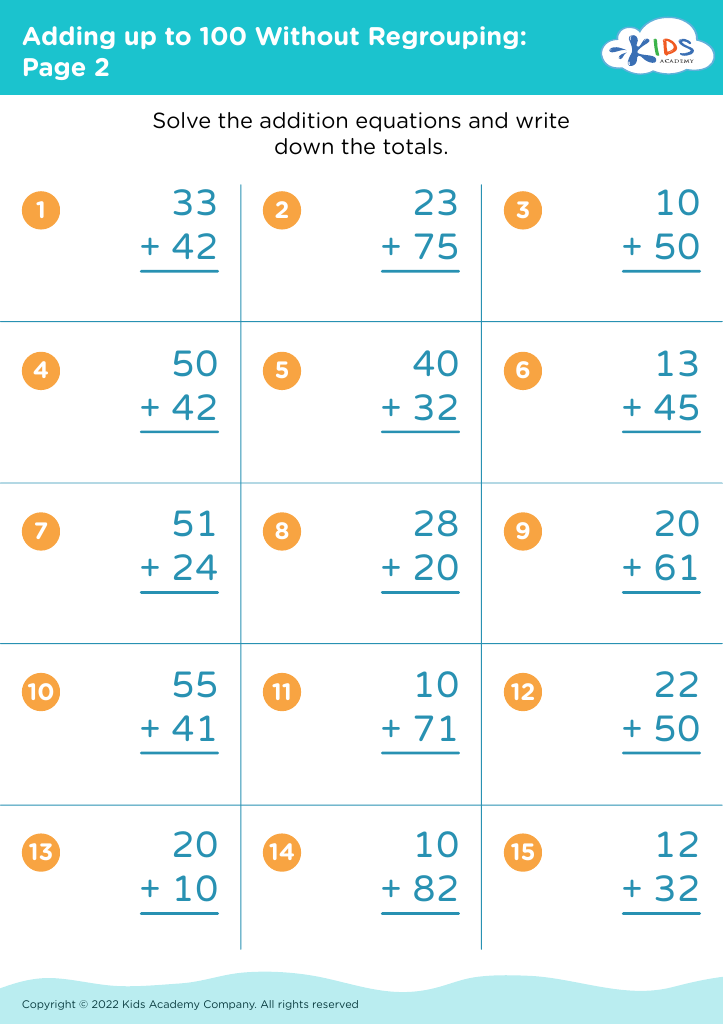
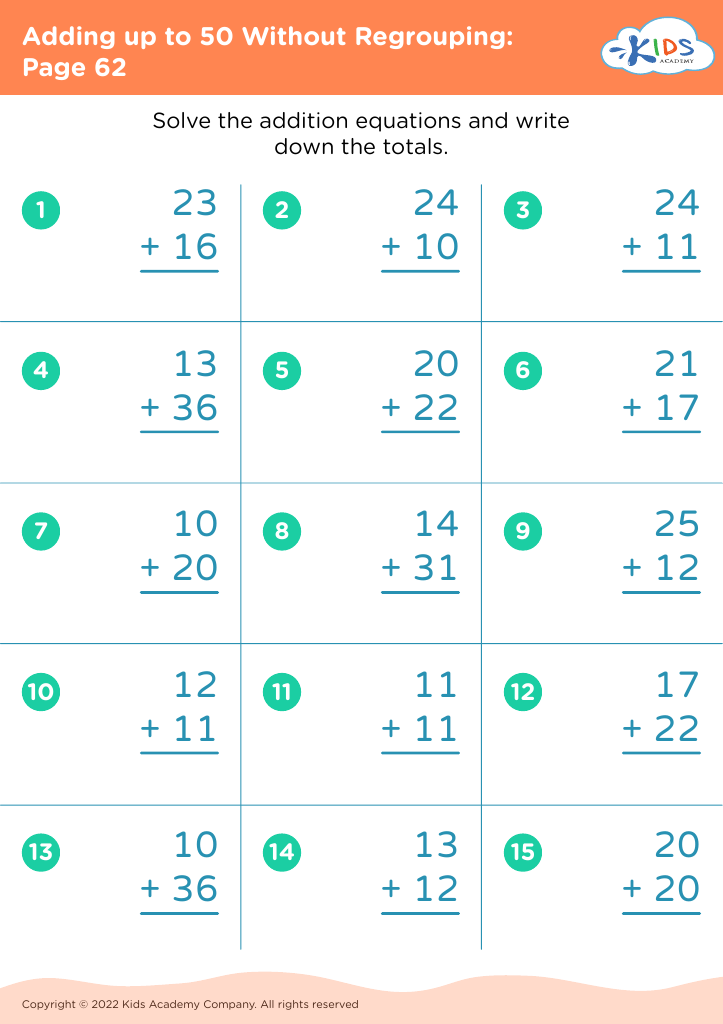








Color matching addition is a beneficial activity for children aged 5 to 7 because it combines visual learning with fundamental math skills in a fun and engaging way. For young learners, straightforward addition might be dull or challenging, but when integrated with colors, it becomes more interactive and enjoyable.
First, children at this age learn best through play and hands-on activities. Color matching addition keeps their attention and makes learning feel like a game. As a result, they are more likely to remain engaged and retain the information.
Second, it aids in cognitive development. When children match colors and numbers, they employ observation, recognition, and problem-solving skills. It enhances their ability to notice similarities and differences, a foundational skill for various subjects in the future.
Moreover, visual aids like colored objects help to develop memory and recall. Associating numbers with colors can make remembering addition facts easier. It taps into different areas of the brain, thereby improving overall understanding and retention.
Lastly, integrating colors can help children with different learning styles. Visual learners benefit by associating concepts with colors, while tactile learners gain from physical counting and coloring activities. Therefore, color matching addition is an inclusive, comprehensive method that supports varied learning needs.
In summary, incorporating colors into addition not only makes math interesting but also holistically supports a child's cognitive and educational development.








