Comparing numbers Addition Worksheets for Ages 5-7
4 filtered results
-
From - To
Discover fun and engaging "Comparing Numbers Addition Worksheets" for ages 5-7 at Kids Academy! Designed to boost early math skills, these printables help young learners grasp the concepts of comparing numbers while practicing addition. Through a mix of colorful visuals and simple exercises, children will learn to identify greater and smaller numbers, develop critical thinking, and improve their number sense. Perfect for both classroom and at-home learning, these worksheets provide a solid foundation in math, encouraging confidence and a love for numbers in early learners.
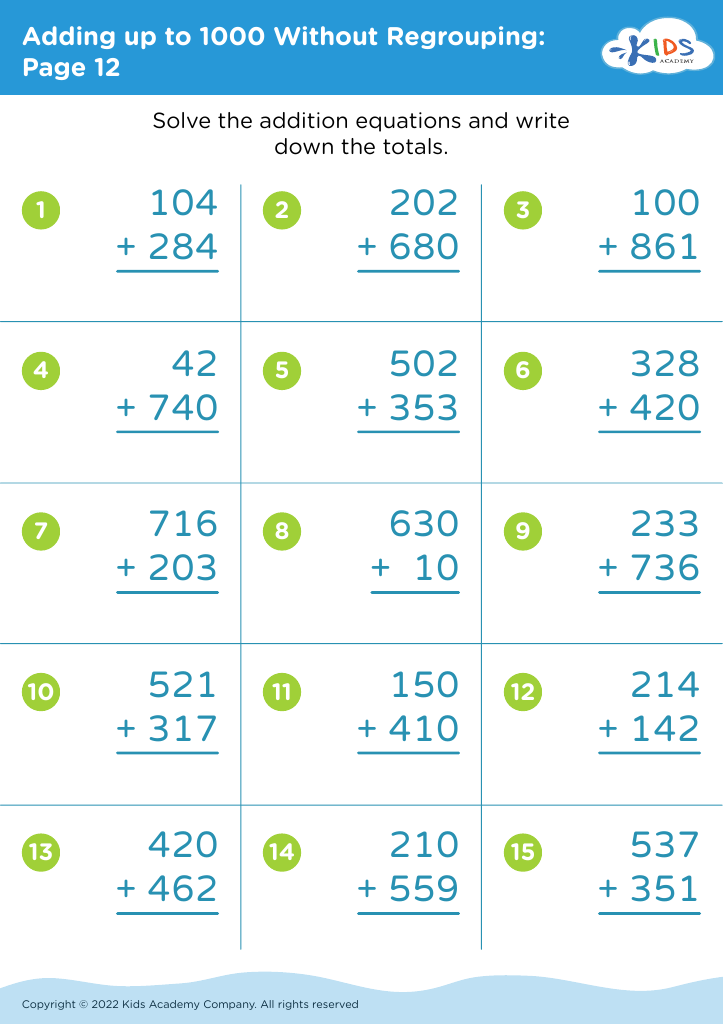
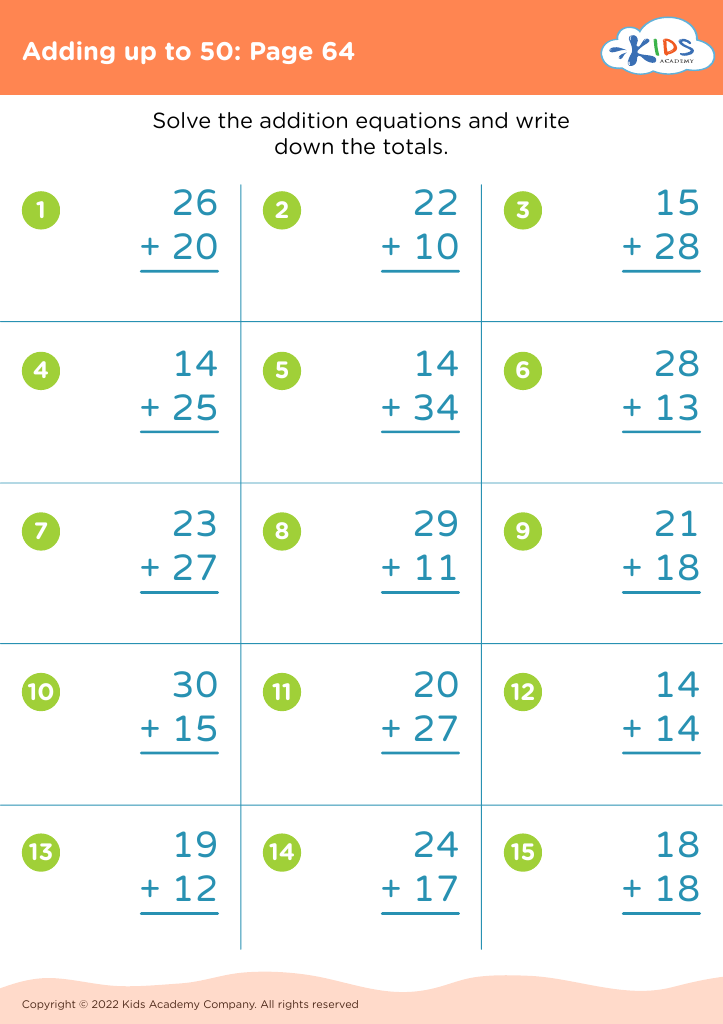
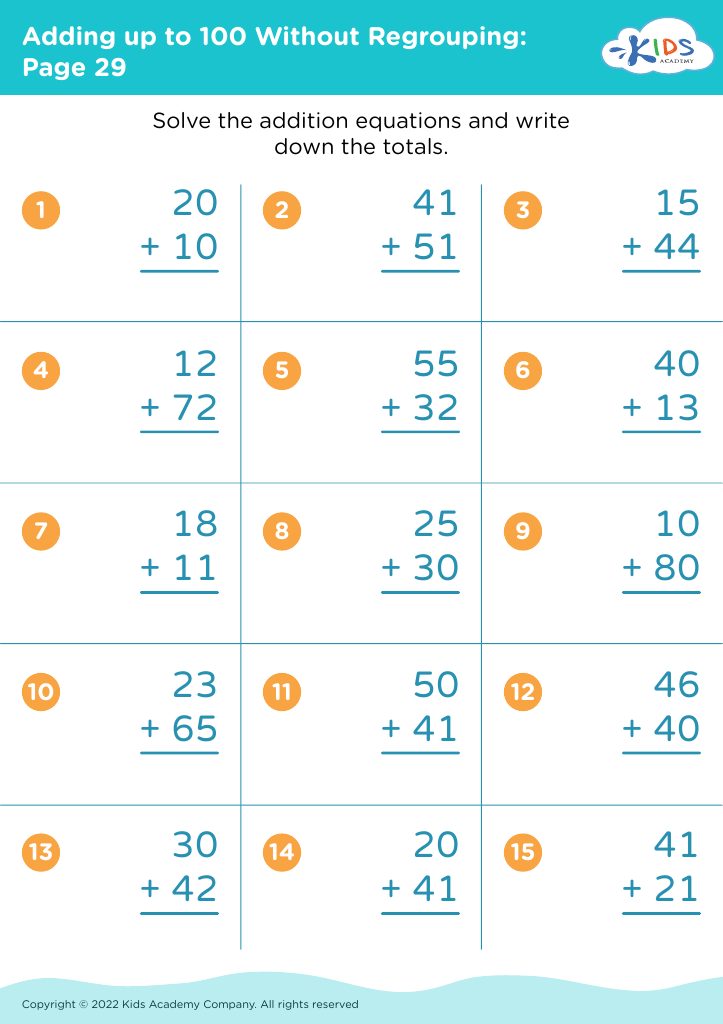
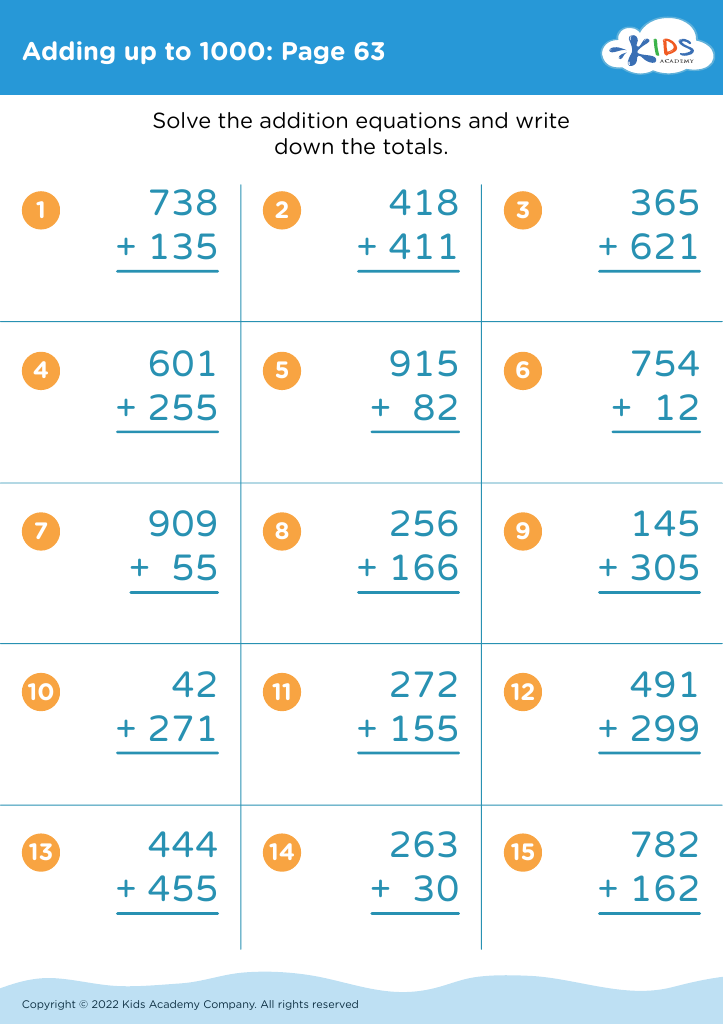








Parents and teachers should prioritize comparing numbers and learning addition for children ages 5-7 because these skills form the foundation of mathematical understanding and number sense. During these early years, children's brains are exceptionally receptive to grasping basic numerical concepts. Comparing numbers allows children to understand relations between different quantities, which is an essential skill for problem-solving and logical thinking.
Mastering addition is equally crucial as it introduces children to the basics of arithmetic, enabling them to perform more complex mathematical operations in later years. Addition teaches children about combining groups and understanding the concept of 'plus' and 'equals,' which are fundamental ideas in everyday math and many other academic subjects.
Early proficiency in these areas boosts children's confidence, encourages a positive attitude towards math, and sets a strong groundwork for future learning. It also helps in daily activities, such as understanding money, time, and measurement. Engaging with these basic math skills through interactive and enjoyable activities promotes a love for learning, allowing children not only to excel academically but also to apply logical reasoning in their daily lives.








