Enhancing creativity Addition Worksheets for Ages 5-7
4 filtered results
-
From - To
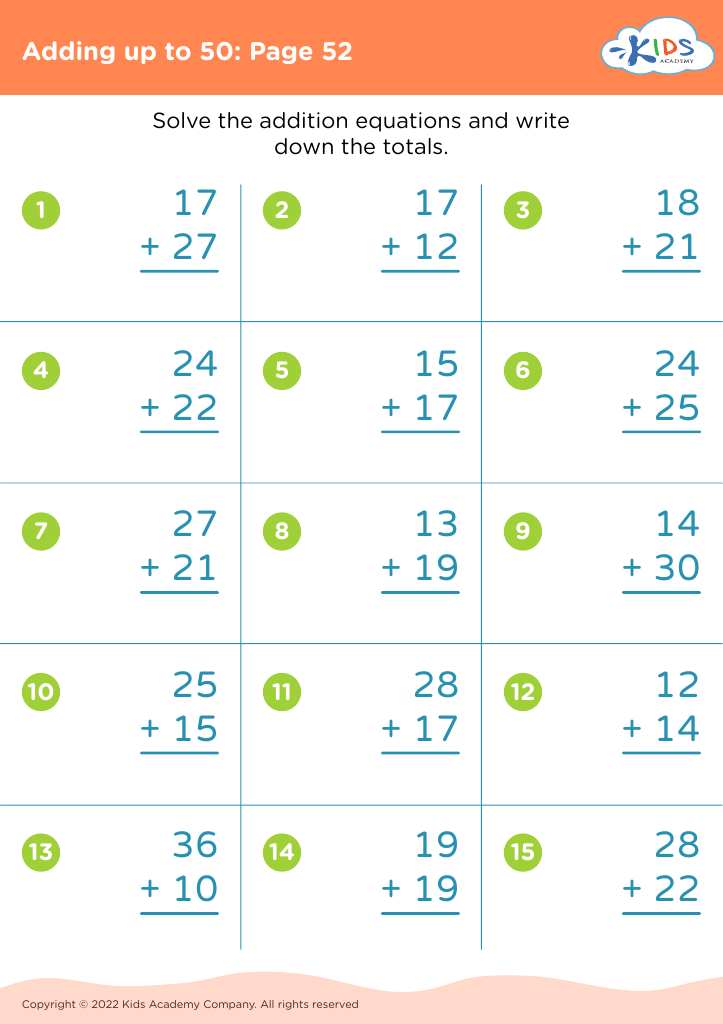
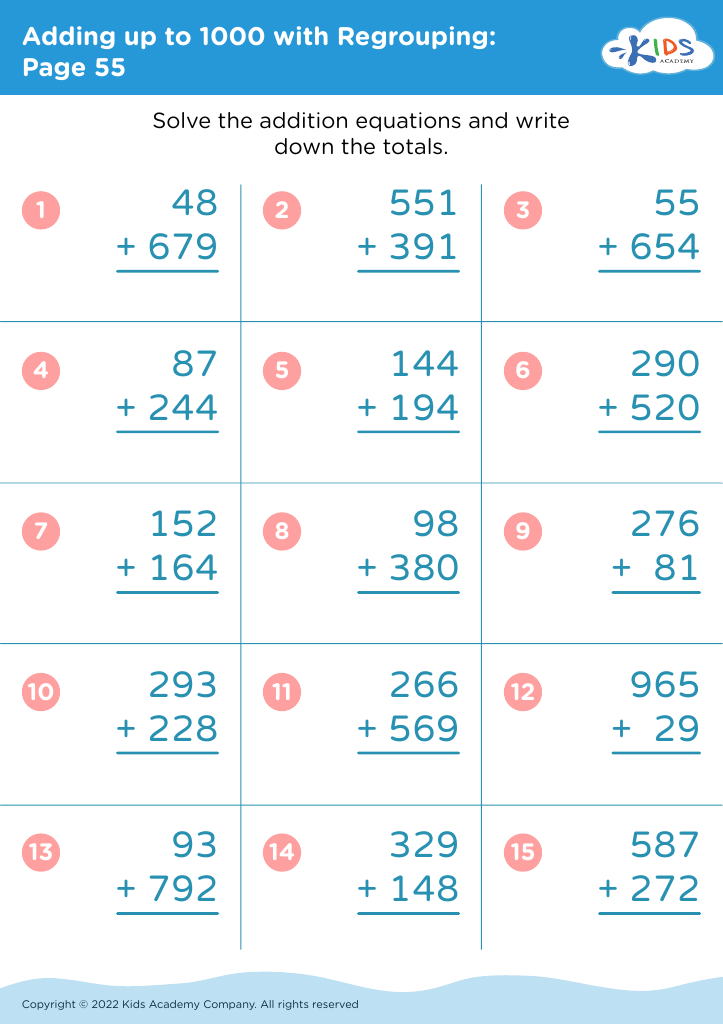
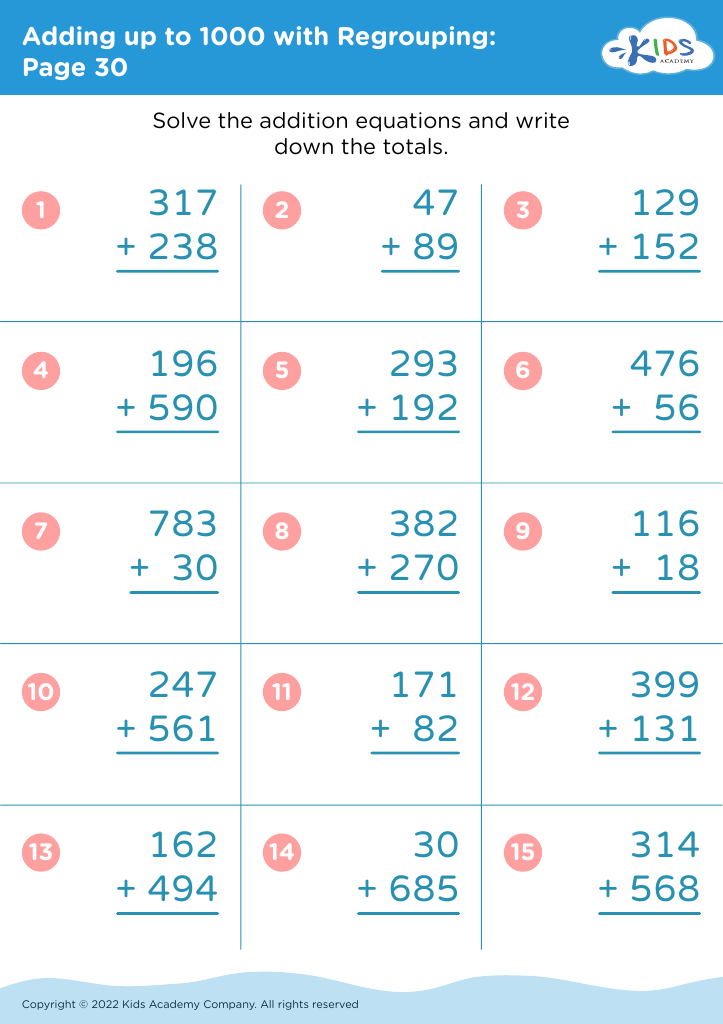
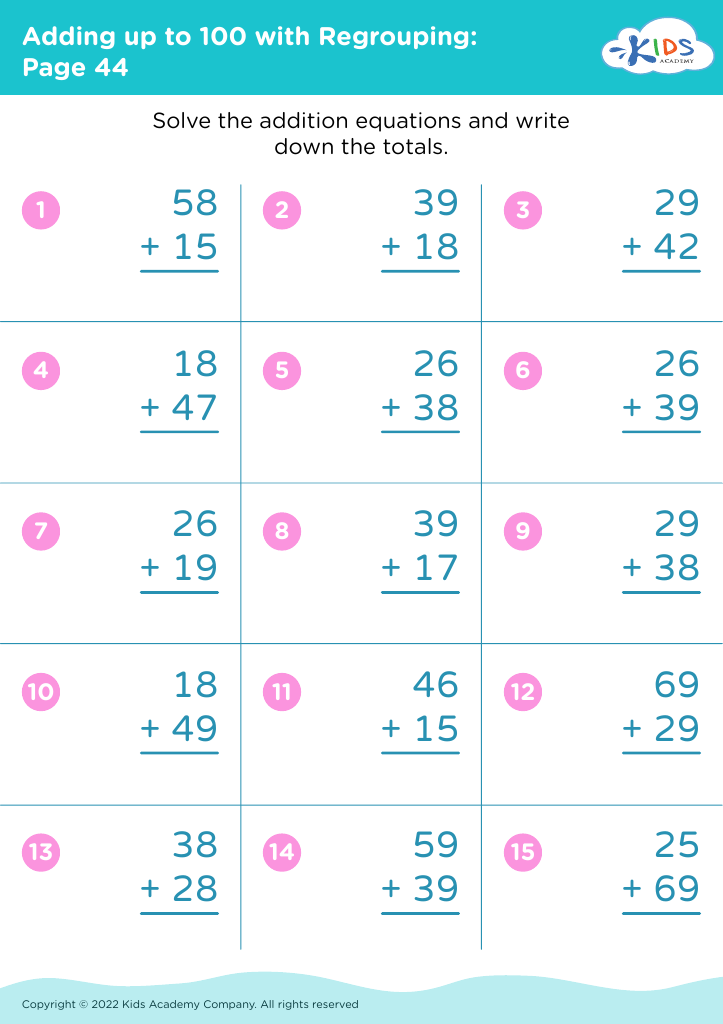
Our "Enhancing Creativity Addition Worksheets for Ages 5-7" are designed to make learning addition engaging and fun for young minds. These worksheets combine basic math skills with creative exercises to stimulate your child's imagination. Each worksheet features colorful illustrations and interactive activities that encourage children to solve addition problems while drawing, coloring, and storytelling. This unique approach not only strengthens their arithmetic skills but also fosters creative thinking. Perfect for at-home practice or classroom use, these worksheets help instill a love for learning in a captivating way. Ideal for parents and teachers aiming to enhance both creativity and math proficiency.






.jpg)

Enhancing creativity in young children, particularly through exercises like creative addition, is essential for their holistic development. At ages 5-7, children’s brains are incredibly malleable, making it a crucial period for cognitive growth and skill acquisition. Encouraging creativity in activities such as addition not only strengthens their mathematical skills but also enhances problem-solving abilities and critical thinking.
Creative addition goes beyond traditional rote learning by incorporating games, storytelling, and interactive activities. For example, using visual aids or manipulatives like colorful blocks or beads can help children visualize and understand mathematical concepts better. This hands-on approach makes learning fun and engaging, promoting a positive attitude toward mathematics from an early age.
Moreover, creativity in learning fosters innovation and adaptability. Children who are encouraged to think outside the box can better navigate challenges and develop resilience. This attribute is invaluable in both academic settings and real-life situations.
Lastly, promoting creativity boosts confidence and self-expression. As children explore various methods to solve problems, they feel a sense of accomplishment that builds their self-esteem. In collaborative settings, these activities also improve social skills and teamwork.
In essence, enhancing creativity through addition for young children lays a solid foundation for their academic journey and equips them with essential life skills.








