
Fine motor skills development Addition Worksheets for Ages 5-7
3 filtered results
Difficulty Level
Grade
Age
-
From - To
Subject
Activity
Standards
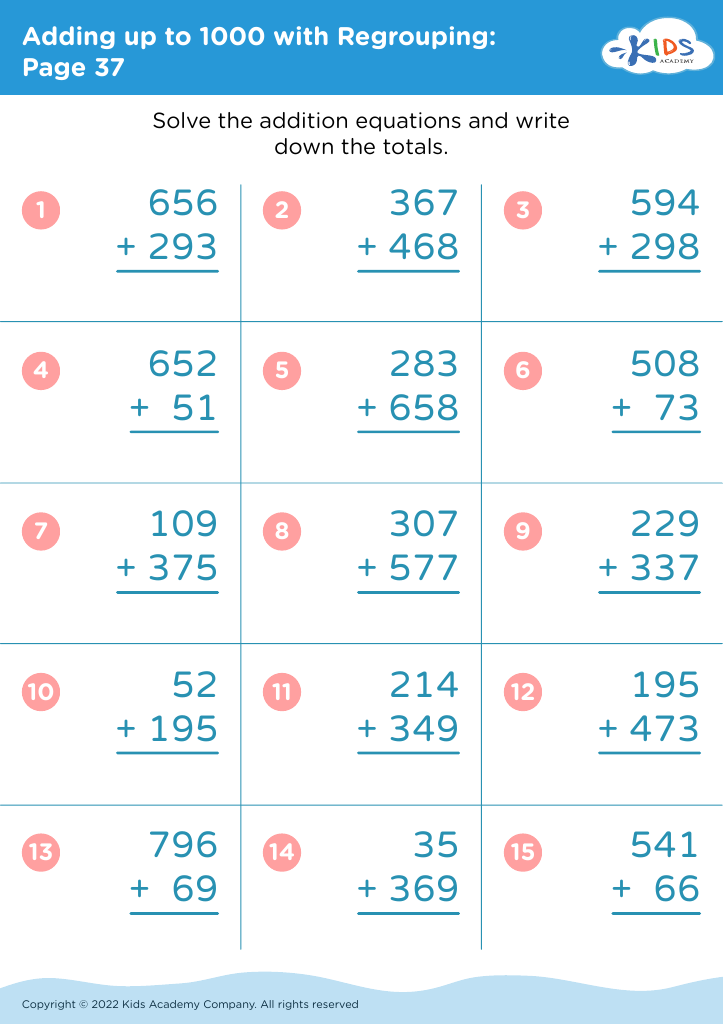
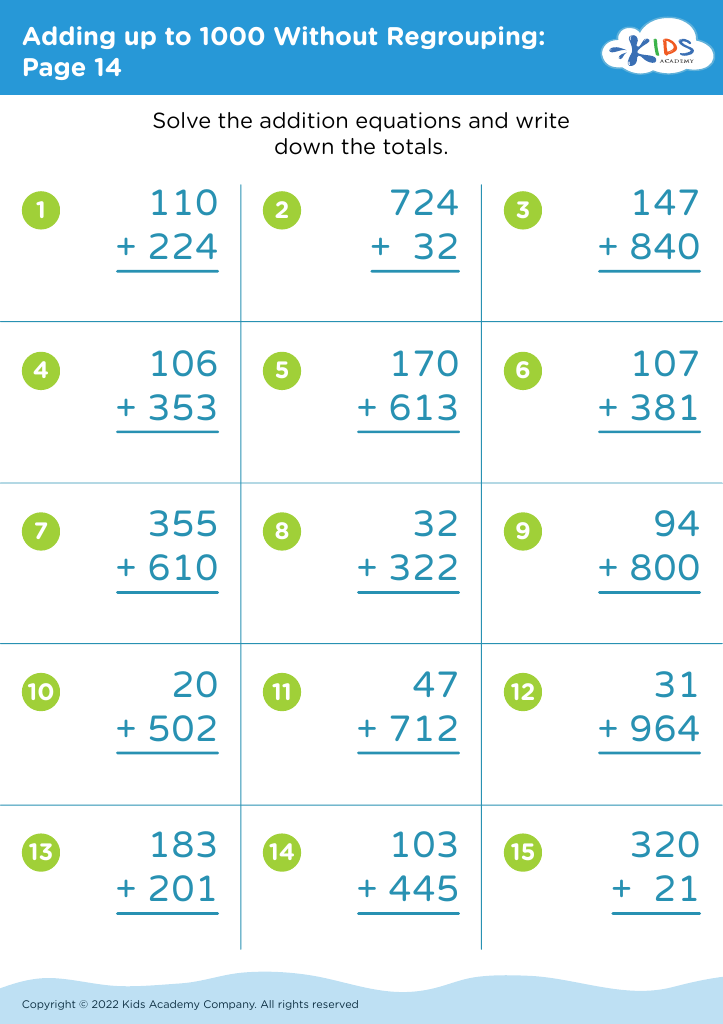
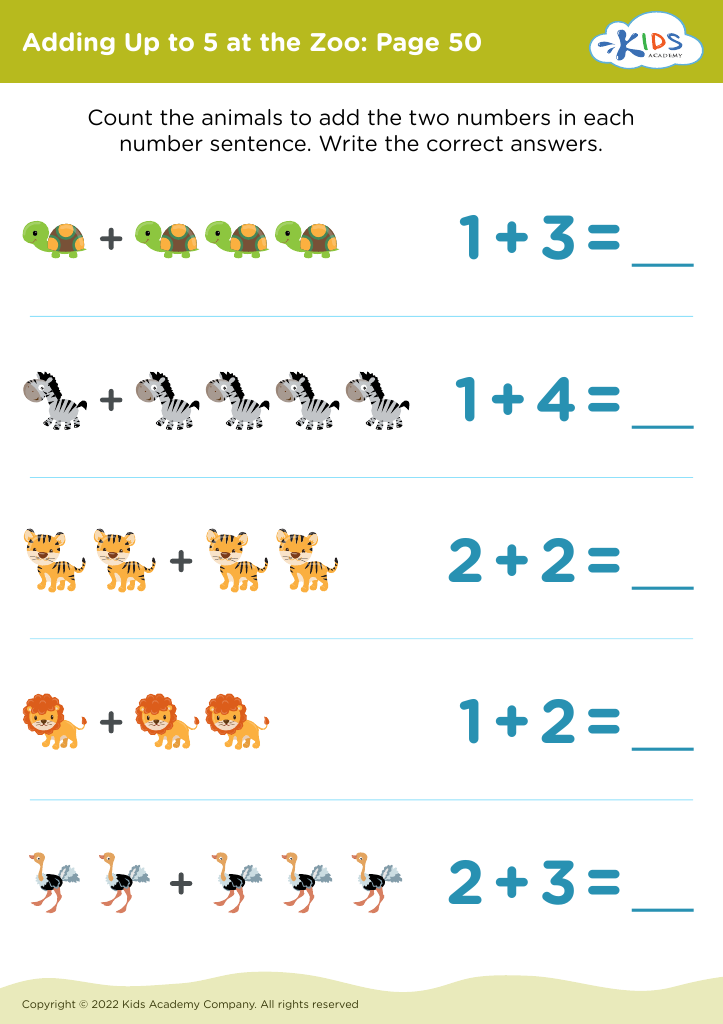
Our Fine Motor Skills Development Addition Worksheets for Ages 5-7 are designed to enhance your child's math abilities while promoting crucial fine motor skills. Combining engaging addition problems with activities like tracing and coloring, these worksheets make learning fun and interactive. Perfect for young learners, they help strengthen hand-eye coordination, pencil grip, and finger dexterity—all essential for handwriting and everyday tasks. Crafted by educational experts, our printable worksheets align with school standards and provide a solid foundation for future learning. Encourage your child's development and confidence with our expertly designed addition worksheets today!
Favorites
With answer key
Interactive
Join Kids Academy for Free
Who is primarily going to use this learning content?








Fine motor skills involve the use of small muscles in the hands and fingers, crucial for tasks such as writing, cutting, and buttoning. For children aged 5-7, development in this area is pivotal, as it lays the foundation for academic achievement and everyday activities.
Firstly, fine motor skills directly influence handwriting quality. Good penmanship is essential for clear communication and can bolster a child's confidence and enjoyment of learning. When children have advanced fine motor skills, they find it easier to navigate classroom tasks, which enhances overall learning.
Secondly, strengthening these skills also supports independence in daily activities. Children mastering buttoning, zipping, and tying shoelaces feel more self-sufficient, which contributes positively to their self-esteem.
Moreover, engaging in fine motor skill-building activities often requires focus and patience, fostering these important cognitive skills. This foundational body control connects with broader coordination and physical activity, promoting overall health and well-being.
Therefore, parents and teachers should prioritize the development of fine motor skills in children aged 5-7. By incorporating activities like clay modeling, drawing, and beading into daily routines, parents and teachers can nurture these essential skills. This attentiveness helps ensure children are not only ready for academic challenges but also equipped for a variety of life skills down the road.








