Fine motor skills (writing) Addition Worksheets for Ages 5-7 - Page 2
38 filtered results
-
From - To
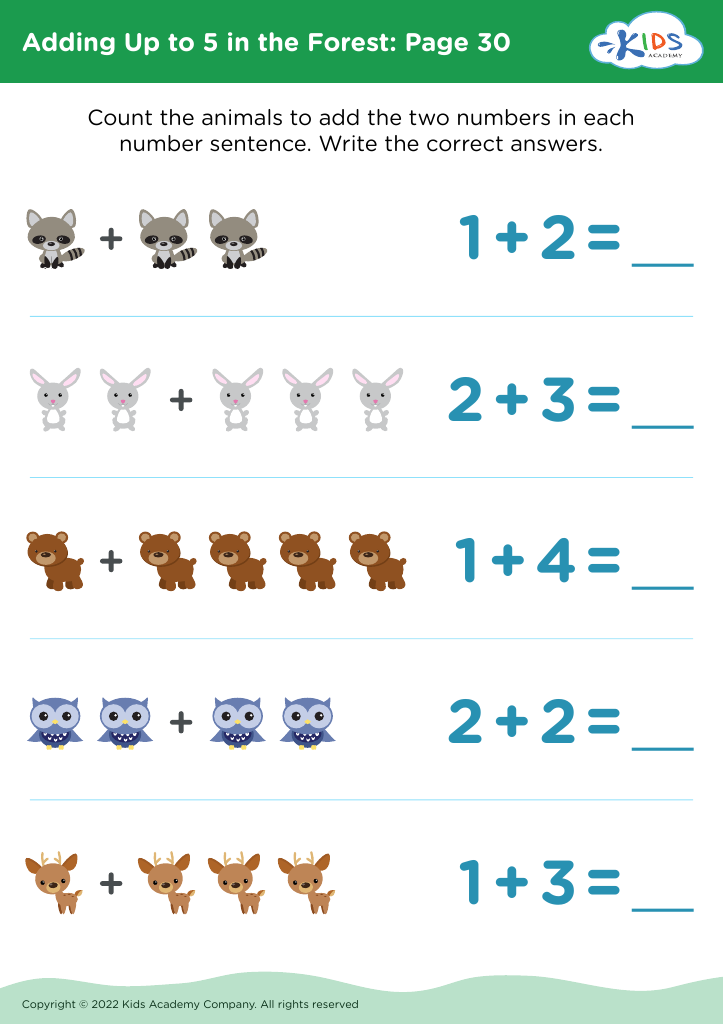
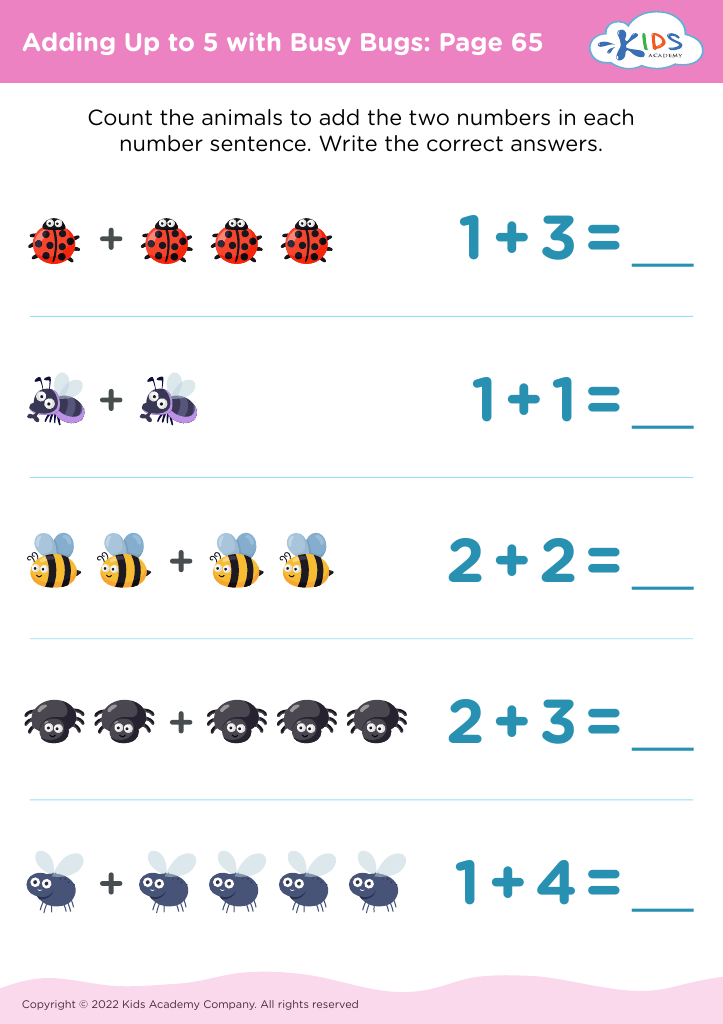








Fine motor skills play a crucial role in a child's overall development, particularly during the ages of 5 to 7 when they are learning to write. These skills involve the coordination of small muscles in the fingers and hands, which are essential for writing, drawing, and other activities that require precision.
Parents and teachers should care about fine motor skills because they form the foundation for academic success. As children develop these skills, they gain confidence in their writing abilities, which can positively affect their overall learning experience. Strong fine motor skills contribute to better handwriting, enabling children to express their thoughts clearly and efficiently on paper, promoting effective communication.
Moreover, tasks requiring fine motor skills enhance cognitive development, as children engage in processes that require focus, patience, and perseverance. Activities like coloring, cutting, and pasting not only improve hand-eye coordination but also encourage creativity, allowing children to think critically as they create visual representations of their ideas.
Lastly, children with well-developed fine motor skills often have better academic performance, increasing their chances of success both in and out of the classroom. For these reasons, parents and teachers should prioritize activities that foster fine motor development during this critical stage of a child's growth.








