Hand-eye Coordination Addition Worksheets for Ages 5-7 - Page 2
25 filtered results
-
From - To
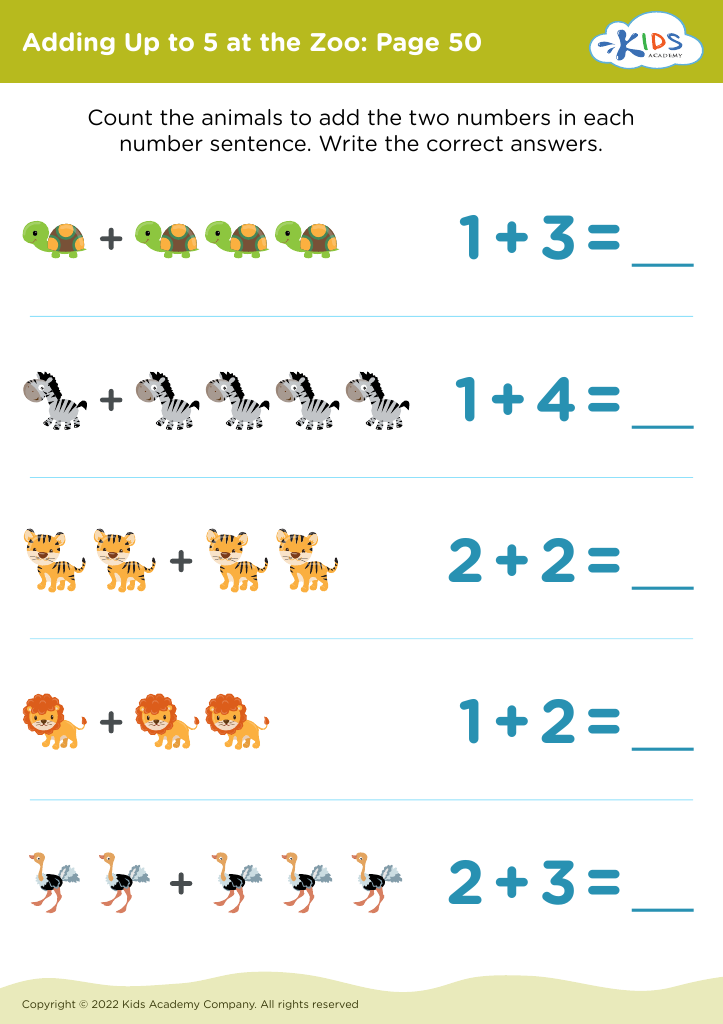








Hand-eye coordination is a crucial skill for children aged 5-7 as it lays the foundation for various academic and everyday activities. During this developmental stage, enhancing hand-eye coordination through engaging activities, like games and exercises, promotes not only physical abilities but also cognitive development. Improved hand-eye coordination facilitates better control over their movements, which is essential for skills such as writing, drawing, and manipulating objects.
Furthermore, encouraging activities that strengthen hand-eye coordination can nurture a child’s confidence, as they develop abilities that are fundamental to their independence and problem-solving skills. Fine motor skills gained from these exercises support learning processes in subjects like math and science, where precision and the ability to follow directions are key.
Additionally, teachers and parents should recognize that the benefits of enhancing hand-eye coordination extend beyond academic performance. These activities can foster social skills and teamwork through group games, and they can be enjoyable, making learning a fun experience. By prioritizing hand-eye coordination development, parents and teachers enable children to thrive, fostering a well-rounded skill set that will serve them throughout their educational journey and into adulthood. Investing time and resources in these areas is essential for a child’s successful growth and learning.








