
Improving concentration Addition Worksheets for Ages 5-7
15 filtered results
Difficulty Level
Grade
Age
-
From - To
Subject
Activity
Standards
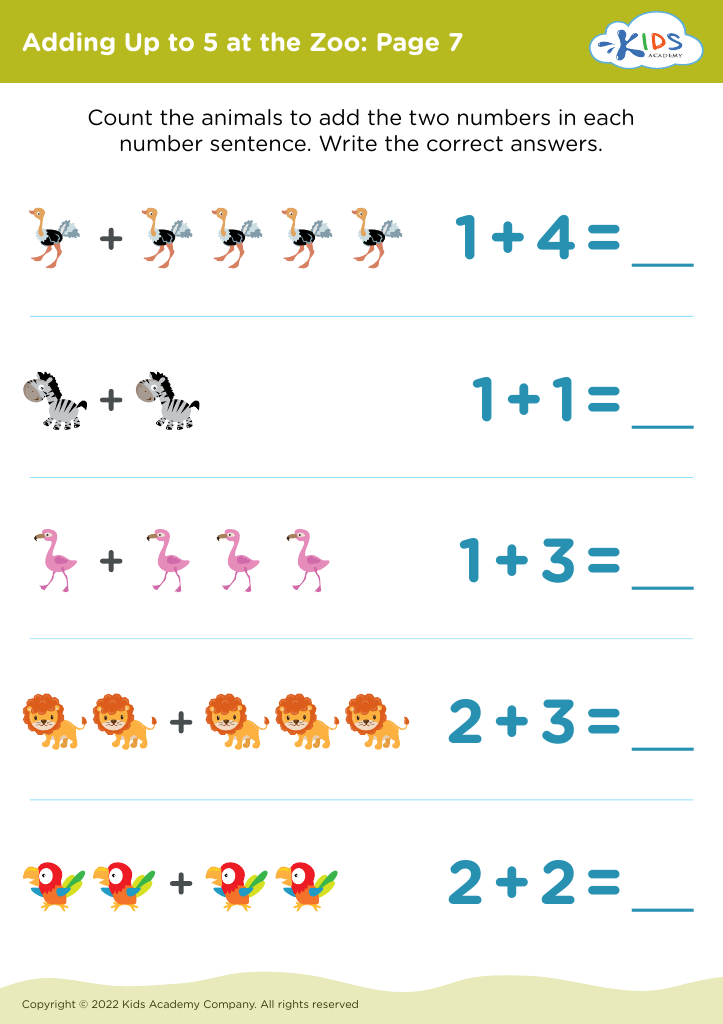
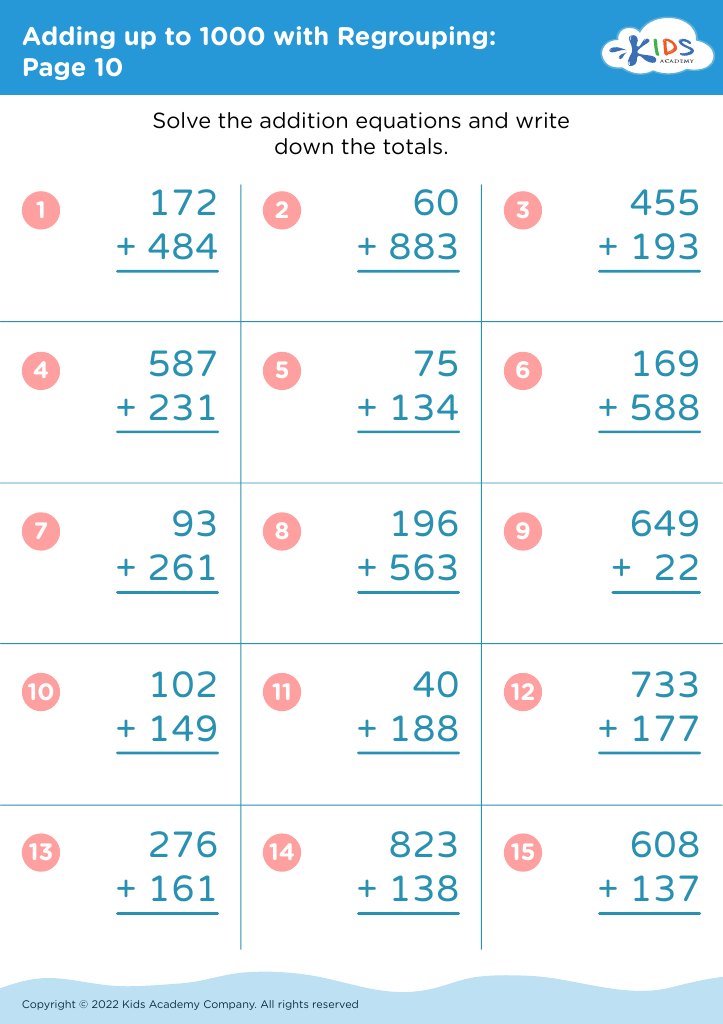
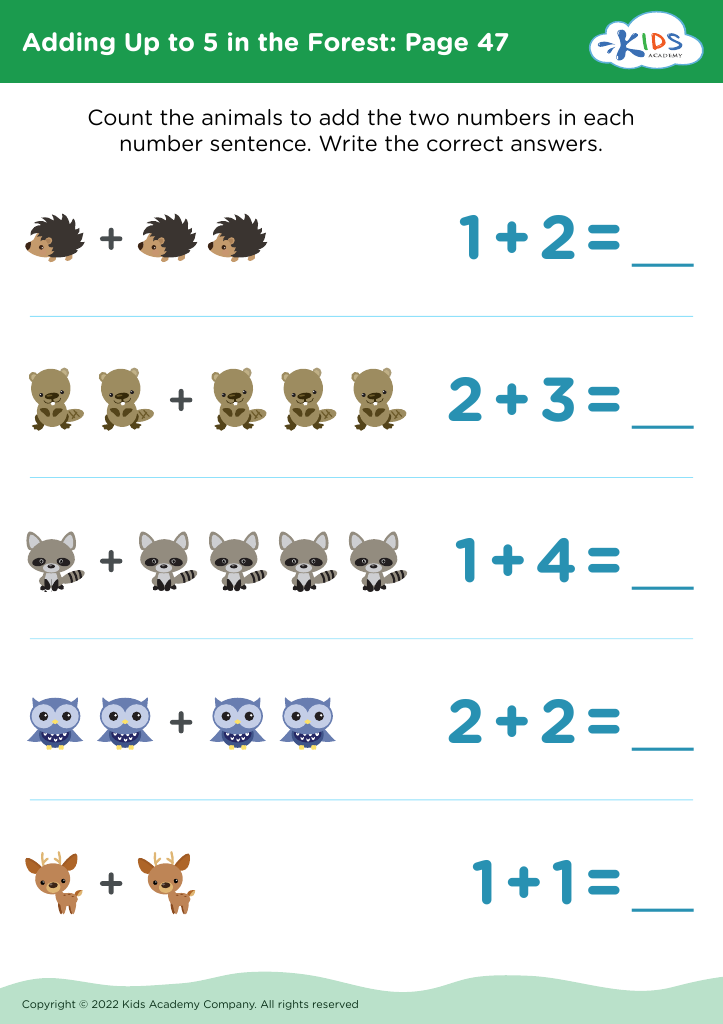
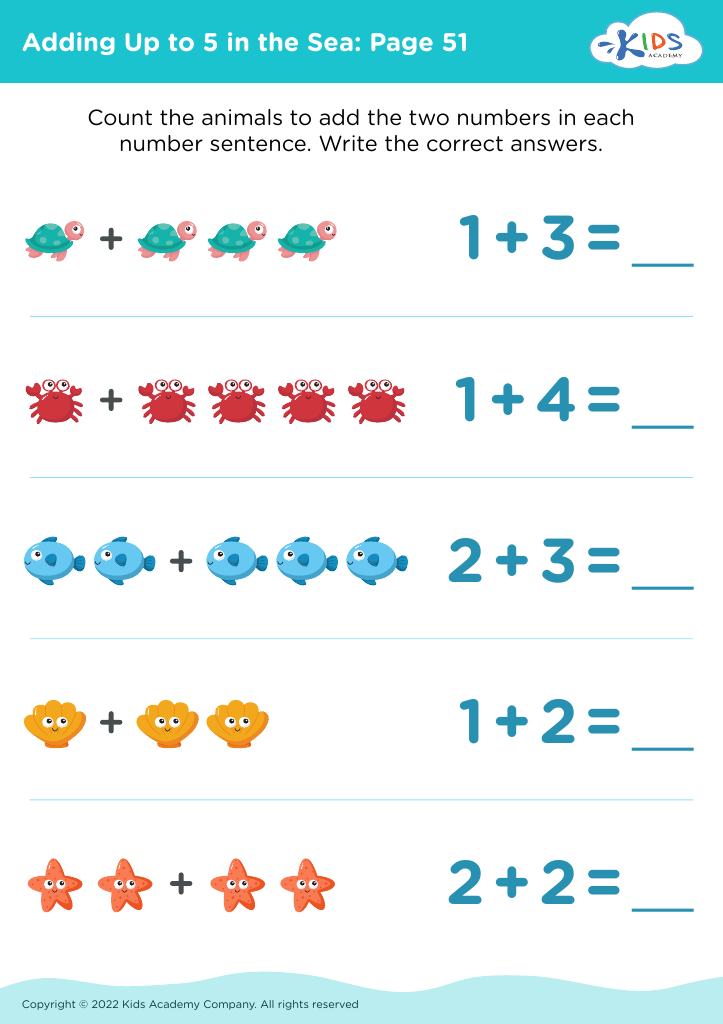
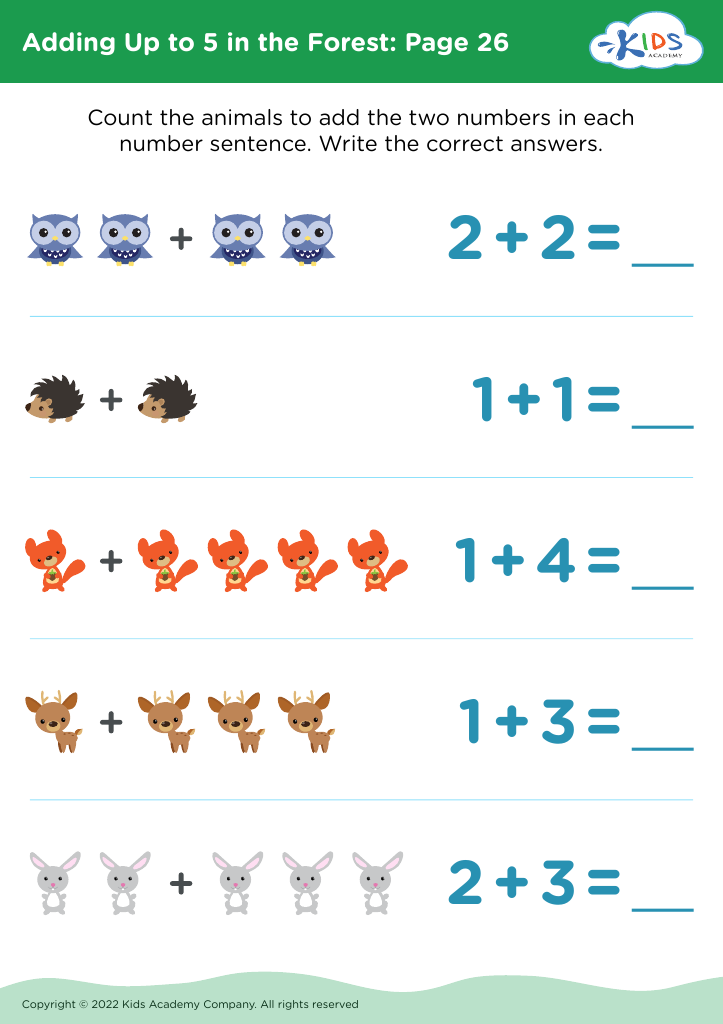
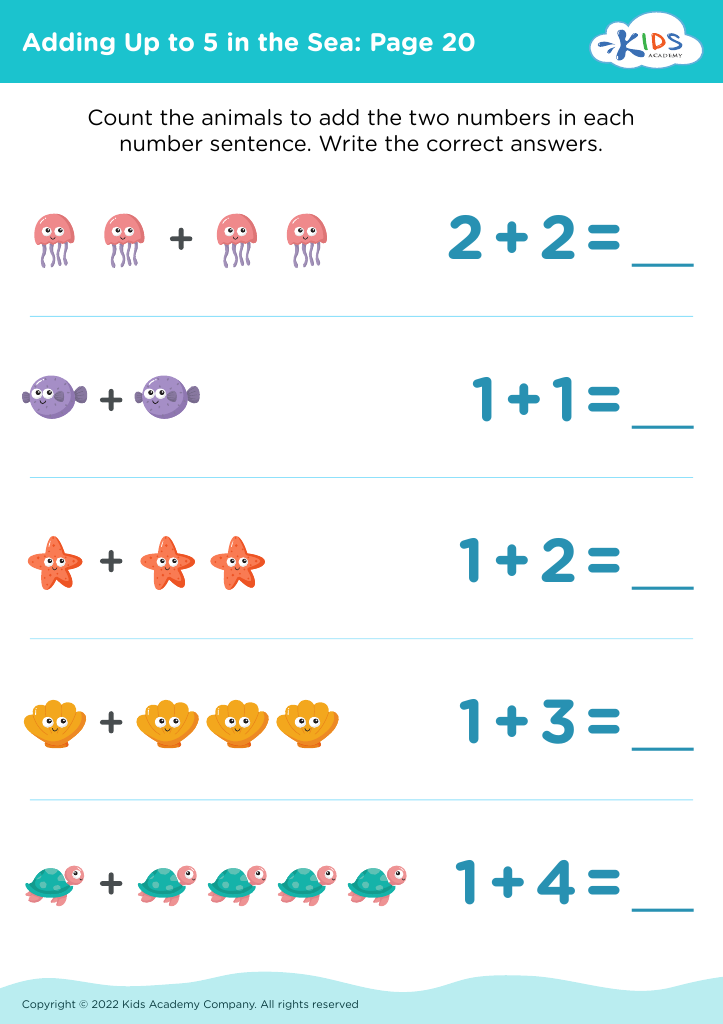
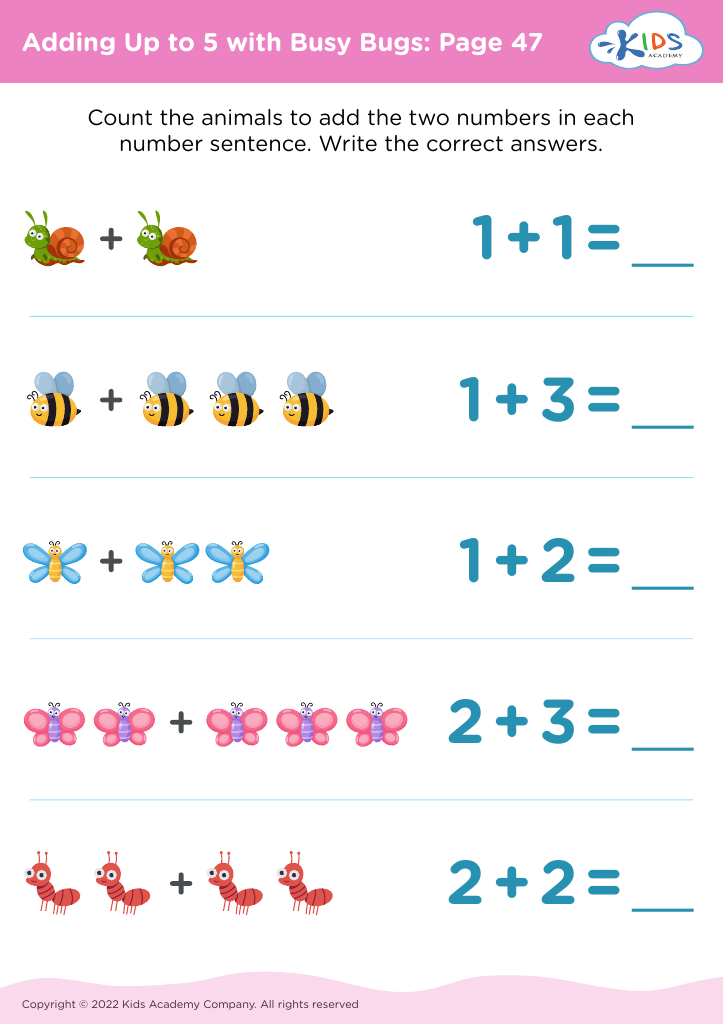
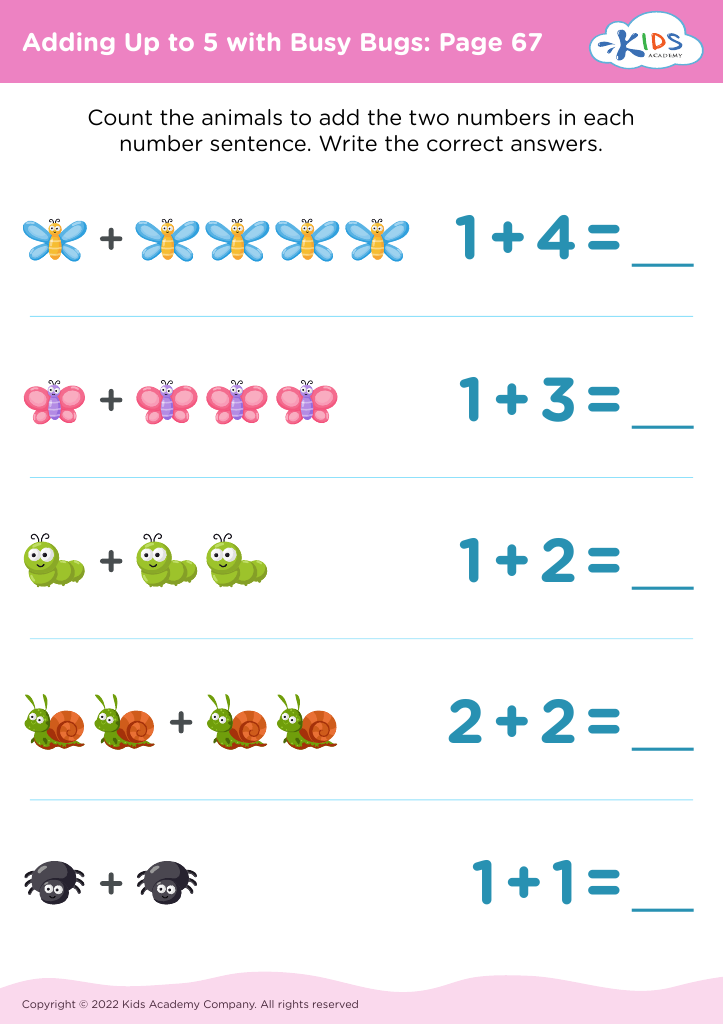
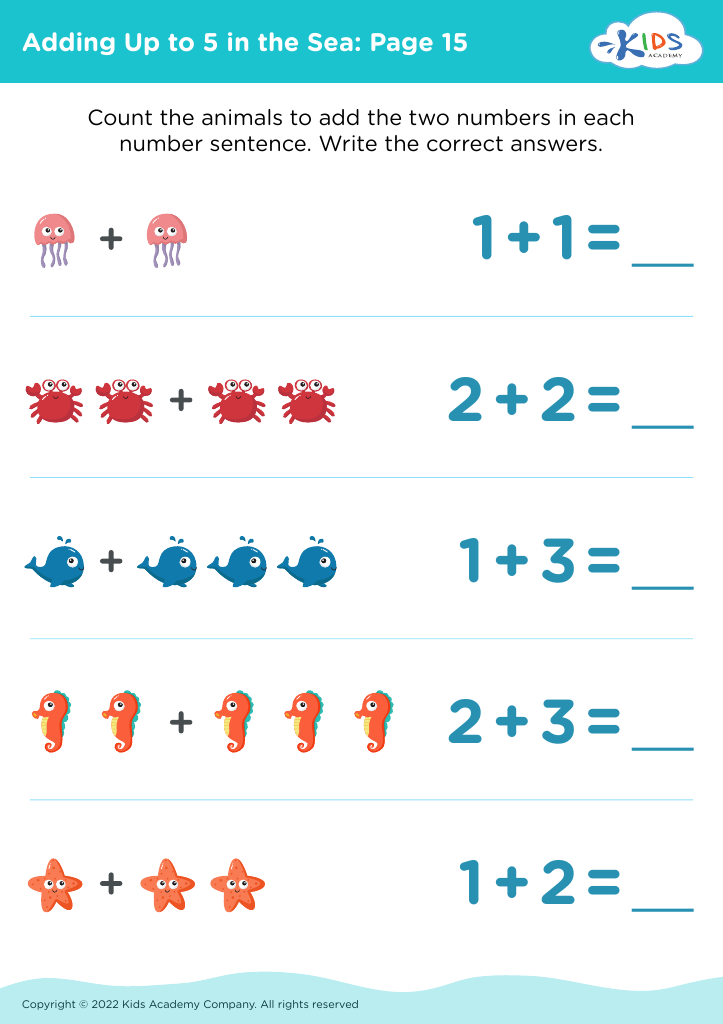
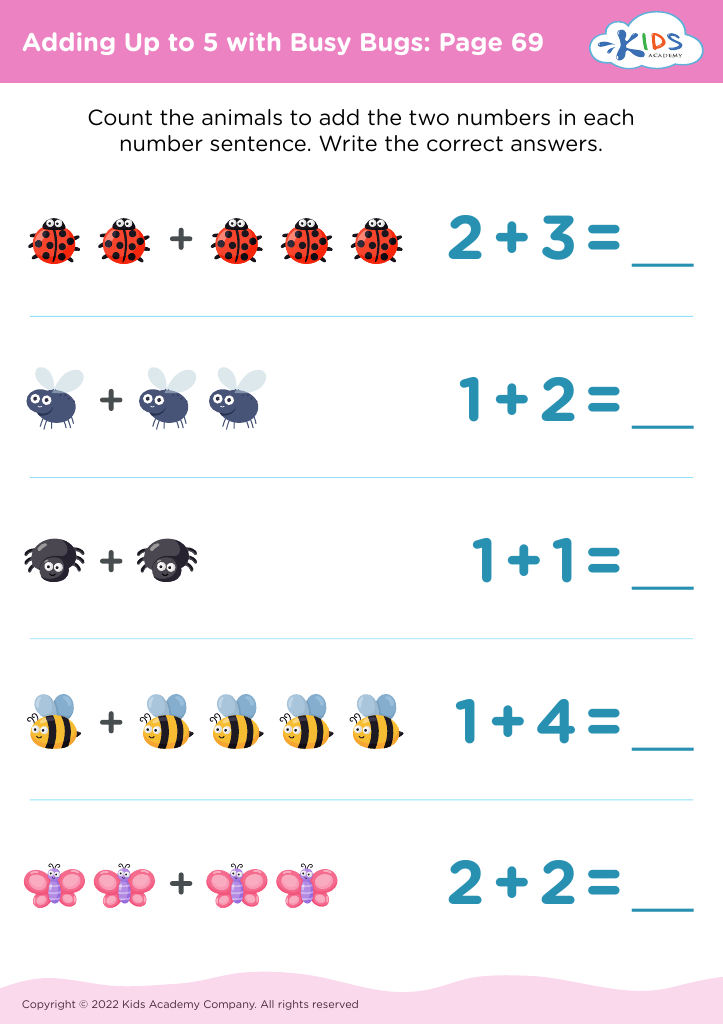
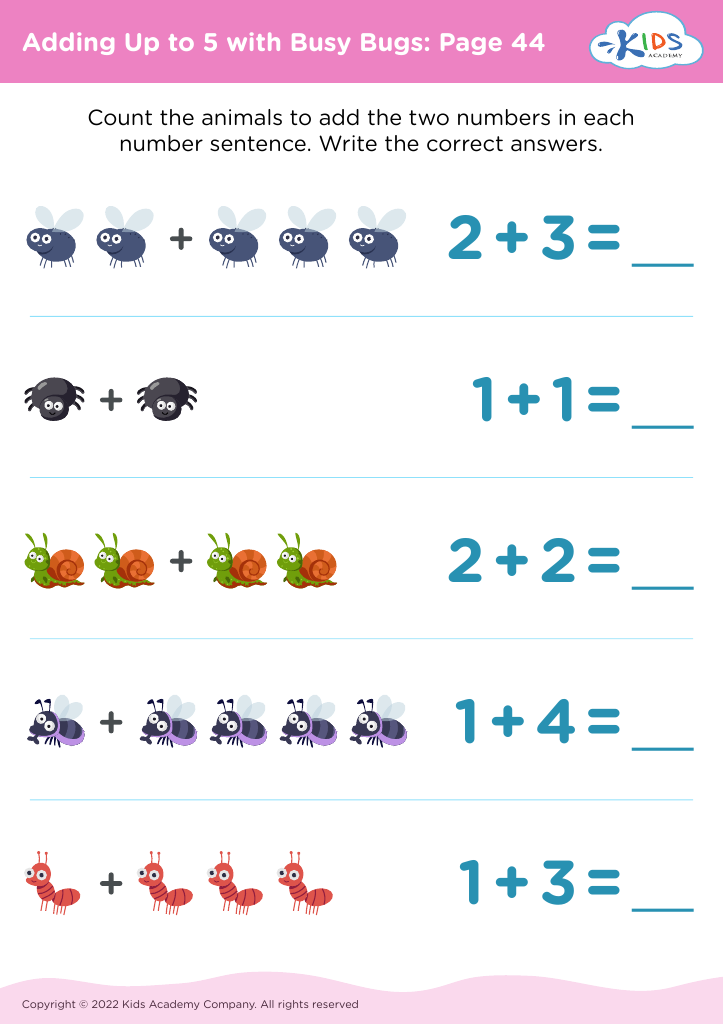
Enhance your child's focus and mathematical skills with our "Improving Concentration Addition Worksheets" designed for ages 5-7. This interactive resource combines fun and learning, ensuring children stay engaged while practicing essential addition skills. With a variety of thoughtfully crafted exercises, these worksheets promote concentration and retention, providing a solid foundation in math. Each activity encourages kids to think critically and solve problems while enjoying the process. Perfect for both classroom and home use, our worksheets make learning addition enjoyable and effective. Equip your young learner with the tools they need to succeed and build confidence in their arithmetic abilities today!
Favorites
With answer key
Interactive
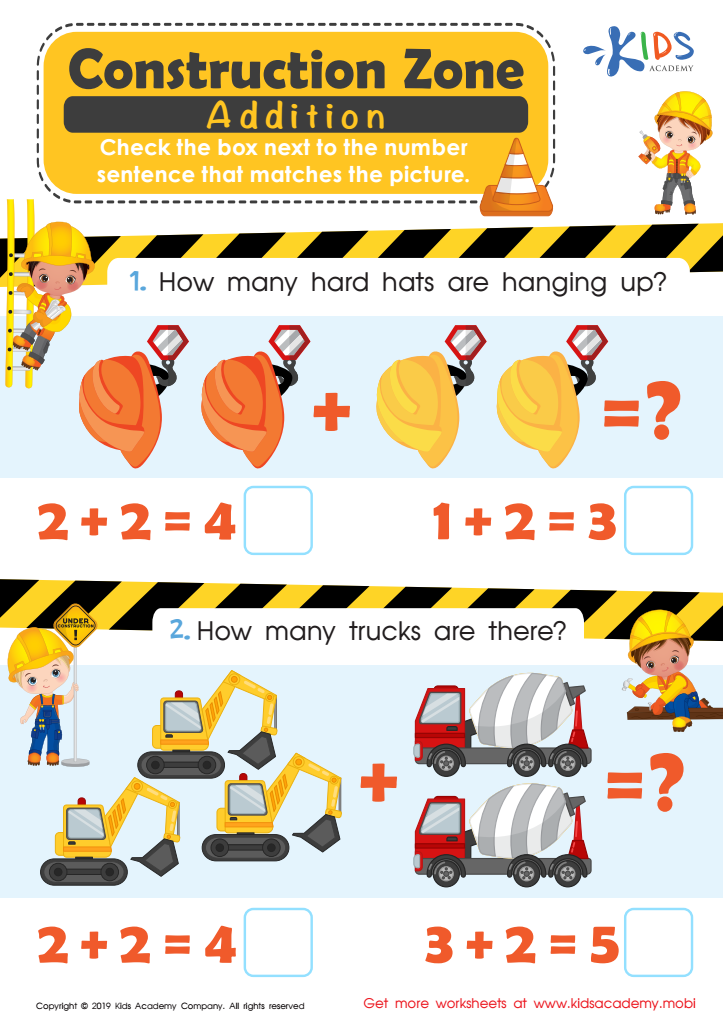
Construction Zone Addition Worksheet
Construction sites are bustling with professionals called construction workers. They use equipment while working, so they must wear protective gear. With kids, look at the pictures and name each object. Then help them check the box next to the number sentence that matches the picture. (80 words)
 Assign to My Students
Construction Zone Addition Worksheet
Worksheet
Join Kids Academy for Free
Who is primarily going to use this learning content?






.jpg)

Improving concentration in children ages 5 to 7 is crucial for their cognitive and emotional development. During these formative years, children are building foundational skills that will support their future learning. Enhanced concentration helps students focus better during lessons, allowing them to absorb information and complete tasks effectively. This, in turn, fosters a love for learning and boosts academic performance.
Moreover, a child with improved concentration is more likely to engage in critical thinking and problem-solving. By effectively managing distractions, these children can develop perseverance and patience—two essential traits for all areas of life. Furthermore, concentrating well allows students to enjoy activities such as reading and math exercises, paving the way for more complex skills in later grades.
From a social perspective, better concentration can improve a child’s interactions with peers. Children who can focus are likely to participate in group activities and discussions, enhancing their communication skills and friendships.
Ultimately, parents and teachers play a critical role in nurturing concentration through structured routines, engaging activities, and positive reinforcement. Investing time and effort into improving concentration today yields lifelong benefits for children, cultivating their overall academic success and personal growth.








