Improving mathematical skills Addition Worksheets for Ages 5-7
4 filtered results
-
From - To
Discover engaging Addition Worksheets designed for children aged 5-7, aimed at enhancing their mathematical skills in a fun and interactive way. Our carefully crafted worksheets help young learners master the basics of addition through colorful illustrations and enjoyable activities. Each worksheet focuses on key concepts, allowing students to practice addition while developing problem-solving abilities and confidence in their math skills. These resources are perfect for both classroom settings and at-home learning, providing a seamless blend of education and entertainment. Encourage your child's love for math and set the foundation for their future success with our comprehensive addition worksheets today!
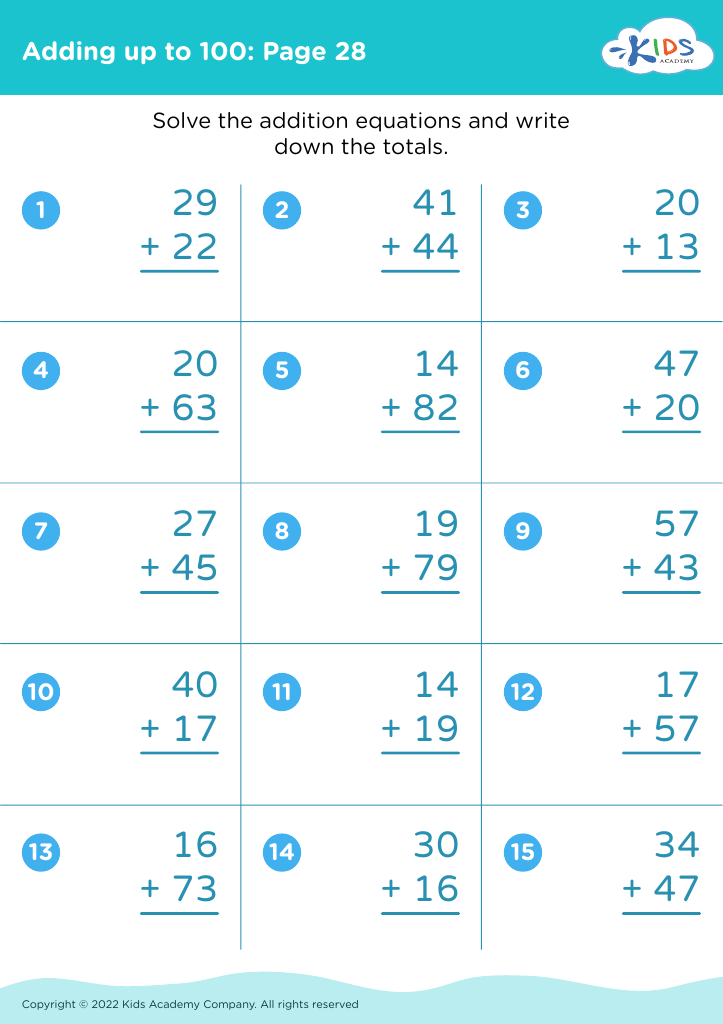
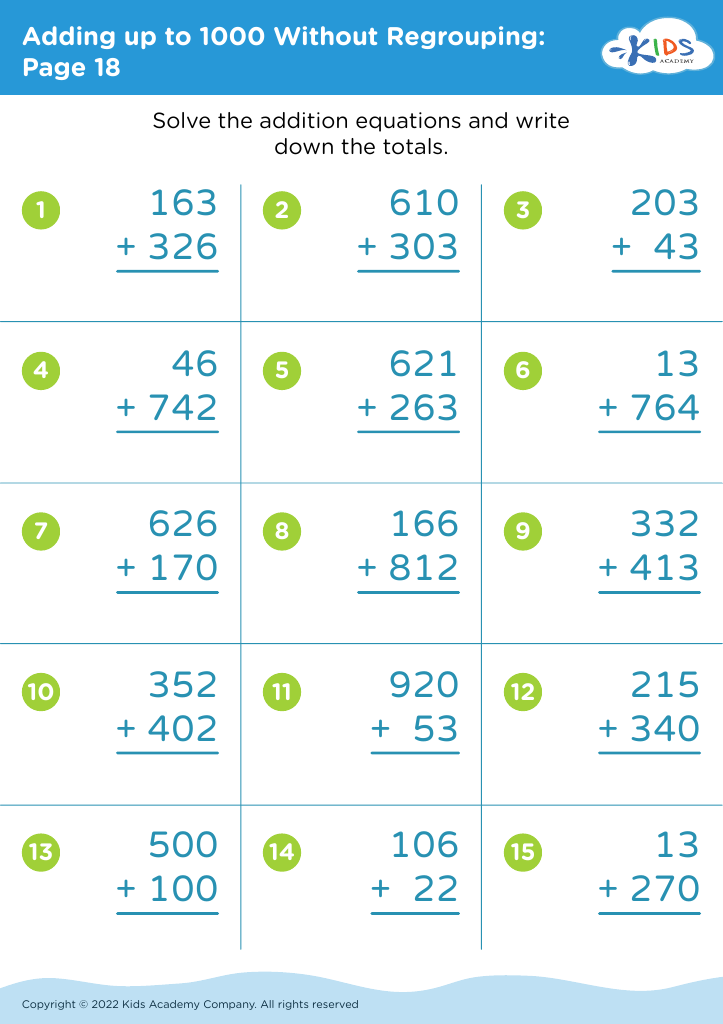
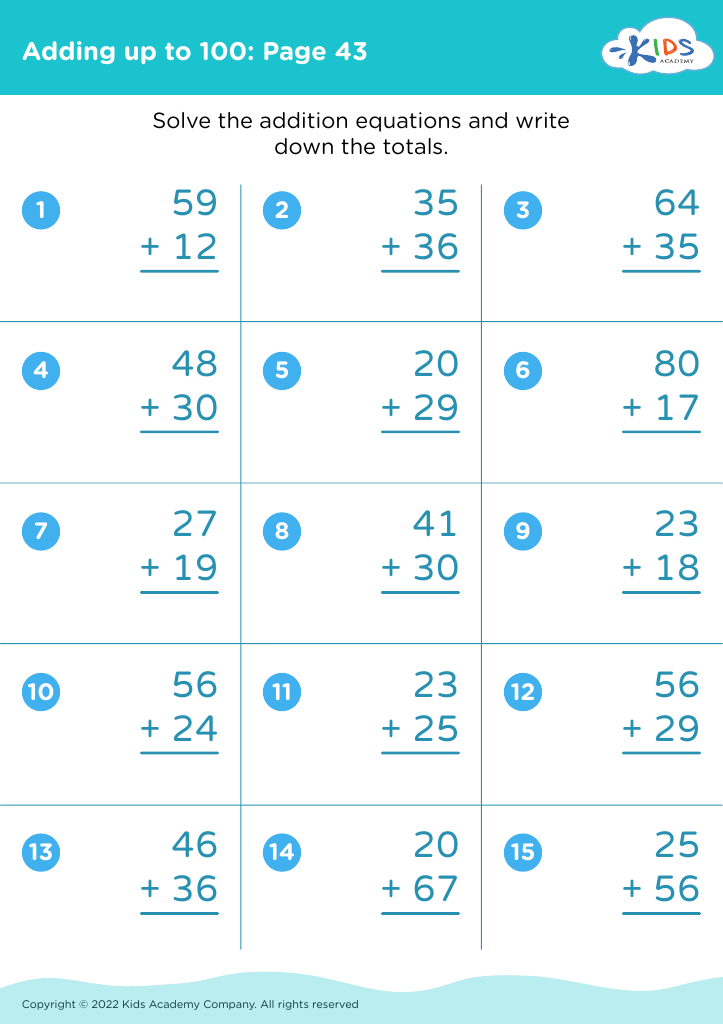
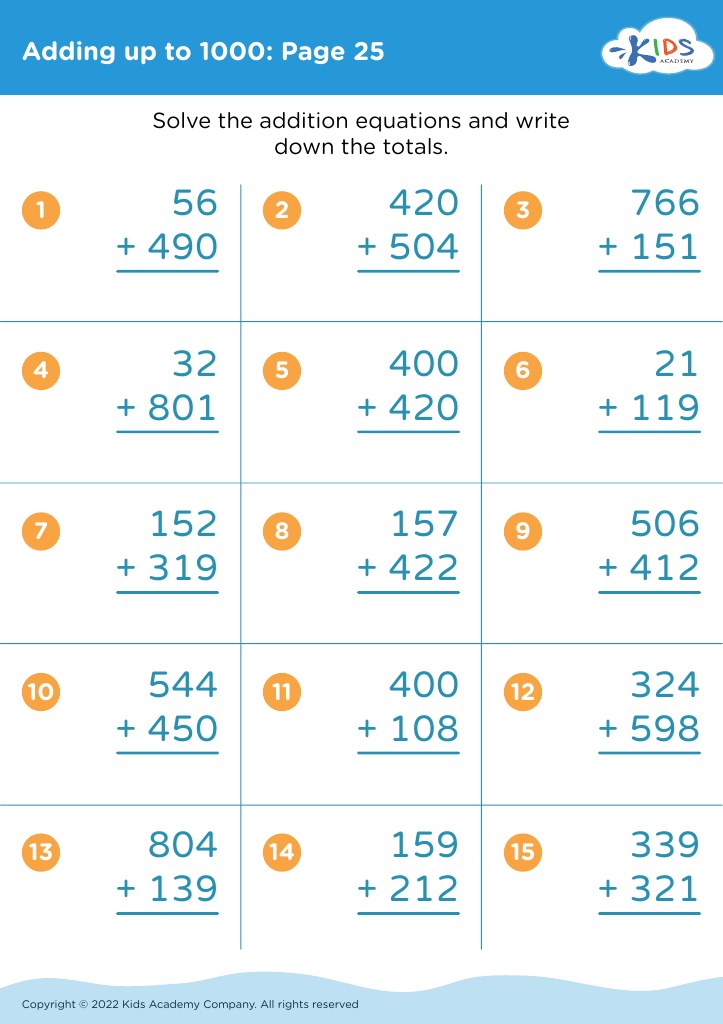







Improving mathematical skills, particularly addition, in children aged 5-7 is crucial for several reasons. Firstly, foundational math skills are essential for academic success. At this early age, children develop their first understanding of numbers and basic operations. Mastery in addition sets the groundwork for more complex mathematical concepts encountered later in school, creating a smoother learning trajectory.
Moreover, addition is woven into everyday life, from counting and budgeting to cooking and shopping. By strengthening these skills, parents and teachers empower children to navigate their environments with confidence. Additionally, high proficiency in math can instill a positive attitude toward the subject, reducing anxiety and fostering enthusiasm about learning.
Furthermore, improving mathematical skills promotes critical thinking and problem-solving abilities. Children learn to approach problems logically, which are crucial skills that extend beyond math into other disciplines and real-life situations.
Finally, strong mathematical skills in early childhood also set the stage for positive self-esteem and motivation. As children see their progress in mastering addition, they gain confidence that translates to a willingness to tackle future challenges. Thus, it is vital for parents and teachers to prioritize improving addition skills in young learners, laying the foundation for future success.








