Motor skills development Addition Worksheets for Ages 5-7
5 filtered results
-
From - To
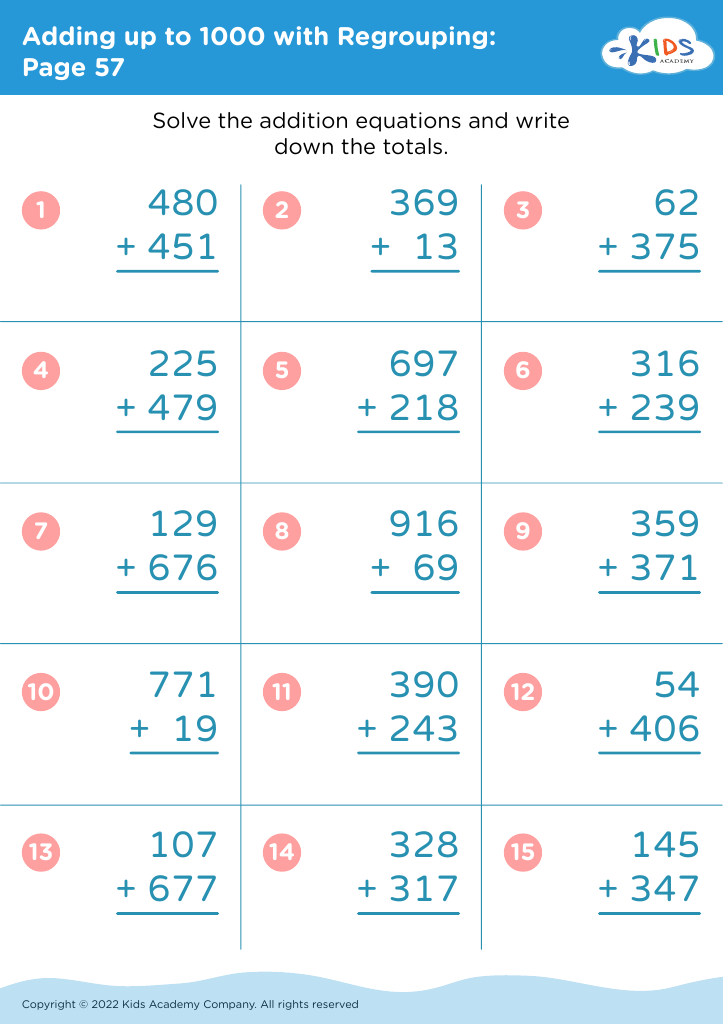
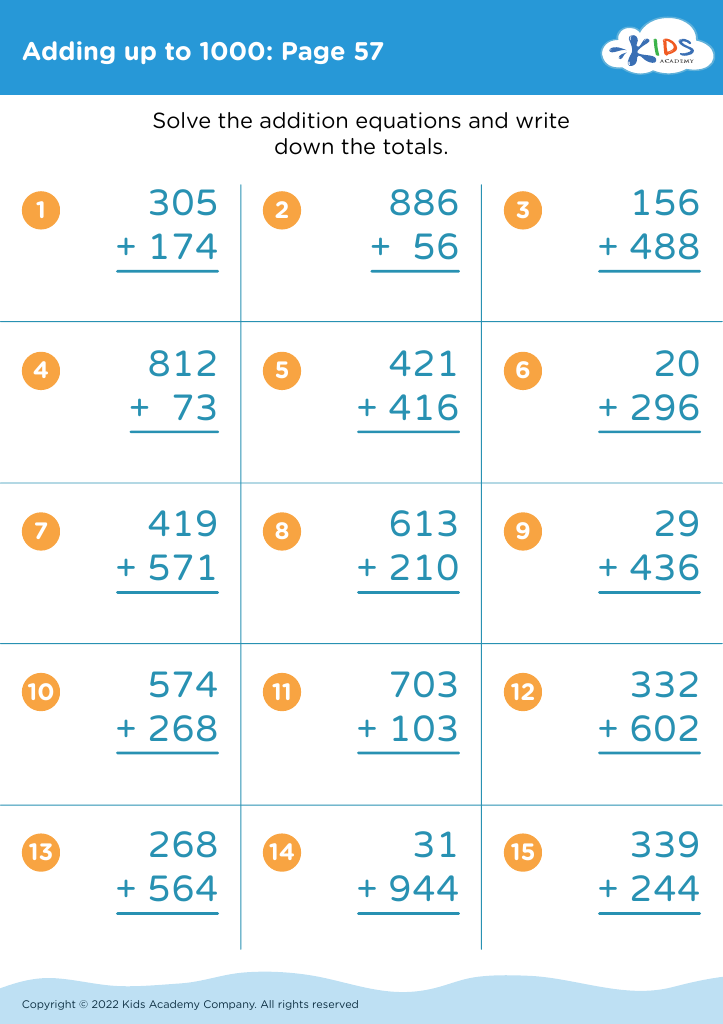
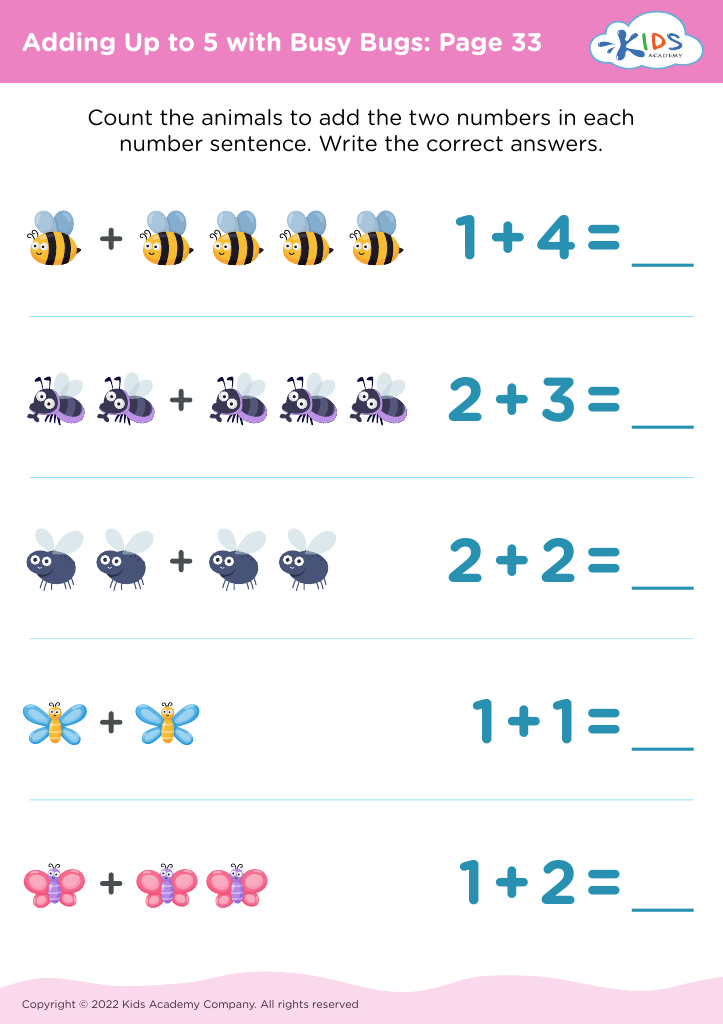
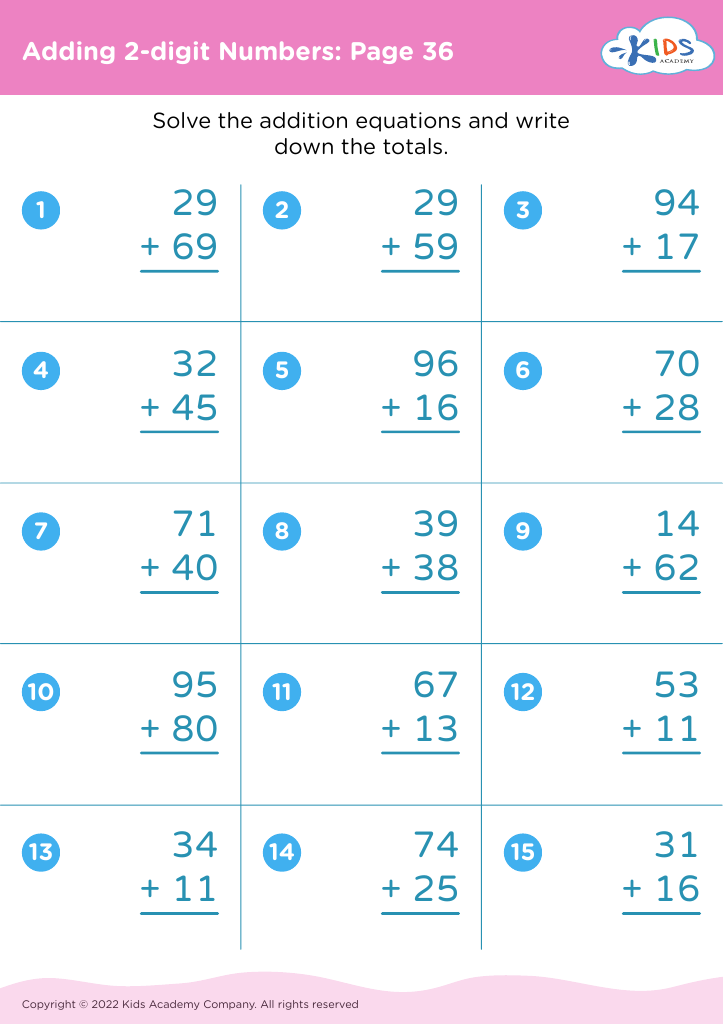
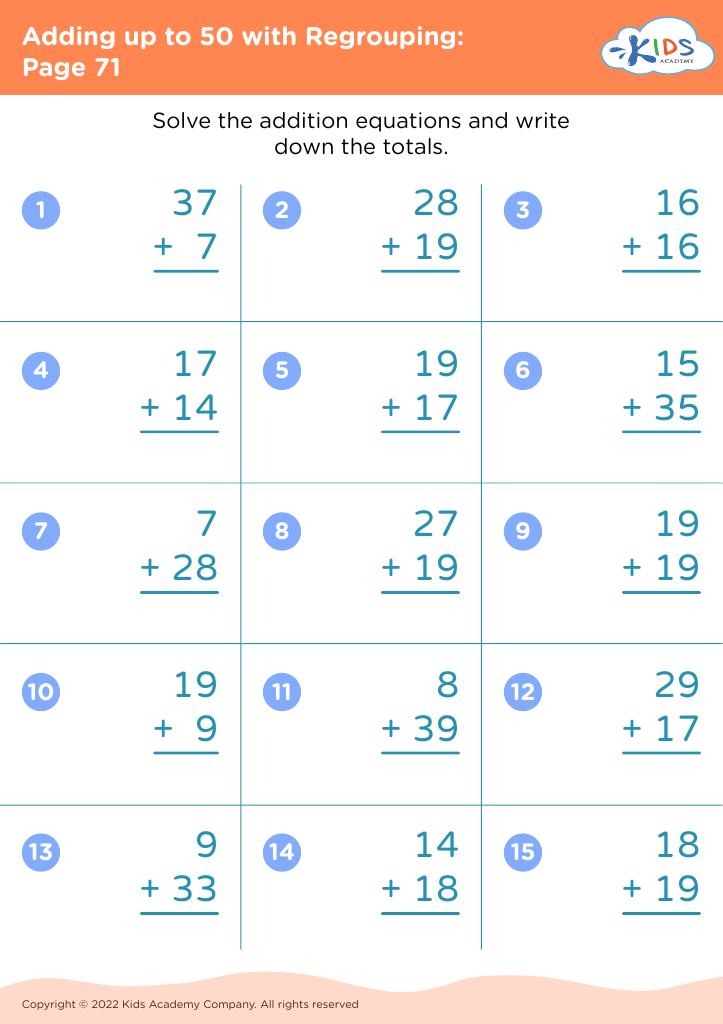
Welcome to our Motor Skills Development Addition Worksheets designed for children aged 5-7! These engaging worksheets combine fun and learning, helping young learners enhance their motor skills while mastering addition. Each activity encourages proper hand-eye coordination and dexterity through tracing, coloring, and interactive exercises. Our worksheets feature vibrant illustrations and age-appropriate problems to make math enjoyable and accessible. By integrating motor skills development into math practice, children gain confidence in their abilities, promoting a love for learning. Explore our collection of worksheets to support your child’s growth in both motor skills and mathematical concepts today!








Motor skills development is crucial for children aged 5-7 as it lays the foundation for their overall physical, social, and cognitive growth. During this vital period, children are refining both gross motor skills, such as running and jumping, and fine motor skills, like writing and using scissors. These skills not only enhance a child's physical prowess but also contribute significantly to their self-esteem and confidence.
Parents and teachers should care about fostering motor skill development because proficiency in these areas can lead to improved academic performance. Engaging in activities like drawing helps enhance fine motor coordination, which is essential for writing later on. Furthermore, participating in sports or group games encourages teamwork and social interaction, promoting emotional intelligence and cooperative behavior.
Additionally, motor skills development is linked to various everyday tasks, from managing personal hygiene to engaging in creative play. Delayed or underdeveloped motor skills can hinder a child’s ability to participate fully in school and peer interactions, possibly impacting their mental well-being. By prioritizing motor skill activities through play and structured exercises, parents and teachers can ensure children develop the necessary capabilities for a successful, active, and well-rounded future.








