Practice counting Addition Worksheets for Ages 5-7
6 filtered results
-
From - To
Welcome to our Practice Counting Addition Worksheets designed for children aged 5-7! These engaging and interactive worksheets help young learners master counting and addition skills through fun activities. Tailored to enhance early math proficiency, our worksheets feature colorful visuals and relatable themes that capture children’s interest. Kids will enjoy counting objects, solving simple addition problems, and developing essential numeracy skills at their own pace. Perfect for home or classroom use, these resources promote confidence in mathematics while making learning enjoyable. Start your child's math journey today with our thoughtfully crafted worksheets and watch them thrive as they practice counting and addition!
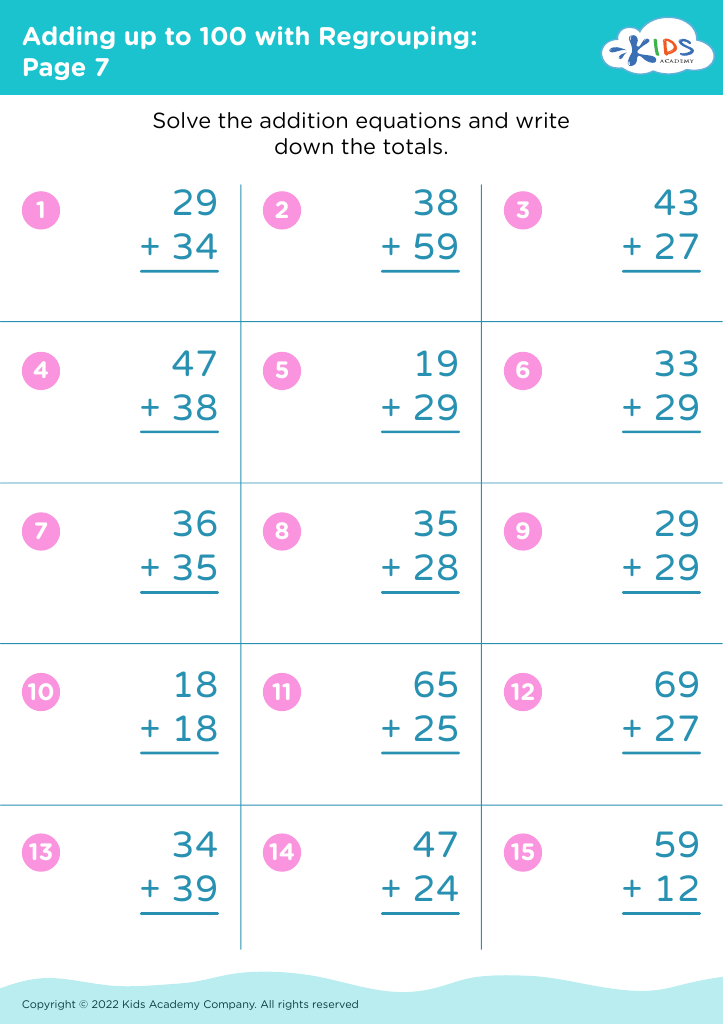
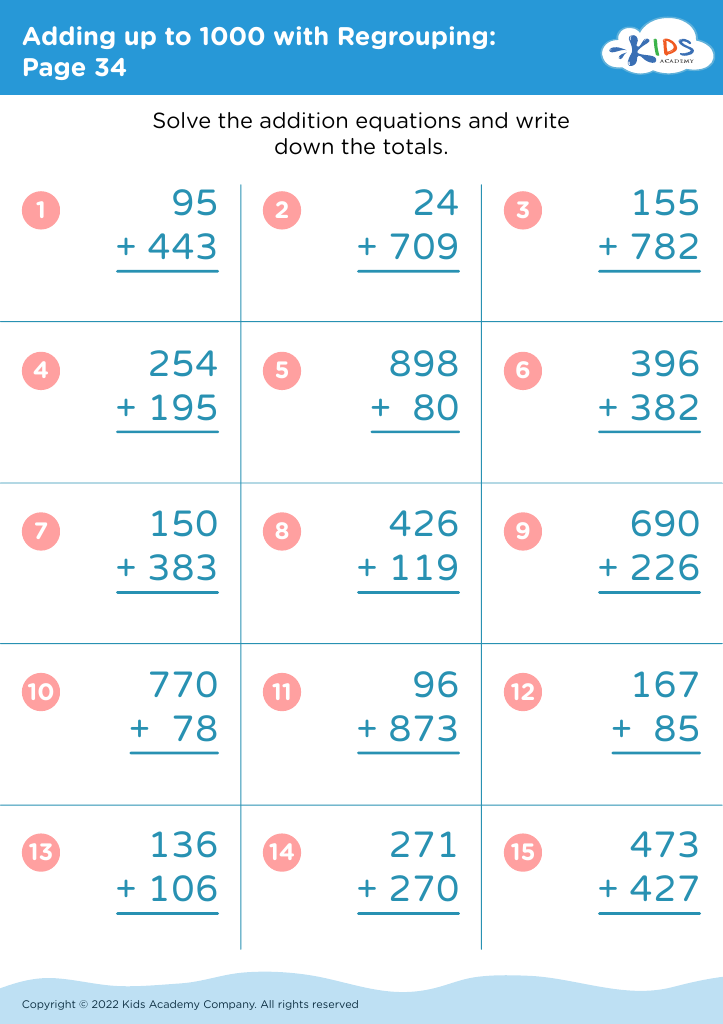
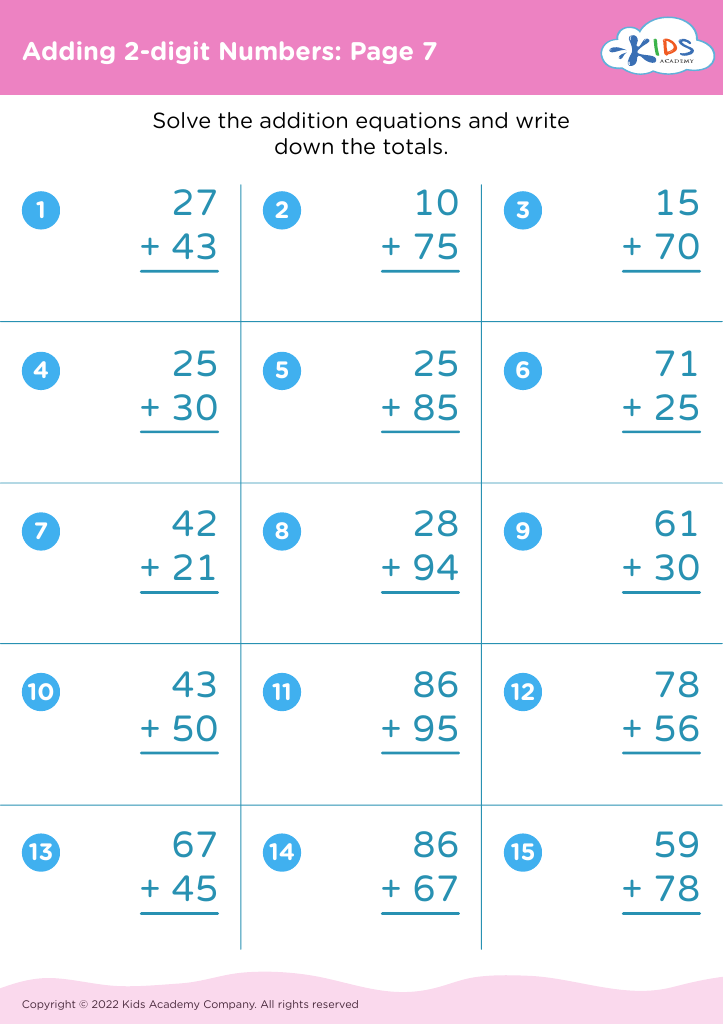
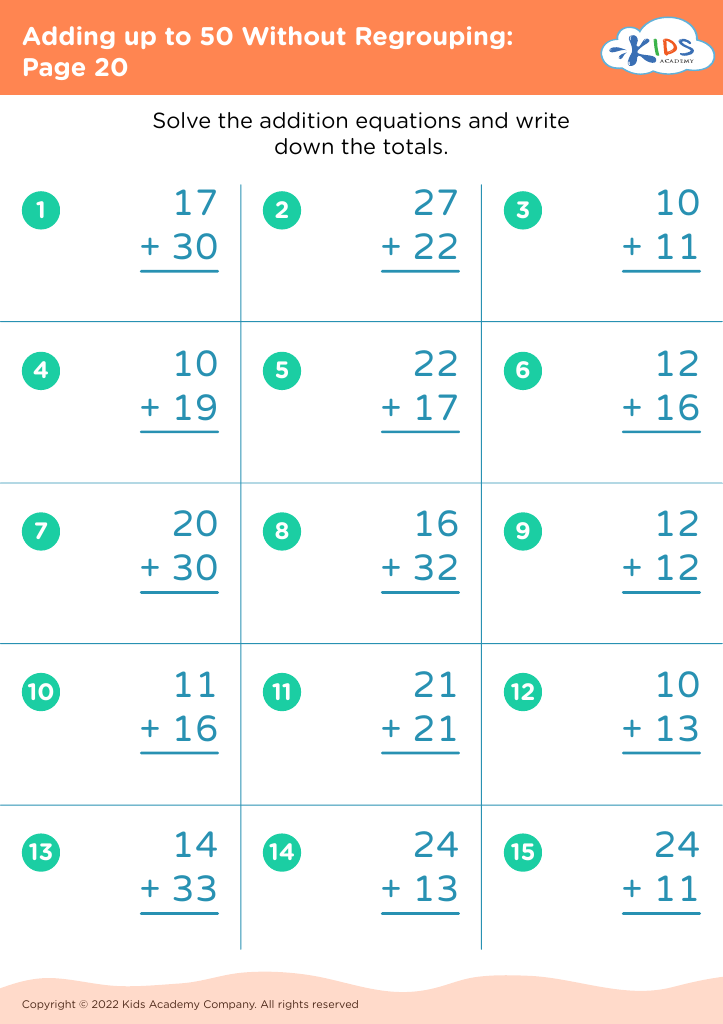
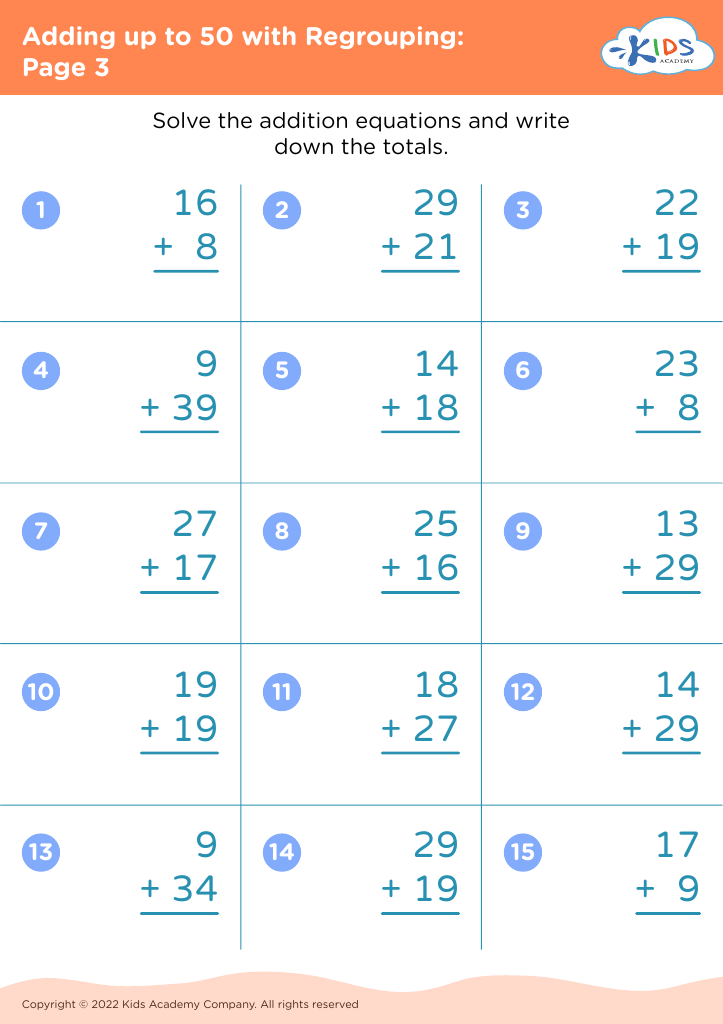
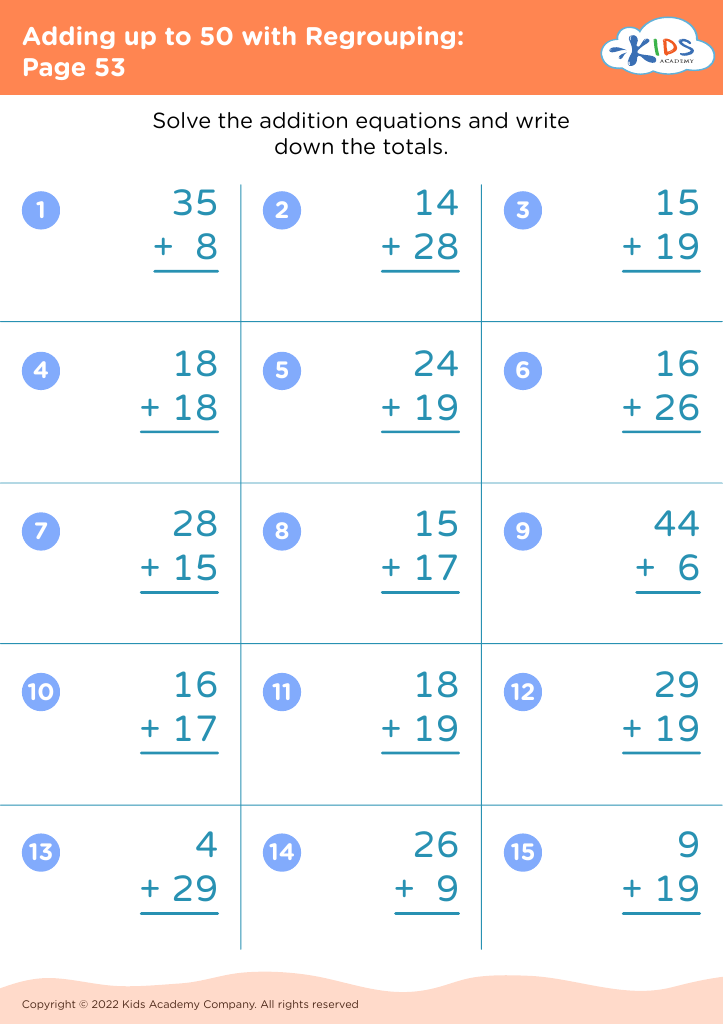








Parents and teachers should prioritize practice counting and addition skills for children aged 5 to 7 because these foundational concepts are crucial for their academic development. At this age, children are beginning to grasp basic numeracy, which forms the groundwork for more complex mathematical concepts they will encounter in later grades. Proficiency in counting and addition enhances children's problem-solving abilities, critical thinking, and cognitive skills.
Additionally, early counting and addition practices build confidence and foster a positive attitude towards math. When children successfully understand and apply these basic skills, they are more likely to engage enthusiastically in future math learning, setting the stage for academic success. This period is also key for social skills, as group activities involving counting games promote teamwork and communication.
Moreover, integrating counting and addition into daily life—like balancing a budget or cooking—helps children see math in a real-world context, making the subject relevant and engaging. Ultimately, when parents and teachers prioritize these practices, they contribute significantly to a child's overall educational foundation, ensuring they are well-equipped for future challenges not only in mathematics but also in various aspects of learning and life.








