Practice inference skills Addition Worksheets for Ages 5-7
3 filtered results
-
From - To
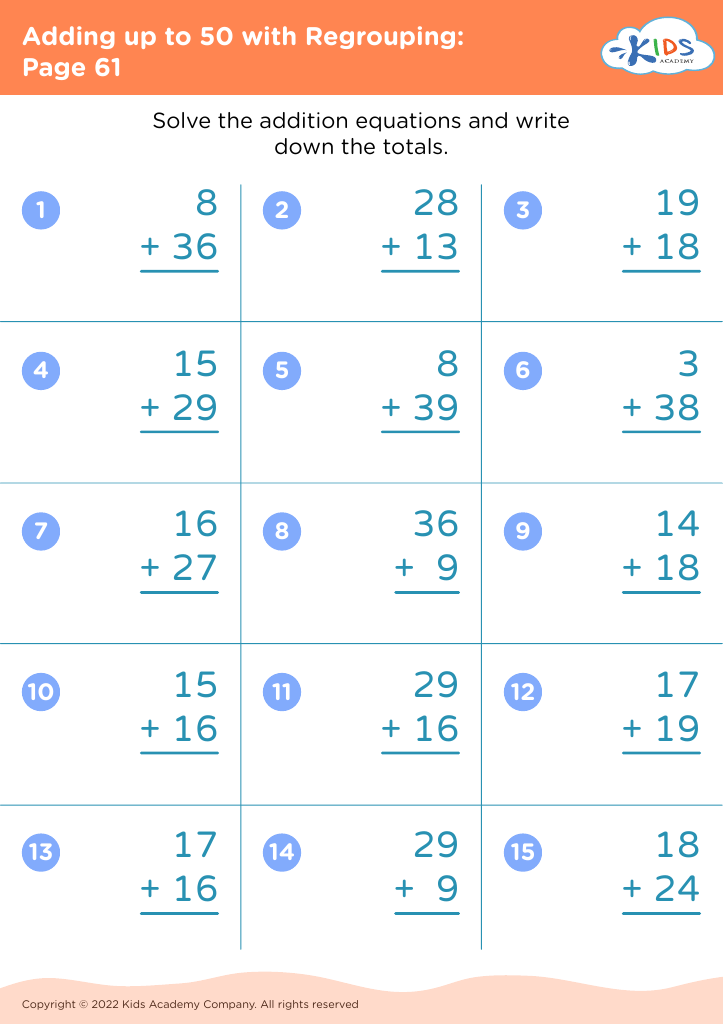
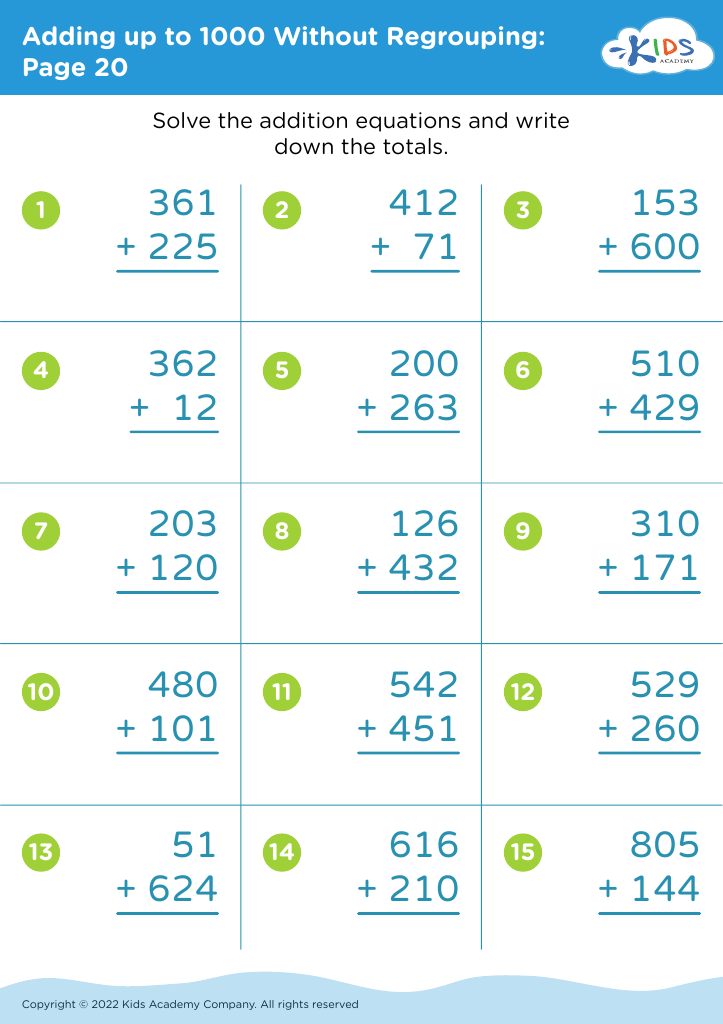
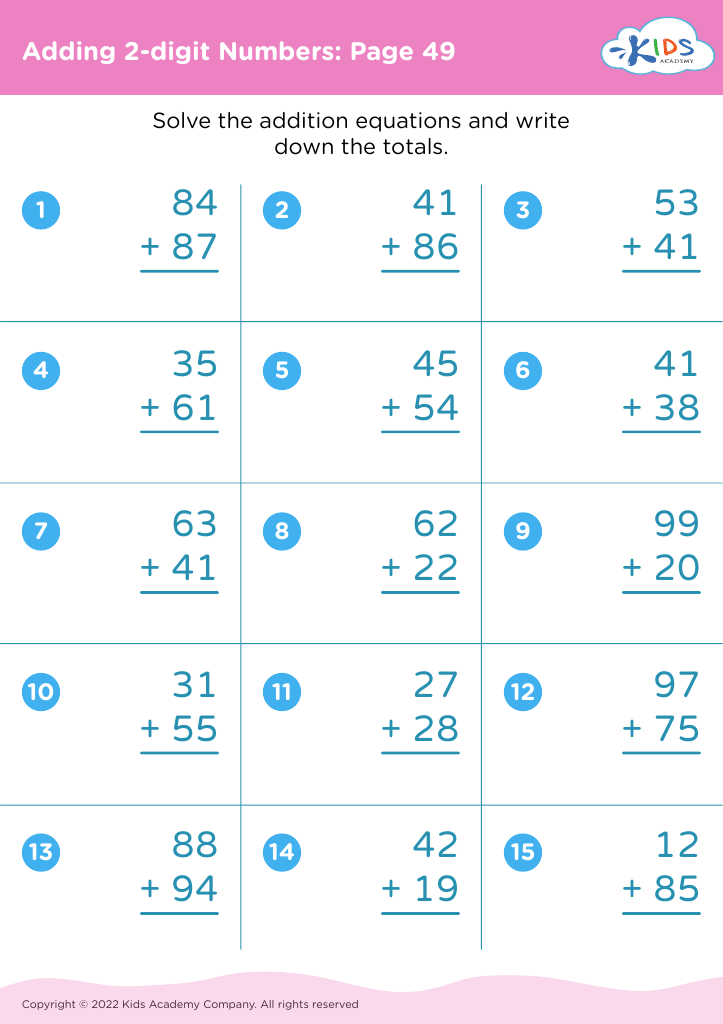
Enhance your child’s mathematical abilities with our Practice Inference Skills Addition Worksheets, tailored for ages 5-7! These printable worksheets combine engaging activities with educational content, enabling young learners to develop critical thinking and inference skills while mastering addition. Each worksheet challenges children to solve problems creatively and develops their ability to draw conclusions based on given information. Illustrated with fun images and age-appropriate problems, these resources keep kids motivated and make learning an enjoyable experience. Ideal for home or classroom settings, our addition practice worksheets help build a solid mathematical foundation for your child’s future academic success.







Practice in inference skills and addition for children aged 5-7 is crucial in laying a strong educational foundation. Inference skills, the ability to understand implicit information and make educated guesses, enhance comprehension and critical thinking. These skills are fundamental in reading as they help children to interpret story contexts and predict outcomes. Nurturing a child’s ability to read between the lines fosters an inquisitive mind, promotes lifelong learning, and enables them to better engage with the world around them.
Adding targeted practice with addition helps early learners build numerical fluency, an essential part of young children's cognitive development. Mastering addition at an early age enhances problem-solving abilities and prepares children for more complex mathematical concepts. It lays the foundation for a range of math skills, including subtraction, multiplication, and division. Furthermore, practicing mathematics promotes logic and structured thinking, which are invaluable across all subjects.
When parents and teachers prioritize both inference skills and addition, they help children develop a well-rounded intellect. Early cognitive development in these areas can boost self-esteem and academic performance, ensuring that young students gain the confidence that will aid them in numerous life scenarios. Therefore, incorporating these skills in early education is not merely beneficial but essential for fostering a generation of thoughtful and skilled individuals.








