Recognizing equivalent fractions Addition Worksheets for Ages 5-7
5 filtered results
-
From - To
Introducing our vibrant "Recognizing Equivalent Fractions Addition Worksheets for Ages 5-7"! These interactive and exciting worksheets are designed to help young learners grasp the concept of fractions in a fun yet educational manner. Through colorful graphics and engaging exercises, kids will practice recognizing equivalent fractions while enhancing their addition skills. Perfectly crafted for early grade students, these printables stimulate cognitive development, all while keeping the learning process enjoyable. Provide your child with the tools they need to succeed in math with our expertly designed resources. Start your mathematical adventure today and watch confidence in fractions grow!
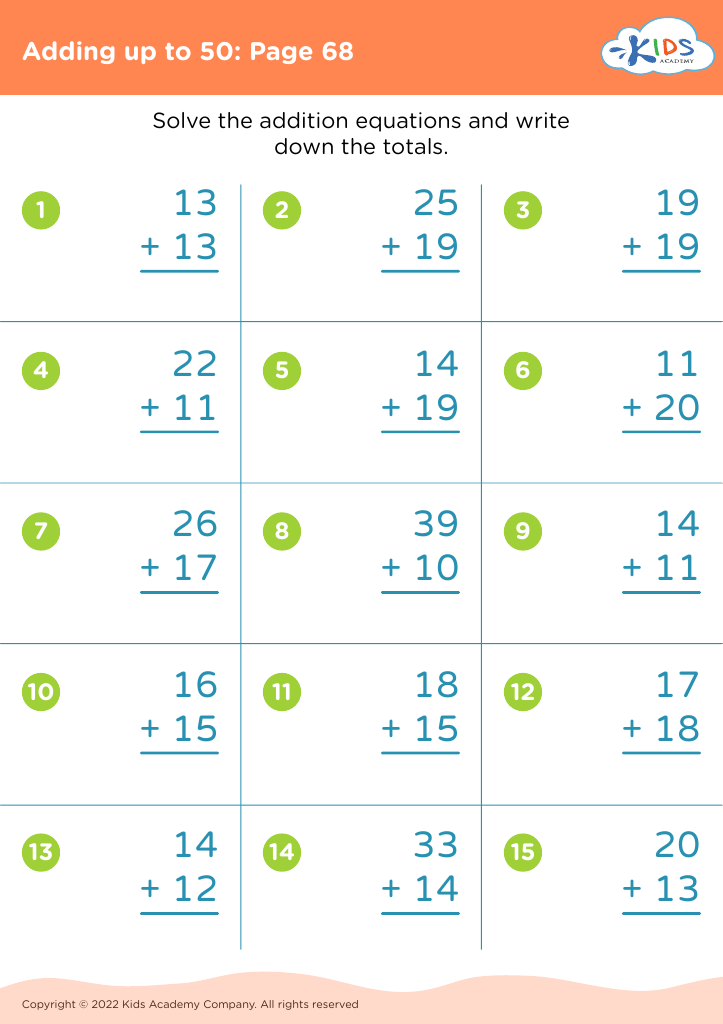
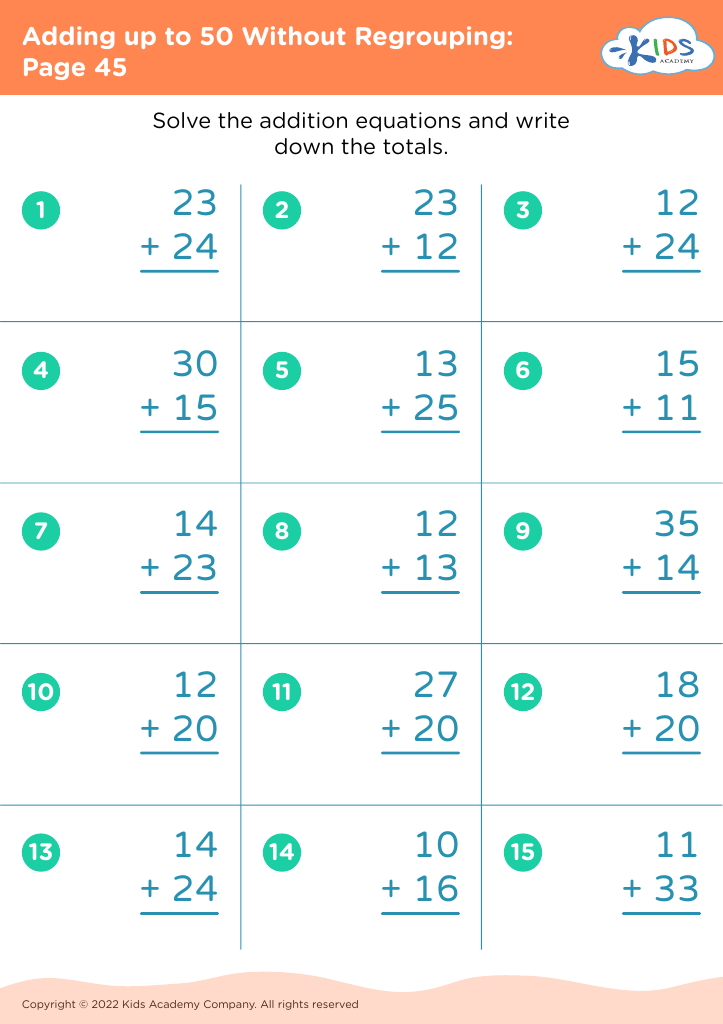
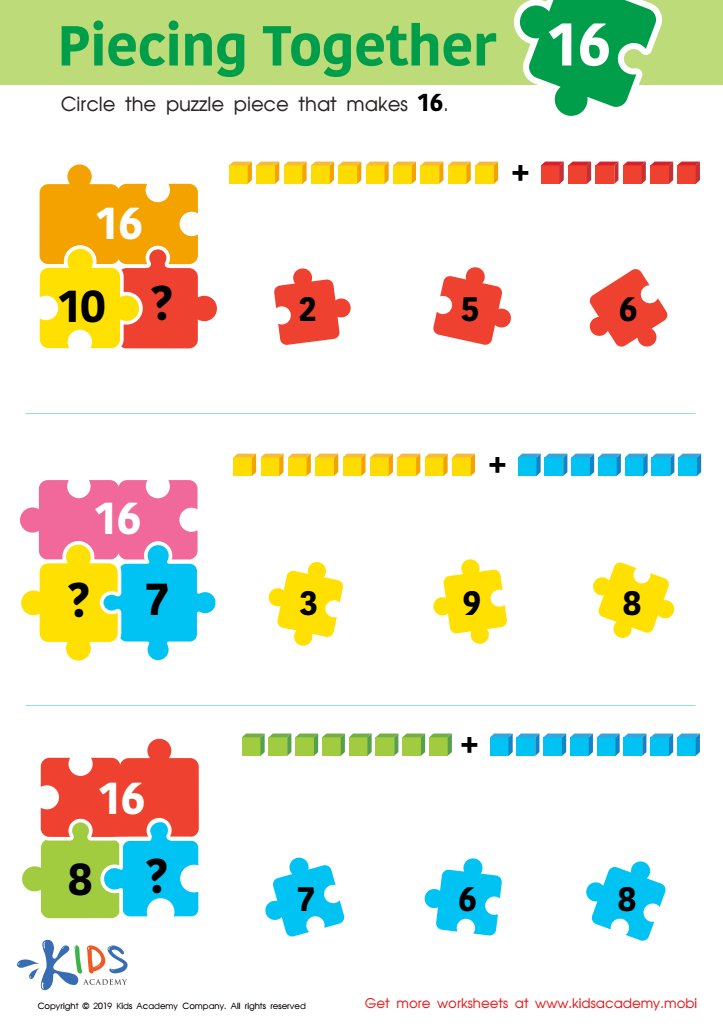
Piecing Together 16 Worksheet
 Assign to My Students
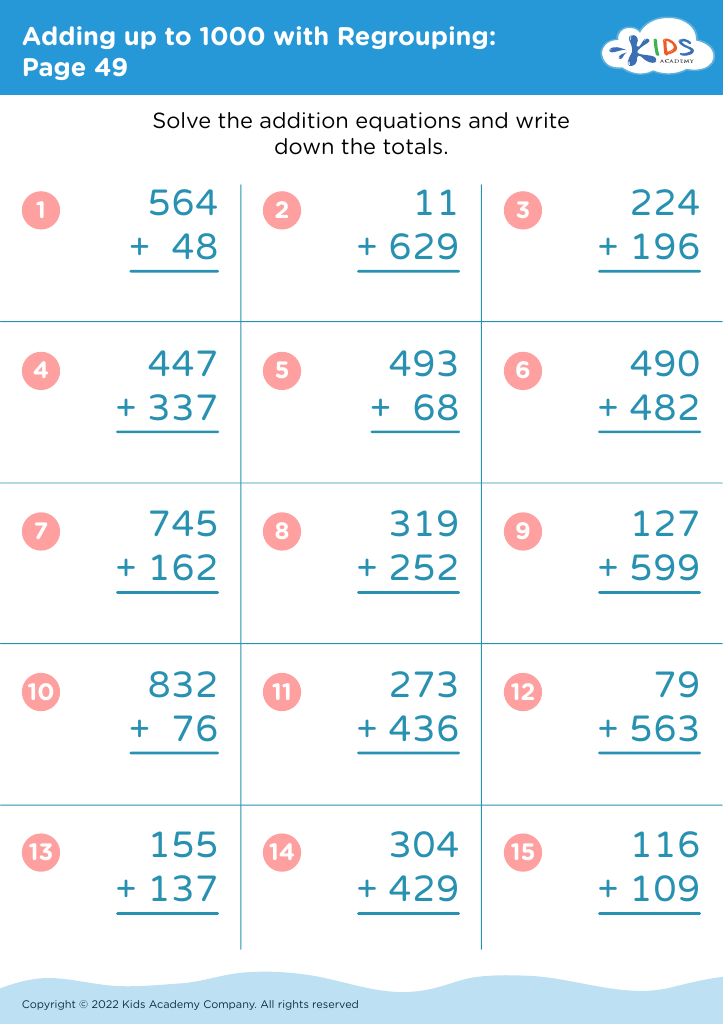








Recognizing equivalent fractions and understanding fraction addition are foundational mathematical skills that significantly influence a young child's future academic success. For children aged 5-7, these concepts are especially crucial because they form the building blocks for more complex mathematical reasoning.
Parents and Teachers Play Essential Roles: First, parents and teachers act as the primary guides in children's early educational journeys. By recognizing the importance of these concepts early, adults can create supportive environments that foster mathematical confidence and curiosity. Engaging children with simple activities involving fractions at an early age can lead to better comprehension and a more in-depth understanding of advanced topics later on.
Development of Critical Thinking Skills: Furthermore, recognizing and working with fractions helps develop a child's critical thinking and problem-solving skills. For example, when a child understands that 1/2 is the same as 2/4, they begin to develop the ability to see relationships between different quantities and navigate ratios and proportions, vital skills in both everyday life and higher-level STEM subjects.
Promotion of a Love for Learning: Finally, early successes in recognizing equivalent fractions and performing fraction additions promote a sense of achievement in children, instilling a love for learning and mathematics. Positive experiences in these formative years can dispel the often-associated 'fear of maths,' setting them on a path to continued academic enthusiasm and achievement.
Together, these reasons underscore why fostering a strong understanding of equivalent fractions and addition in young learners is a priority for both parents and teachers.








