Sea creatures identification Addition Worksheets for Ages 5-7
3 filtered results
-
From - To
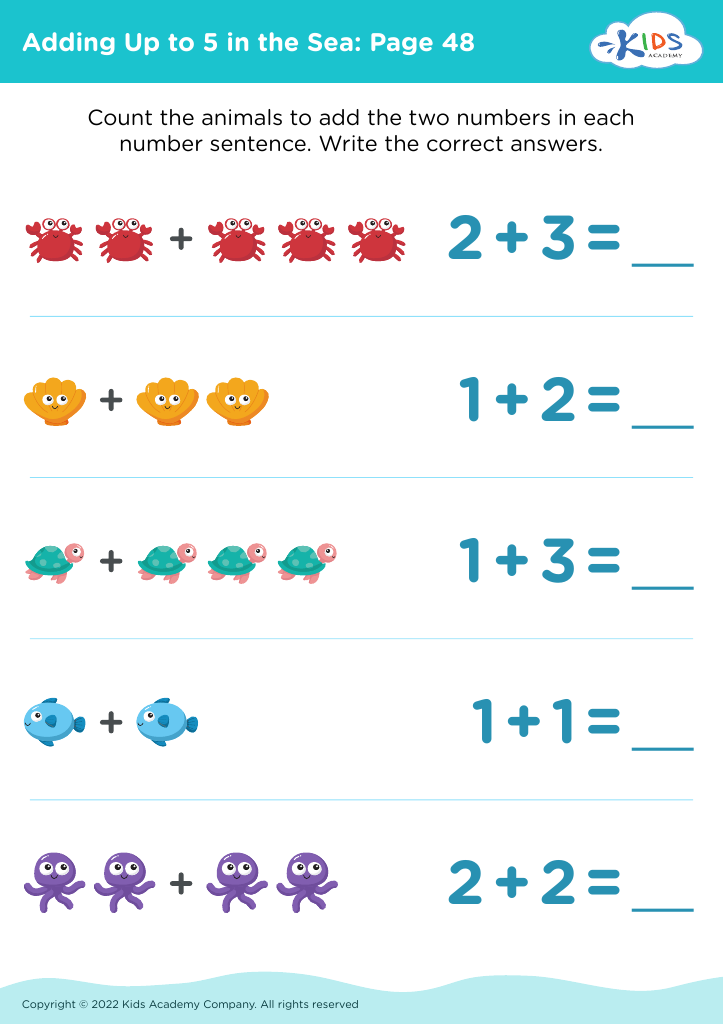
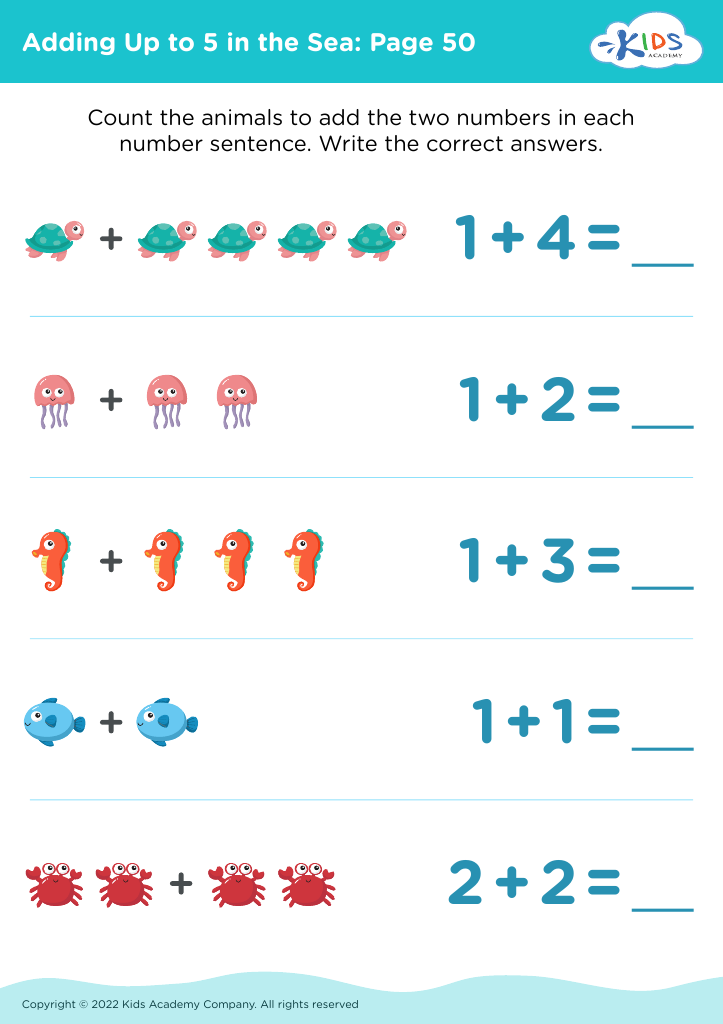
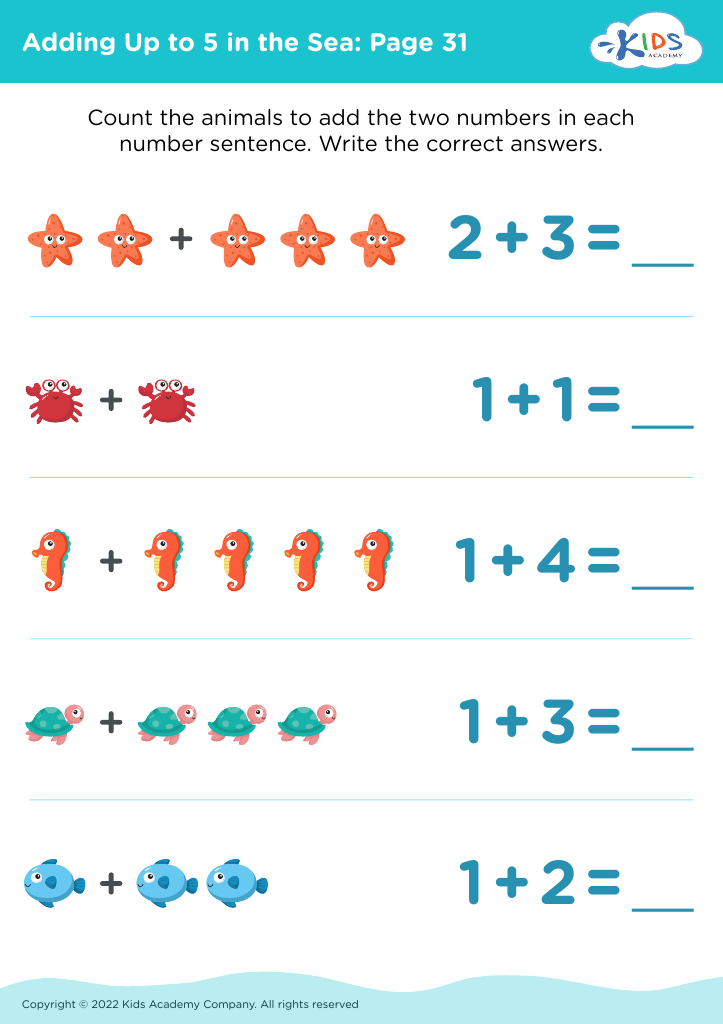
Dive into the captivating world of underwater math with our "Sea Creatures Identification Addition Worksheets for Ages 5-7". These engaging worksheets combine the excitement of learning about sea animals with essential addition practice, making math both fun and educational. Young learners will enjoy identifying vibrant sea creatures while solving addition problems, reinforcing their arithmetic skills in a playful, ocean-themed context. Ideal for children ages 5-7, these printable worksheets are perfect for classroom activities or at-home practice, promoting both mathematics proficiency and marine biology curiosity. Boost your child's addition skills while sparking a love for colorful sea life today!








Understanding sea creature identification is an exciting and educational addition to early childhood learning for several important reasons. For children aged 5-7, this activity not only captures their lively imaginations but also instills essential cognitive skills and environmental awareness.
Firstly, identifying sea creatures encourages observational skills and attention to detail. Children learn to distinguish between different shapes, sizes, and colors, honing their ability to notice subtle differences and similarities, which is a foundational skill in science and reading.
Secondly, integrating sea creature identification into learning fosters a child's curiosity and sense of wonder about the natural world. At a young age, instilling a love for marine life can translate into long-term environmental stewardship. As children recognize the diversity and beauty of sea life, they're likely to develop a greater interest in conserving oceans and marine habitats.
Additionally, learning about sea creatures can enhance vocabulary and language skills. Names of creatures, their characteristics, and habitats supply rich, complex words, enhancing linguistic development.
Furthermore, activities like this support coordination and social skills through interactive learning, group discussions, and hands-on activities like drawing or crafting sea creatures together.
Ultimately, incorporating sea creature identification into education for ages 5-7 nurtures multi-faceted development—academic, cognitive, environmental, and social—setting a strong foundation for future learning and responsible, curious citizens.








