Understand patterns Addition Worksheets for Ages 5-7
6 filtered results
-
From - To
Unlock the magic of numbers with our "Understand Patterns Addition Worksheets for Ages 5-7" at Kids Academy! Perfectly designed for young learners, these engaging worksheets help children grasp basic addition through fun pattern recognition exercises. By connecting numbers with visual sequences, your child will enjoy building a strong mathematical foundation. Encourage critical thinking and problem-solving skills in a colorful, interactive way. Elevate your child's math proficiency while making learning enjoyable and stress-free. Visit Kids Academy for these must-have resources and watch them master addition patterns effortlessly! Download today and embark on this educational adventure together.
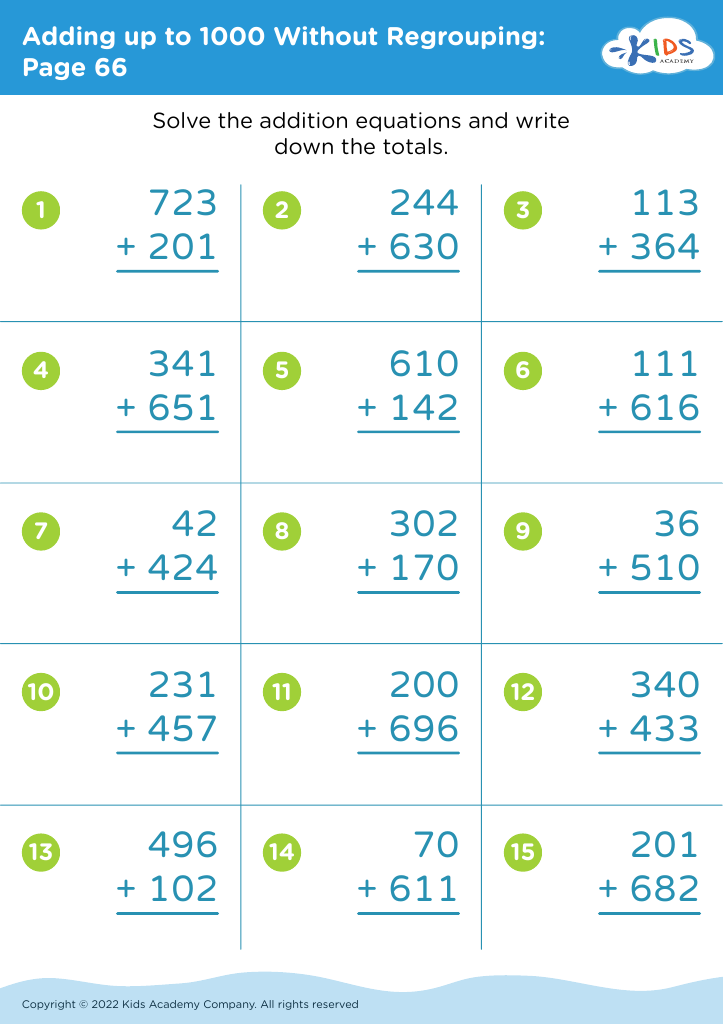
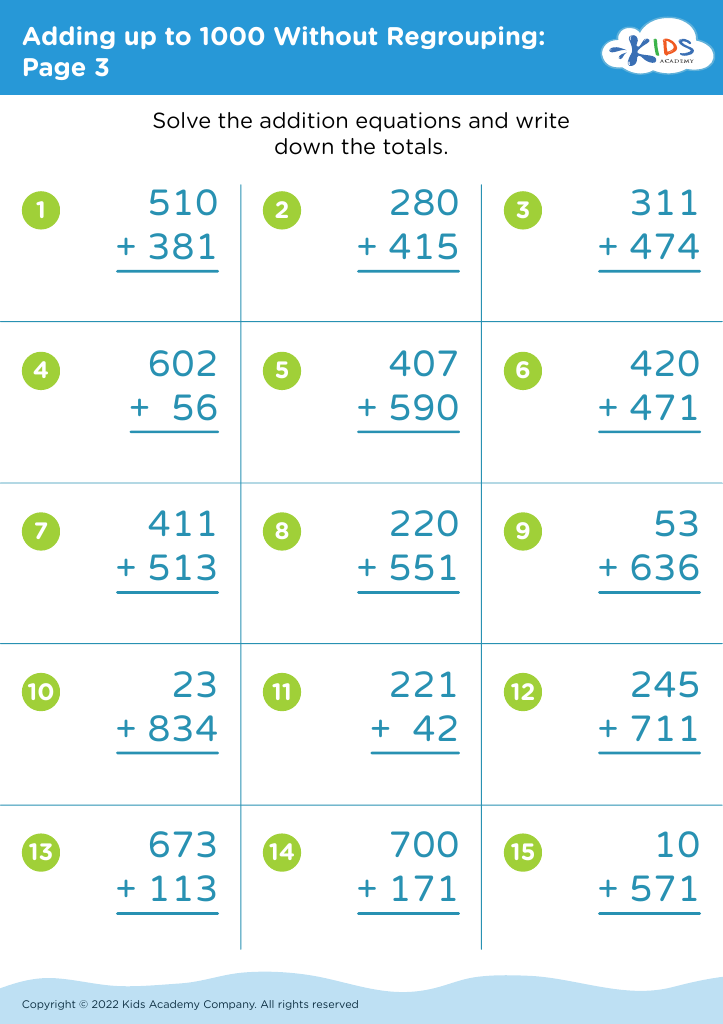
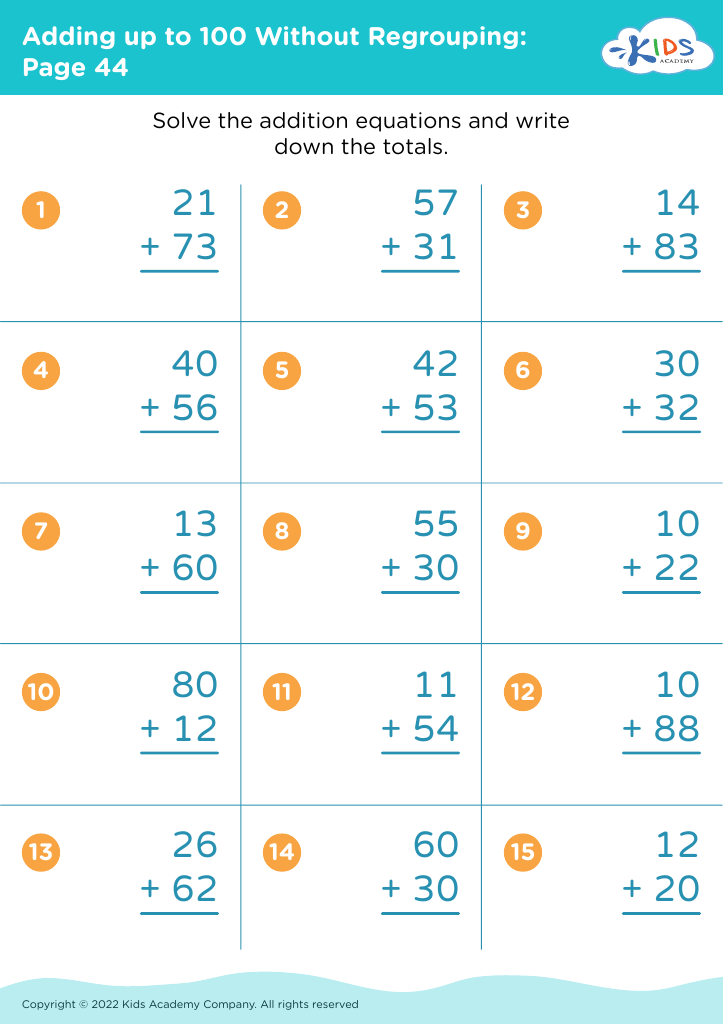
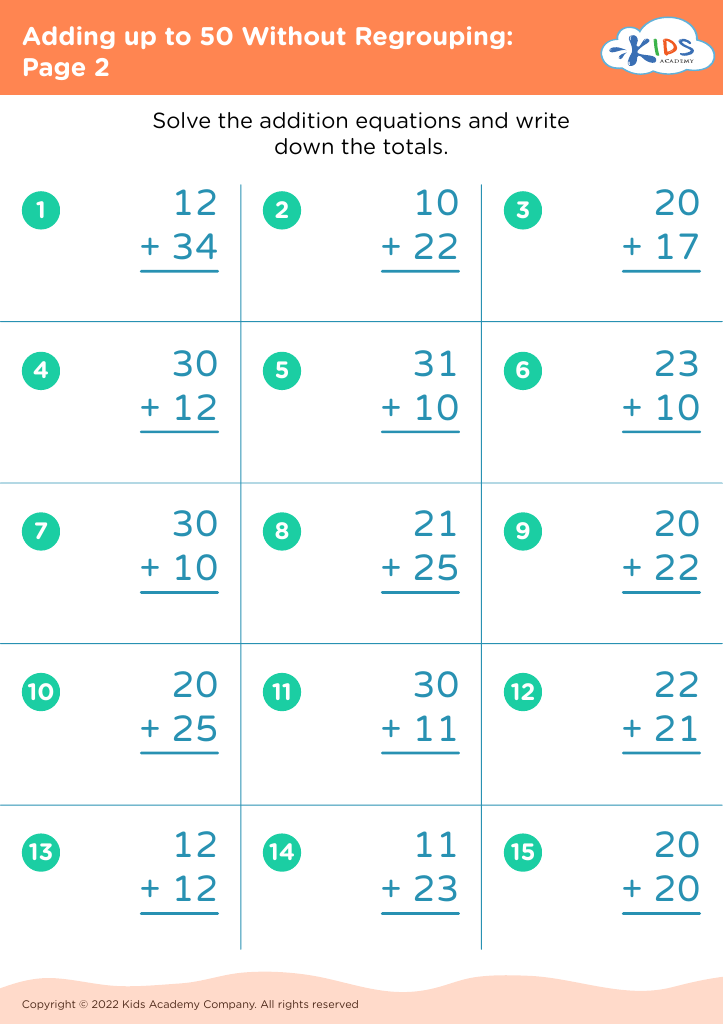
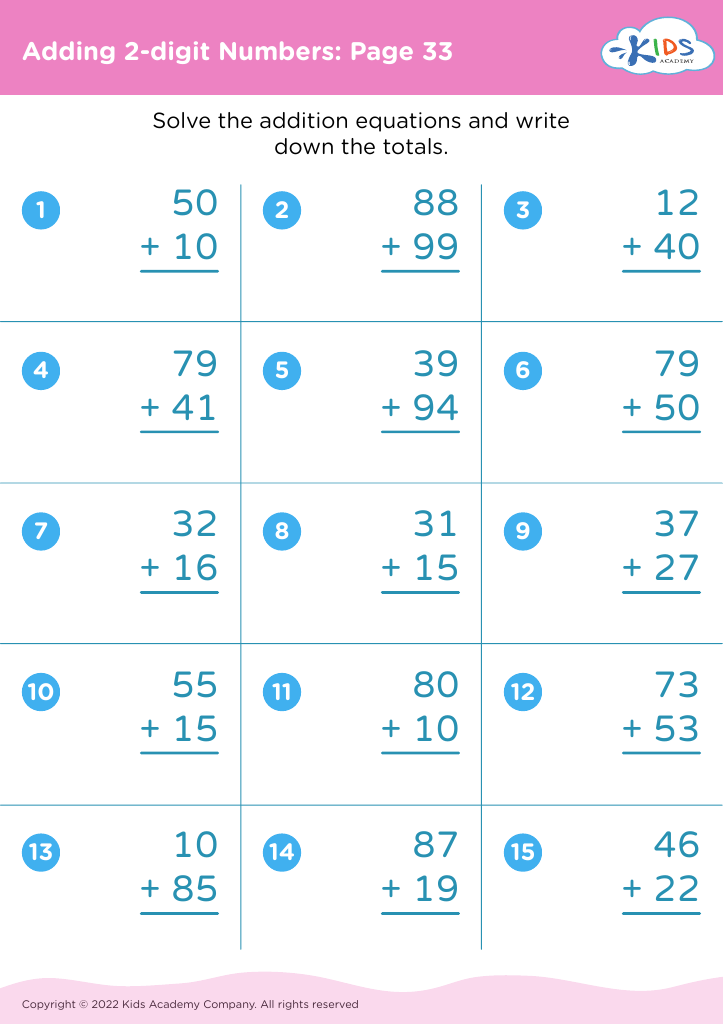
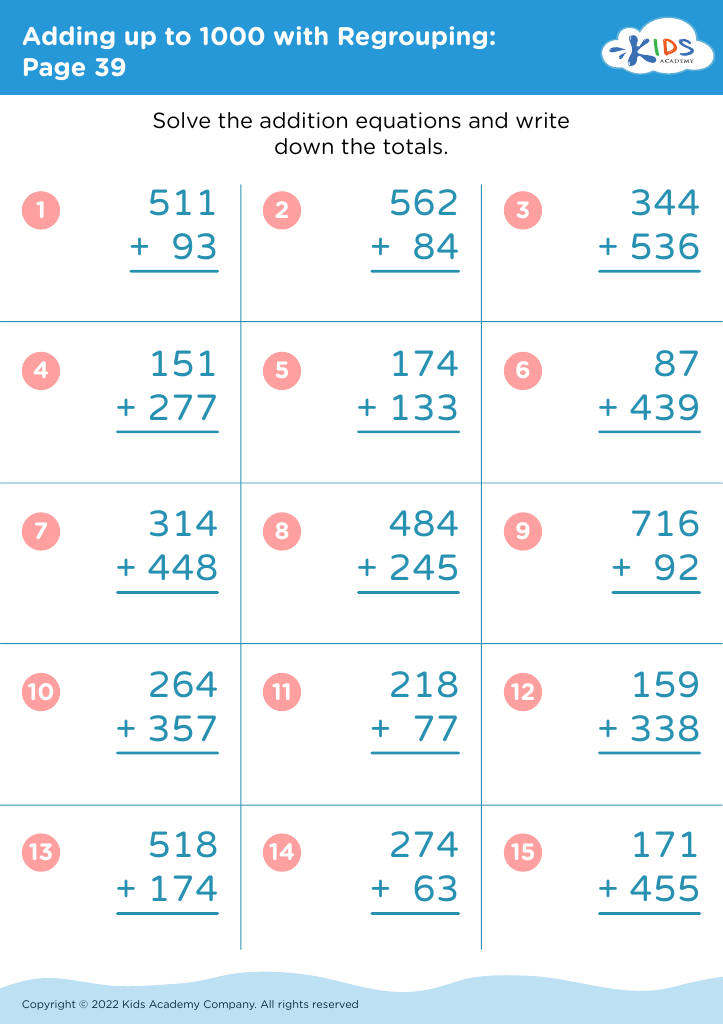








Understanding patterns in addition is crucial for children aged 5-7 as it builds a strong foundation for future mathematical learning. Recognizing patterns helps children develop critical thinking and problem-solving skills that are essential for academic success not only in math but also in other subjects.
Firstly, learning how to identify and create patterns allows young students to understand the predictability and order of numbers. This foundational skill makes addition less abstract and more approachable, as children can see the logic behind mathematical operations. For example, recognizing that 2+3 and 3+2 yield the same result helps them understand the commutative property of addition.
Secondly, understanding patterns fosters a sense of confidence and competence. When children can predict the outcomes of addition problems, they become more engaged and motivated to tackle more complex problems.
Lastly, pattern recognition isn't limited to addition; it is a skill used throughout various aspects of daily life and education. From navigating a calendar to understanding rhythmic patterns in music, the ability to recognize and use patterns strengthens cognitive development across multiple disciplines.
Parents and teachers should prioritize teaching patterns in addition because it equips children with critical skills that form the bedrock of their academic and personal growth. Supporting children in understanding these concepts at an early age helps ensure they are prepared for the more sophisticated math challenges ahead.








