Understanding addition Addition Worksheets for Ages 5-7
7 filtered results
-
From - To
Unlock the world of numbers with our "Understanding Addition" worksheets, designed specifically for kids aged 5-7! These engaging and visually appealing resources introduce young learners to the concept of addition through fun exercises and interactive activities. Our worksheets promote number recognition, counting skills, and basic addition techniques in an enjoyable way, making math both accessible and enjoyable. With colorful illustrations and simple instructions, children will develop a solid foundation in addition, a crucial building block for future math success. Perfect for both classroom settings and at-home learning, these worksheets are an excellent tool to bolster your child's mathematical confidence and enthusiasm!
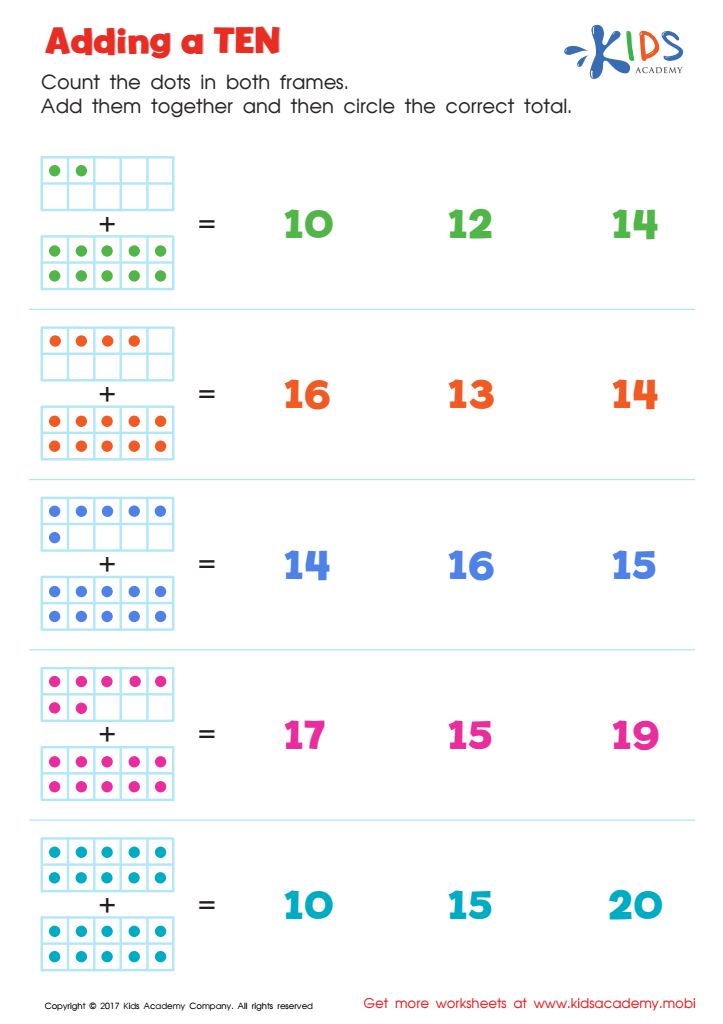
Adding a Ten Worksheet
 Assign to My Students
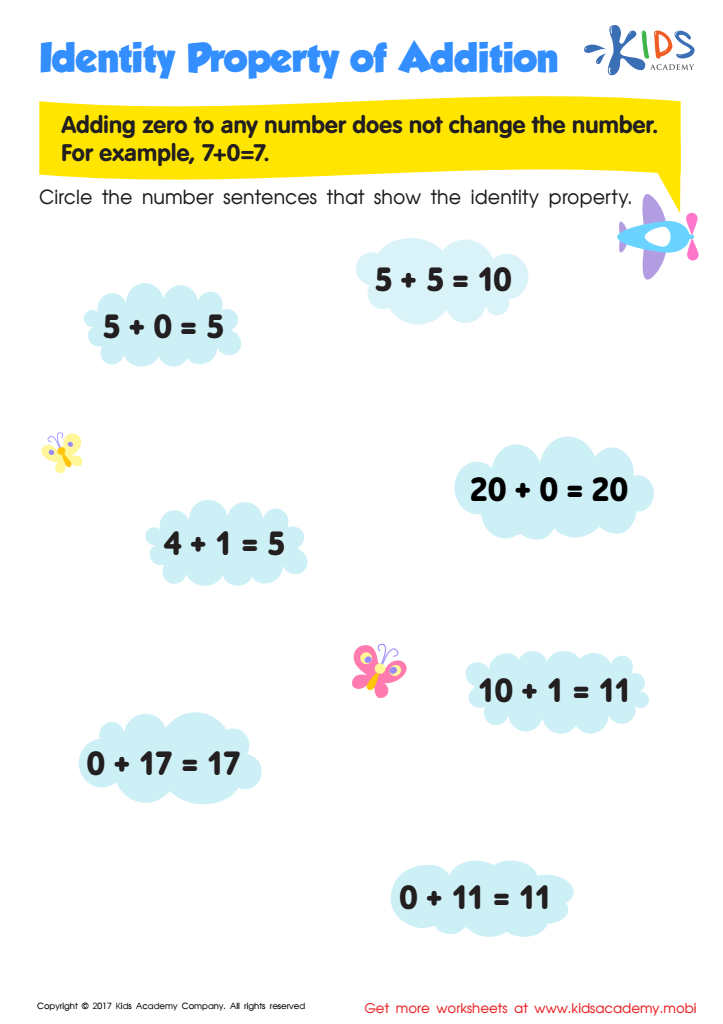
Identity Property of Addition Worksheet
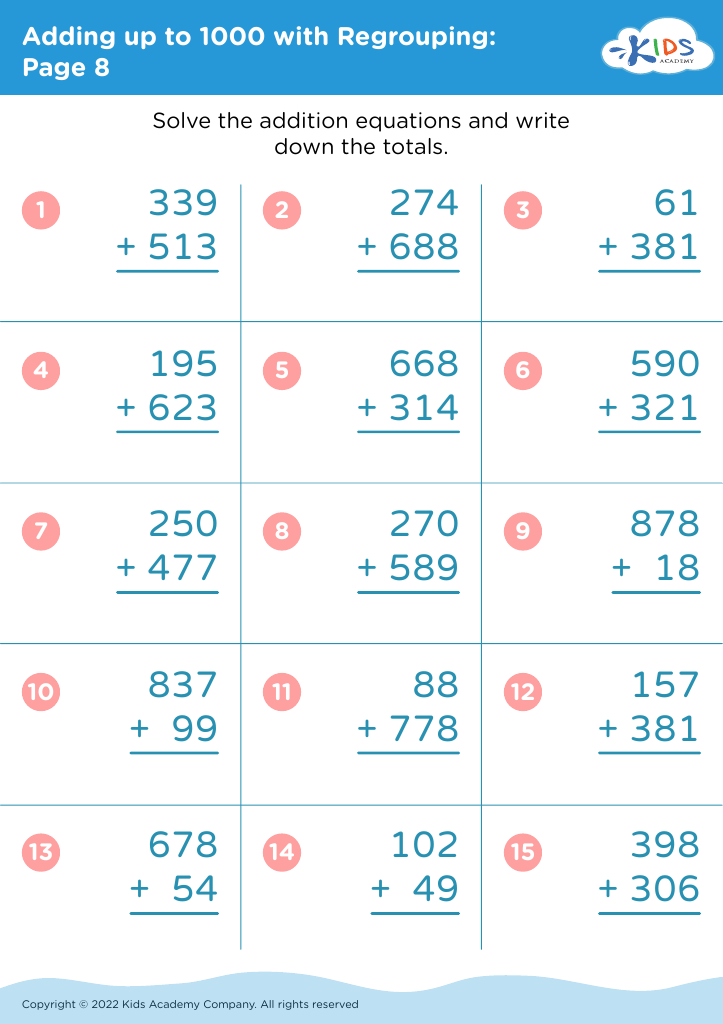
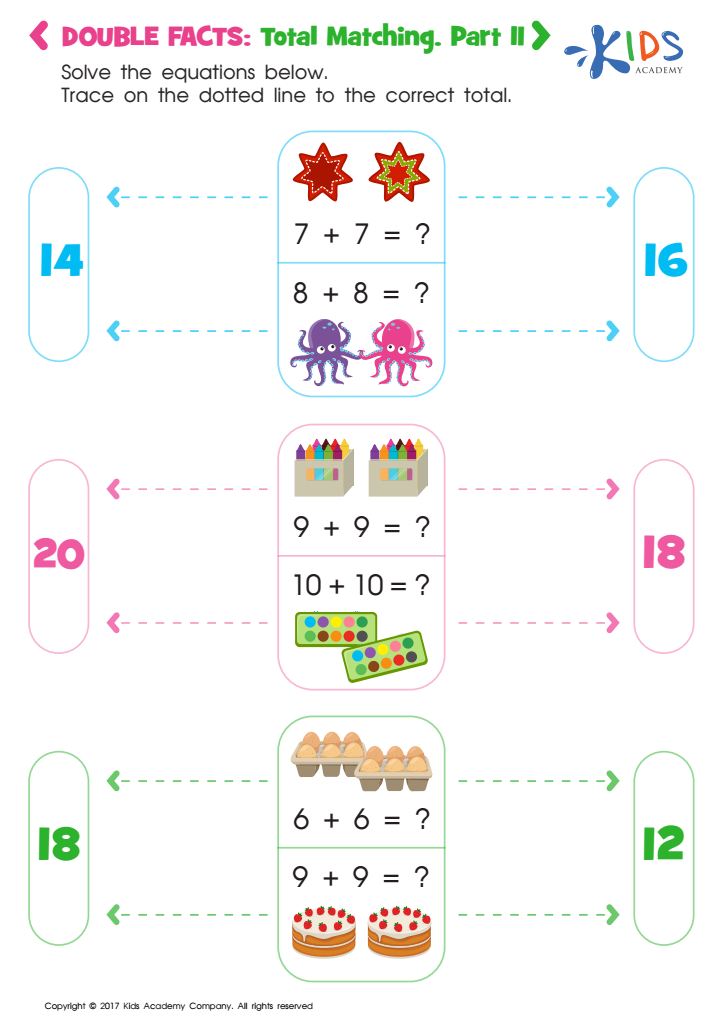
Double Facts: Total Matching 2 Worksheet
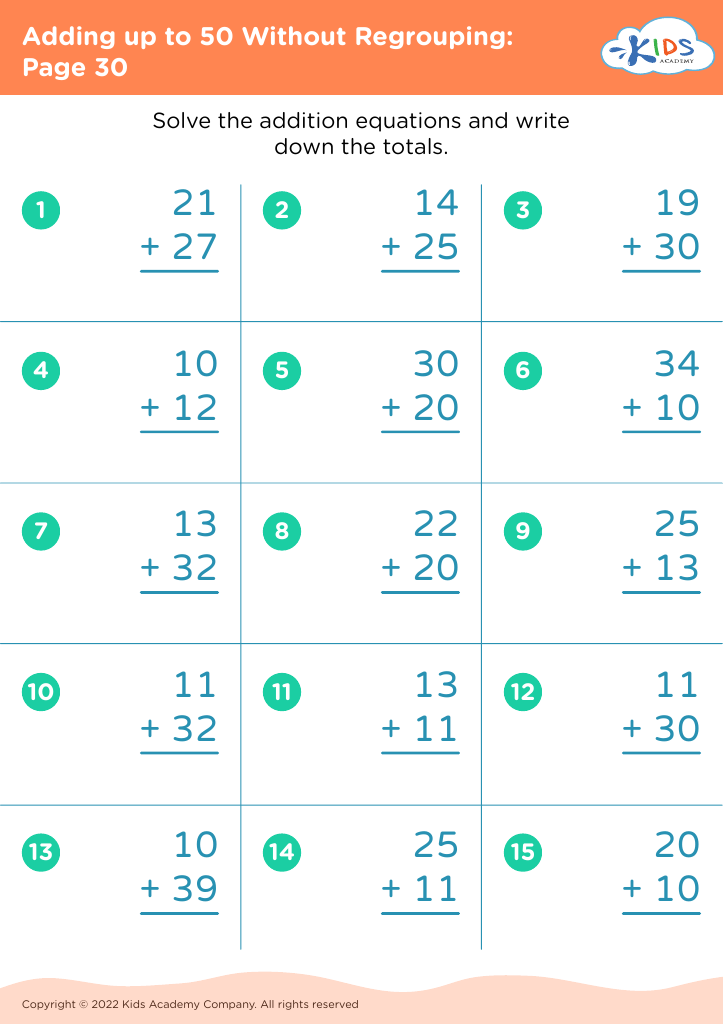








Understanding addition is crucial for children aged 5-7 as it lays the foundation for future math skills and overall cognitive development. At this age, children are naturally curious, and introducing them to addition in a tangible and engaging manner helps foster a strong mathematical understanding. When parents and teachers emphasize the importance of addition, they open the door to critical thinking and problem-solving skills that benefit children in all areas of learning.
Moreover, grasping addition allows young learners to build confidence and encourages a positive attitude towards math. It is not only about memorizing sums but about comprehending the process of combining numbers to find a total, which can be applied to real-life scenarios, such as sharing snacks or counting toys. Engaging children with fun activities, such as games or visual aids, makes learning enjoyable and reinforces these concepts.
In doing so, parents and teachers play a vital role in promoting a lifelong love for math. As addition serves as the stepping stone to more complex mathematics, support during this developmental stage ensures children are well-prepared for future mathematical challenges—which can contribute to their overall academic success. Thus, a focus on addition fosters both cognitive and emotional growth in young learners.








