Understanding equations Addition Worksheets for Ages 5-7
4 filtered results
-
From - To
Our "Understanding Equations Addition Worksheets for Ages 5-7" are thoughtfully crafted to introduce young learners to the foundational concepts of addition. These worksheets provide engaging and interactive activities that simplify the understanding of equations for children. Through a variety of exercises, kids will learn to solve basic addition problems and comprehend the principles behind the equations, building essential early math skills. Ideal for classroom use or extra practice at home, our worksheets will ignite a passion for math in young minds and lay a solid foundation for future mathematical success. Explore now for free!
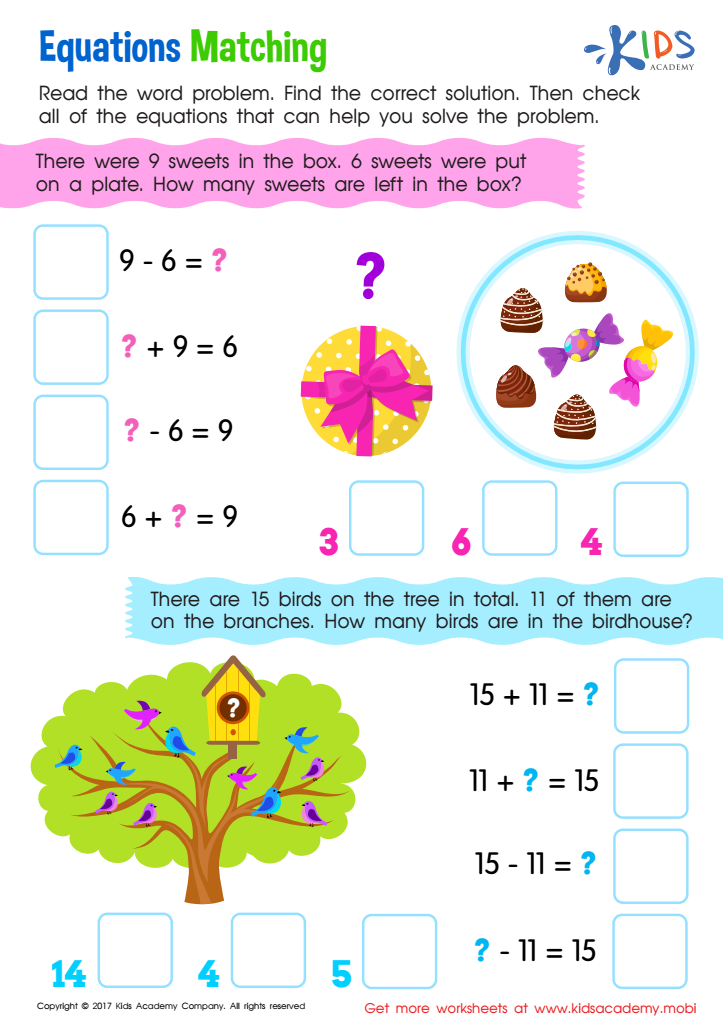
Equations Matching Word Problems Worksheet
 Assign to My Students
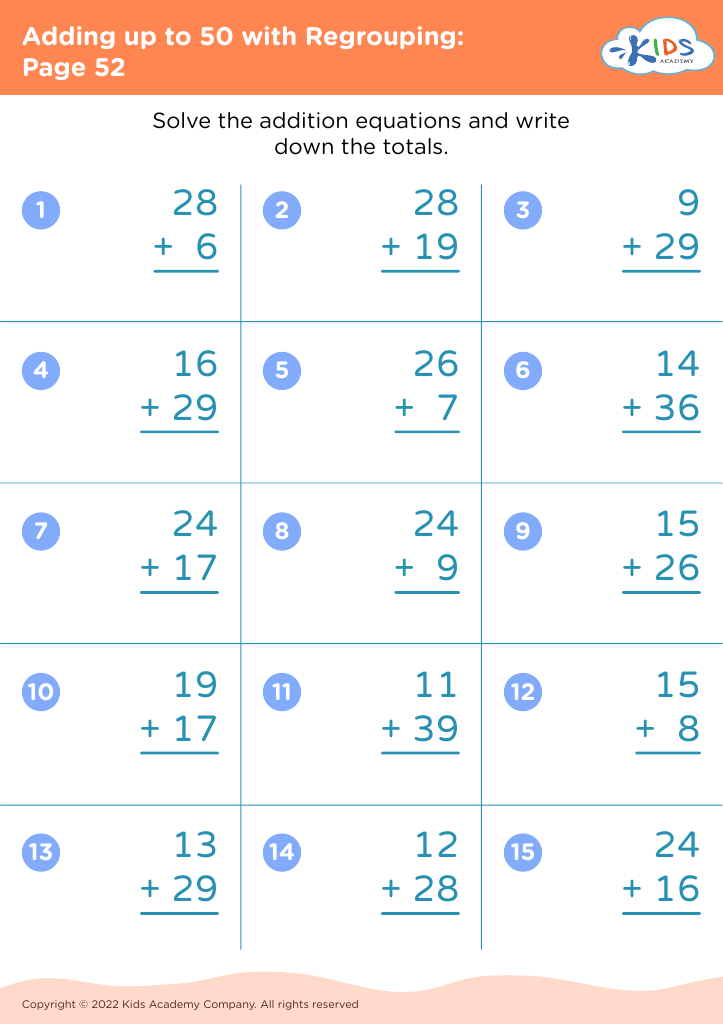
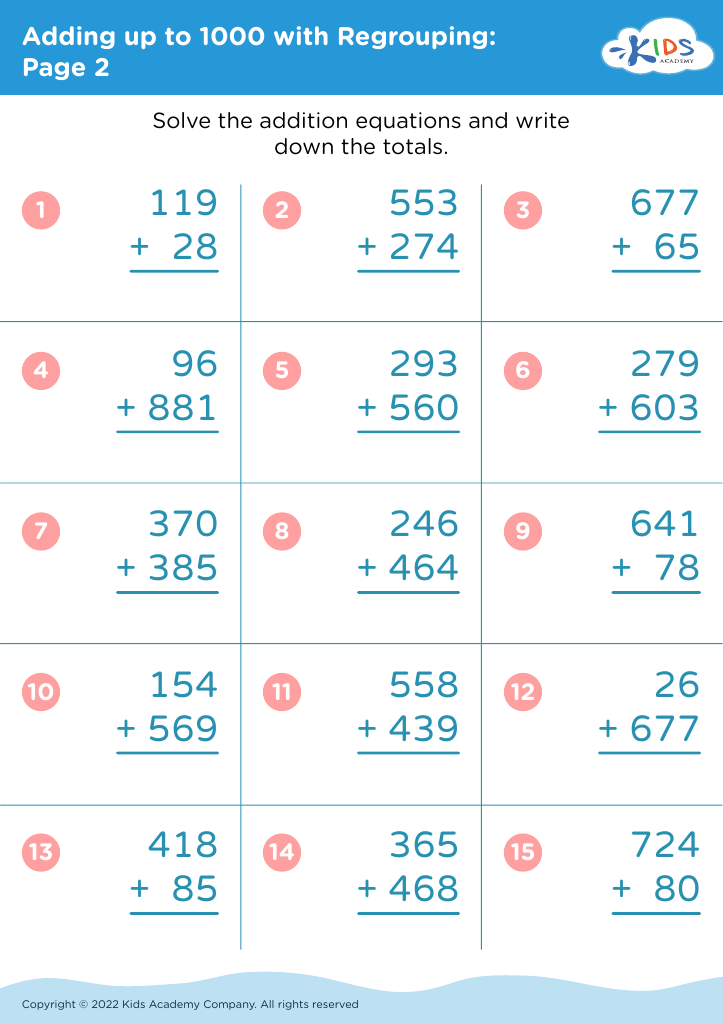
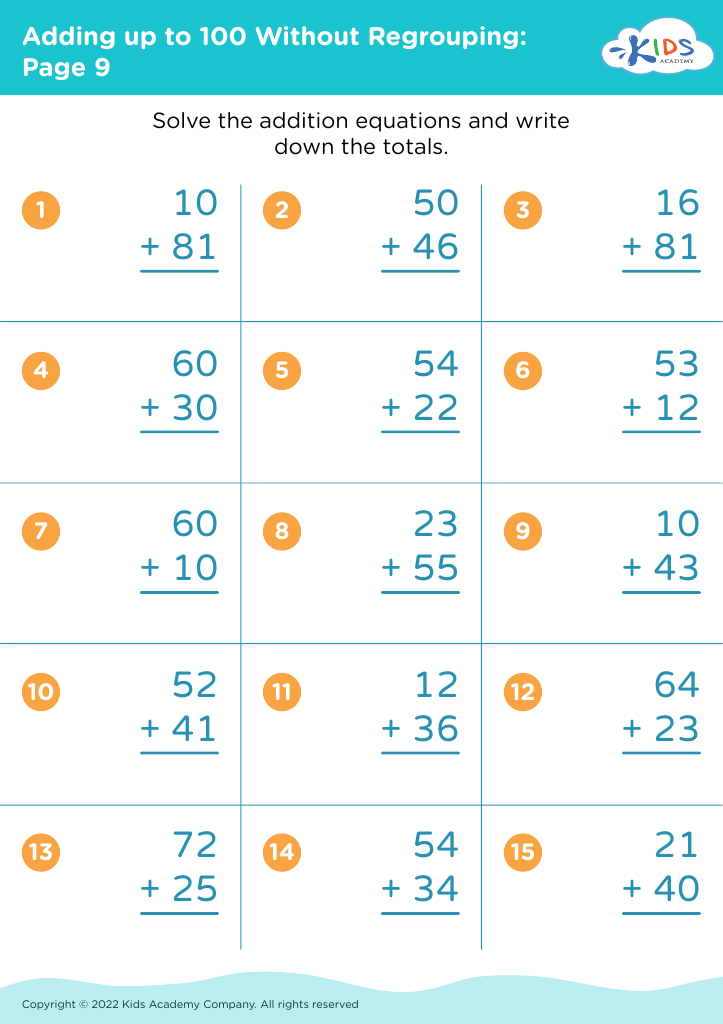






.jpg)

Understanding basic addition equations at ages 5-7 lays a crucial foundation for children's mathematical development. At this early stage, children's brains are remarkably adept at absorbing new information and forming cognitive connections. Mastering addition not only aids in immediate academic success but also contributes to long-term cognitive development.
First, addition is a fundamental arithmetic skill, and fluency in this area boosts overall math confidence. Early engagement with adding helps learners comprehend number relationships, sequencing, and problem-solving, which are vital for more complex math concepts later on. Children who grasp addition early often find it easier to learn subtraction, multiplication, and division.
Second, early mathematical success directly impacts self-esteem and attitudes towards learning. Positive experiences with math can foster an enthusiasm for tackling new challenges and boost students' confidence across other subjects, enhancing their overall educational experience.
Finally, parents and teachers who engage young children in understanding addition are also implicitly teaching them about patience, perseverance, and critical thinking. Encouraging a growth mindset in math helps children understand that learning is a process that requires effort and practice. By investing in early math education, parents and teachers are setting children up for both academic and personal success, enriching their lifelong learning journey.








