Filters

158 filtered results

Clear all filters
Favorites
With answer key
Interactive

158 filtered results

Difficulty Level

Grade


Check out this FREE Trial Lesson on Addition for age 5-7!

A

Favorites
With answer key
Interactive
  • 5-7
  • Understanding fractions
  • Addition
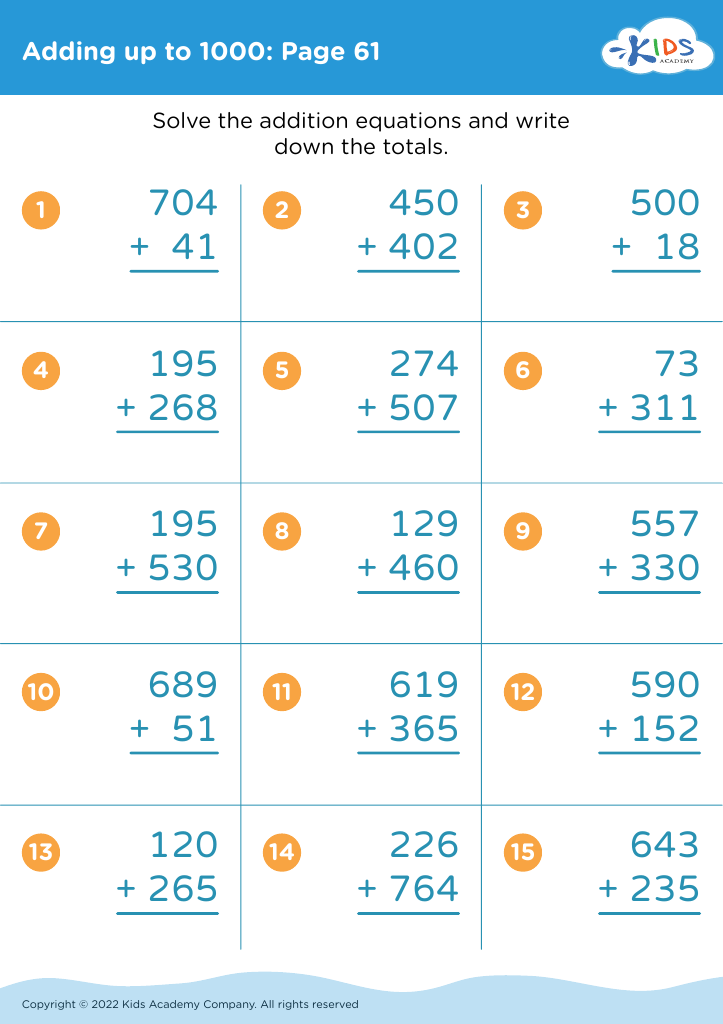
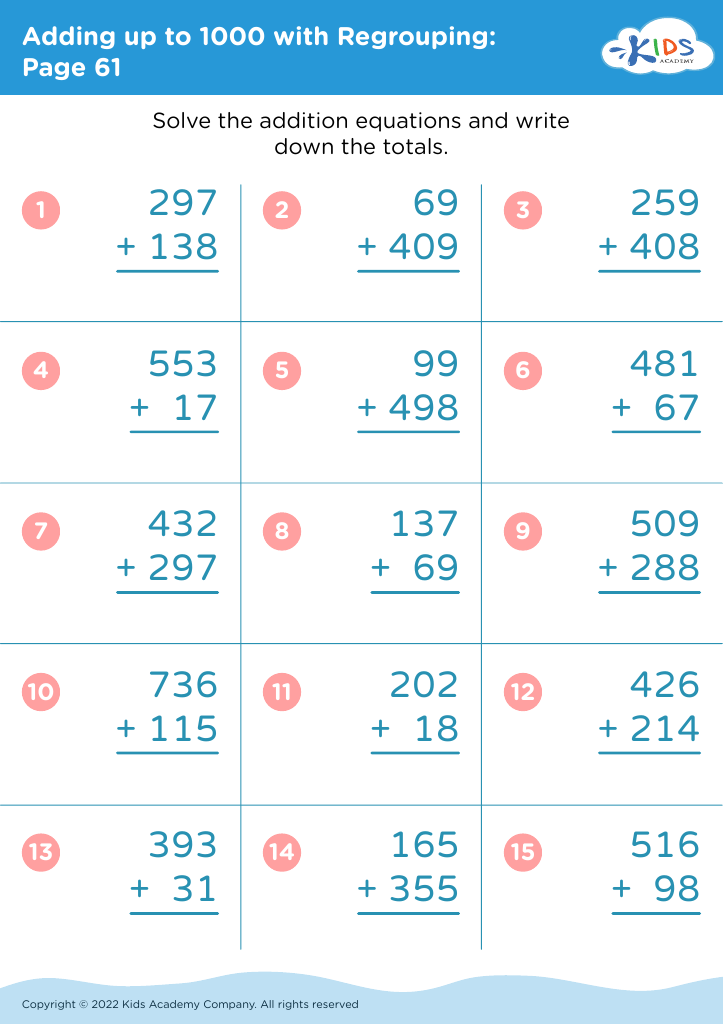
Adding up to 1000: Page 61

Adding up to 1000: Page 61

Adding up to 1000: Page 61
Worksheet
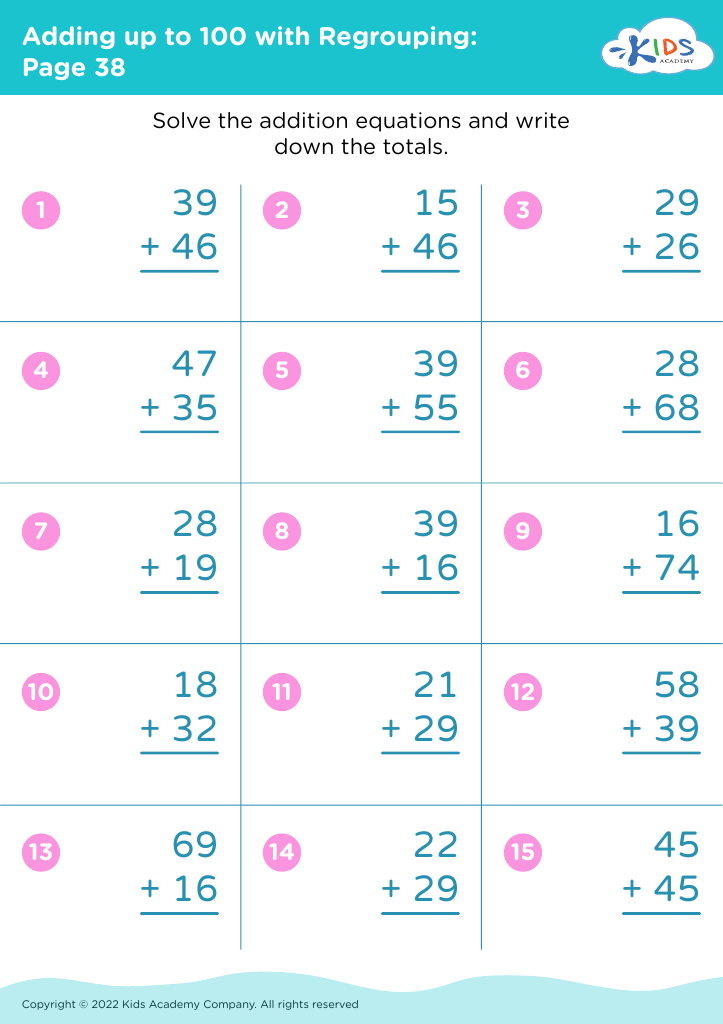
Adding up to 100 with Regrouping: Page 38
Worksheet
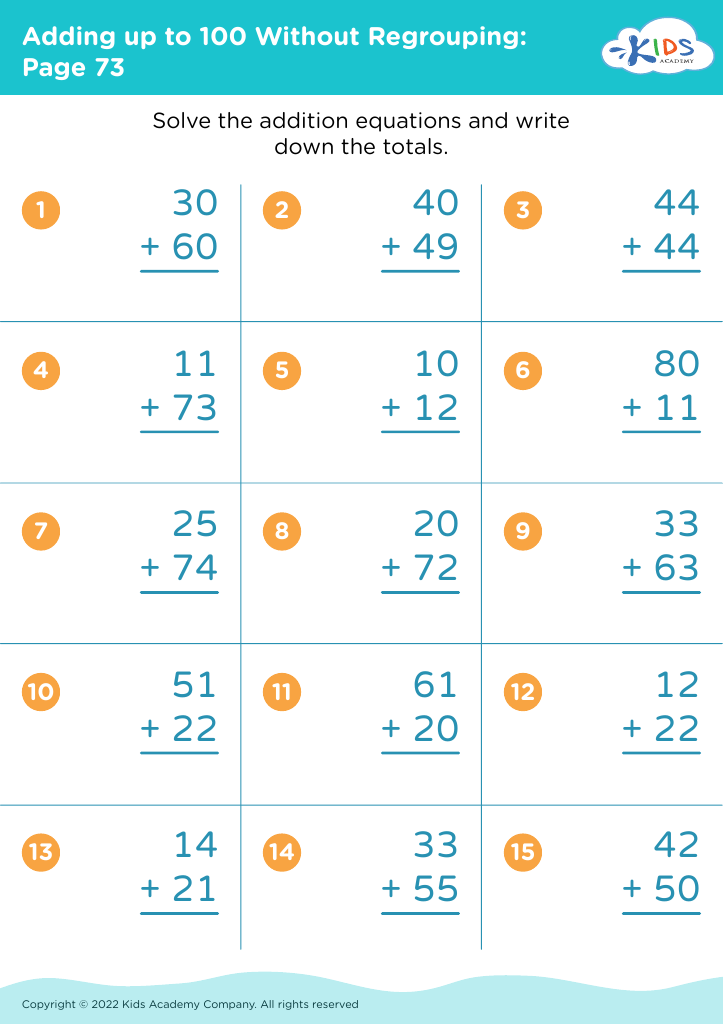
Adding up to 100 Without Regrouping: Page 73
Worksheet
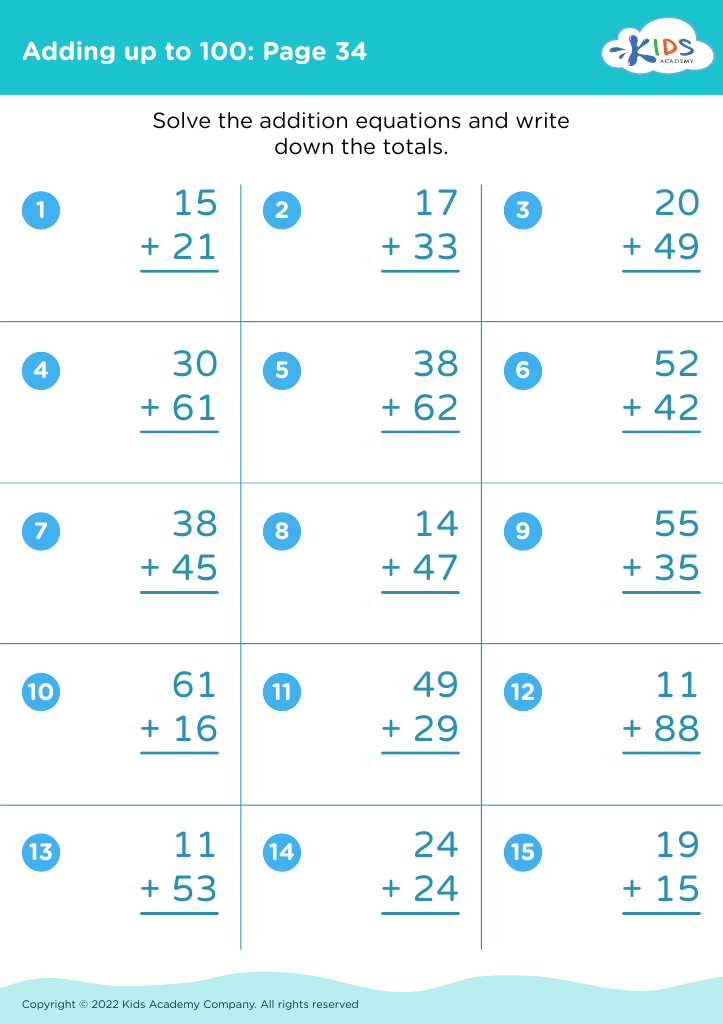
Adding up to 100: Page 34

Adding up to 100: Page 34

Adding up to 100: Page 34
Worksheet
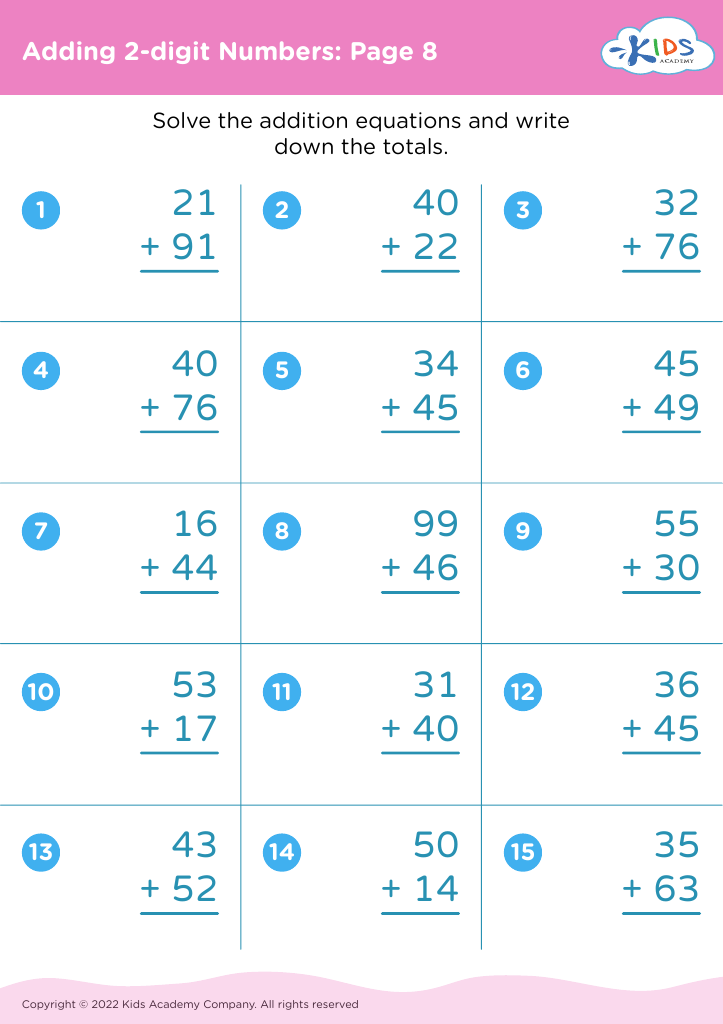
Adding 2-digit Numbers: Page 8

Adding 2-digit Numbers: Page 8

Adding 2-digit Numbers: Page 8
Worksheet
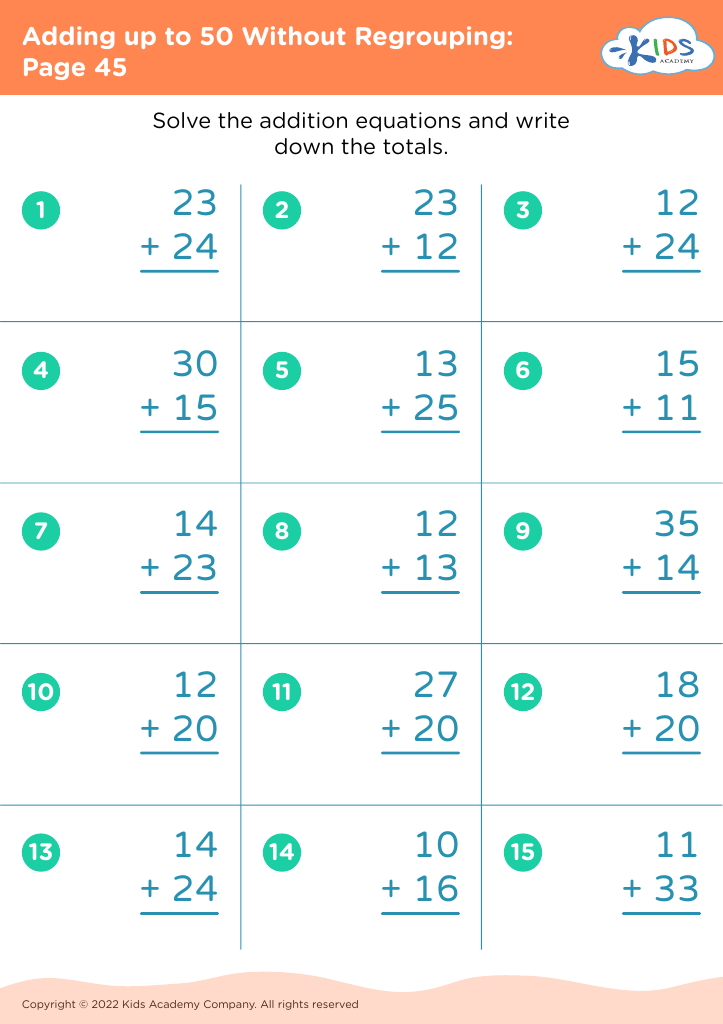
Adding up to 50 Without Regrouping: Page 45
Worksheet
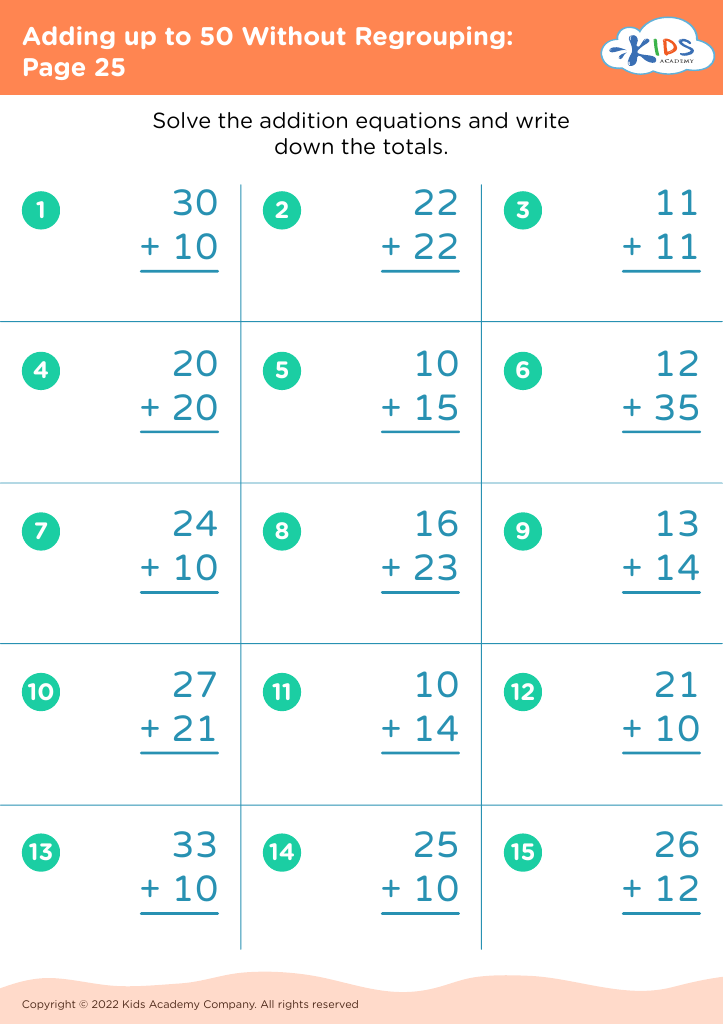
Adding up to 50 Without Regrouping: Page 25
Worksheet
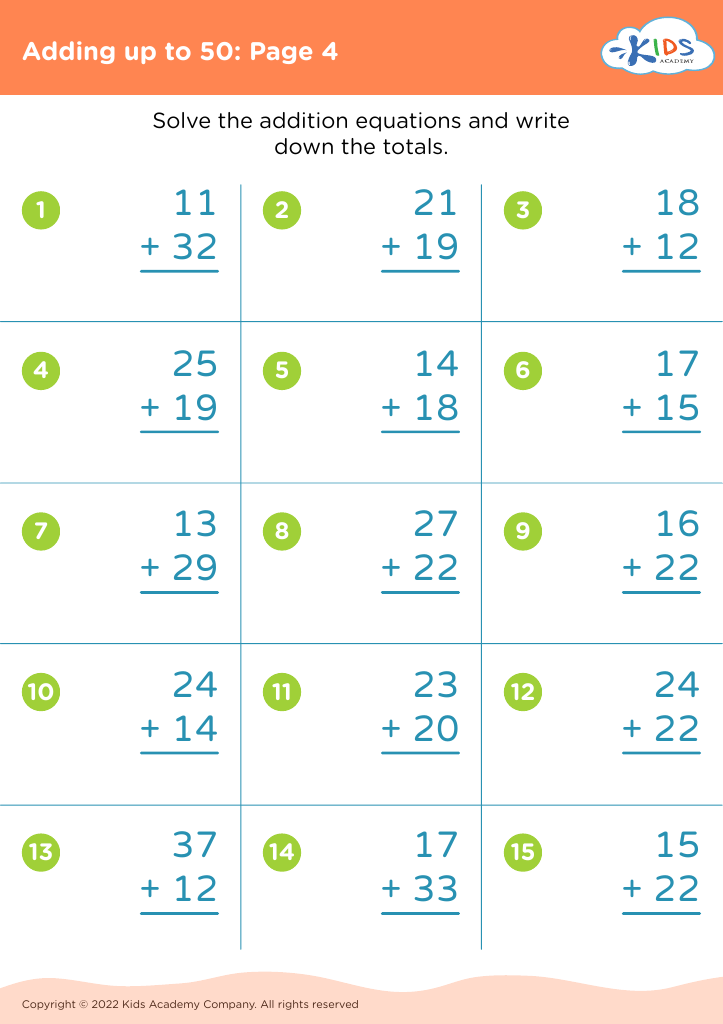
Adding up to 50: Page 4

Adding up to 50: Page 4

Adding up to 50: Page 4
Worksheet
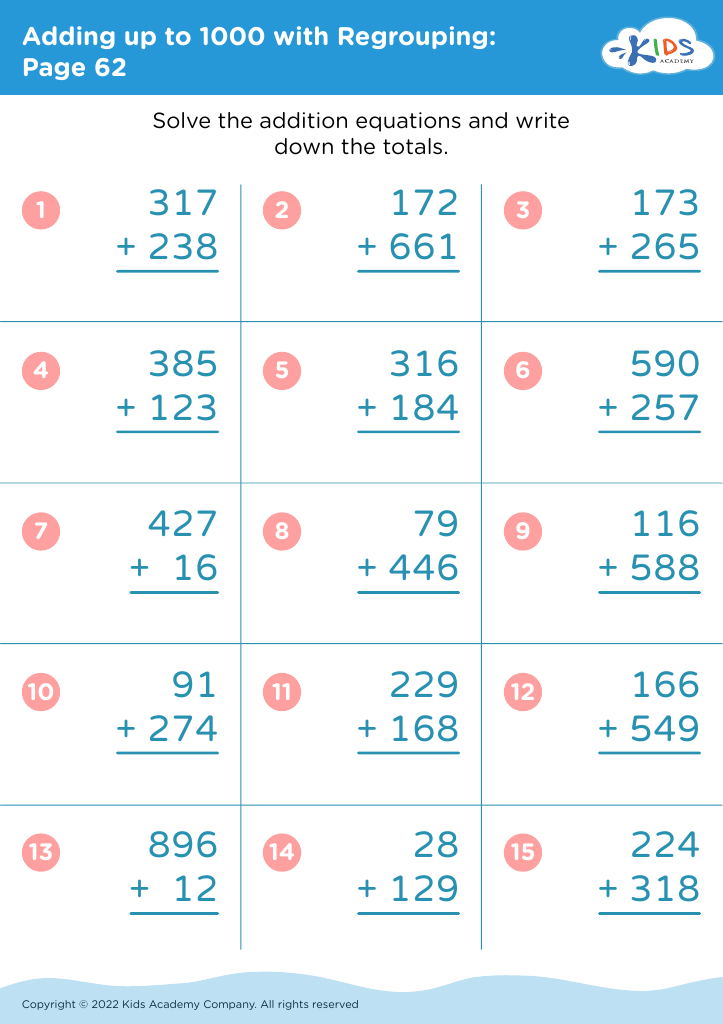
Adding up to 1000 with Regrouping: Page 62
Worksheet
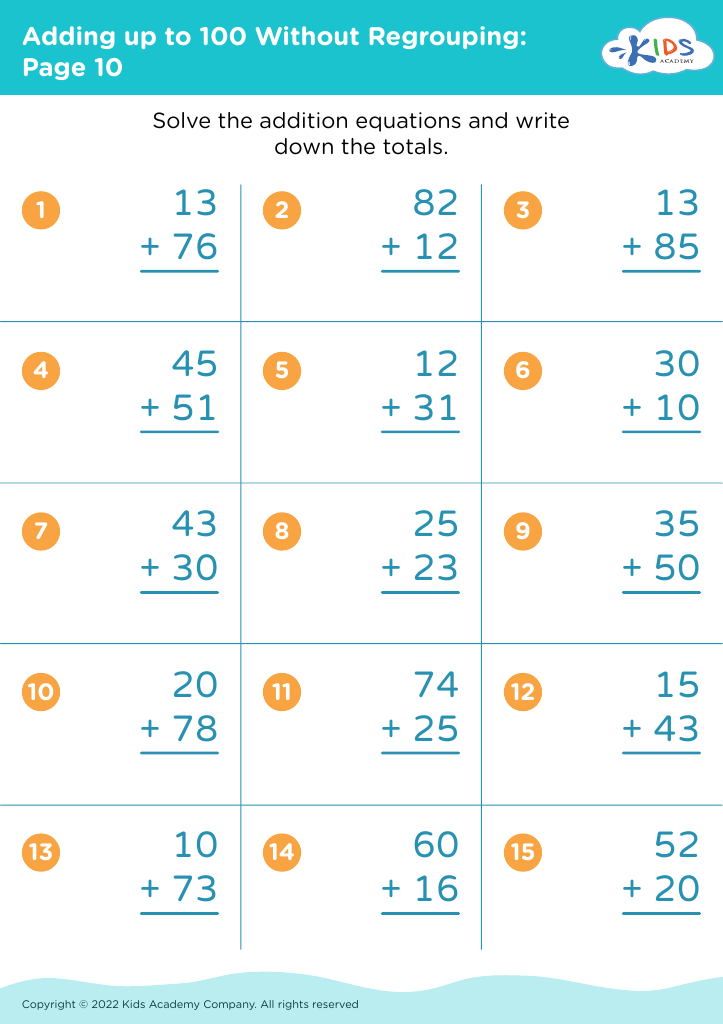
Adding up to 100 Without Regrouping: Page 10
Worksheet
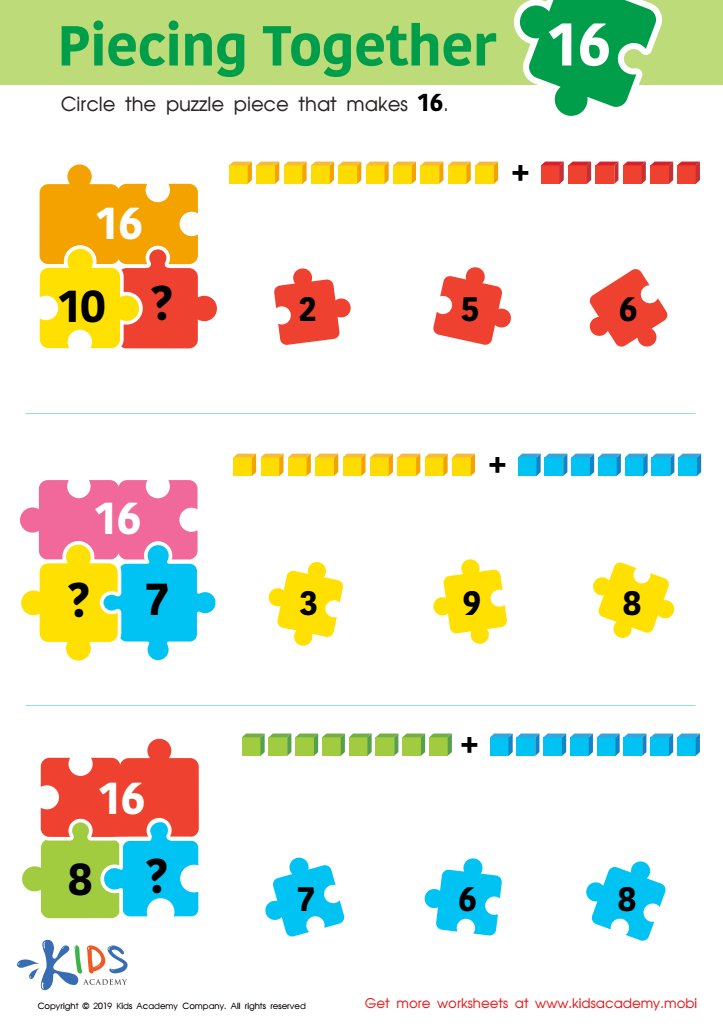
Piecing Together 16 Worksheet

Piecing Together 16 Worksheet

Combine learning with fun using this colorful worksheet! Ask your preschoolers what they see in the picture, then help them solve the mathematical equations on the puzzle pieces. One equation is missing on each; have them circle the piece that will make the bottom puzzle piece numbers equal 16. Use puzzles and bright colors to teach - it's one of the best ways your kids can learn!
Piecing Together 16 Worksheet
Worksheet
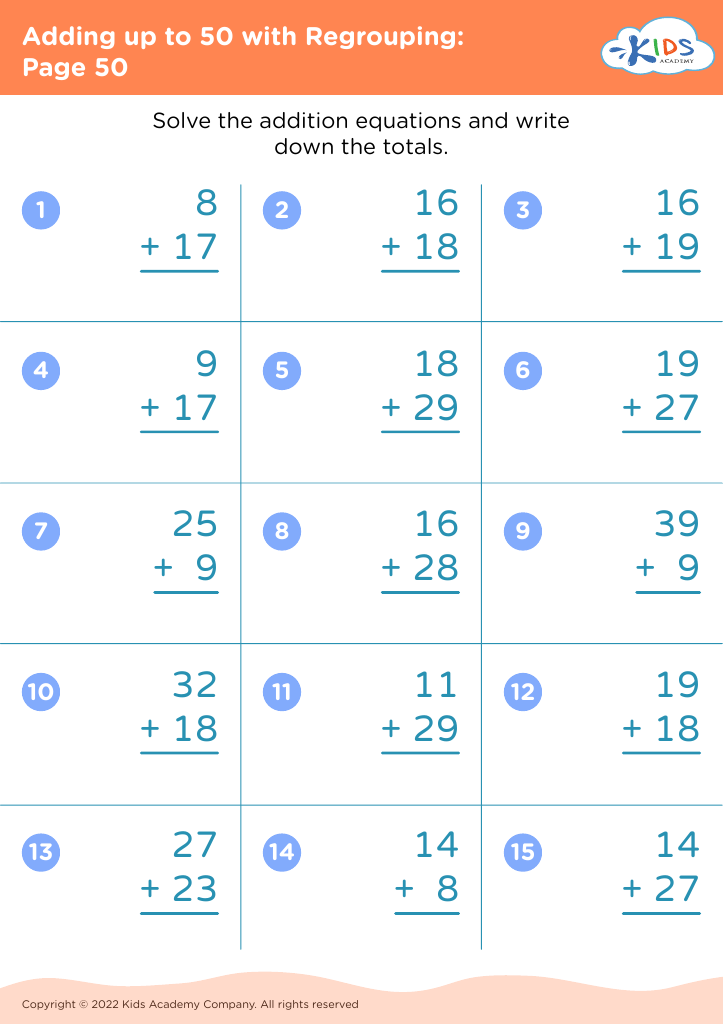
Adding up to 50 with Regrouping: Page 50
Worksheet
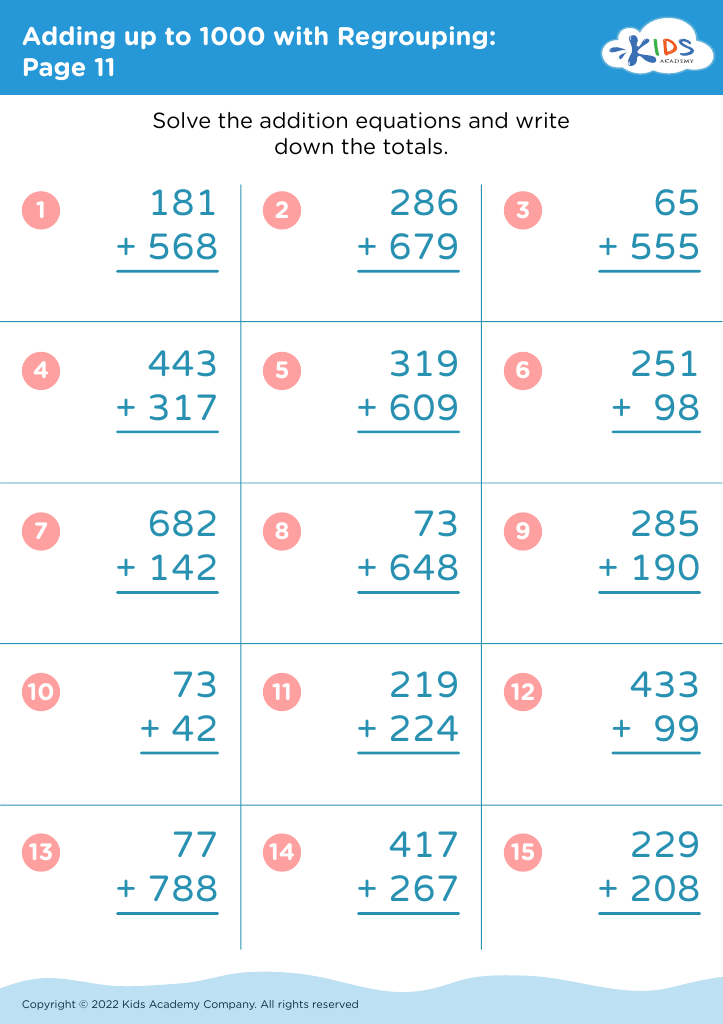
Adding up to 1000 with Regrouping: Page 11
Worksheet
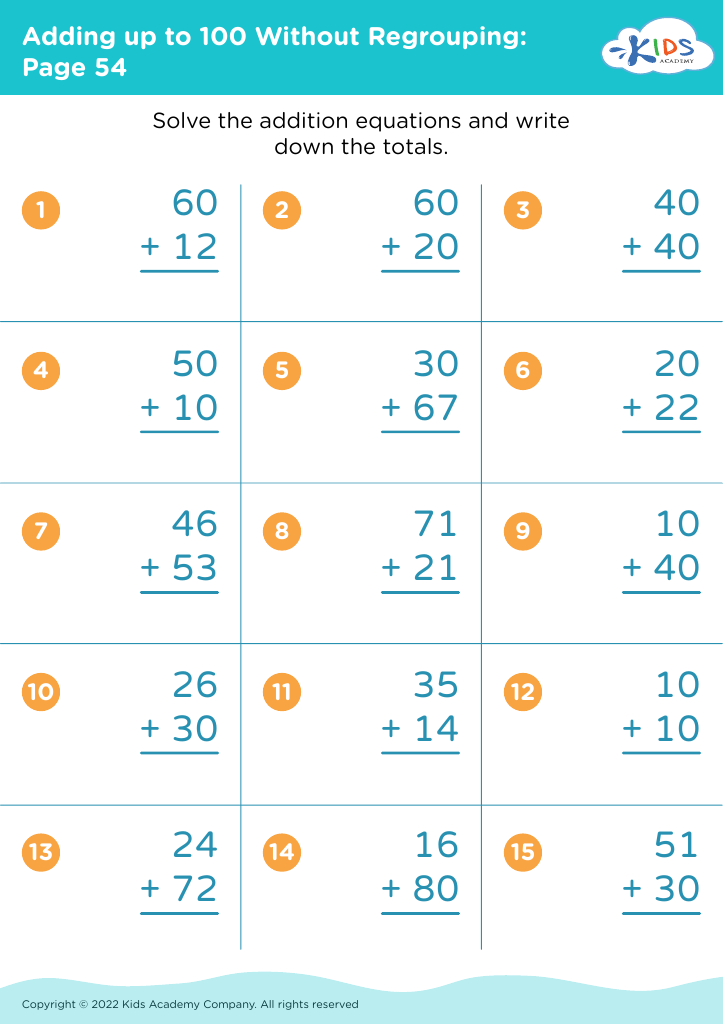
Adding up to 100 Without Regrouping: Page 54
Worksheet
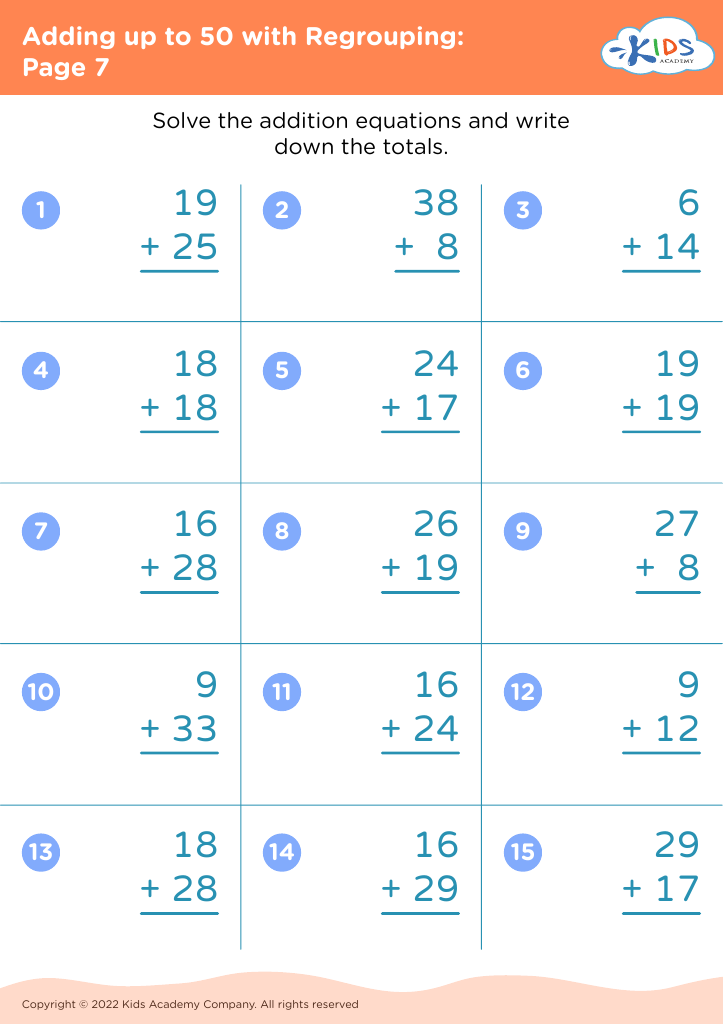
Adding up to 50 with Regrouping: Page 7
Worksheet
Adding up to 1000 with Regrouping: Page 61
Worksheet
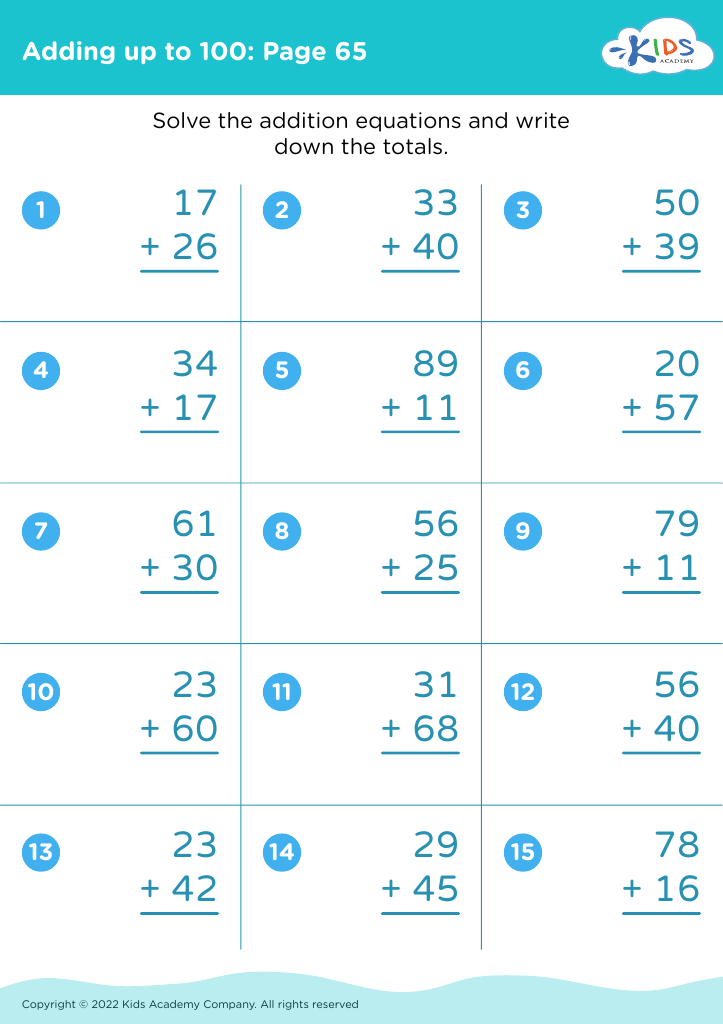
Adding up to 100: Page 65

Adding up to 100: Page 65

Adding up to 100: Page 65
Worksheet
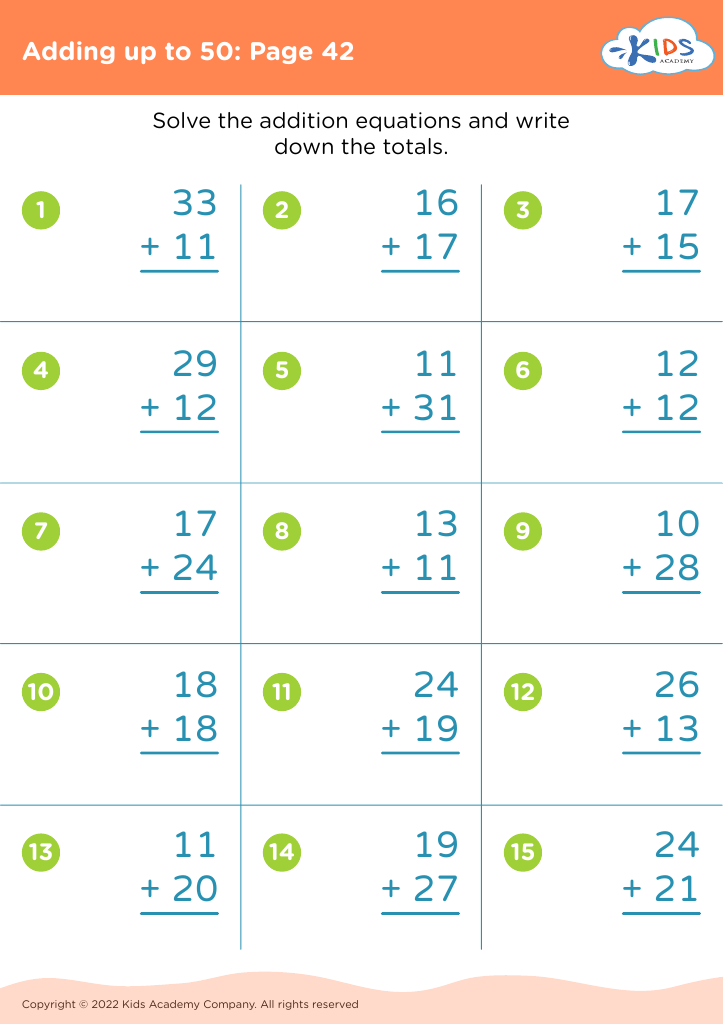
Adding up to 50: Page 42

Adding up to 50: Page 42

Adding up to 50: Page 42
Worksheet
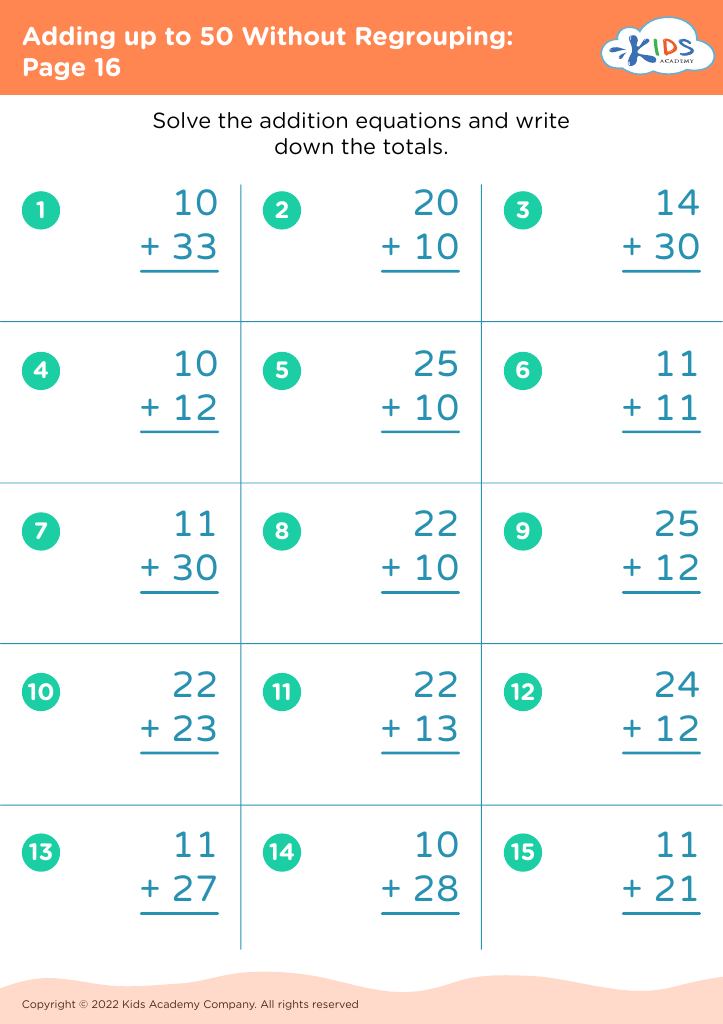
Adding up to 50 Without Regrouping: Page 16
Worksheet
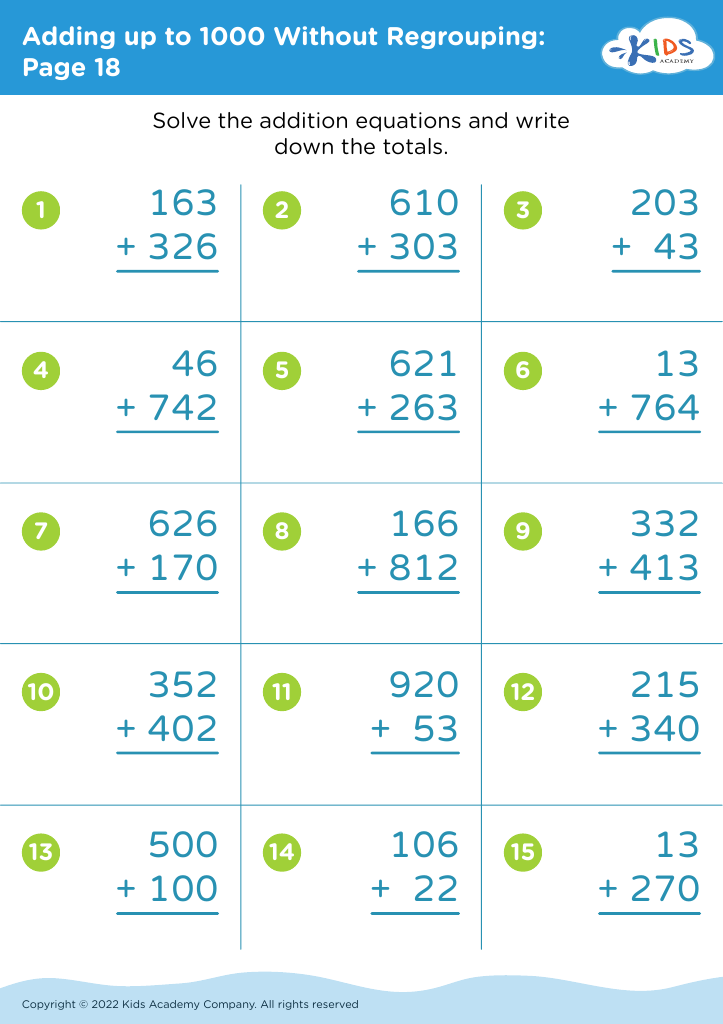
Adding up to 1000 Without Regrouping: Page 18
Worksheet
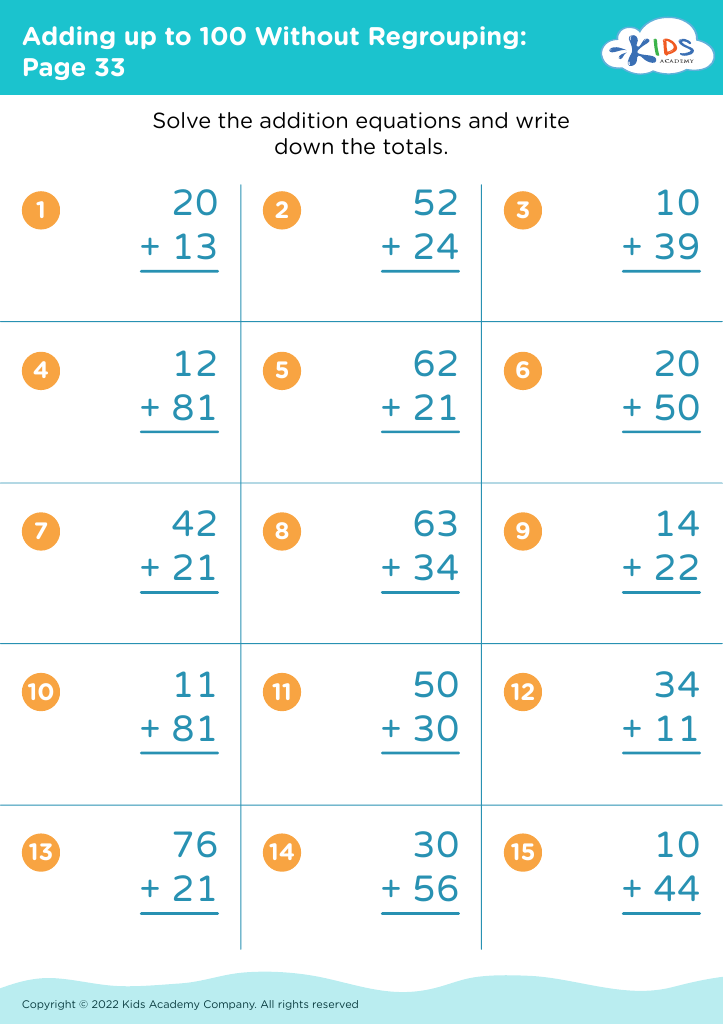
Adding up to 100 Without Regrouping: Page 33
Worksheet
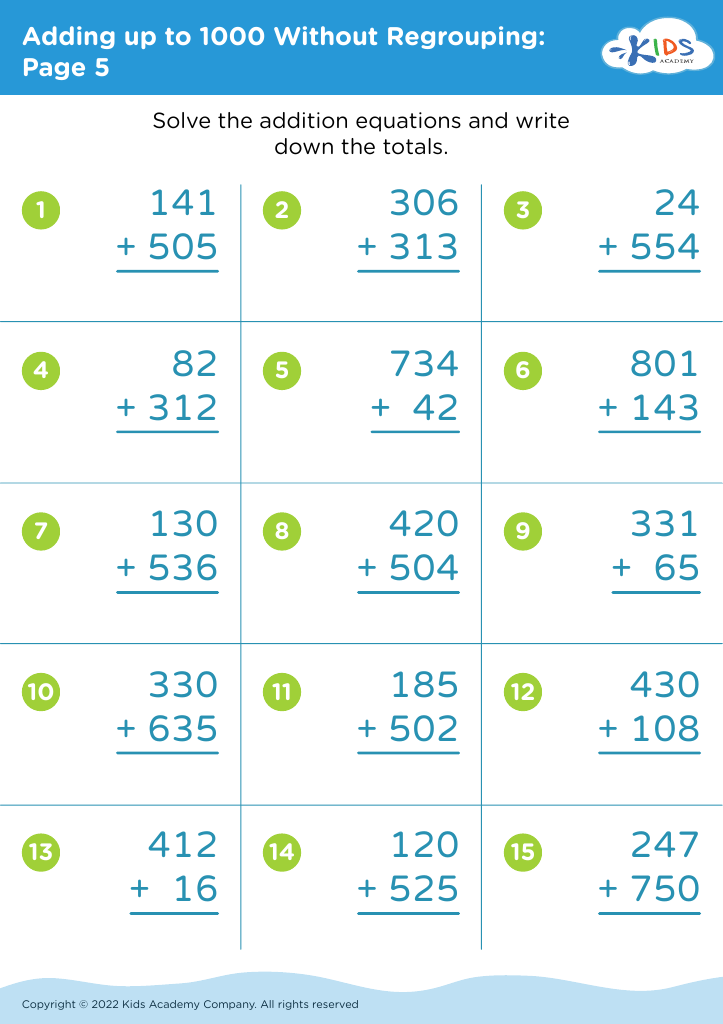
Adding up to 1000 Without Regrouping: Page 5
Worksheet
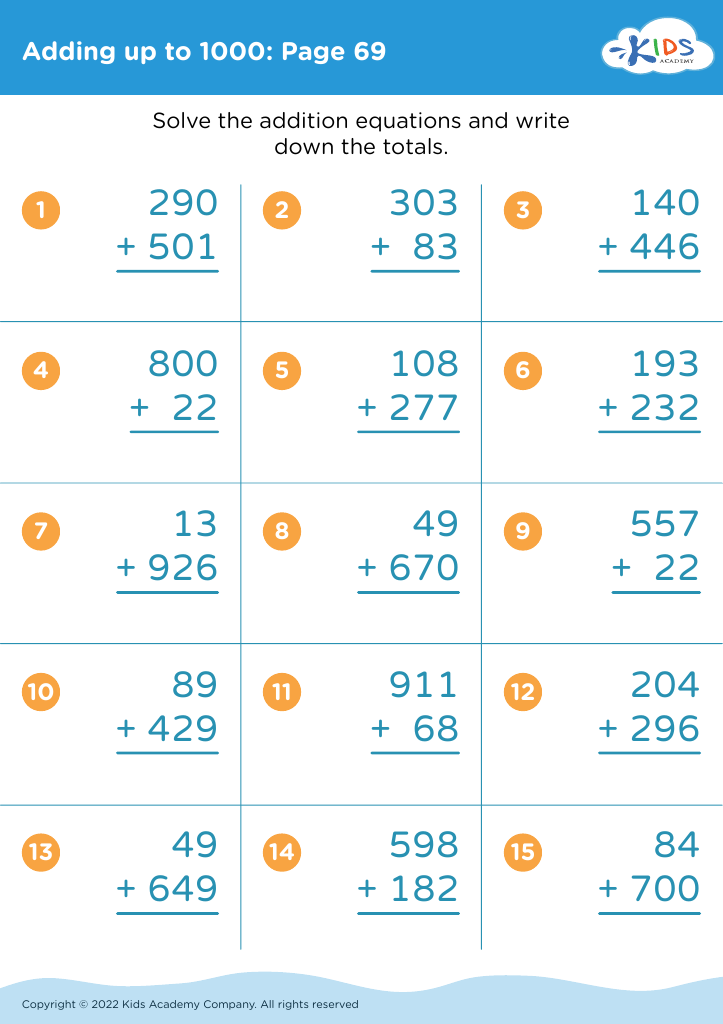
Adding up to 1000: Page 69

Adding up to 1000: Page 69

Adding up to 1000: Page 69
Worksheet
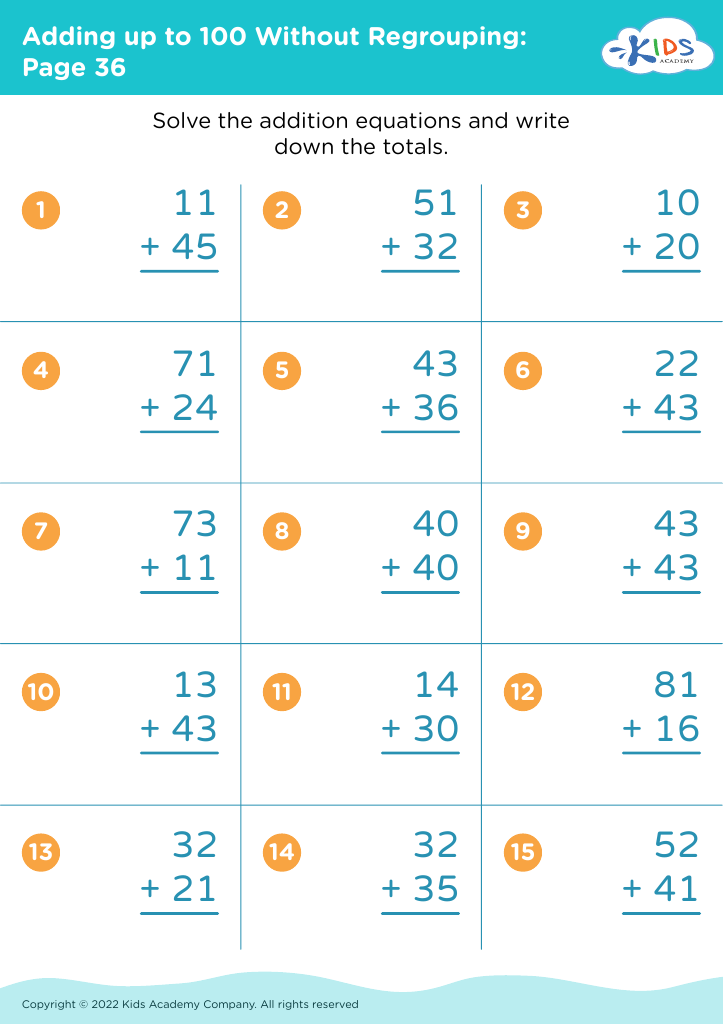
Adding up to 100 Without Regrouping: Page 36
Worksheet


Understanding fractions and their addition is crucial for children ages 5 to 7, as it lays the foundation for more complex mathematical concepts they will encounter later in their education. At this developmental stage, children are beginning to grasp the idea of parts versus wholes, which is fundamental in a variety of everyday situations, such as sharing pizza or measuring ingredients for cooking.

Parents and teachers should care about fostering this understanding because it promotes critical thinking and problem-solving skills. It can be an engaging topic that connects mathematics to real-life scenarios, enhancing children's interest in the subject. When children understand how to add fractions—such as combining 1/4 and 1/2—they gain not only the ability to tackle simple calculations but also insight into concepts of equivalence and comparison.

Moreover, mastering fractions at a young age builds confidence and encourages a positive attitude toward mathematics. This early success can reduce math anxiety and promote a lifelong love for learning. With a solid grasp of fractions, children will be better prepared for future mathematical concepts, thereby setting the stage for academic success and proficiency in STEM fields. Investing time in this area is beneficial for both educational growth and overall cognitive development.