Understanding number sequences Addition Worksheets for Ages 5-7
3 filtered results
-
From - To
Unlock your child's mathematical potential with our "Understanding Number Sequences Addition Worksheets" designed for ages 5-7! These fun and engaging worksheets from Kids Academy help young learners grasp the concept of number sequences through addition exercises. By progressing through these thoughtfully crafted activities, children enhance their counting skills, recognize patterns, and build a strong foundation in basic math. Perfect for young minds, these worksheets encourage critical thinking and make learning addition an enjoyable experience. Watch your child gain confidence in math with each completed sequence and set them on the path to academic success!
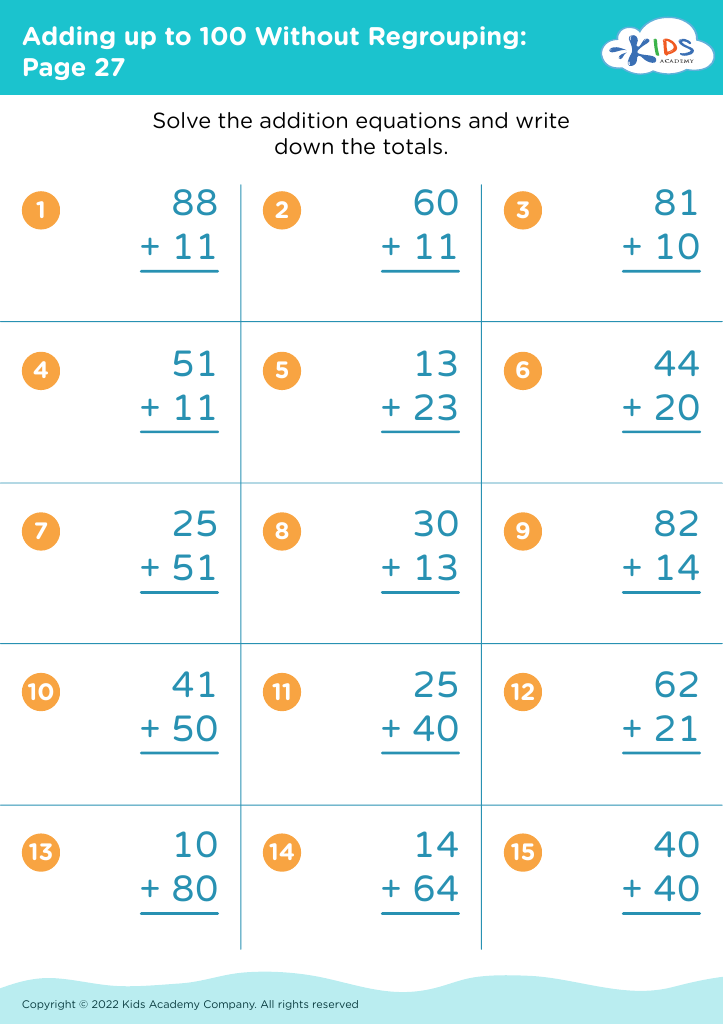
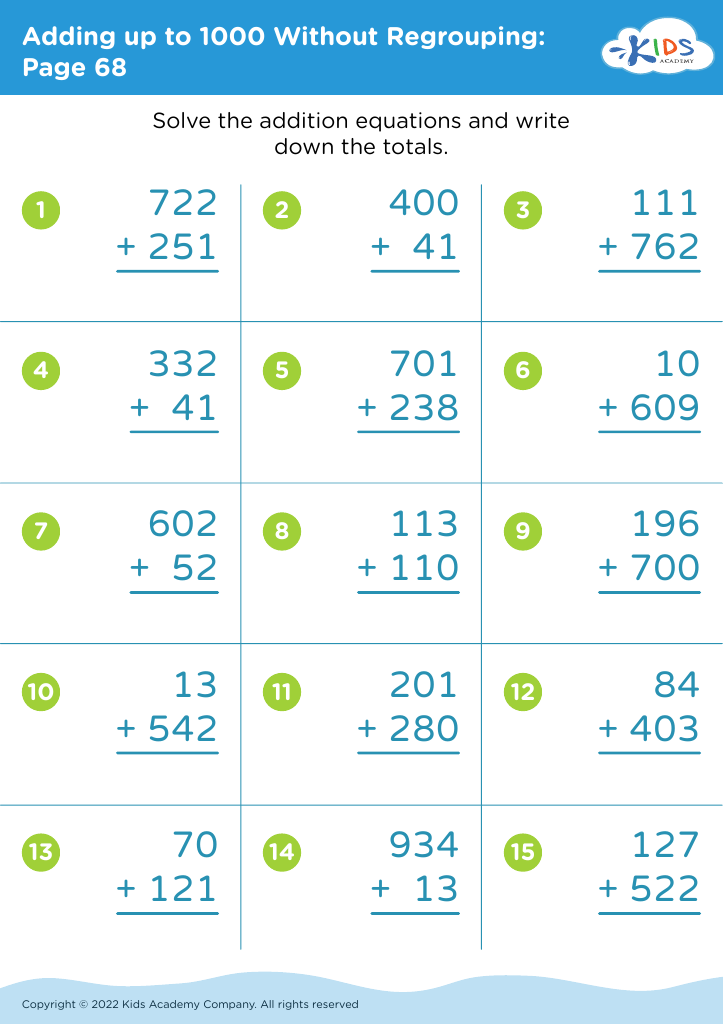
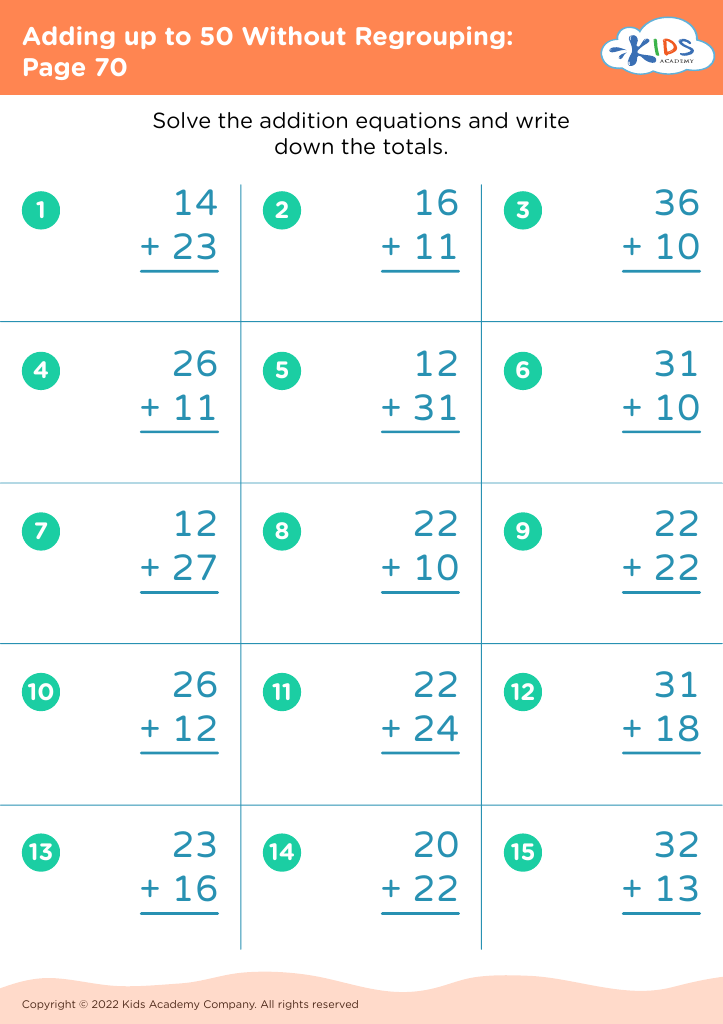







.jpg)
Understanding number sequences and basic addition is fundamental for children ages 5-7, laying the groundwork for all future math learning. At this early developmental stage, engaging with numbers helps enhance cognitive skills by promoting logical thinking and problem-solving abilities. Learning sequences aids children in recognizing patterns, an essential skill not just in math but in real-life situations.
Grasping number sequences builds a child's ability to comprehend the order of numbers and establish a mental framework for more complicated math concepts. This understanding cultivates mathematical fluency, allowing children to approach addition and subsequent operations more confidently.
Addition itself introduces young learners to the concept of combining quantities, which they encounter daily—whether through sharing toys or counting steps. These early arithmetic skills are essential for their progress in school subjects and for everyday tasks. Proficiency in addition fosters numeracy, critical for higher-level math and science fields.
Finally, aligned with early exposure to these concepts is improved academic confidence. When children feel proficient with basic math, they are more likely to embrace and excel in subsequent subjects. For parents and teachers, investing time and effort in teaching number sequences and addition paves the way for a lifelong positive attitude towards learning and problem-solving.








