Understanding patterns Addition Worksheets for Ages 5-7 - Page 2
29 filtered results
-
From - To
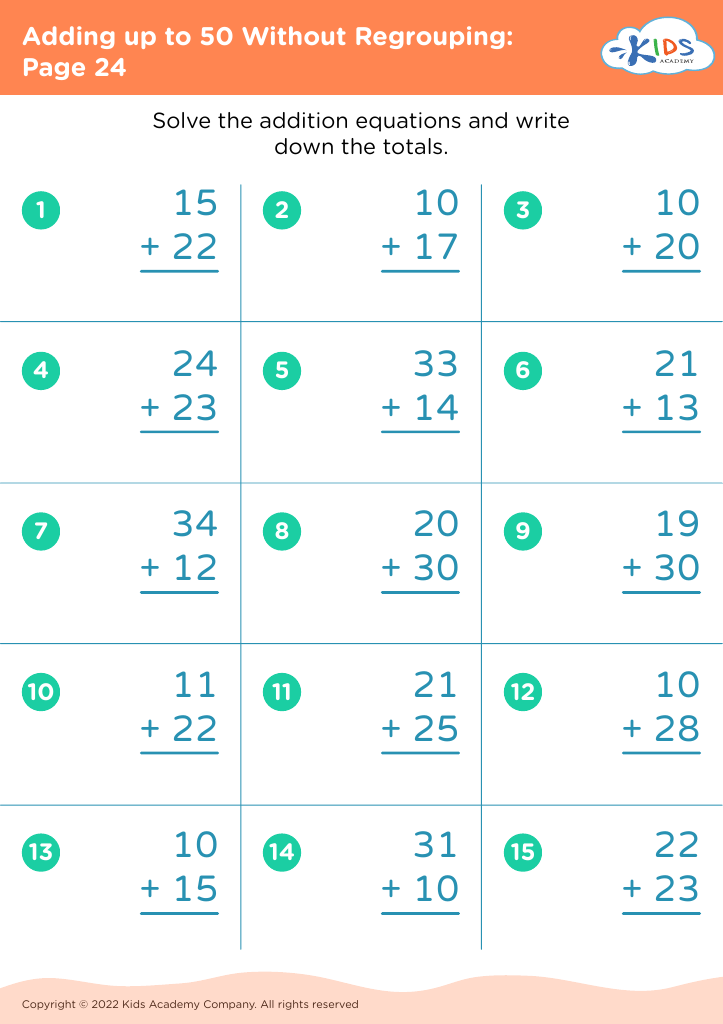
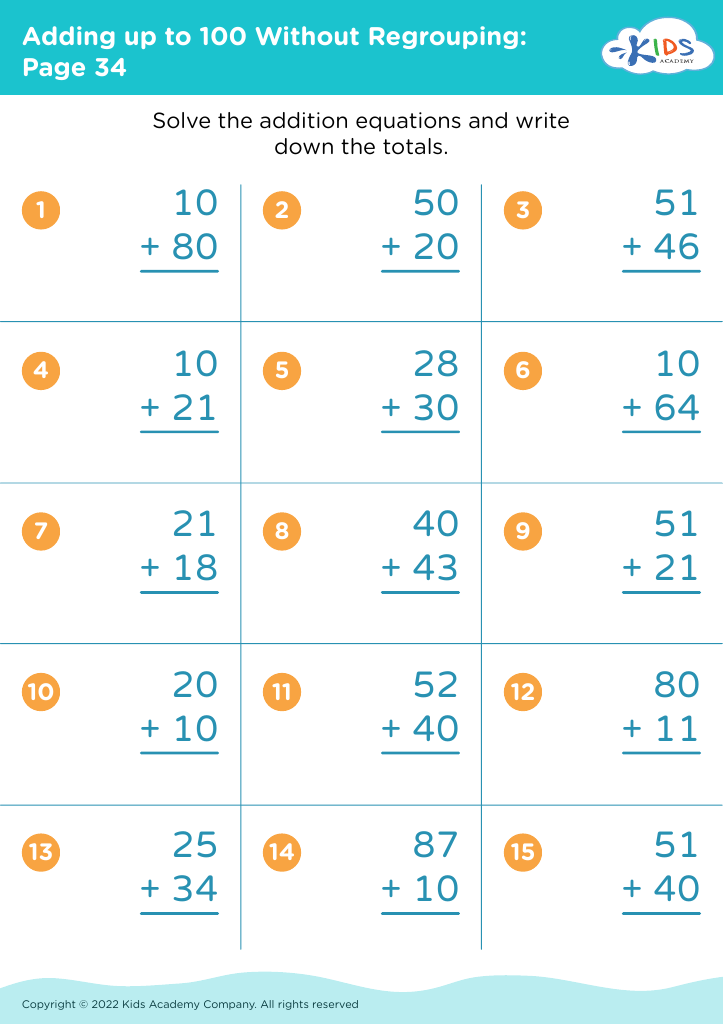
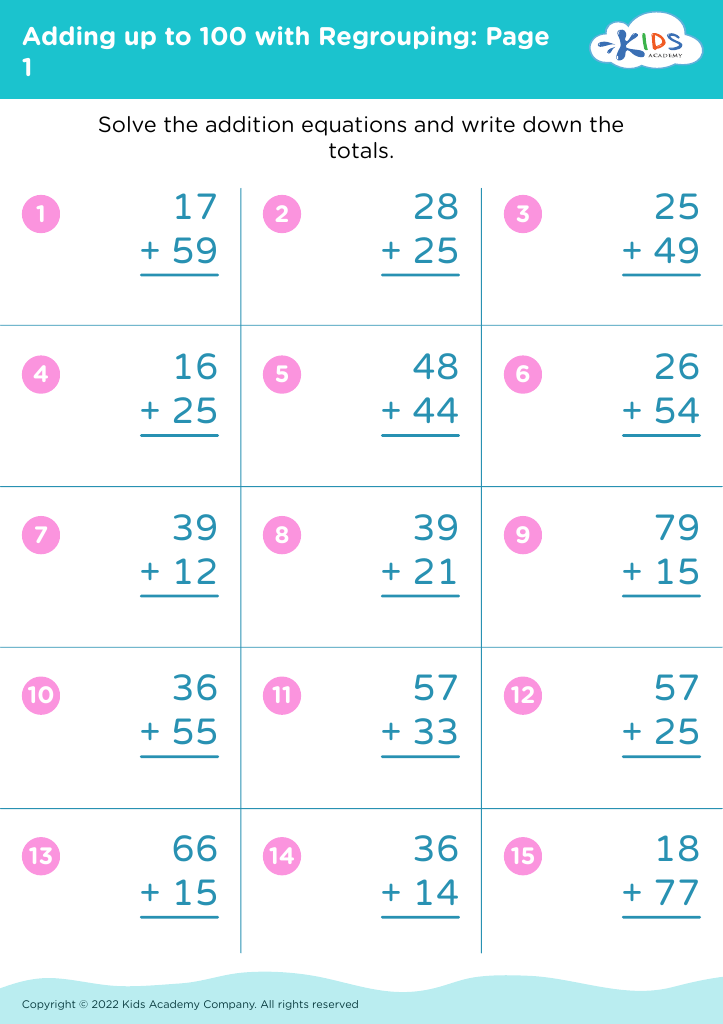
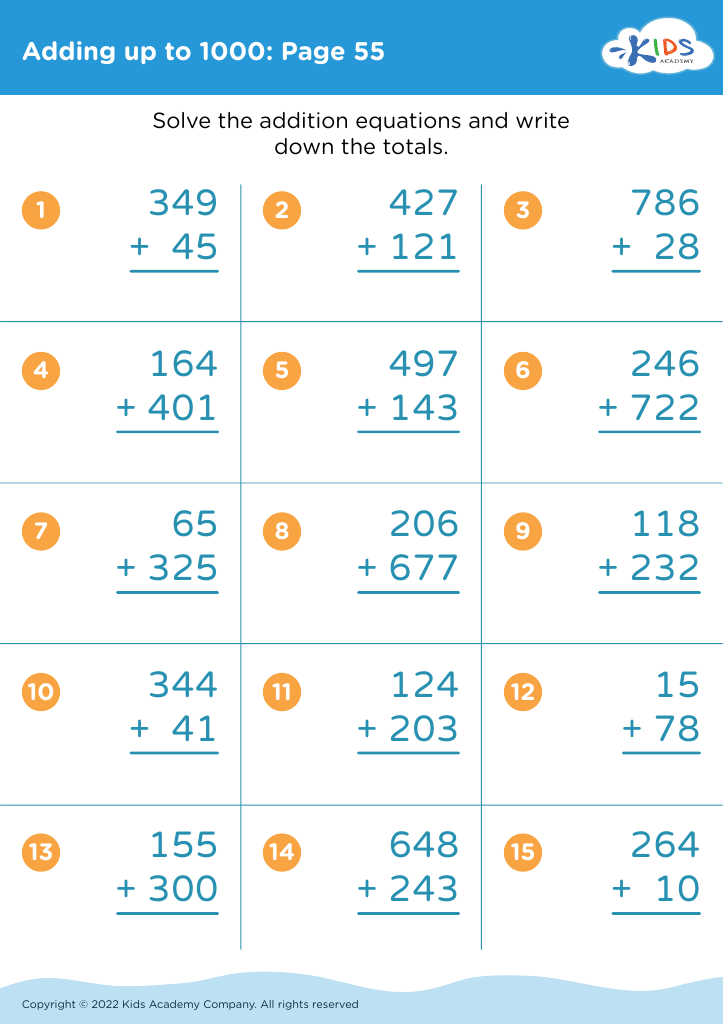
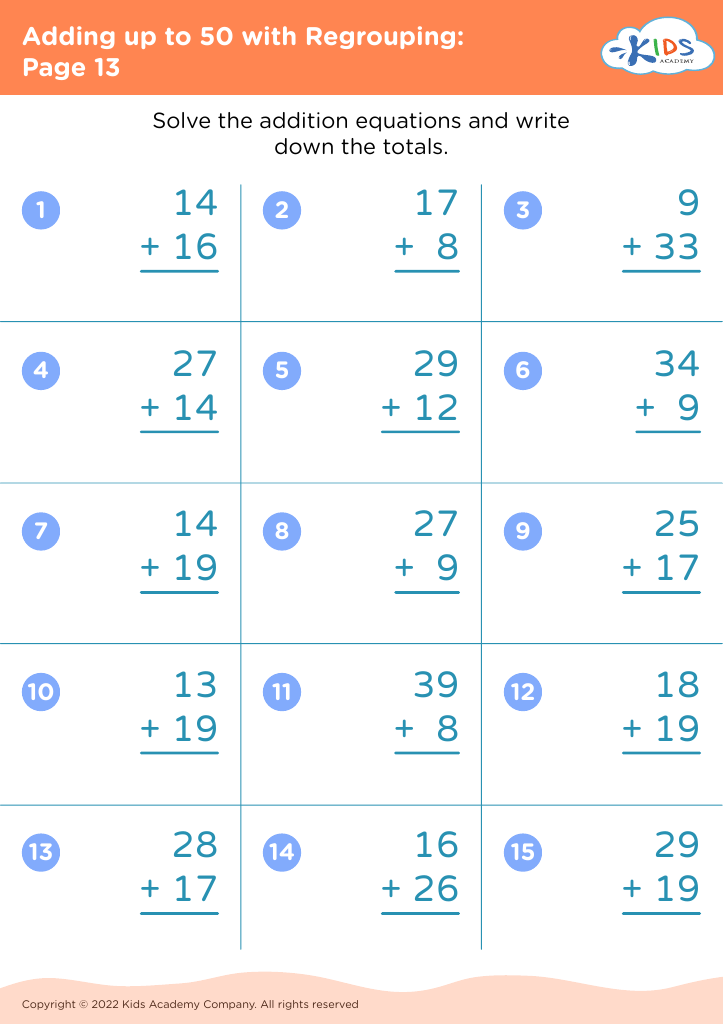








Understanding addition patterns is crucial for children aged 5-7 because it forms the foundation for their mathematical learning and critical thinking skills. At this age, kids are incredibly receptive and moldable, making it the perfect time to introduce key concepts that will support their academic journey.
Firstly, recognizing addition patterns helps children develop number sense, which is the ability to understand, relate, and connect numbers. This is fundamental as number sense underpins nearly all later mathematics learning, including more complex operations like subtraction, multiplication, and division. For instance, knowing that adding 1 always increases a number by 1 lays the groundwork for understanding sequences and arithmetic progressions.
Secondly, learning addition patterns enhances problem-solving skills. When kids identify that 2 + 3 and 3 + 2 yield the same result, they grasp the commutative property of addition, simplifying complex problems and promoting flexible thinking—skills essential in both mathematics and everyday life.
Lastly, mastering these patterns boosts confidence and enjoyment in learning. Children who quickly recognize these patterns often find math less intimidating, which encourages a positive attitude towards the subject. This early enthusiasm can lead to sustained interest and performance in mathematics throughout their educational journey.
Parents and teachers should recognize the importance of embedding these concepts early, as they are building blocks for future success in math.








