Understanding sequencing Addition Worksheets for Ages 5-7
7 filtered results
-
From - To
Help your child excel in early math with our "Understanding Sequencing Addition Worksheets for Ages 5-7". These engaging materials are designed to strengthen foundational skills by combining sequencing with addition practice. Our worksheets provide fun and interactive activities that help young learners understand the order of numbers and the concept of incremental addition. Perfect for classroom or home use, these resources enhance cognitive development, problem-solving proficiency, and confidence in math. Guiding children through a step-by-step learning process, our worksheets ensure that they grasp the fundamentals of addition while enjoying the journey of learning. Start building essential math skills today!
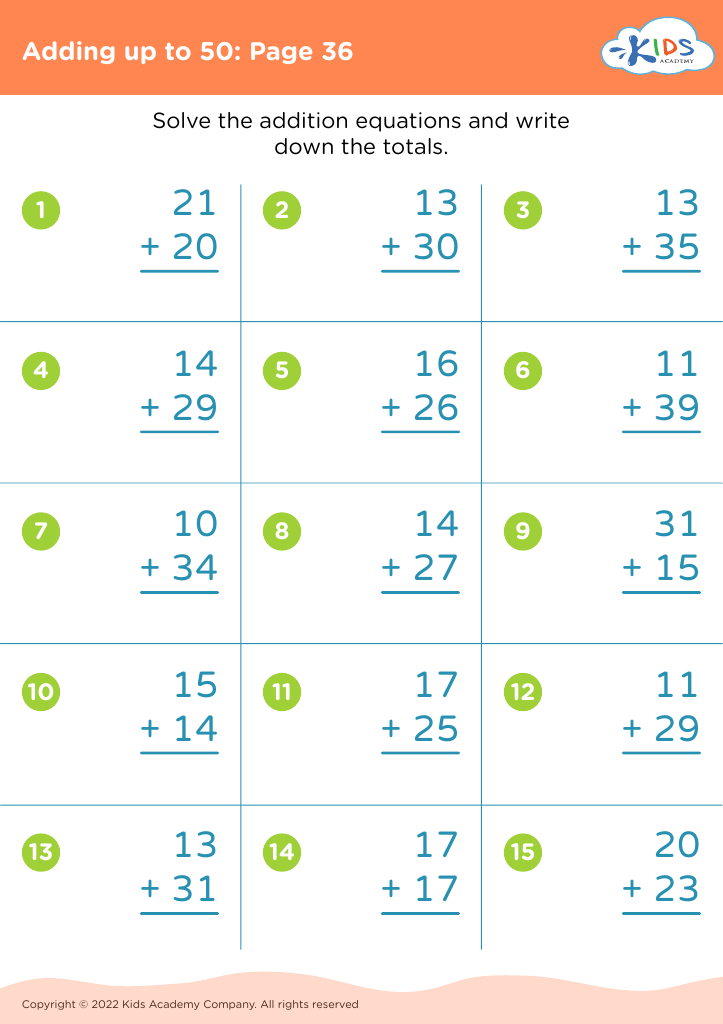
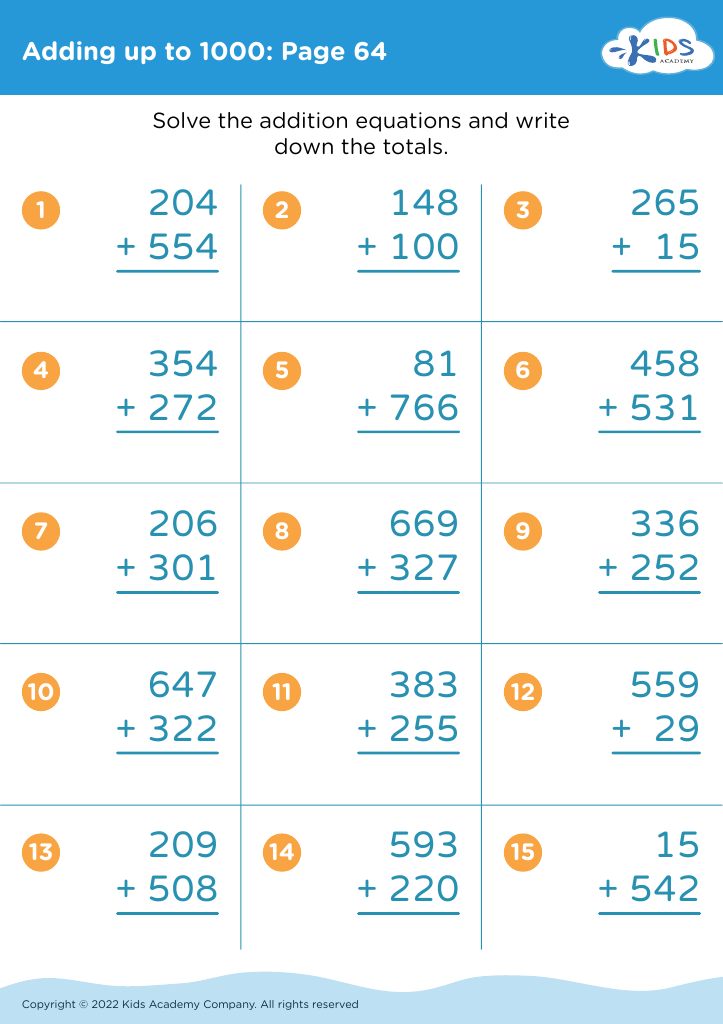
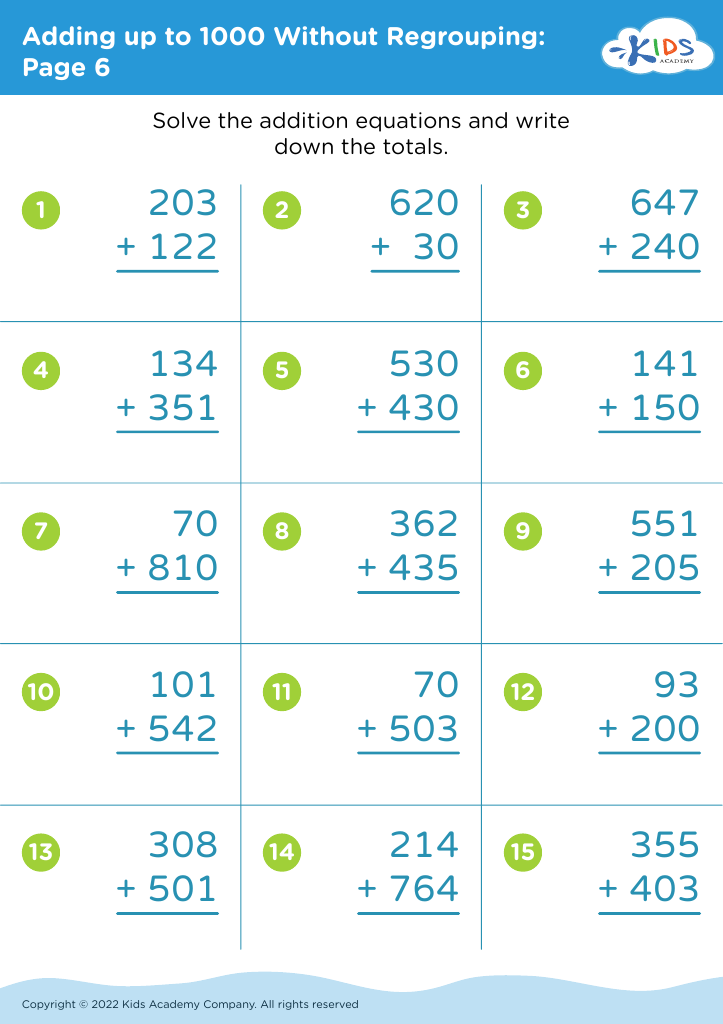
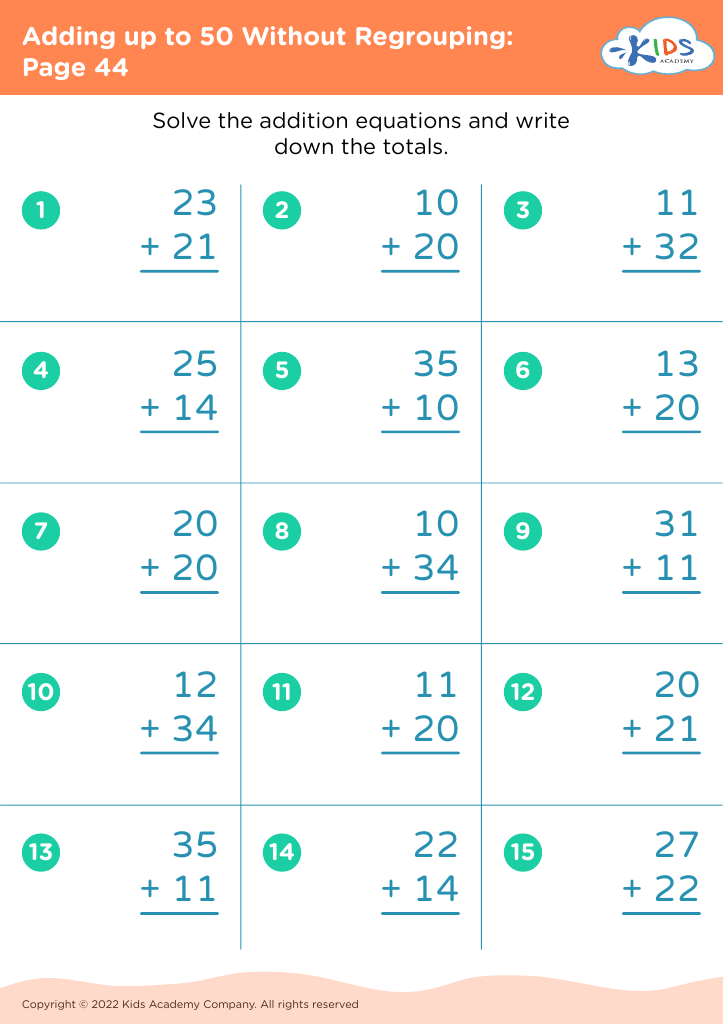
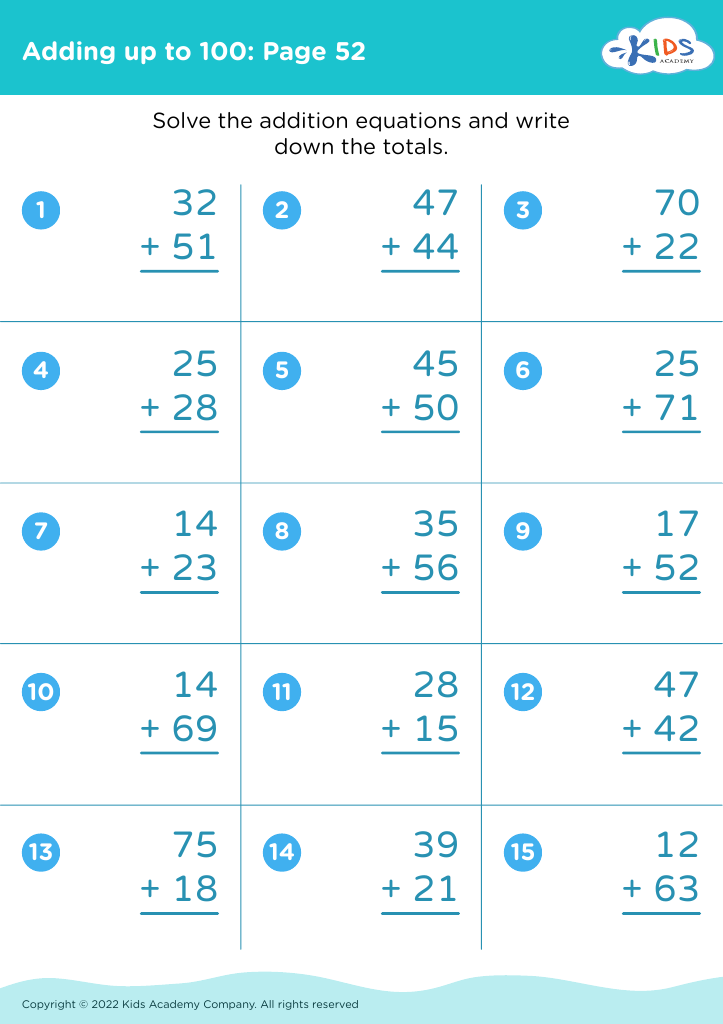
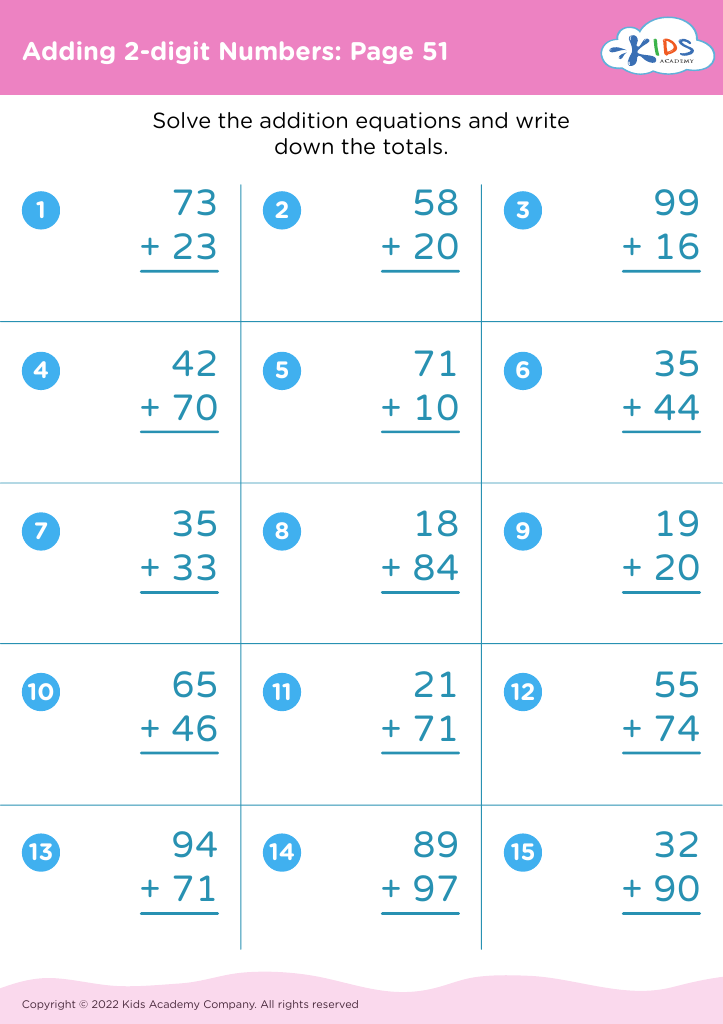
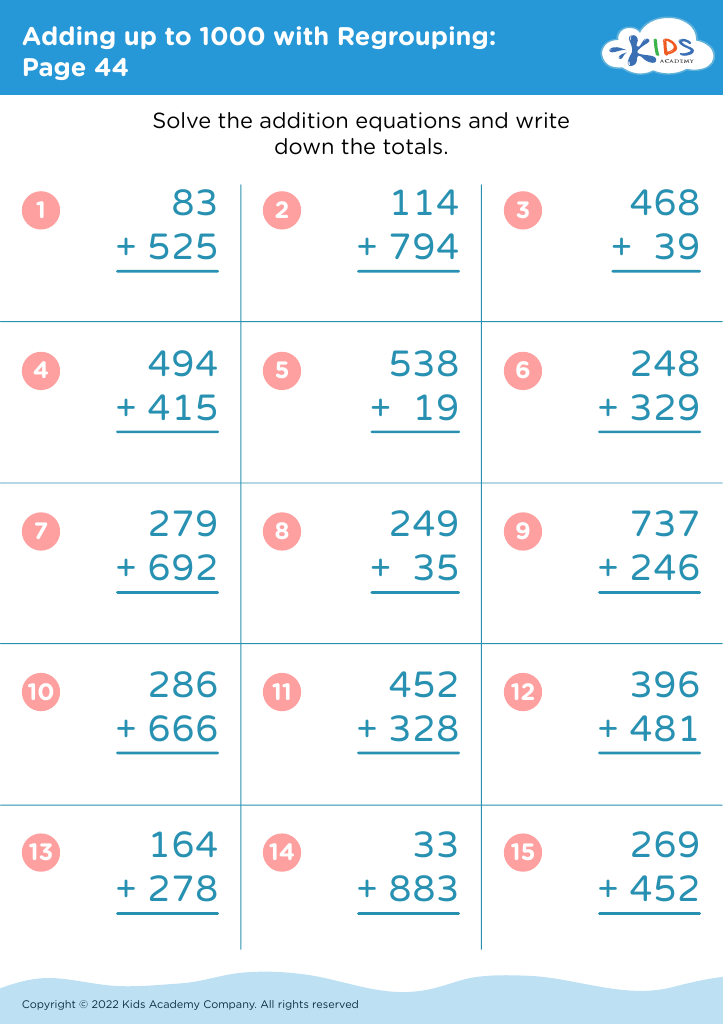








Understanding sequencing and addition is fundamental for young children ages 5-7, as it lays the groundwork for more advanced math skills they'll encounter in later years. Sequencing helps children grasp the order of numbers and events, enhancing their ability to follow instructions, comprehend stories, and solve problems systematically. When children master sequencing, they can better understand patterns, which is critical for learning addition.
Addition, one of the first math operations children learn, builds on sequencing by teaching them how numbers interact. By understanding addition, children start to see connections between numbers, developing their mental arithmetic skills and number sense. This knowledge is essential not only for future math lessons but also for everyday tasks such as counting objects, telling time, and managing money.
For parents and teachers, focusing on these skills encourages cognitive development and builds a child's confidence in their abilities. Fun, engaging activities, like counting games, storybooks that involve numbers, and hands-on objects, can make learning these concepts enjoyable. By prioritizing sequencing and addition, parents and teachers can foster a positive attitude toward math, setting a strong educational foundation that will benefit children throughout their academic journey and beyond.








