Understanding time Addition Worksheets for Ages 5-7
6 filtered results
-
From - To
Unlock the world of learning with our "Understanding Time Addition Worksheets" designed specifically for children ages 5-7. These engaging worksheets blend essential math skills with the concept of time, helping young learners grasp addition while becoming familiar with time-telling. Through colorful illustrations and captivating exercises, kids will solve addition problems related to clocks and daily activities, making math relatable and fun. Perfect for home or classroom use, these worksheets promote critical thinking and problem-solving skills, ensuring a strong foundation in both mathematics and time management. Explore our collection today and watch your child's confidence and understanding flourish!
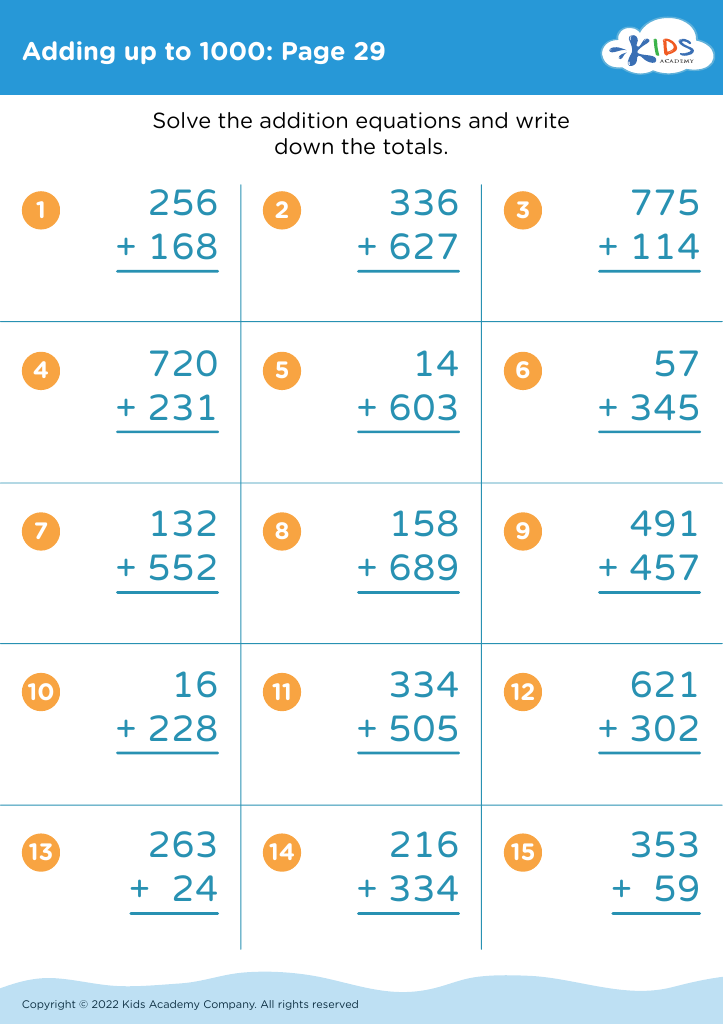
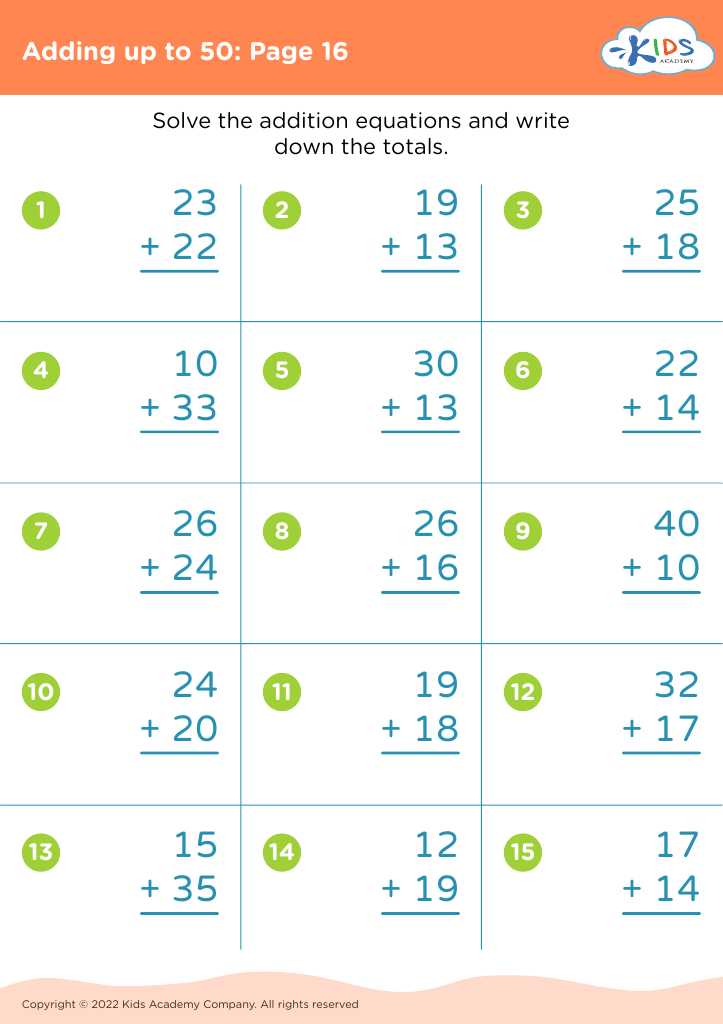
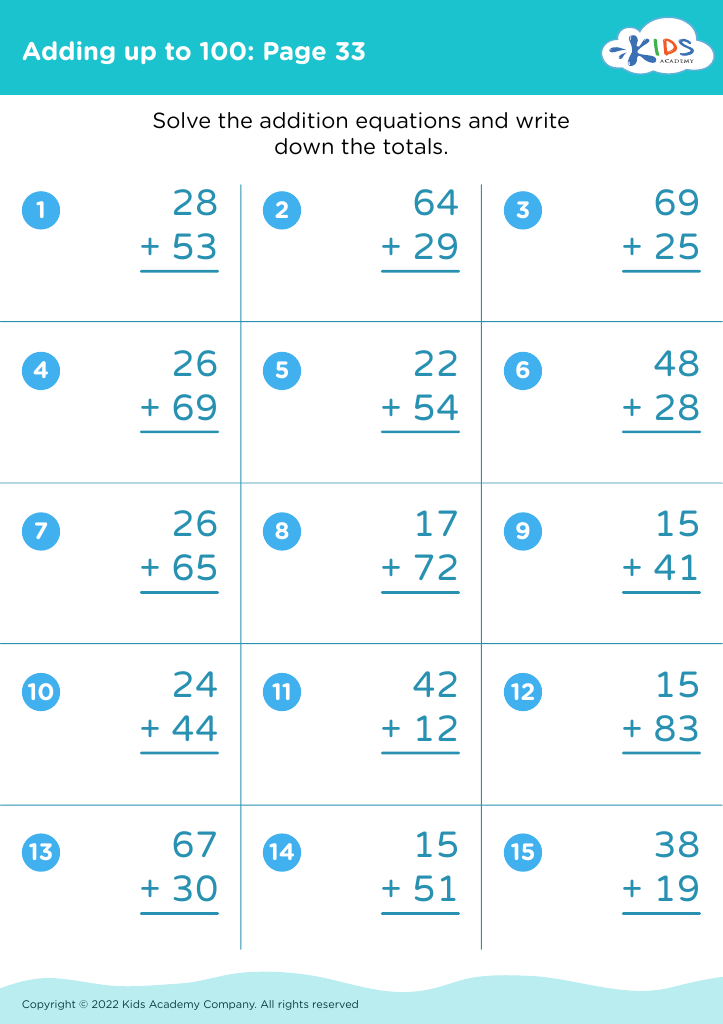
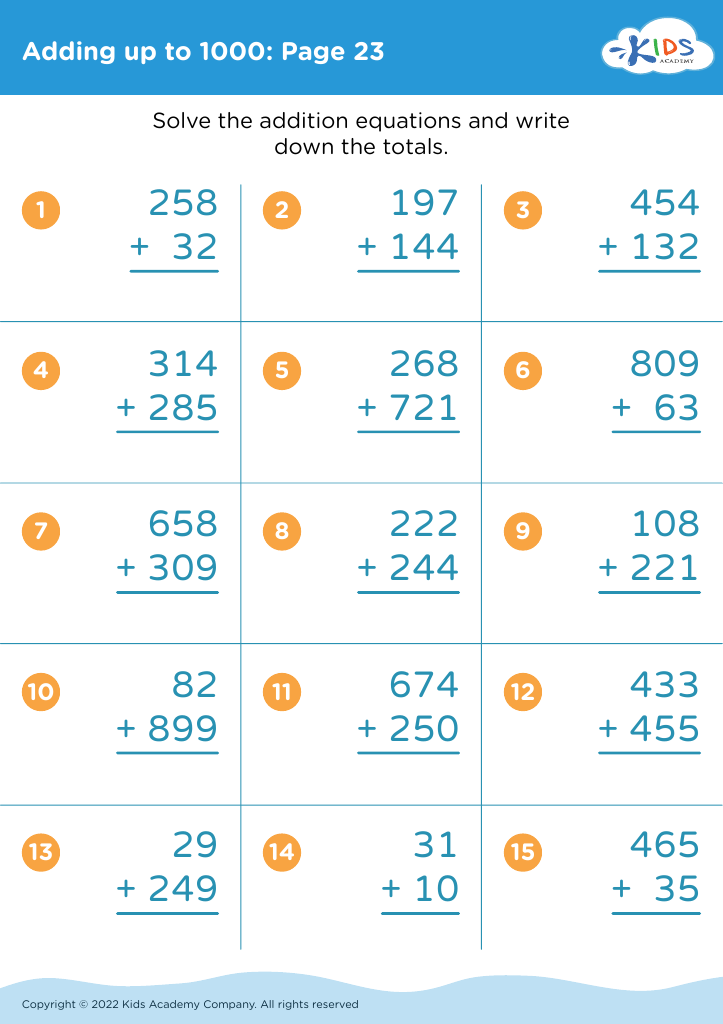








Understanding time addition is crucial for children aged 5-7 as it lays the foundation for both mathematical skills and daily life skills. At this age, children are developing their cognitive abilities, and learning about time enhances their understanding of sequences, measurements, and number relationships. Time-related concepts, such as hours and minutes, are abstract ideas, and mastering them through addition helps children apply math in real-world contexts, like reading clocks and planning events.
Furthermore, learning to add time supports critical thinking and problem-solving skills. For example, when calculating how long an activity will take based on start and end times, children engage with fundamental mathematical operations and learn to think logically.
Moreover, the ability to manage time effectively plays a significant role in fostering independence. Children who understand how to add time can better navigate daily routines, enhancing their organizational skills as they progress in school and later life.
Parents and teachers play an essential role in introducing and reinforcing these concepts. By making time math relatable through games, storytelling, and practical activities, they ensure children comprehend and appreciate these vital skills, setting them up for success in both math and everyday situations.








