Visual interpretation Addition Worksheets for Ages 5-7
5 filtered results
-
From - To
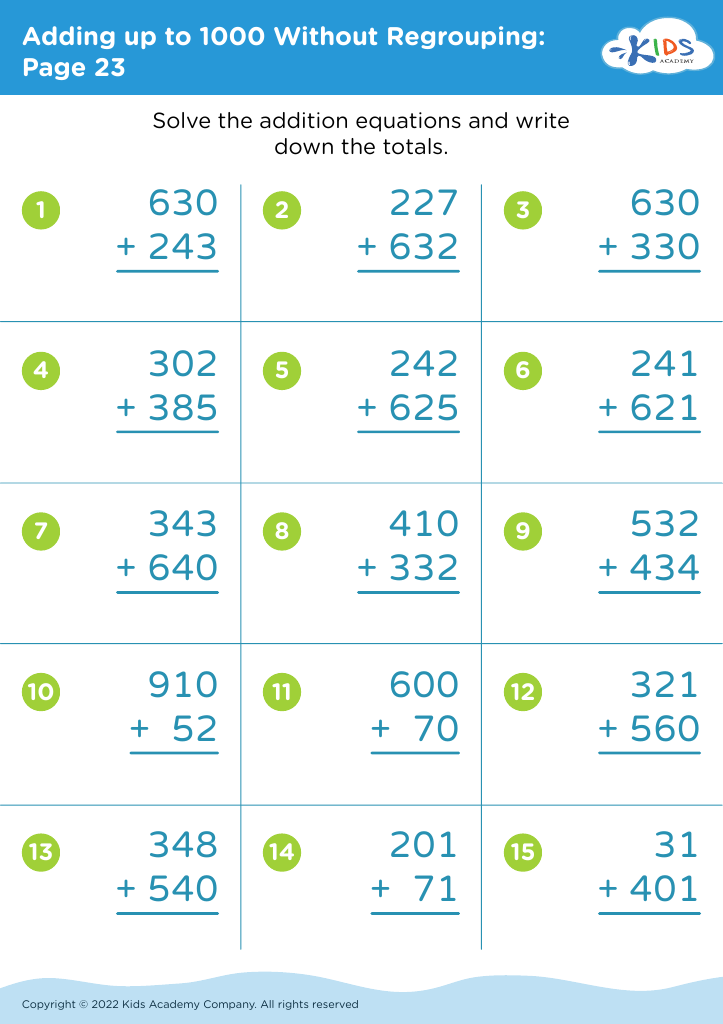
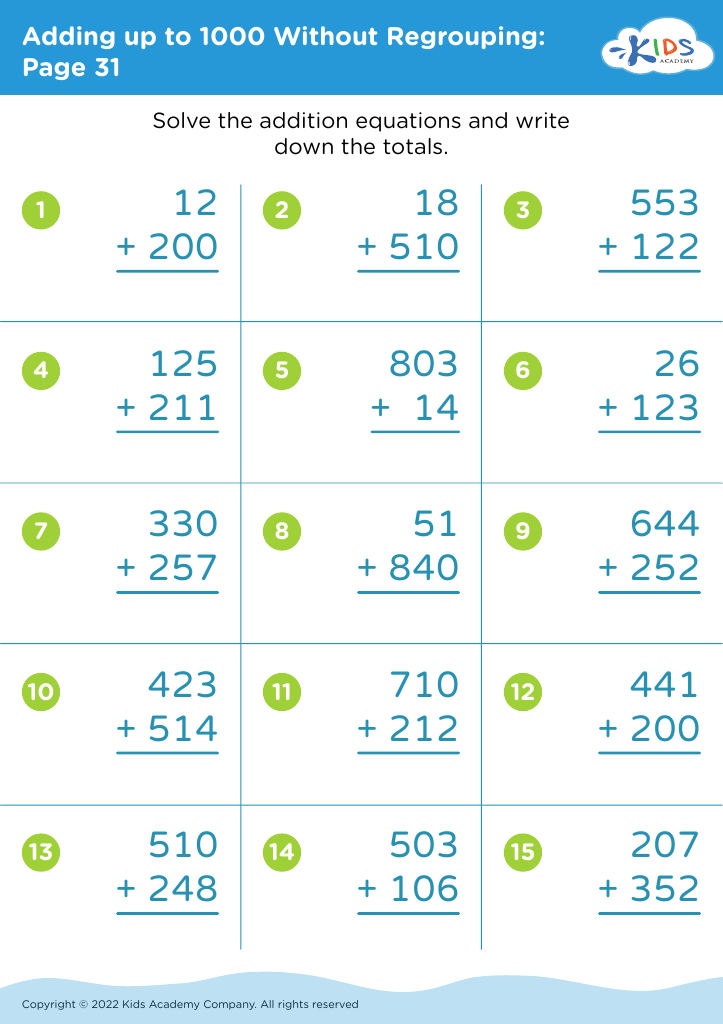
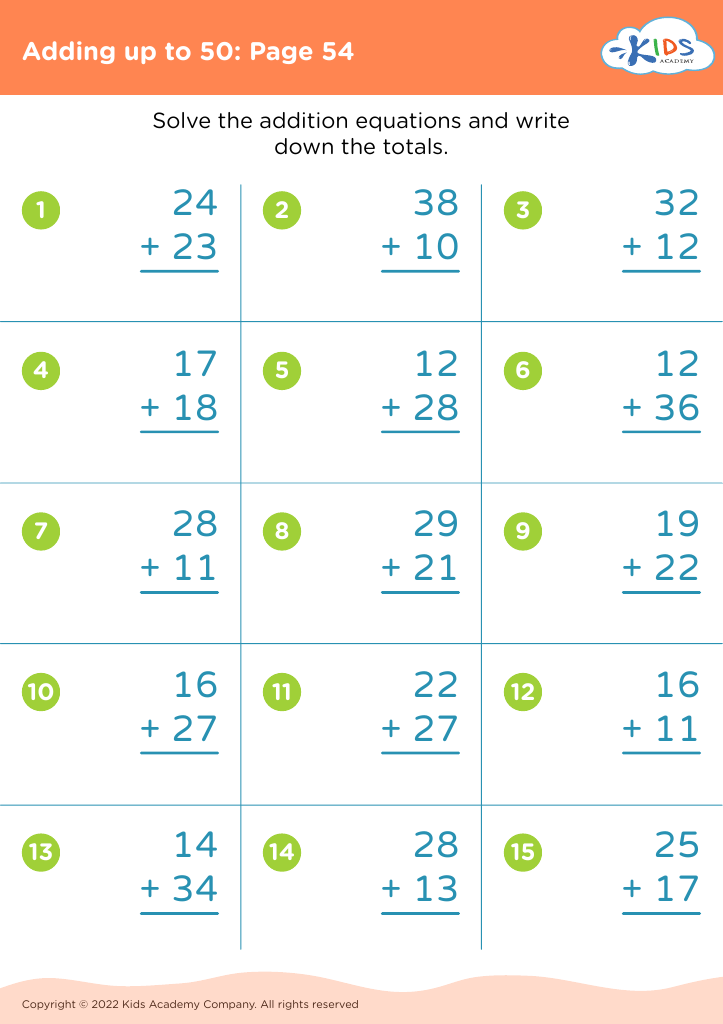
Boost your child's understanding of addition with our engaging Visual Interpretation Addition Worksheets, designed specifically for ages 5-7. These worksheets leverage visual aids, such as colorful images and diagrams, to help young learners grasp the concept of addition in a fun and interactive way. By connecting numbers with visual representations, children develop strong foundational math skills, enhancing their ability to solve problems confidently. Tailored to meet early learning standards, these worksheets encourage independent practice while fostering critical thinking. Download our printable worksheets today and watch your child thrive in their math journey, making learning enjoyable and effective!
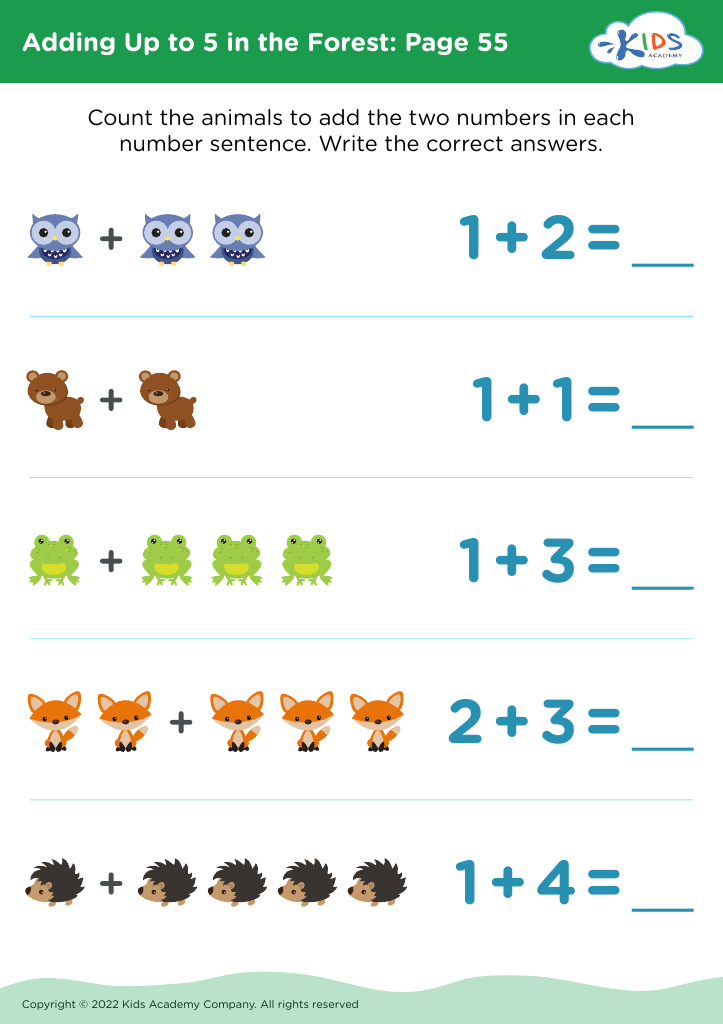
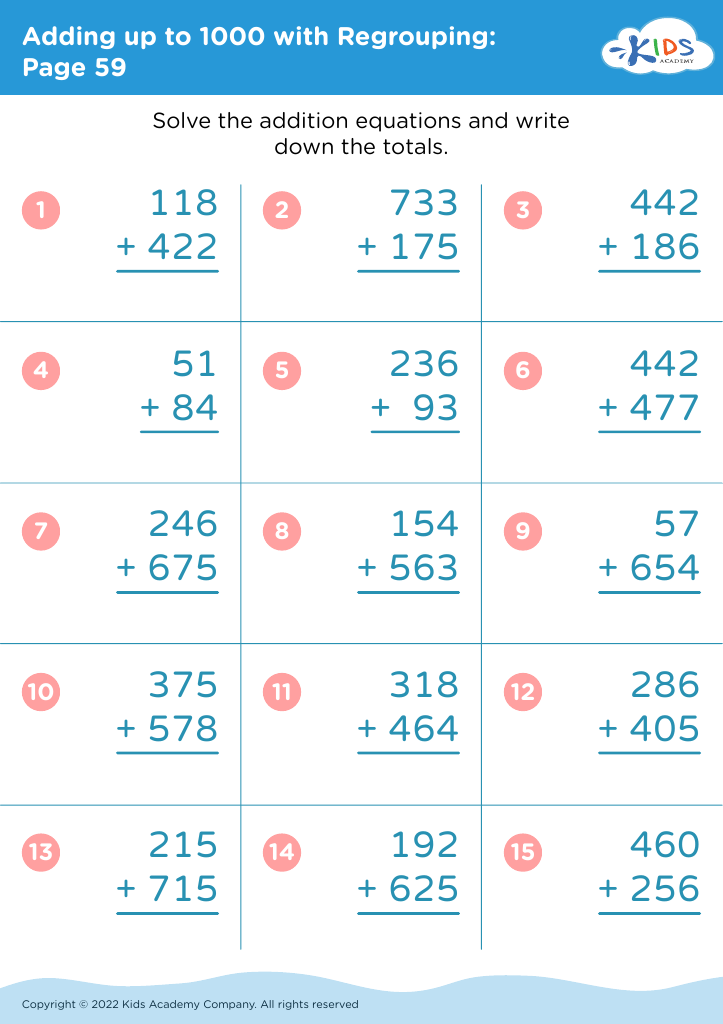








Parents and teachers should care about visual interpretation in addition for children aged 5-7 because it plays a crucial role in developing foundational math skills. At this age, children are transitioning from concrete to abstract thinking, and visual aids—such as number lines, pictures, and manipulatives—help bridge this gap. Visual tools allow children to see and understand the concept of addition as a combination of quantities, fostering number sense and enhancing their problem-solving abilities.
Furthermore, using visual representations can cater to various learning styles. Some children grasp concepts better with tangible objects, while others may benefit from diagrams or charts. By incorporating visual interpretation, educators and parents can make math more engaging and accessible, reducing anxiety and building confidence in young learners.
Additionally, understanding the "why" behind addition promotes deeper comprehension. Research shows that when children visualize mathematical concepts, they are more likely to retain information and apply it in different contexts. Ultimately, embracing visual interpretation not only lays the groundwork for future mathematical success but also nurtures a positive attitude toward learning. It encourages curiosity, exploration, and a lifelong love for mathematics, essential skills that will serve children throughout their educational journey and beyond.








