Visual learning reinforcement Addition Worksheets for Ages 5-7
6 filtered results
-
From - To
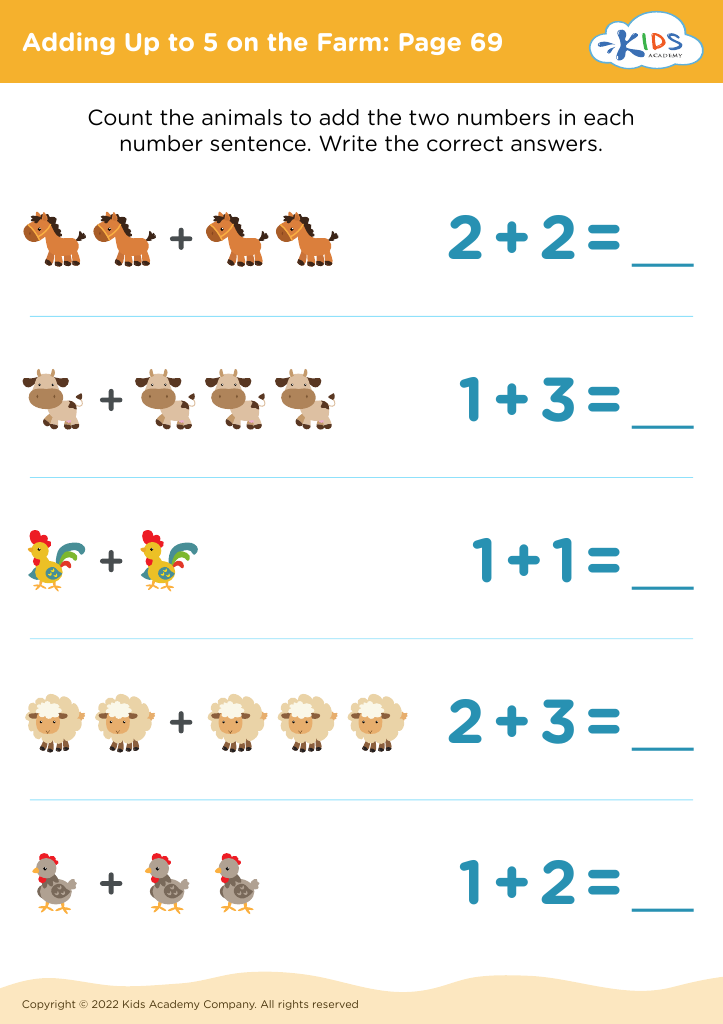
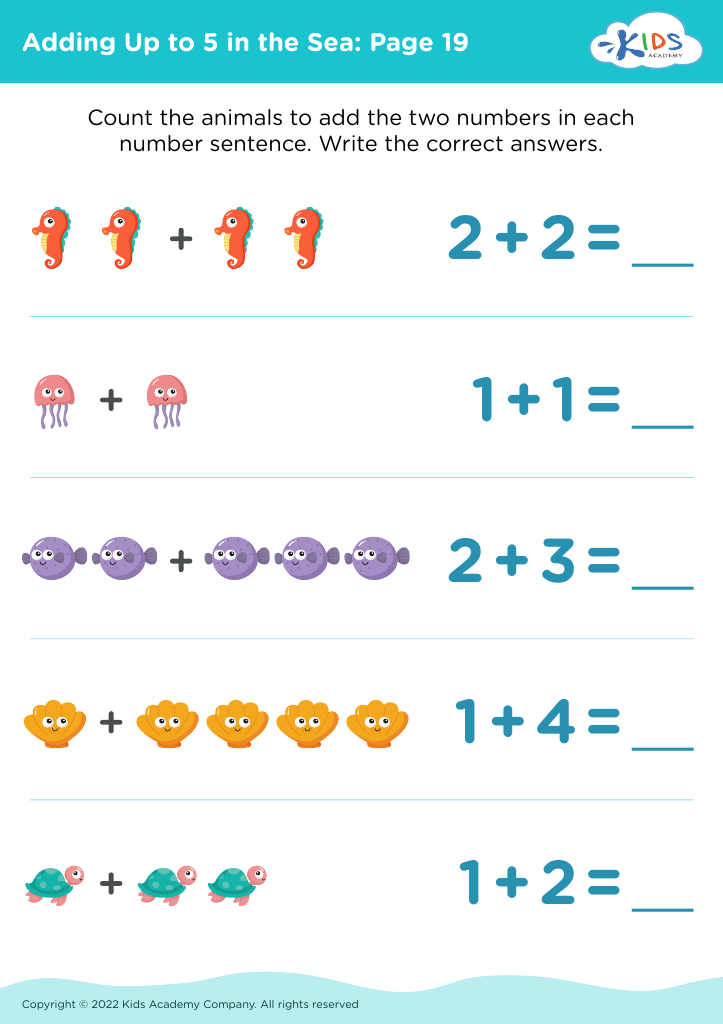
Welcome to our Visual Learning Reinforcement Addition Worksheets designed specifically for children ages 5-7! These engaging worksheets leverage vivid visuals to make learning addition both fun and intuitive. By incorporating colorful images and interactive exercises, young learners can easily grasp foundational math concepts, improving their number sense and problem-solving skills. Our thoughtfully crafted worksheets cater to various learning styles, ensuring every child can thrive in their math journey. Whether at home or in the classroom, these resources provide essential practice and reinforcement for early math skills, laying a strong foundation for lifelong learning. Start enhancing your child's math abilities today!
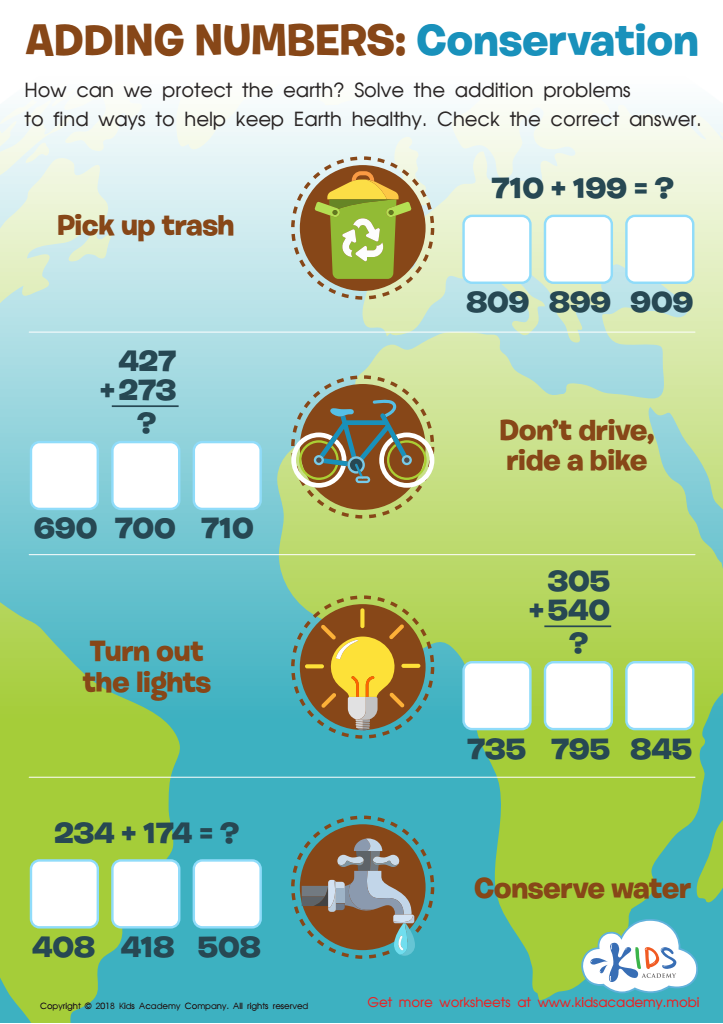
Adding Numbers: Conservation Worksheet
 Assign to My Students
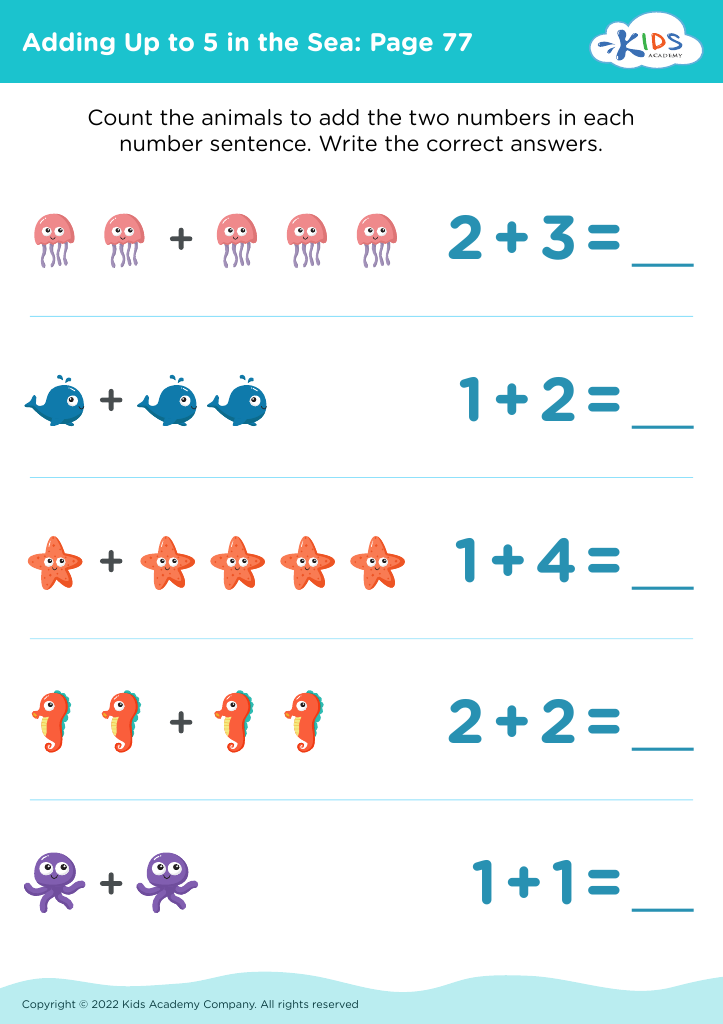
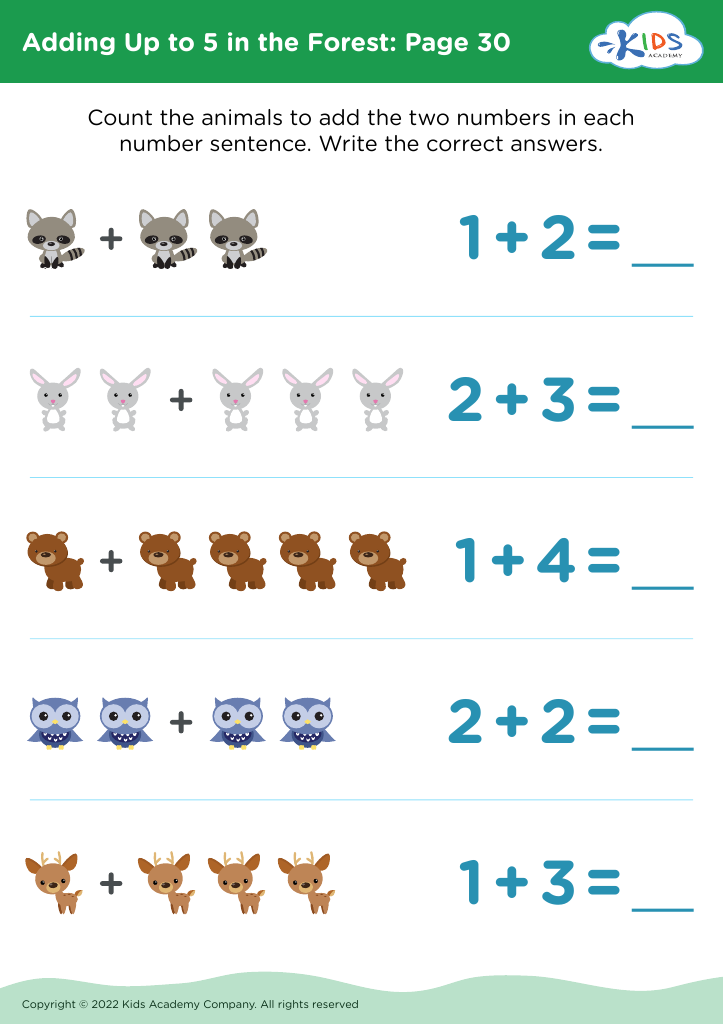
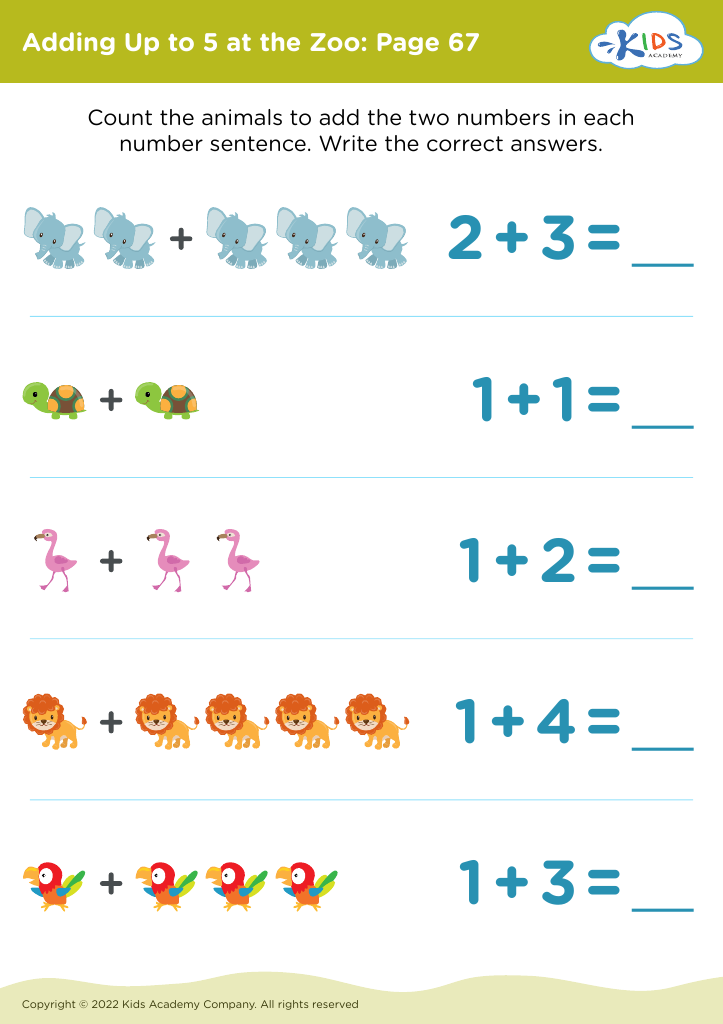








Visual learning reinforcement in addition is crucial for children aged 5-7, a formative stage in their cognitive development. This approach leverages images, diagrams, and manipulatives to enhance understanding and retention of mathematical concepts. Young learners often grasp abstract ideas more effectively when paired with visual aids, as it helps them see patterns and relationships, making addition more concrete.
Understanding addition through visual methods can foster a deeper comprehension of numbers, encouraging students to see not just '5 + 3' but to visualize how these numbers combine. This is beneficial for building a strong mathematical foundation, setting the stage for future learning. Visual reinforcement also promotes engagement and motivation; children are more likely to participate and enjoy learning when it involves interactive and visually stimulating materials.
Moreover, visual learning accommodates different learning styles, ensuring that all children can engage with the content effectively. It supports early arithmetic skills, which are essential for their ongoing education. Parents and teachers who prioritize visual reinforcement empower children to build confidence, improve problem-solving skills, and develop a positive attitude towards mathematics, ultimately aiding their overall academic success. Caring about this approach reflects a commitment to fostering inclusive and effective learning environments.








