
Visual perception Addition Worksheets for Ages 5-7
16 filtered results
Difficulty Level
Grade
Age
-
From - To
Subject
Activity
Standards
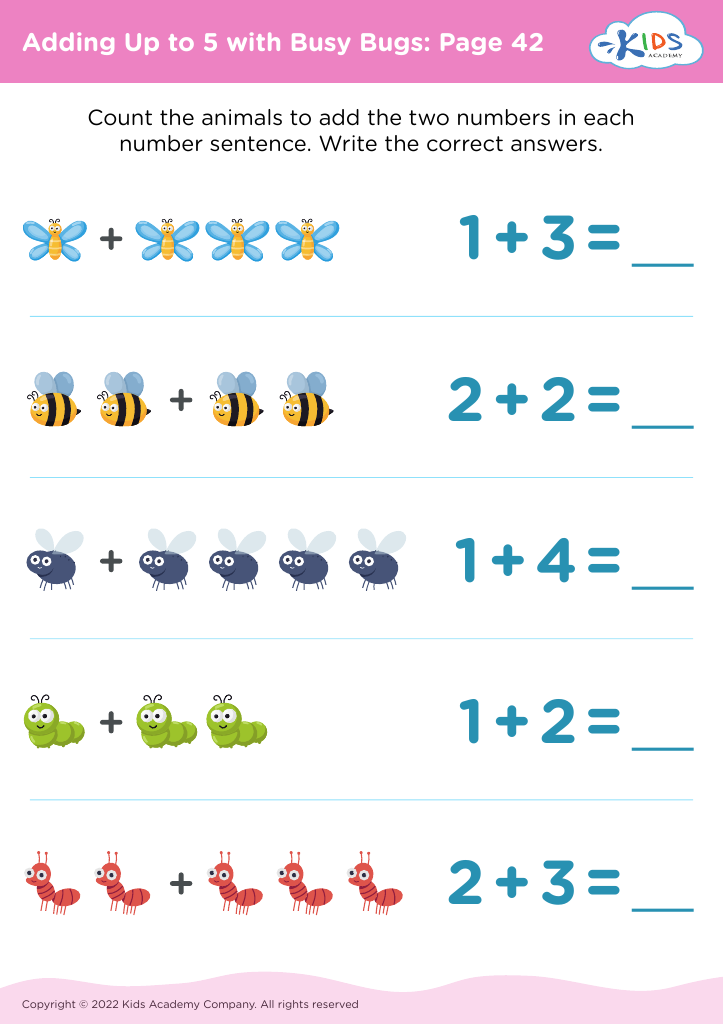
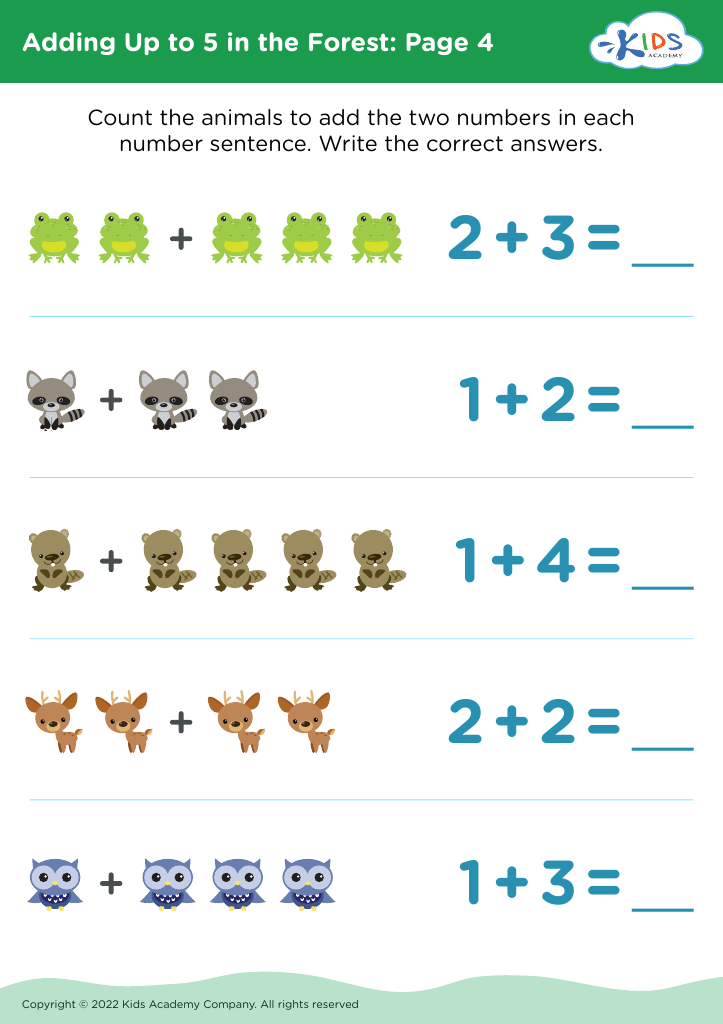
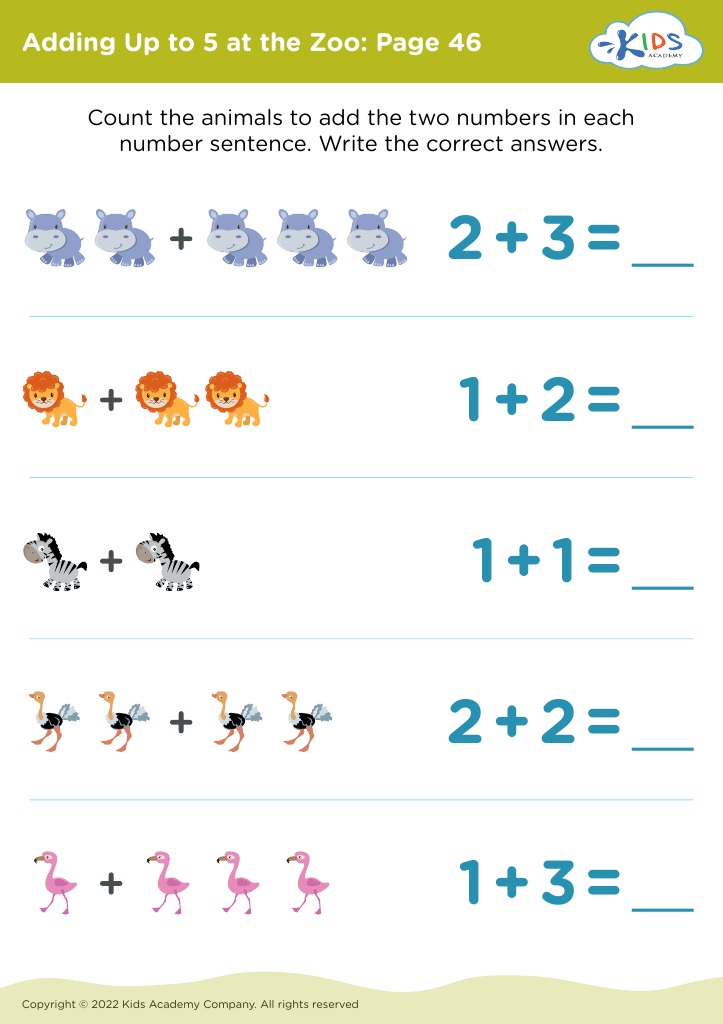
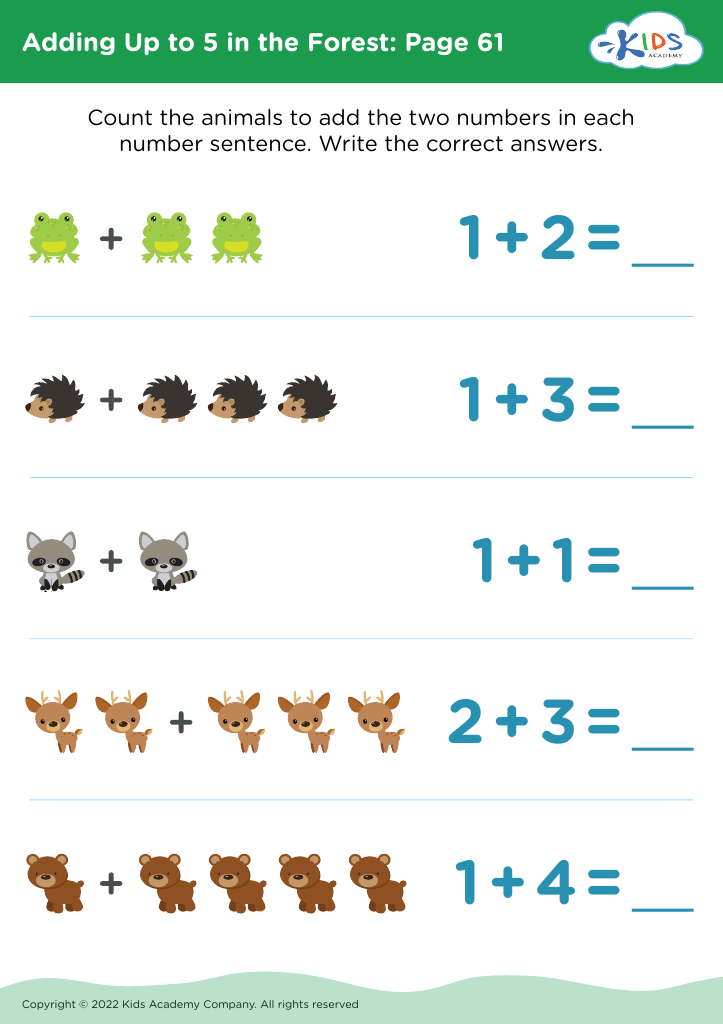
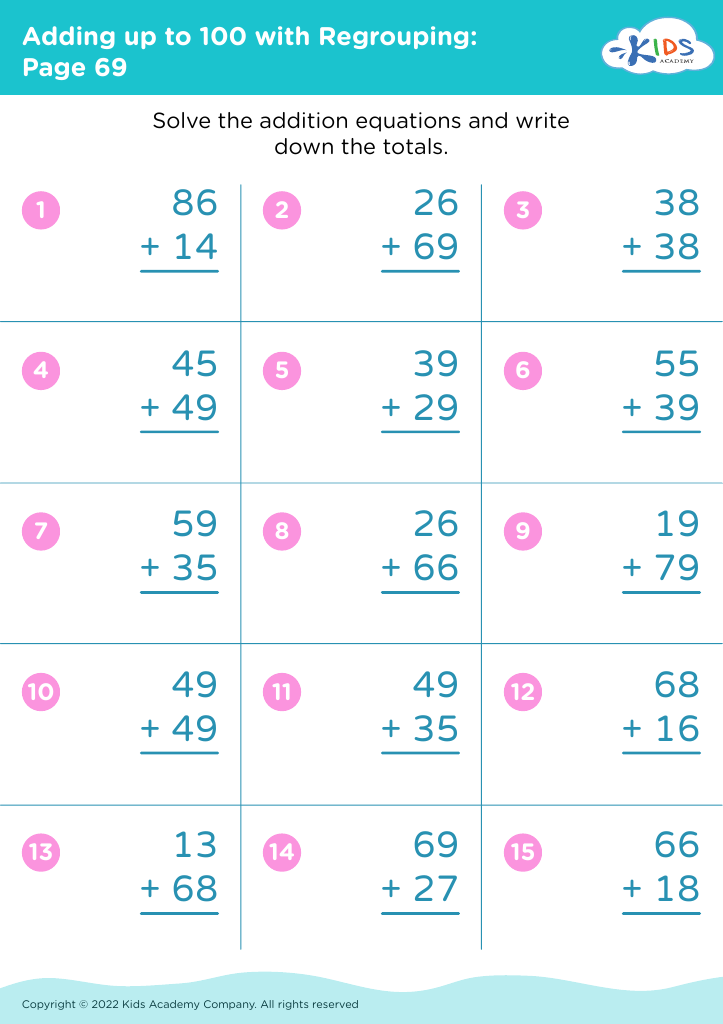
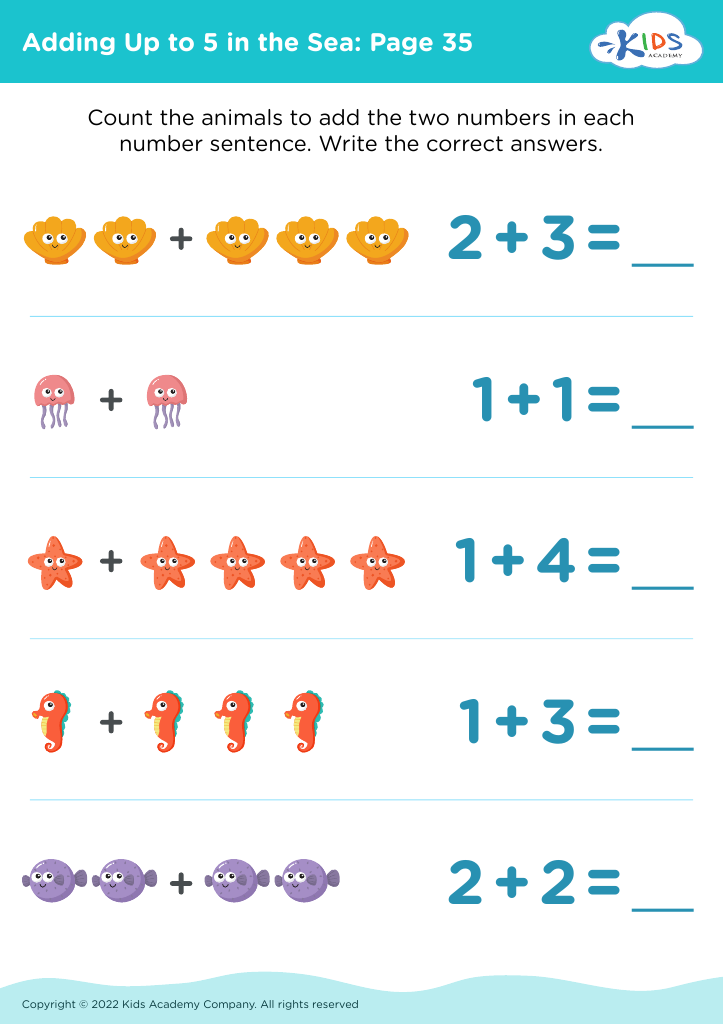
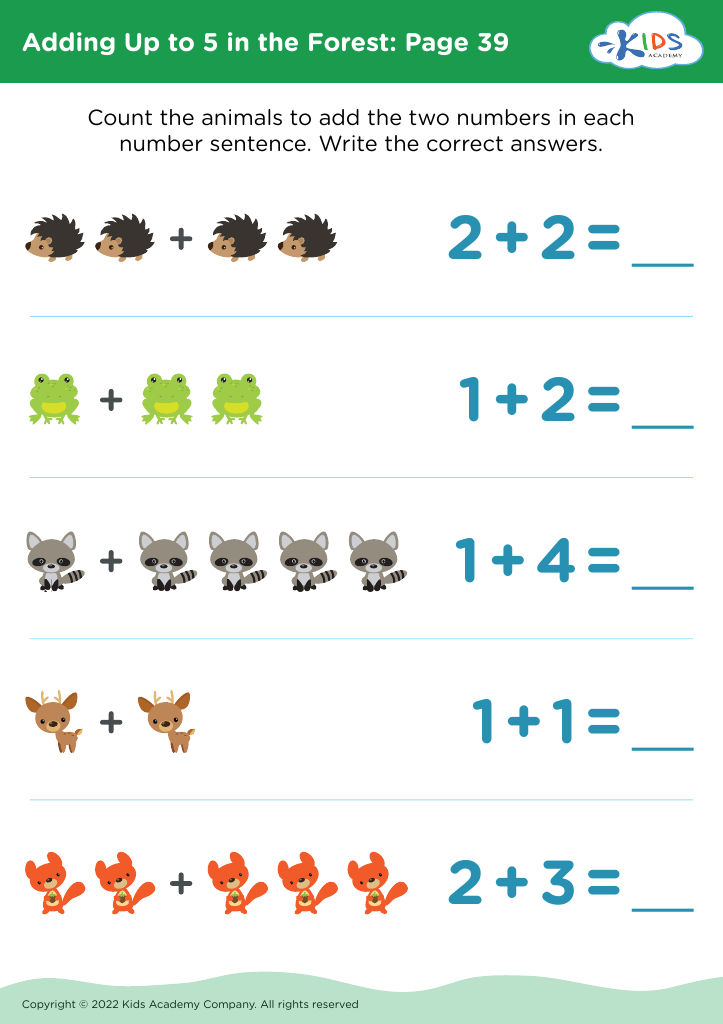
Enhance your child's math skills with our Visual Perception Addition Worksheets designed for ages 5-7! These engaging activities combine fun visuals and interactive learning to reinforce foundational math concepts. By integrating images and clear illustrations, your child will develop the essential skills of identifying numbers, recognizing patterns, and enhancing their visual understanding of addition. Our worksheets cater to various learning styles, ensuring every child can grasp these concepts effectively. Ideal for home practice or classroom use, these resources promote a love for learning while building confidence in math. Download our Visual Perception Addition Worksheets today and watch your child's skills flourish!
Favorites
With answer key
Interactive
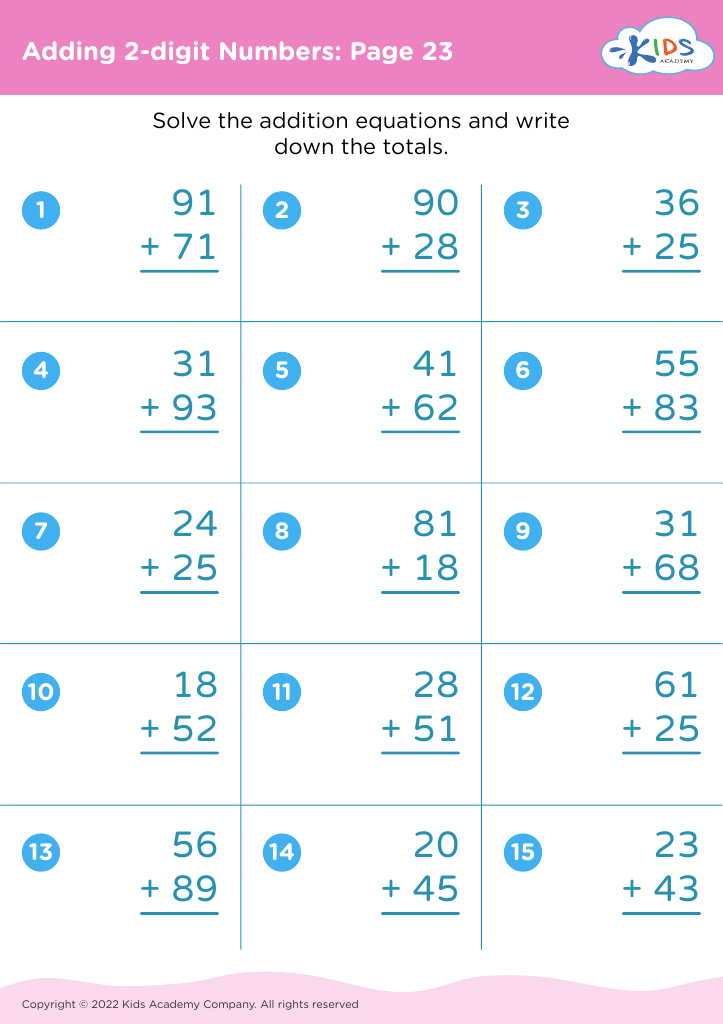
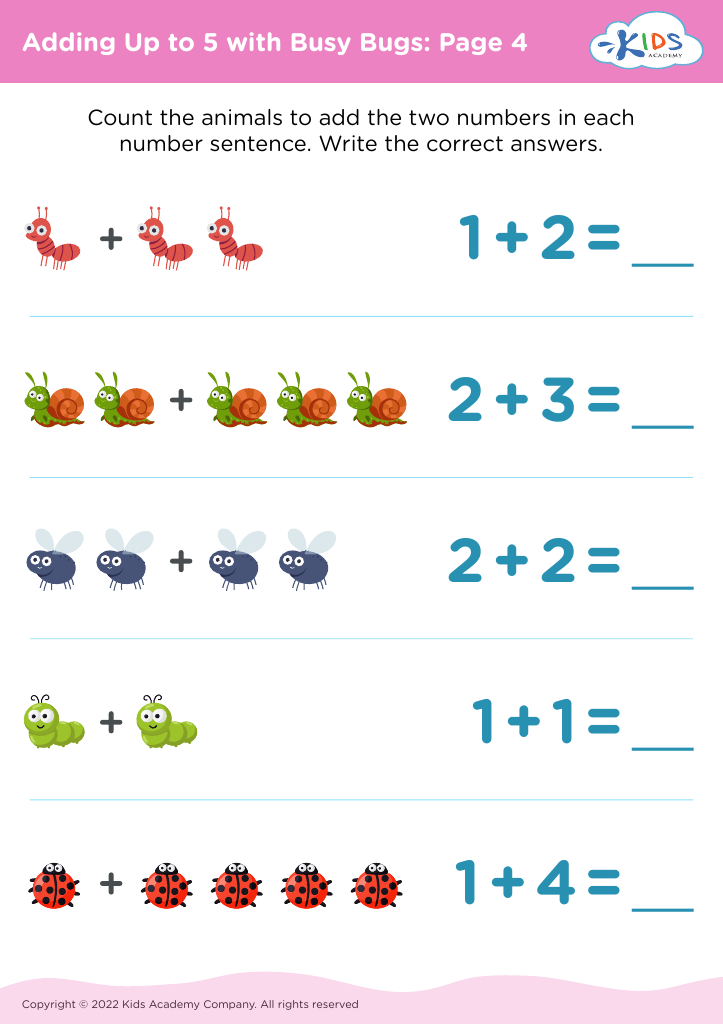
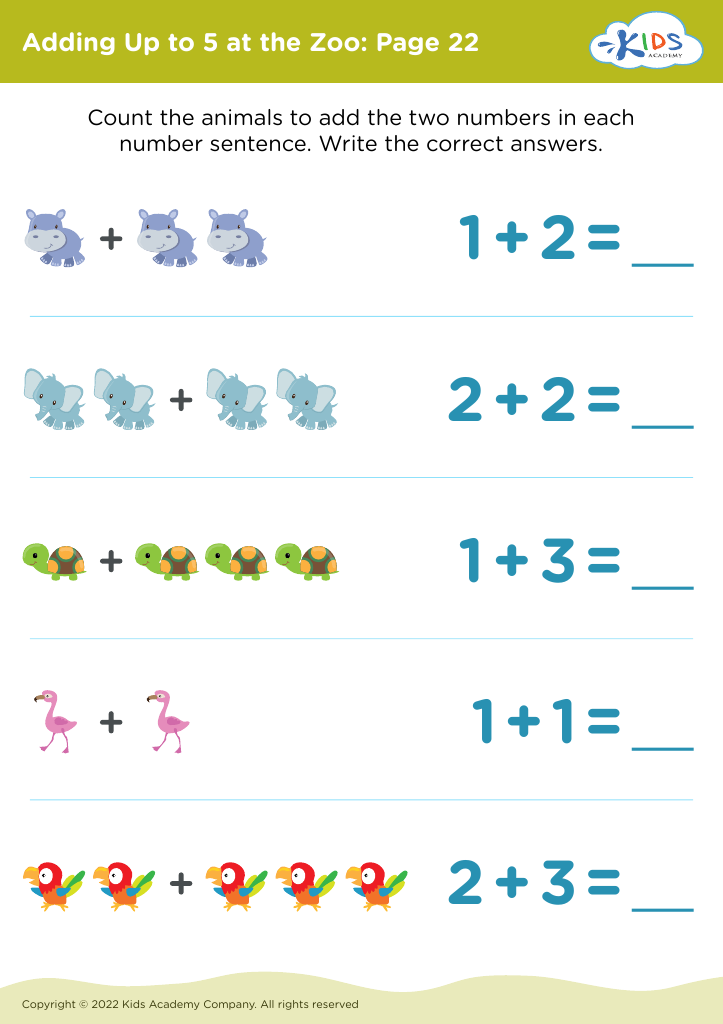
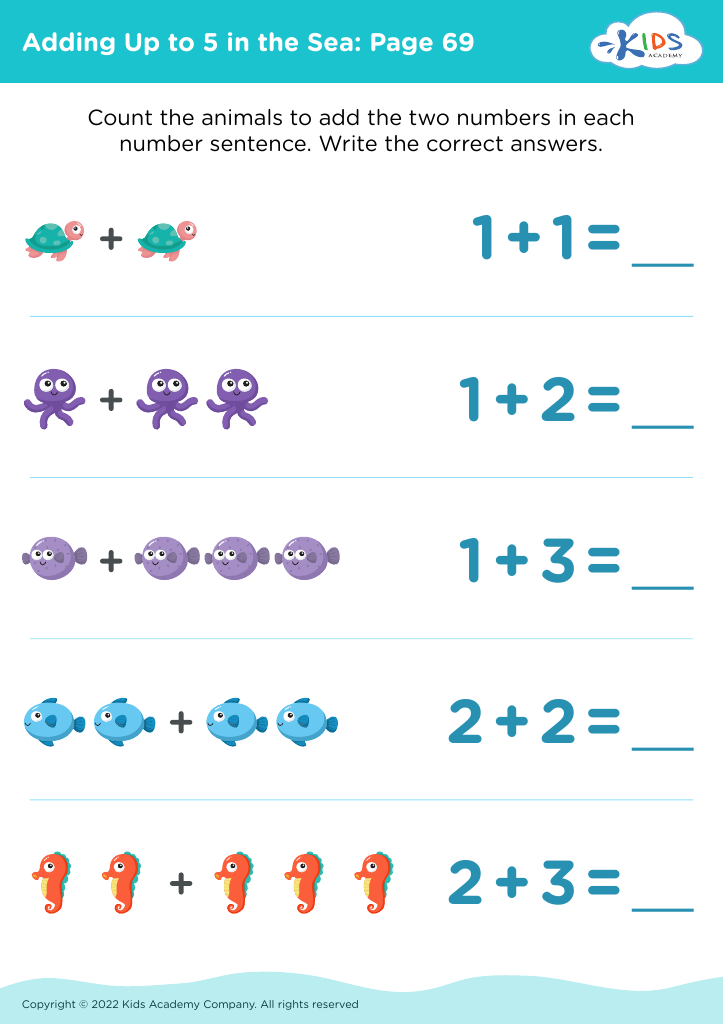
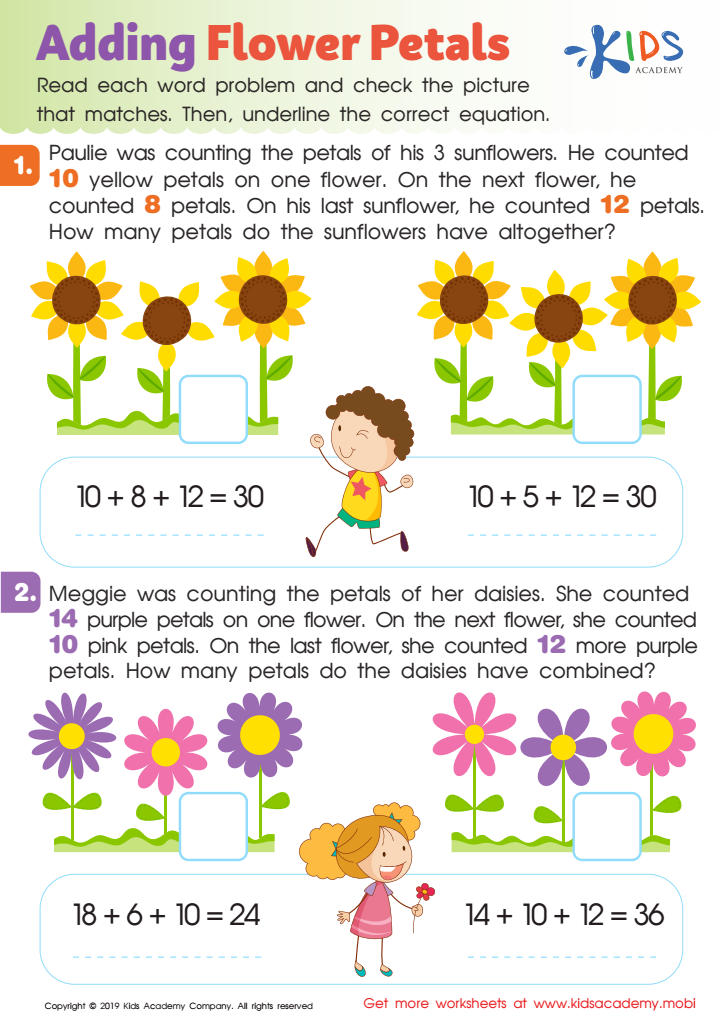
Adding Flower Petals Worksheet
This free worksheet helps little mathematicians learn to understand word problems. They'll read each one and match it to the corresponding picture. Important info is highlighted, teaching kids to look for key info when solving problems. Then they'll underline the correct number equation that matches the picture. A great way to practice problem-solving skills!
 Assign to My Students
Adding Flower Petals Worksheet
Worksheet
Join Kids Academy for Free
Who is primarily going to use this learning content?








Visual perception is a crucial skill for children aged 5 to 7, as it lays the groundwork for various academic skills, particularly in mathematics. This skill involves the ability to interpret and understand visual information, which is essential for tasks such as recognizing numbers, shapes, and patterns. When it comes to addition, visual perception allows children to efficiently understand and manipulate numerical concepts.
Parents and teachers should care about fostering visual perception because it directly impacts a child's ability to perform addition and other mathematical operations. By strengthening visual perception, children can improve their ability to visualize problems, recognize relationships between numbers, and solve equations more effectively. This, in turn, enhances their confidence and enthusiasm for learning mathematics.
Moreover, visual perception activities can be engaging and fun, making math enjoyable for young learners. Engaging in games that involve counting, sorting, or matching can not only boost visual perception but also promote social skills and teamwork.
In essence, prioritizing visual perception skills supports children in becoming proficient problem solvers, encouraging a positive mindset toward learning that benefits them not just in math, but across all subjects. This foundational skill can ultimately contribute to their academic success and love for learning.








