Visual Perception Skills Addition Worksheets for Ages 5-7
5 filtered results
-
From - To
Enhance your child’s early math skills with our "Visual Perception Skills Addition Worksheets" tailored for ages 5-7. These engaging worksheets combine addition practice with important visual perception exercises, helping young learners recognize patterns, shapes, and spatial relationships as they solve mathematical problems. Designed to make learning fun, our resources foster cognitive development and boost problem-solving abilities. Parents and educators can easily access and print these worksheets for home or classroom use. Unlock your child's potential in math through interactive and visually stimulating activities! Perfect for building a strong foundation in essential skills while mastering addition. Try them today!
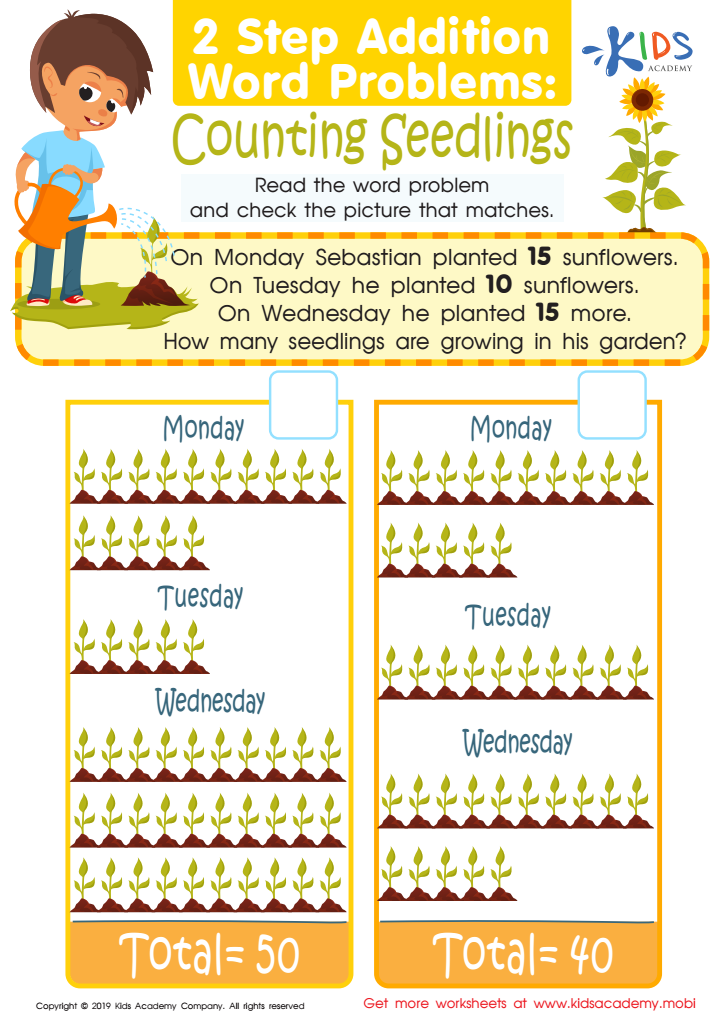
Counting Seedlings Worksheet
 Assign to My Students
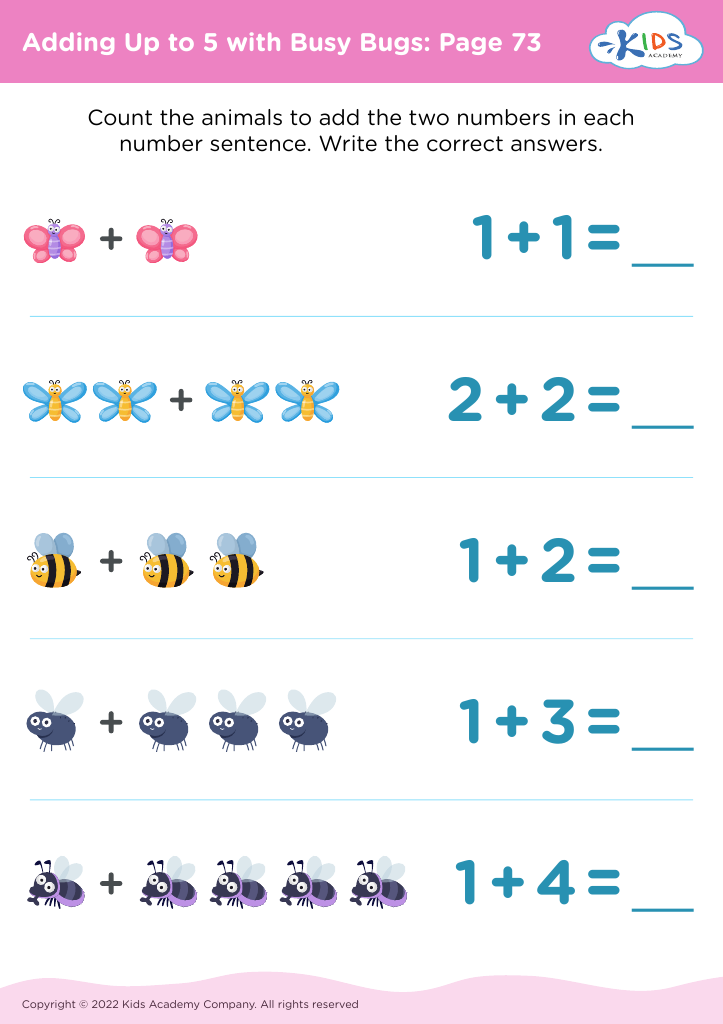
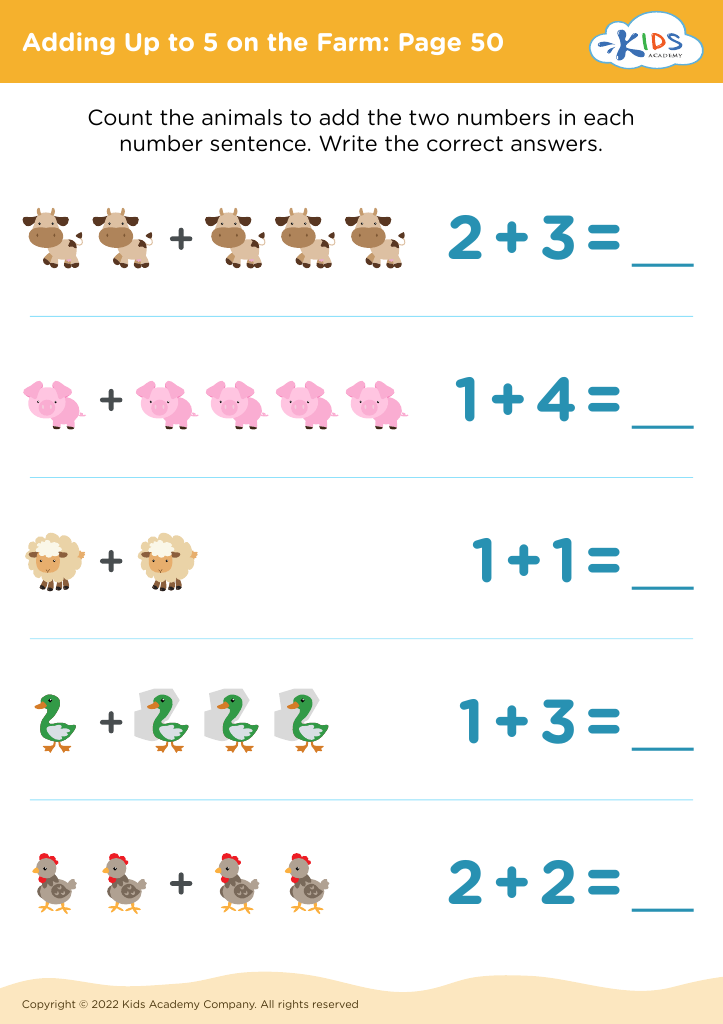
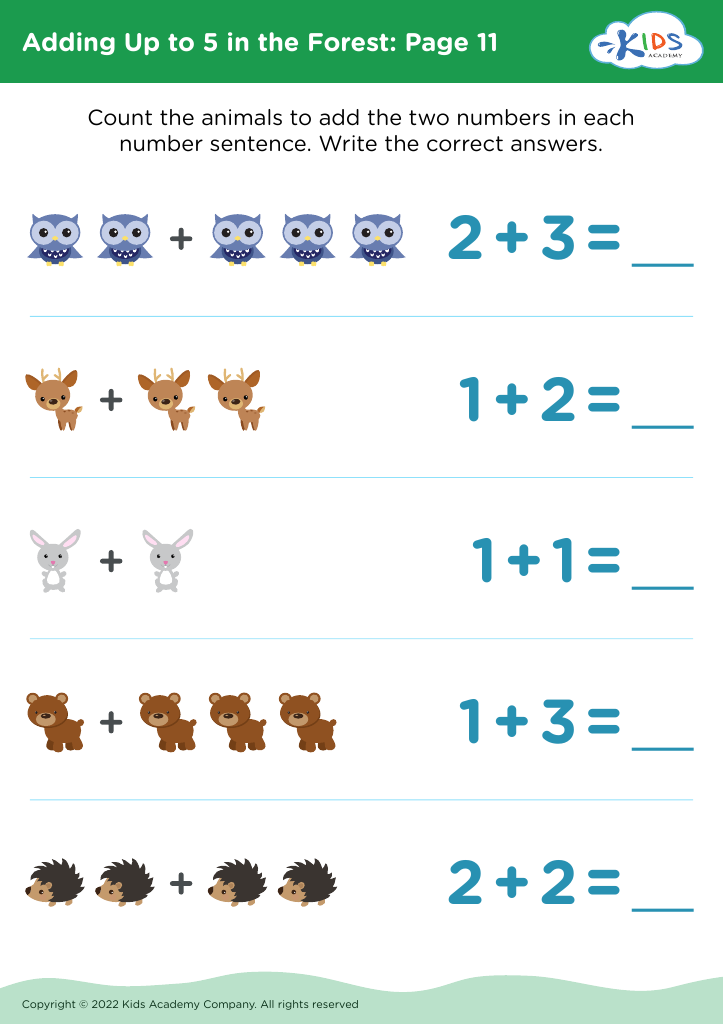
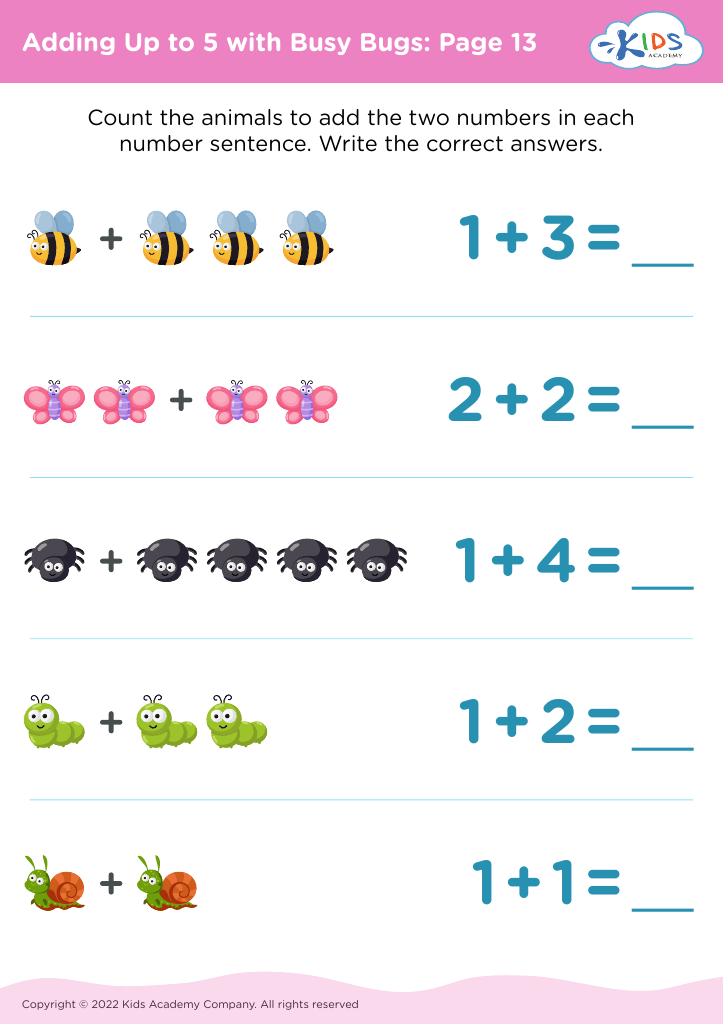








Visual perception skills are crucial for children's learning, especially for ages 5-7, when foundational abilities are being developed. These skills encompass how children interpret and understand visual information, which directly impacts their reading, writing, mathematics, and overall learning processes. Parents and teachers should care about enhancing visual perception skills as they play a significant role in academic success.
At this age, children are beginning to formalize their learning through written communication and problem-solving. Strong visual perception allows them to recognize letters, numbers, shapes, and patterns, paving the way for reading and math proficiency. For example, distinguishing between similar-looking letters or numbers is essential for reading and arithmetic tasks. Moreover, robust visual skills foster spatial awareness, helping children understand directions, build structures, and engage in sports or activities.
Furthermore, developing these skills can boost children's confidence and motivation in the classroom. Parents and teachers can aid in this development through engaging games and activities that strengthen visual discrimination, memory, and integration skills. When children grasp visual concepts, they can explore their environments more effectively, ultimately enhancing their learning experiences and laying the groundwork for future educational achievements. Thus, prioritizing visual perception skills is essential for academic and personal development in young learners.








