Vocabulary development Addition Worksheets for Ages 5-7
5 filtered results
-
From - To
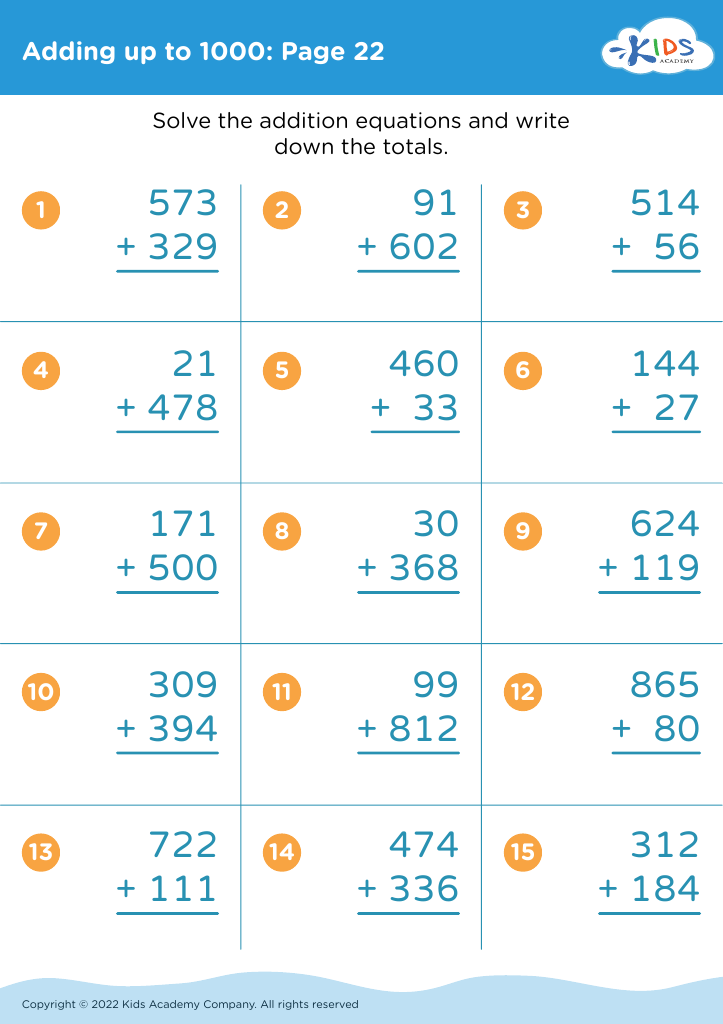
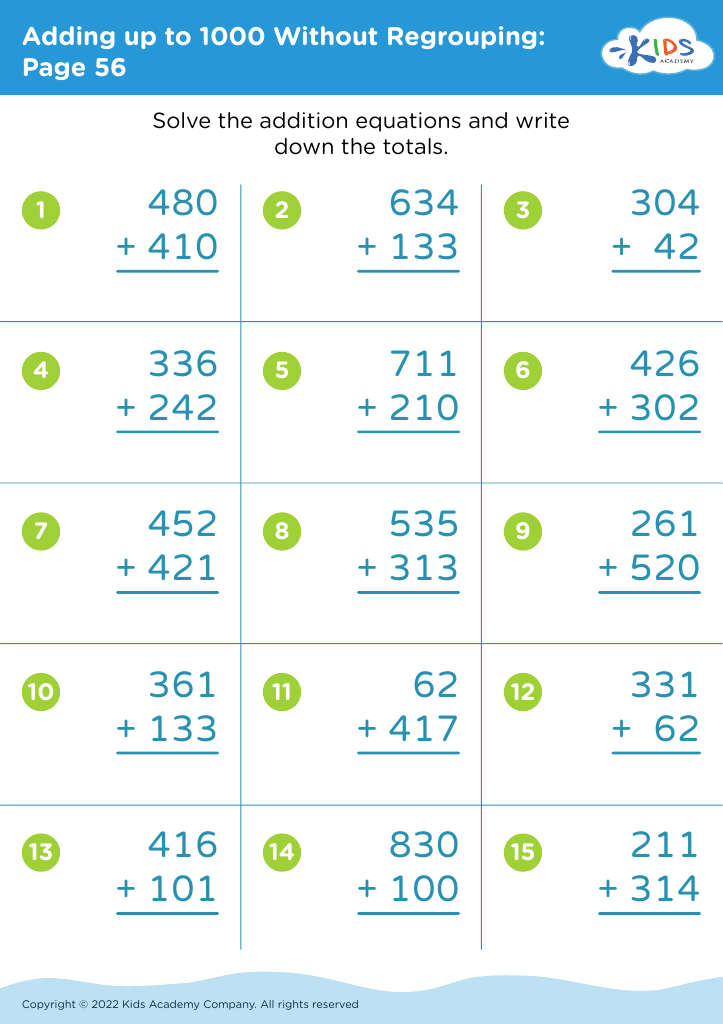
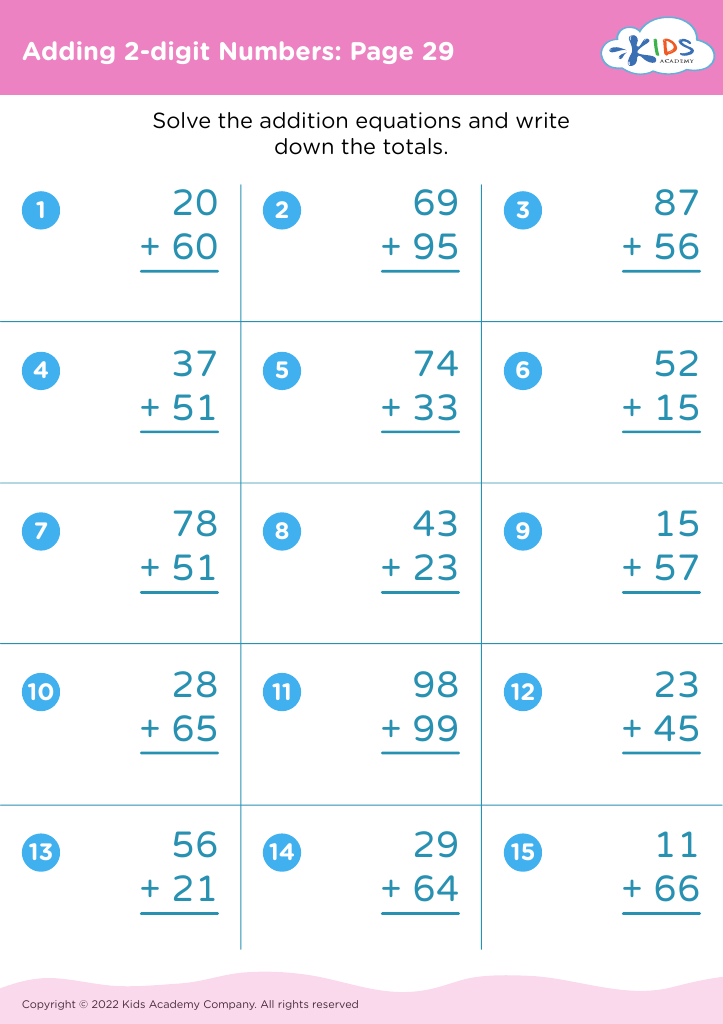
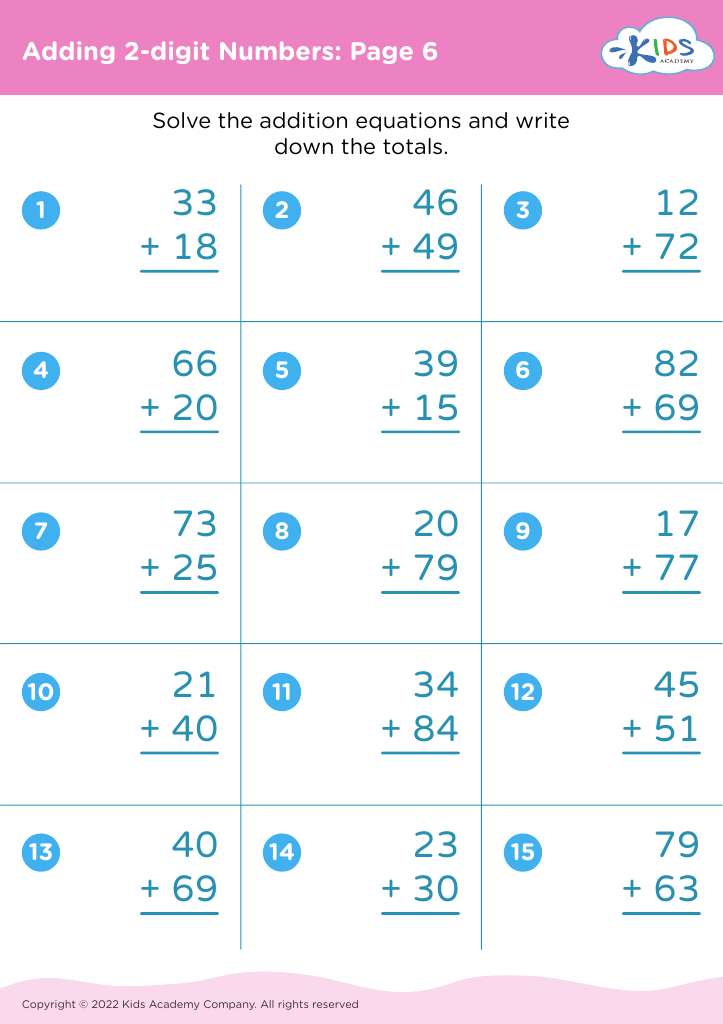
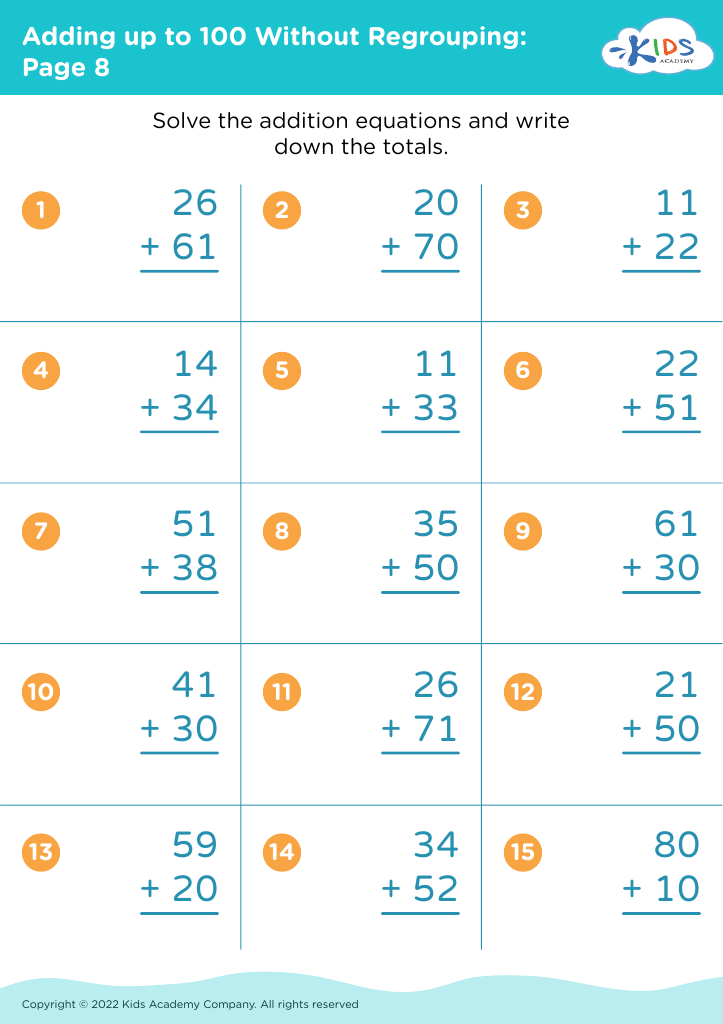
Enhance your child's early learning journey with our Vocabulary Development Addition Worksheets, specially designed for ages 5-7. These engaging worksheets combine essential addition skills with vocabulary development to boost both math proficiency and language abilities. Each activity features vibrant illustrations and simple word problems that introduce math terms in a fun, interactive way. Ideal for kindergarten and first-grade learners, our resources support reading comprehension while reinforcing fundamental arithmetic principles. Empower young minds to become confident in their math vocabulary and skills with these comprehensive, educational worksheets tailored for young learners. Start your child's success story today!








Vocabulary development in children aged 5-7 is crucial for their overall cognitive and academic growth. At this critical developmental stage, children are rapidly expanding their understanding and use of language, which forms the foundation for effective communication, reading comprehension, and future learning.
First, a rich vocabulary allows children to express themselves more precisely and confidently. When they have the words they need to describe their thoughts, emotions, and experiences, they can interact more effectively with peers and adults, leading to better social connections and emotional intelligence.
Second, vocabulary development is closely linked to reading skills. Children who have a broad vocabulary can better comprehend stories and texts, making reading a more enjoyable and enriching experience. This, in turn, boosts their interest in books and learning, fostering a lifelong love of reading.
Moreover, a strong vocabulary is a predictor of academic success. As children progress through school, they encounter increasingly complex subjects and texts. A well-developed vocabulary equips them to tackle these challenges head-on.
In addition, early vocabulary-building not only enhances language skills but also stimulates brain development, aiding in memory and critical thinking. By prioritizing vocabulary development during these formative years, parents and teachers set the stage for a child's success both in school and in life.








