Counting skills Graphs Worksheets for Ages 5-7
3 filtered results
-
From - To
Enhance your child's counting skills with our engaging Counting Skills Graphs Worksheets for Ages 5-7. These expertly designed worksheets from Kids Academy focus on making math fun and interactive. By incorporating colorful graphs, kids learn to count, compare data, and interpret simple charts, reinforcing their mathematical understanding. Suitable for young learners, these worksheets cater to different learning styles, encouraging curiosity and confidence in math. Help your child build a strong foundation in counting and graph reading with these exciting resources. Perfect for both classroom use and home practice, discover the ideal tool to develop essential math skills.
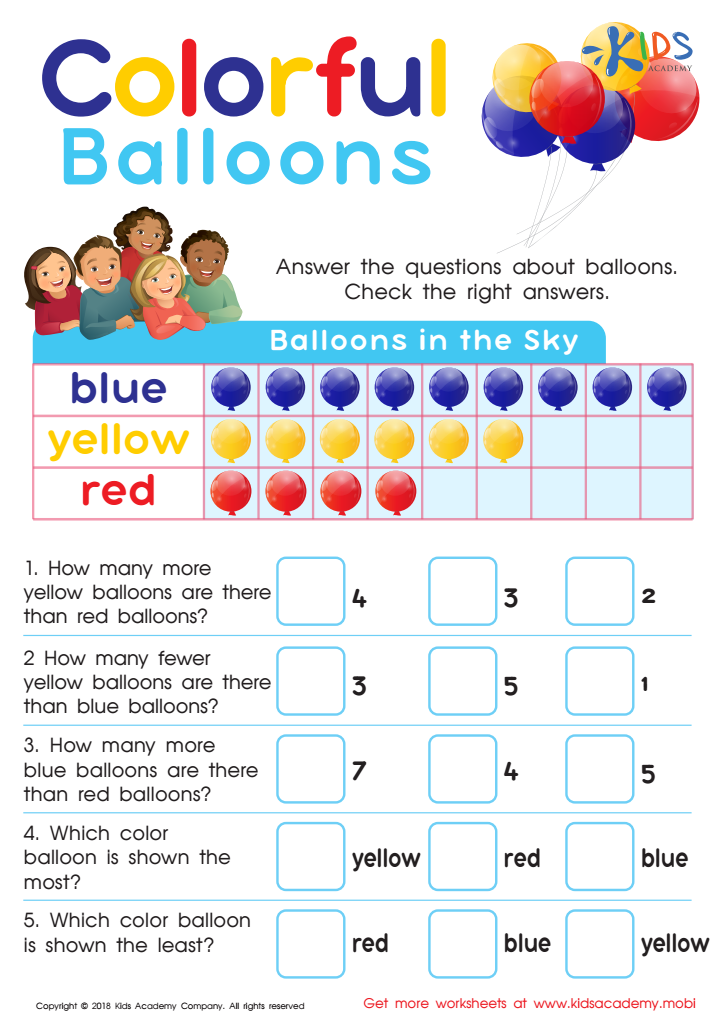
Picture Graphs: Colorful Balloons Worksheet
 Assign to My Students
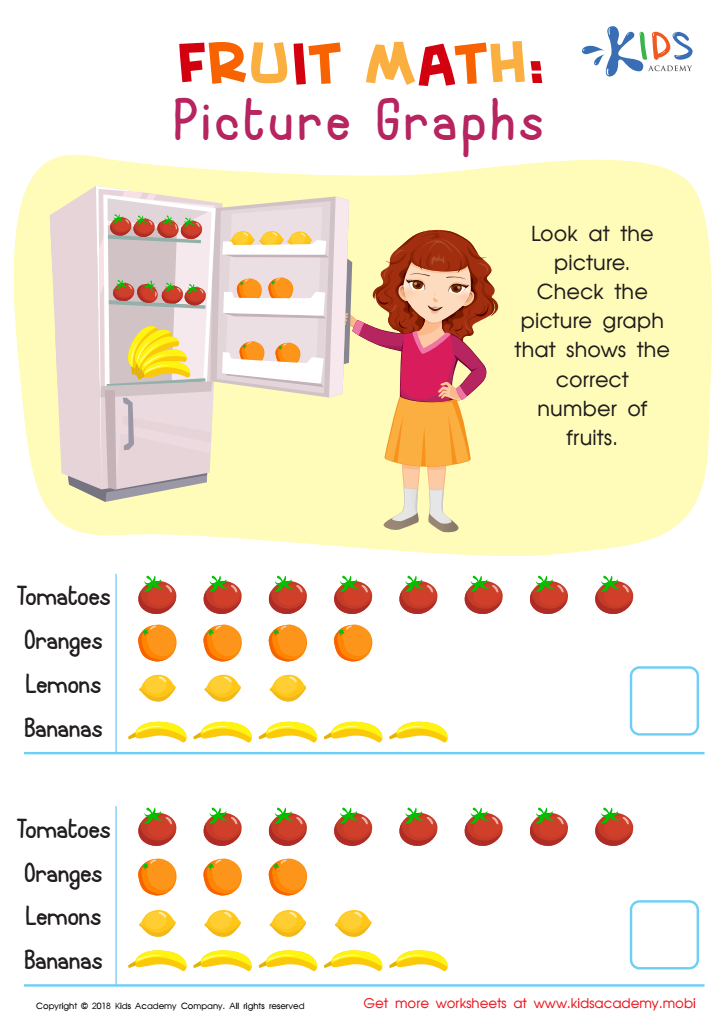
Fruit Math: Picture Graphs Worksheet
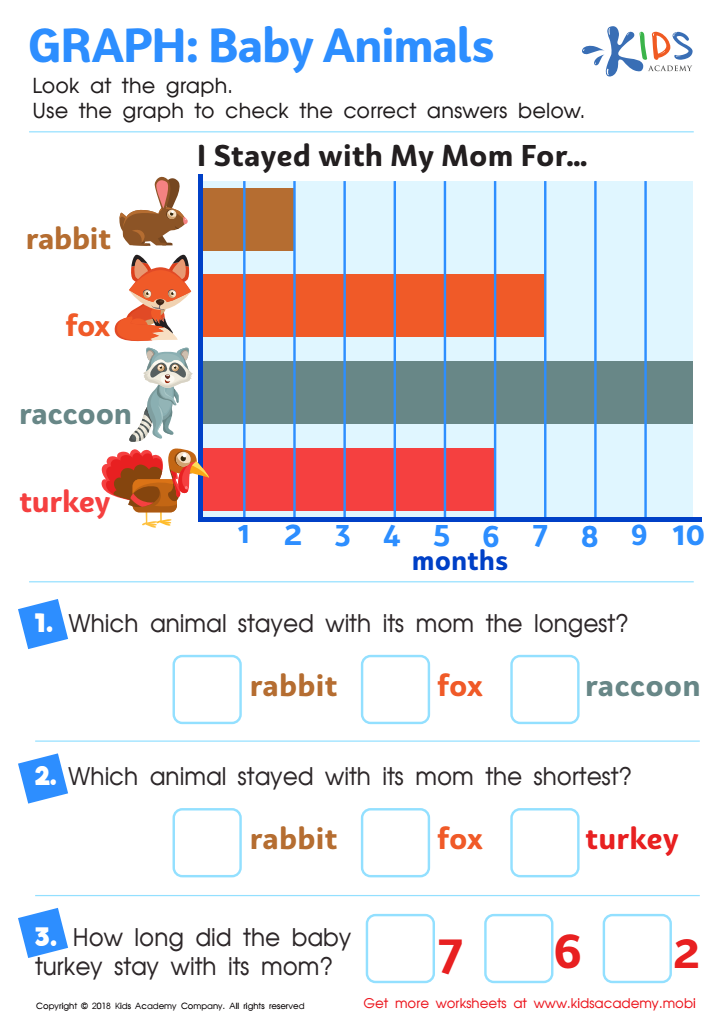
Graph: Baby Animals Worksheet








Counting skills and understanding graphs are foundational elements of early mathematics education, and parents or teachers should pay close attention to these areas, especially for children aged 5-7. Counting is not just reciting numbers; it helps children grasp quantity, recognize patterns, and build basic arithmetic skills. Mastering counting paves the way for more complex math concepts like addition, subtraction, and eventually multiplication and division. Children use counting skills daily, whether in educational settings or everyday activities, fostering numeracy that is crucial for problem-solving.
Similarly, introducing graphs at an early age helps develop a child's ability to visually organize and interpret data. Graphs teach kids to compare information, notice trends, and make predictions. These skills are not only valuable for math but for science, social studies, and even language arts. For example, kids might use bar graphs to represent the number of books they've read or to compare class preferences for certain activities.
Both counting and graphing skills contribute to critical thinking and logical reasoning. By integrating these concepts into learning, parents and teachers empower children with the tools they need for academic success and everyday decision-making. Fostering a strong foundation in these areas sets the stage for future achievement in various subjects, including STEM disciplines.








