Applying math skills Math Worksheets for Ages 5-7
3 filtered results
-
From - To
Explore our engaging "Applying Math Skills Math Worksheets for Ages 5-7" designed to make math fun and accessible! Perfect for young learners, these worksheets focus on real-world applications of basic math concepts, fostering a practical understanding of addition, subtraction, and number recognition. Each activity encourages kids to think critically and boost their problem-solving abilities while reinforcing essential math skills. Suitable for home and classroom use, our worksheets support early education and help children gain confidence in their math abilities. Make learning a delightful experience with our thoughtfully crafted resources that cater specifically to your child's developmental stage!
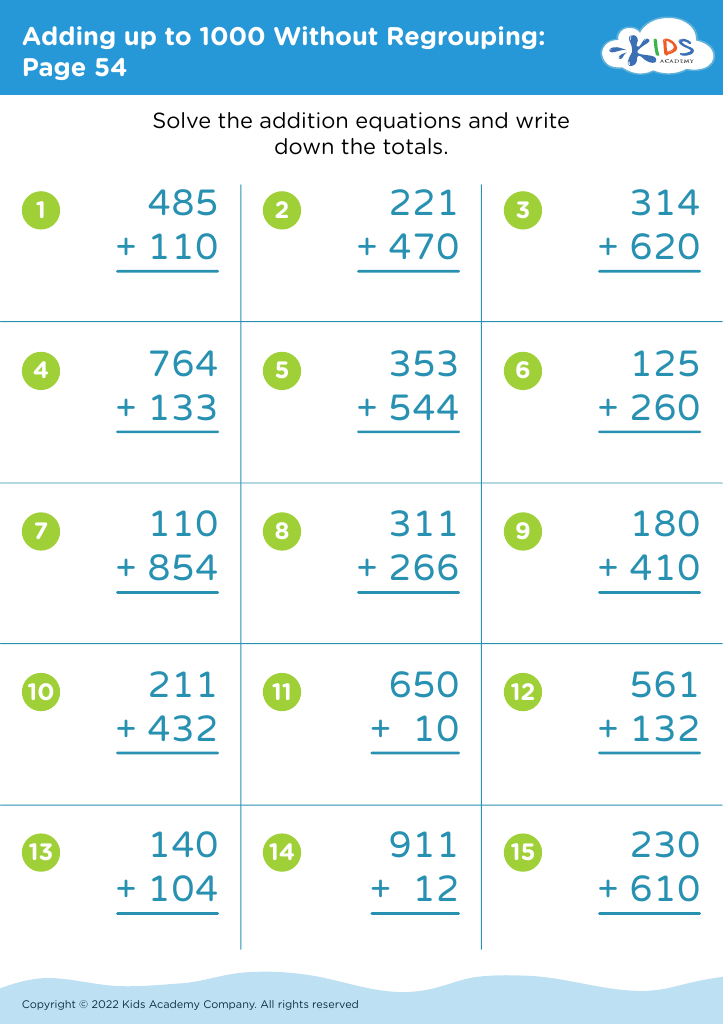
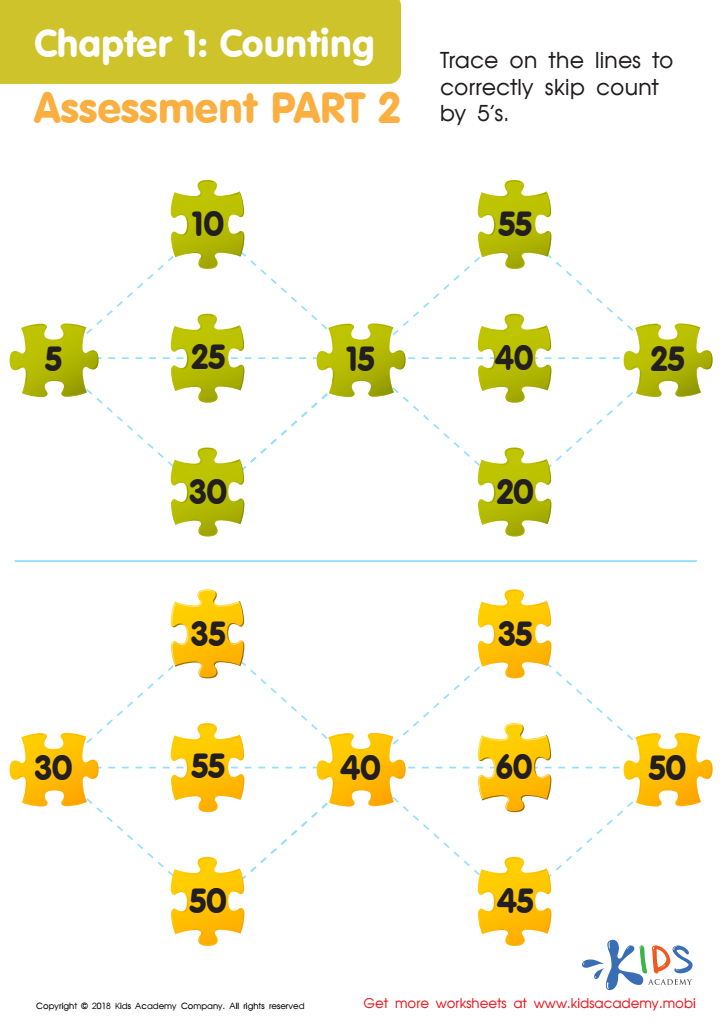
Counting: Assessment 2 Worksheet
 Assign to My Students
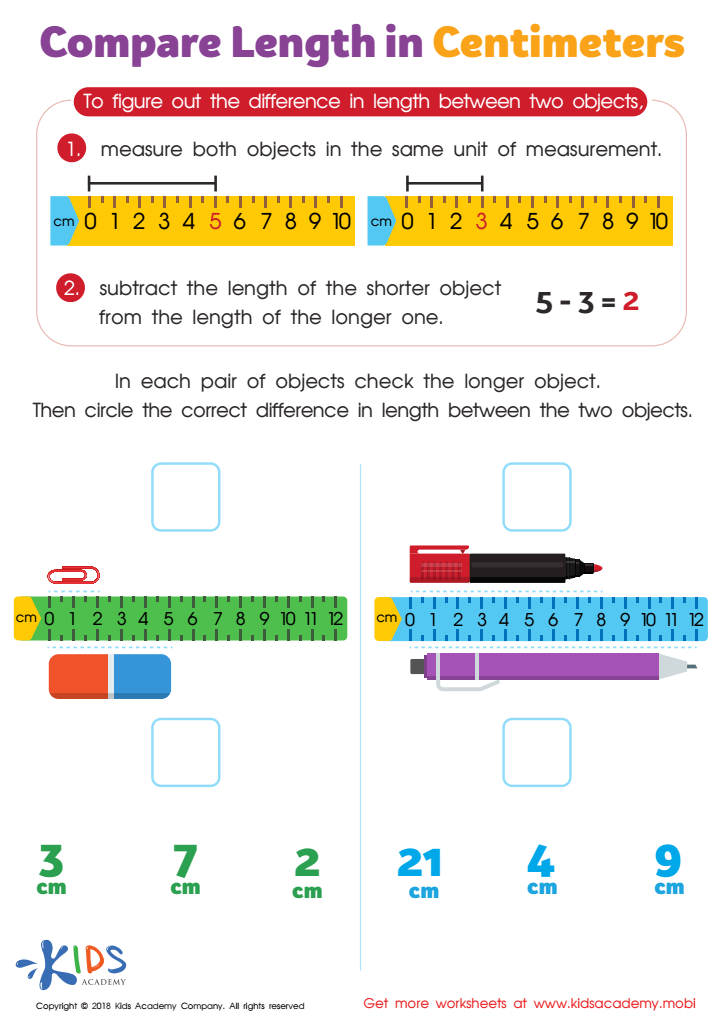
Compare Length in Centimeters Worksheet



%20(1).jpg)




Parents and teachers should care about applying math skills for children aged 5-7 because early math proficiency lays a crucial foundation for future learning. At this age, children are naturally curious and eager to explore concepts like counting, shapes, and patterns. Engaging them with practical applications of math helps solidify these foundational skills.
When children relate mathematics to everyday situations—like measuring ingredients for a recipe or counting items during a shopping trip—they see math as relevant and useful. This practical application fosters a positive attitude towards the subject and encourages critical thinking. Moreover, children are more likely to retain information when they can connect it to real-world experiences.
Additionally, strong math skills are linked to improved problem-solving abilities and cognitive development, benefiting children in not only math but other academic areas as they progress. Parents and teachers play a vital role in creating a supportive environment that endorses exploration and inquiry in mathematics. By nurturing these skills early, we prepare children for academic success, instill confidence, and enhance their ability to navigate a world where mathematical understanding is increasingly important.








