Basic math abilities Math Worksheets for Ages 5-7
3 filtered results
-
From - To
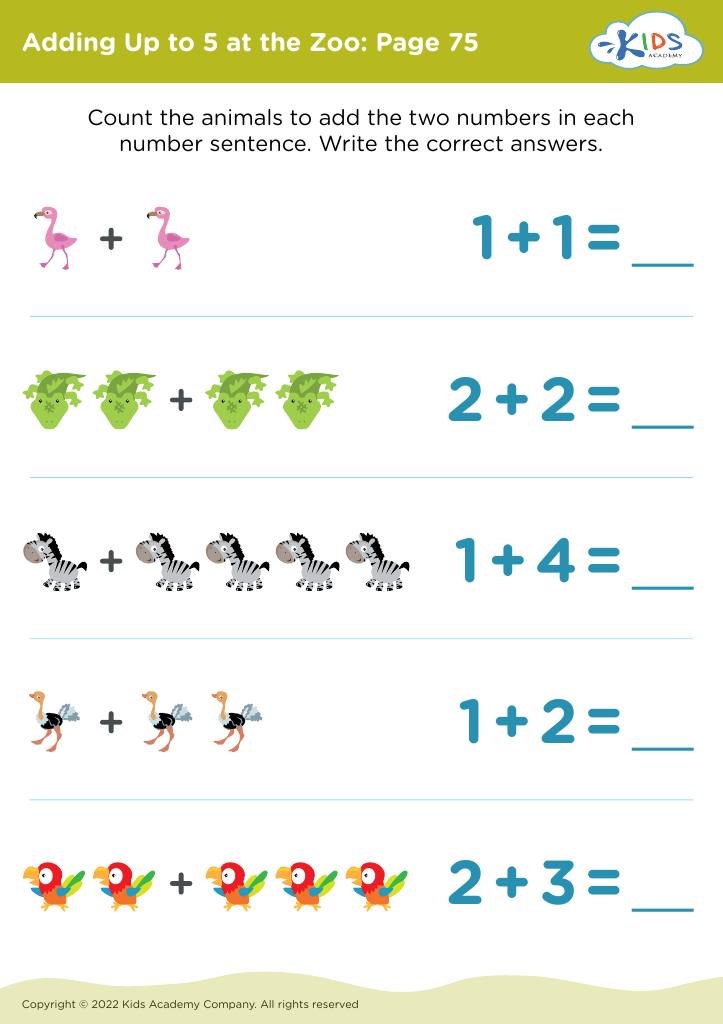
Welcome to our "Basic Math Abilities" worksheets designed specifically for children ages 5-7! Our engaging printables aim to build foundational math skills through fun activities that excite young learners. Kids will explore essential concepts such as addition, subtraction, number recognition, and counting in a playful and interactive manner. Each worksheet is thoughtfully crafted to enhance cognitive development while nurturing a love for math. Ideal for both classroom and home use, these resources provide the perfect opportunity for children to practice and reinforce their mathematical abilities. Dive into a world of learning that supports your child’s academic journey today!
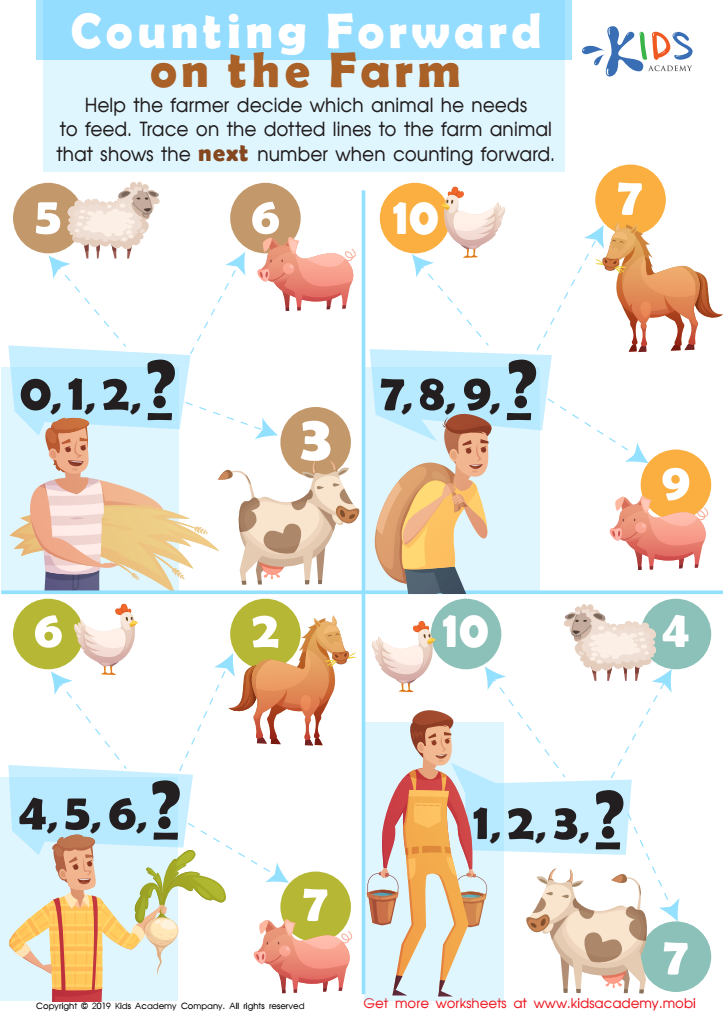
Counting Forward On the Farm Worksheet
 Assign to My Students
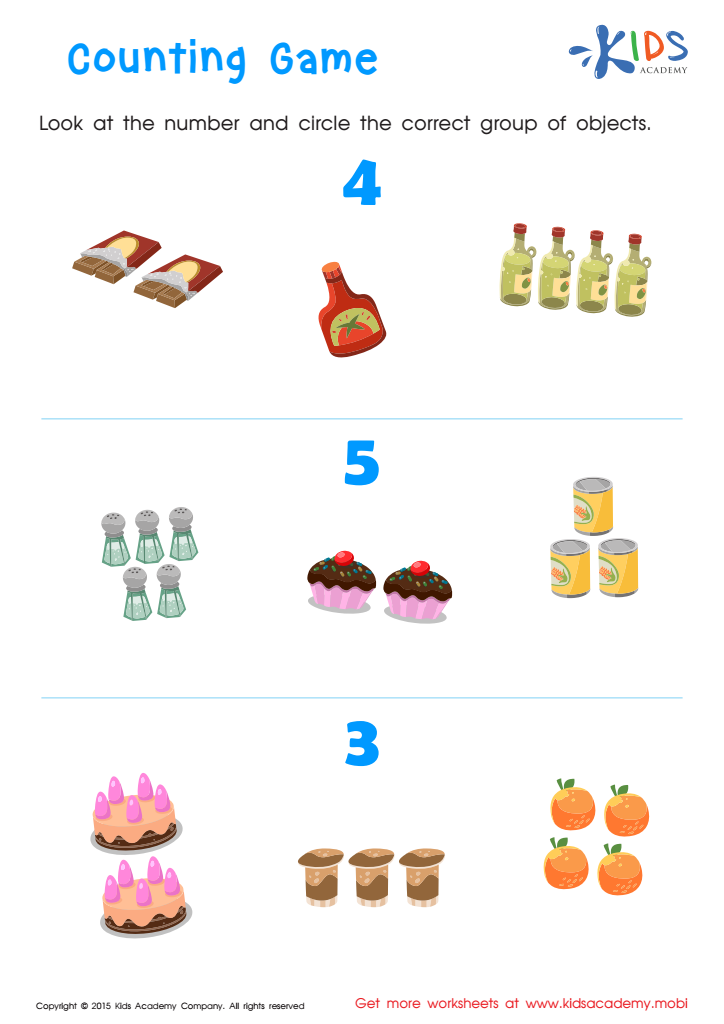
Counting Worksheet







Parents and teachers should care deeply about basic math abilities for children aged 5-7 because foundational skills in mathematics set the stage for future learning and educational success. During these crucial years, children develop essential cognitive skills such as problem-solving, logical reasoning, and critical thinking. Mastery of basic math concepts—such as counting, addition, subtraction, and understanding shapes—enhances a child's confidence and fosters a positive attitude toward learning.
Moreover, early math proficiency is linked to later academic achievement. Research has shown that children who grasp fundamental math concepts in early grades perform better in higher-level math throughout their schooling. This competence also supports learning in other subjects, such as science and reading, where spatial awareness and logical thinking are necessary.
Additionally, basic math skills prepare children for real-life situations, such as managing money, understanding time, and solving everyday problems. Encouraging a curious and playful approach to math can help demystify the subject and eliminate any math anxiety that may develop later. By nurturing these abilities, parents and teachers equip children with tools for lifelong success and inspire a love for learning that transcends the classroom. Ensuring robust math foundations ultimately supports a well-rounded education.








