
Counting money Math Worksheets for Ages 5-7
3 filtered results
Difficulty Level
Grade
Age
-
From - To
Subject
Activity
Standards
Unlock the world of financial literacy for young learners with our Counting Money Math Worksheets for ages 5-7. These engaging and educational worksheets from Kids Academy help children develop essential skills in recognizing coins, counting money, and understanding basic currency concepts. With colorful illustrations and interactive exercises, kids will quickly learn to identify pennies, nickels, dimes, and quarters. Perfect for home or classroom use, these printable worksheets not only enhance math proficiency but also prepare children for real-world scenarios. Foster your child’s confidence in handling money with fun, hands-on learning today!
Favorites
With answer key
Interactive
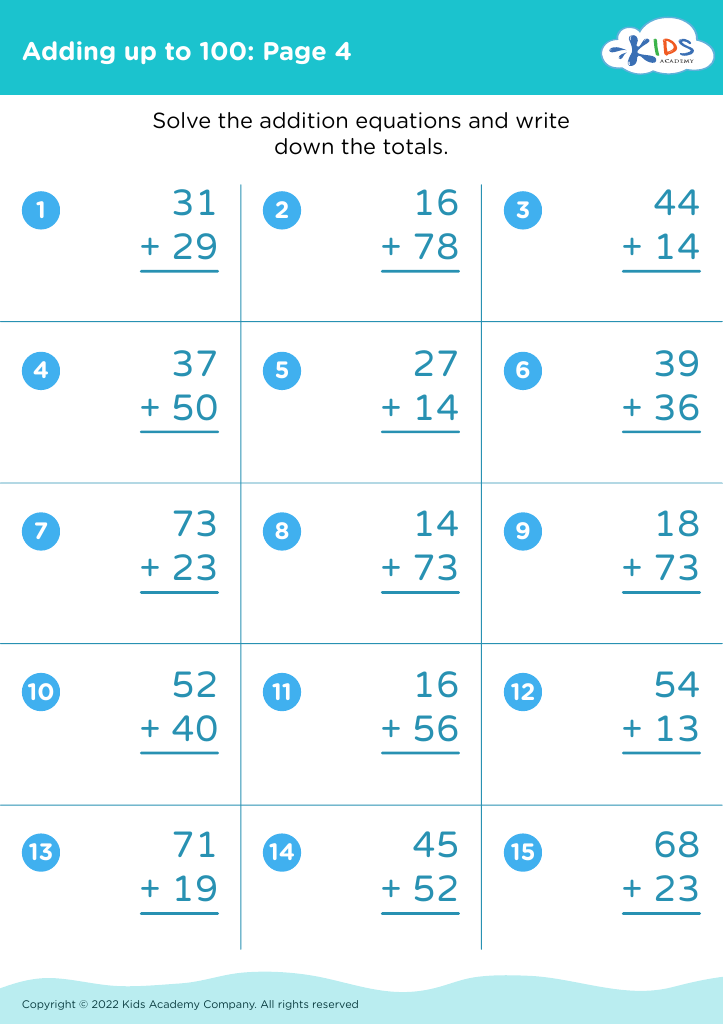
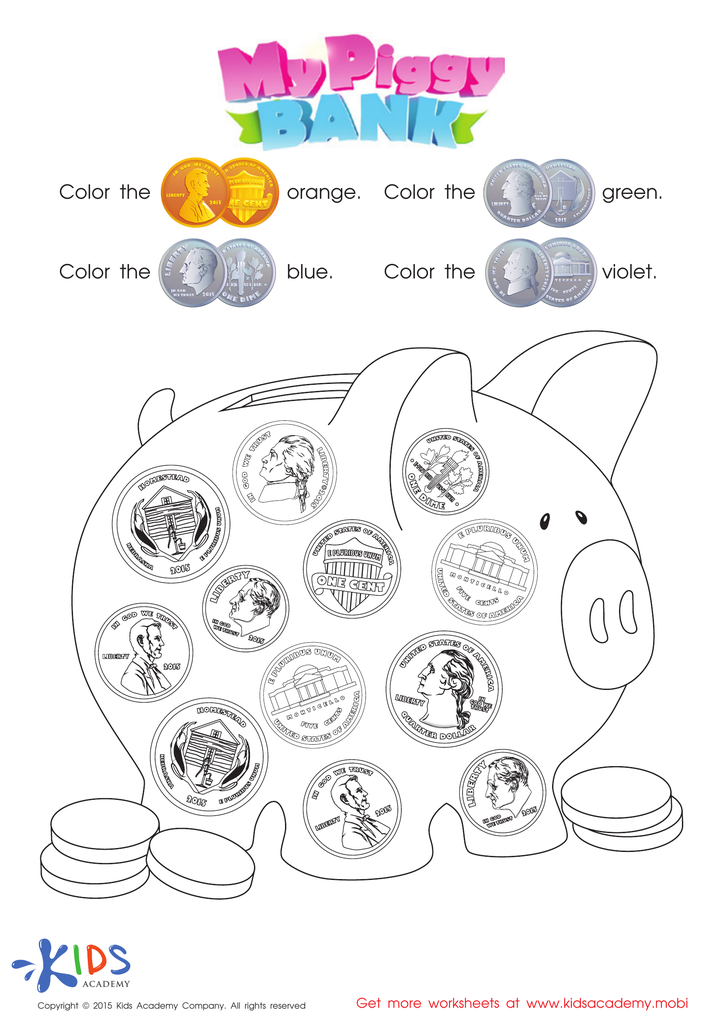
Recognizing Money Money Worksheet
Help the piggy bank by coloring its coins with Kids Academy's free money worksheets! Learn the different coins and their values with your kids. Printable worksheets are available to continue the lesson. Let's learn and have fun!
Recognizing Money Money Worksheet
Worksheet
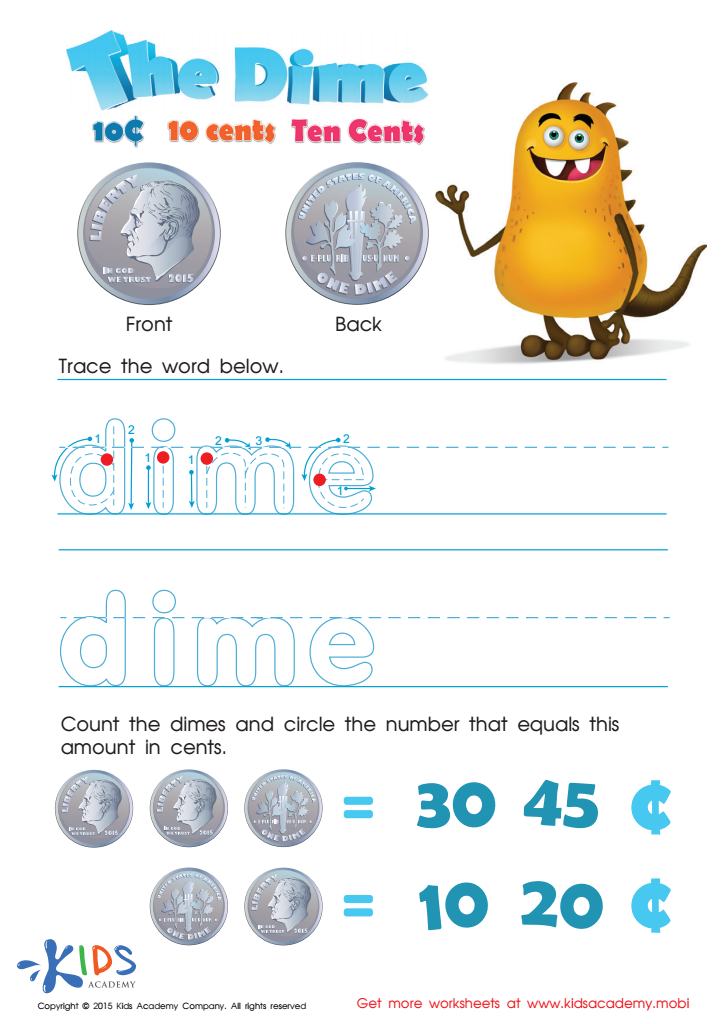
Ten Cents or the Dime Money Worksheet
Introduce your kids to coin games! Start with a dime: trace the word on both sides and count the dimes. Kids Academy has printable worksheets to help your kids learn how to count money.
 Assign to My Students
Ten Cents or the Dime Money Worksheet
Worksheet
Join Kids Academy for Free
Who is primarily going to use this learning content?







Counting money is a fundamental skill that lays the groundwork for financial literacy and practical life skills. For children aged 5-7, learning to count money introduces basic math concepts in a fun, tangible way. Parents and teachers should care about this important skill for several reasons:
First, it enhances numerical understanding and reinforces arithmetic skills. Counting coins and bills involves addition, subtraction, and understanding the value of different denominations, which are crucial math fundamentals.
Second, it promotes problem-solving and critical thinking. Children learn to compare quantities, make change, and understand equivalences, such as how many nickels make a quarter. These activities help develop logical and analytical thinking.
Third, gaining familiarity with money fosters independence and confidence. When children understand money, they can participate in simple transactions, like buying a snack or a toy, empowering them and encouraging responsible spending habits.
Finally, introducing the concept of money at an early age sets the stage for future financial literacy. Understanding money management is essential for making informed financial decisions later in life. Through playful and engaging activities related to counting money, parents and teachers can cultivate an early appreciation for math and practical life skills that will benefit children throughout their lives.








