Counting skills improvement Math Worksheets for Ages 5-7
3 filtered results
-
From - To
Enhance your child's counting skills with our engaging Math Worksheets designed for ages 5-7. These worksheets focus on improving numerical understanding through fun activities that encourage children to practice counting, number recognition, and simple addition. Featuring vibrant illustrations and interactive challenges, our resources make learning enjoyable and effective. Each worksheet is tailored to accommodate different skill levels, ensuring a personalized experience for every child. Designed to support early math development, these printables are perfect for classroom use or home learning. Foster your child's confidence in math while preparing them for future academic success with our counting skills improvement resources!
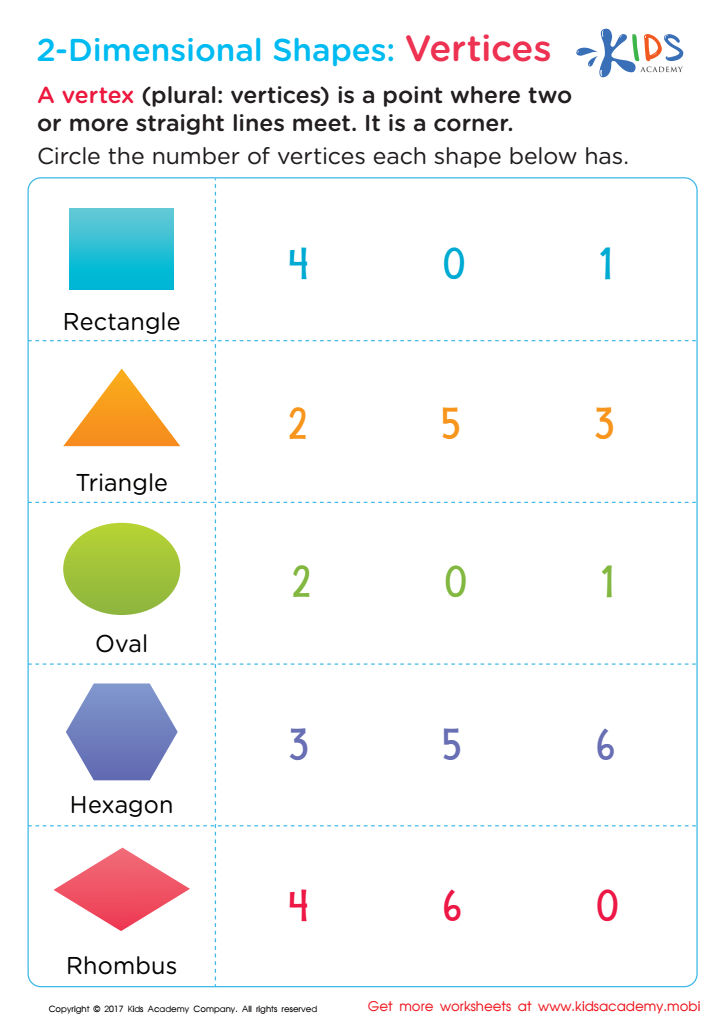
Two–Dimensional Shapes: Vertices Printable
 Assign to My Students
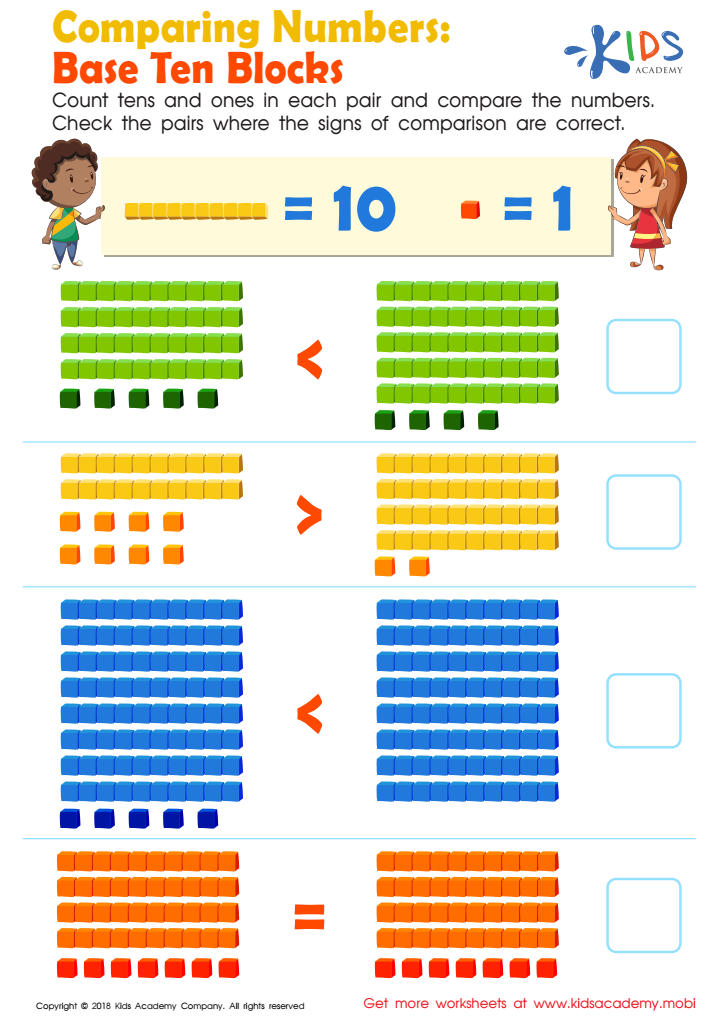
Comparing Numbers: Base Ten Blocks Worksheet
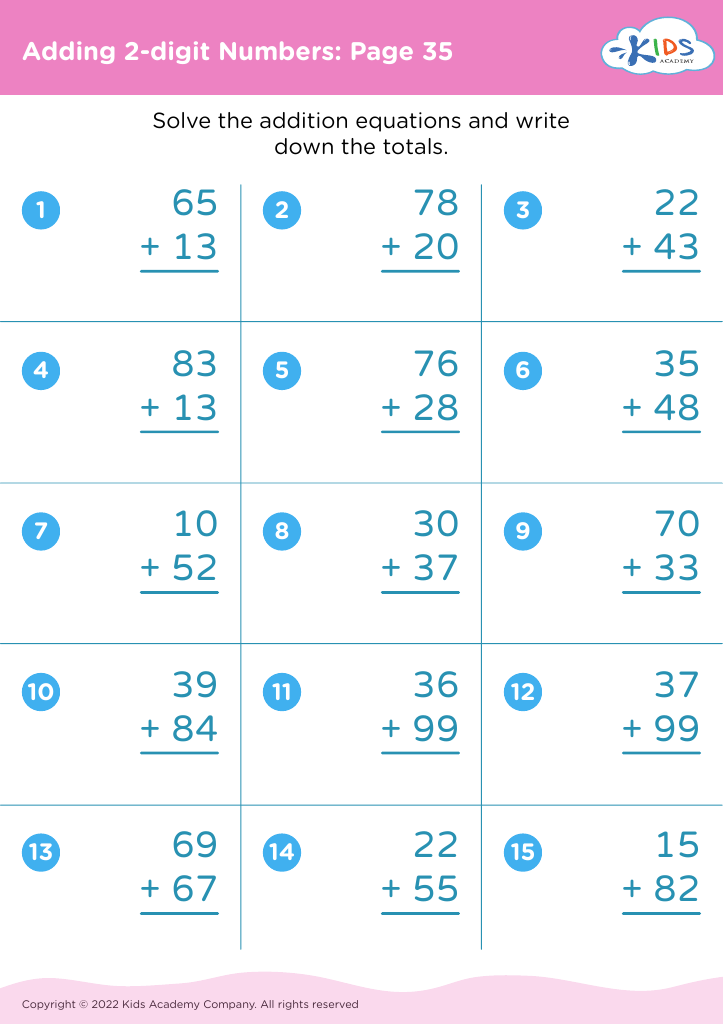








Counting skills are foundational to a child's mathematical development, particularly for those aged 5 to 7. Mastering counting enhances not only numerical understanding but also strengthens cognitive abilities. These skills are crucial as they pave the way for grasping more complex mathematical concepts, like addition and subtraction, which children will encounter in later grades.
Improving counting skills helps children in various everyday situations—be it shopping, sharing toys, or balancing time. It encourages logical thinking and problem-solving, building a solid framework for critical reasoning. Early mastery can boost a child’s confidence and motivation in math, diminishing anxiety around the subject as they progress academically.
Moreover, strong counting skills offer children an advantage in age-appropriate mathematics assessments, which can positively influence their educational trajectory. For teachers and parents, fostering counting skills can also serve as a bonding experience; engaging in games, songs, and interactive activities makes the learning process enjoyable and relatable. Investing time in developing counting skills enhances not only academic performance but also prepares children for life skills, encouraging them to see math as a valuable tool rather than a daunting subject. Ultimately, nurturing these skills during critical formative years sets a robust foundation for lifelong learning and confidence.








