Developing observational skills Math Worksheets for Ages 5-7
4 filtered results
-
From - To
Unlock your child's potential with our "Developing Observational Skills Math Worksheets" designed for ages 5-7! These engaging worksheets focus on enhancing critical observational skills vital for math success. With fun, age-appropriate activities, children will learn to identify patterns, quantify objects, and improve their attention to detail. Each worksheet is crafted to promote hands-on learning and stimulate curiosity, providing a solid foundation for future mathematical concepts. Perfect for home or classroom use, our materials encourage interactive learning and spark creativity. Watch as your young learners become more confident problem solvers and develop a deeper understanding of the mathematical world around them!
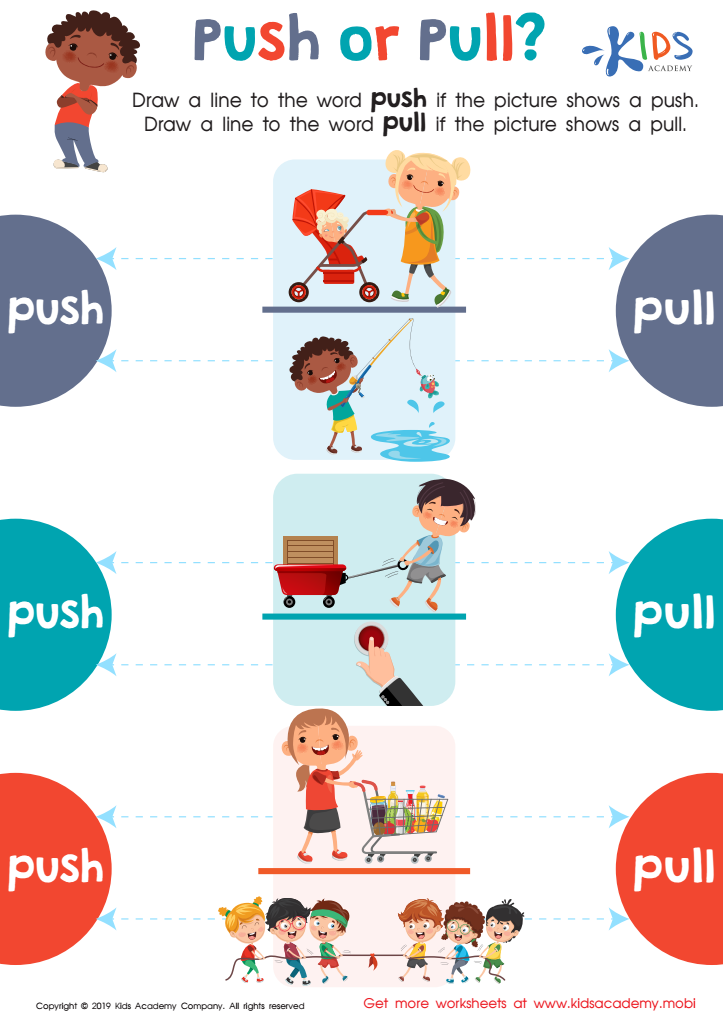
Push or Pull? Worksheet
 Assign to My Students
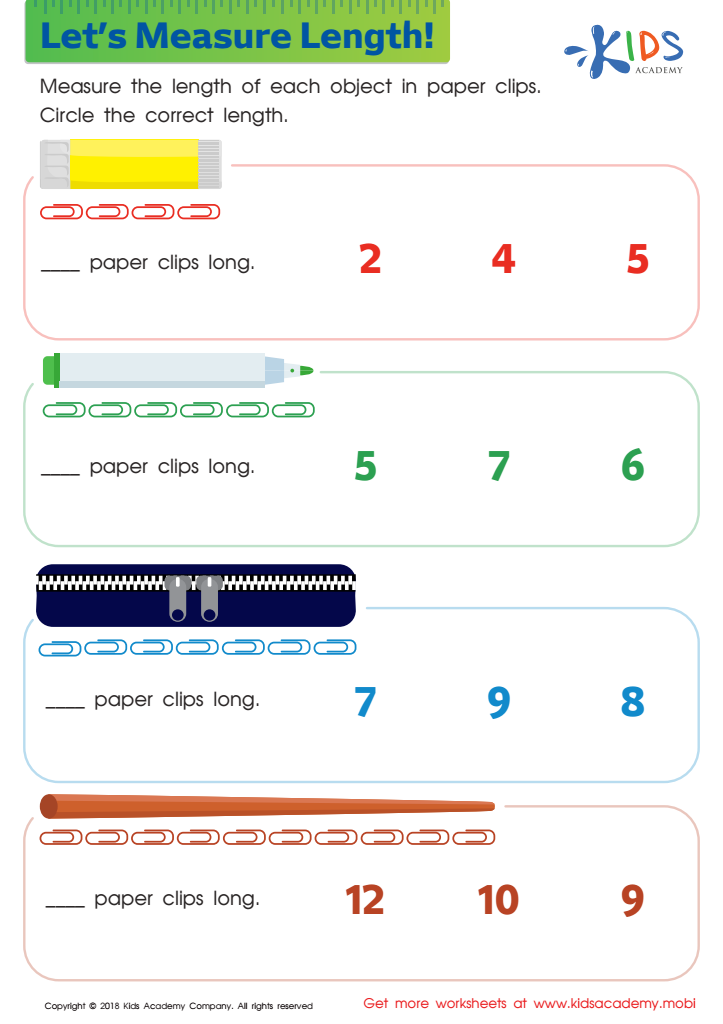
Lets Measure Length Worksheet
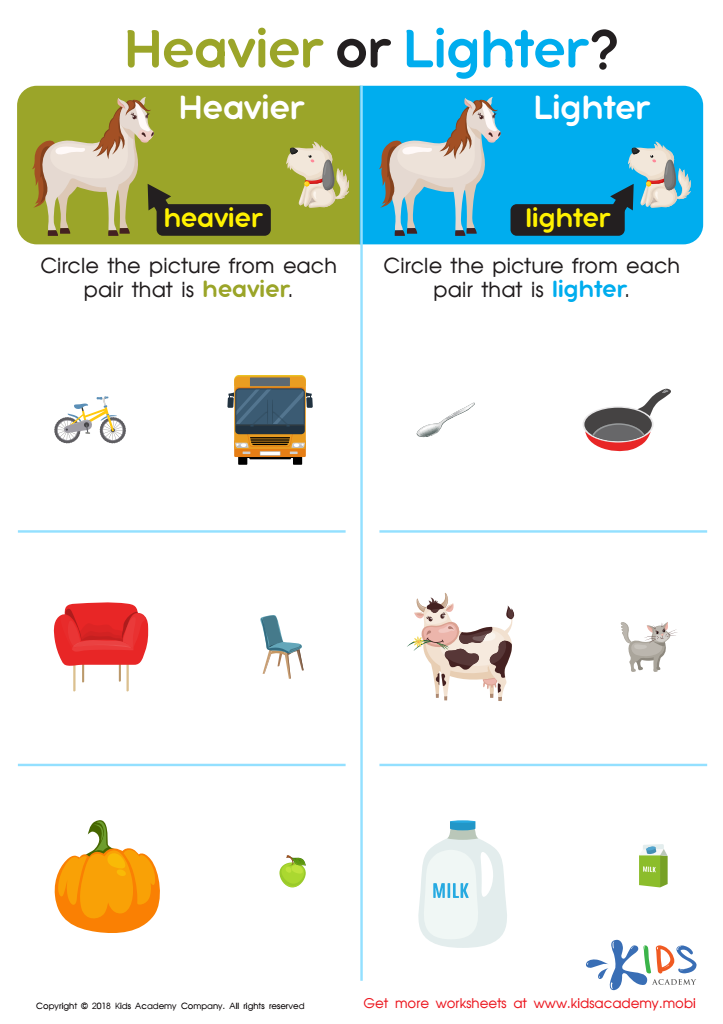
Heavier or Lighter? Worksheet








Developing observational skills in math for children ages 5-7 is crucial for several reasons. First, observation fosters curiosity and engagement, essential components of active learning. When children examine their surroundings, they identify patterns, shapes, and relationships, building a concrete foundation for mathematical concepts. For instance, noticing the symmetry in leaves or the configuration of toys encourages classification and sorting—key skills in early math.
Second, strong observational skills support critical thinking, enabling children to ask questions, make predictions, and solve problems independently. When teachers and parents emphasize observation in math, they encourage children to explore various strategies, leading to deeper understanding and retention of concepts.
Additionally, these skills lay the groundwork for later academic success. Children who learn to observe details and patterns early on are better prepared for more complex mathematical tasks in higher grades.
Finally, promoting observational skills fosters collaboration and communication among peers, as children share their findings and reasoning with one another. This social aspect enhances their confidence and enthusiasm for math. In short, early development of observational skills equips children with the tools needed for lifelong learning and appreciation of mathematics.








