Developing problem-solving abilities Math Worksheets for Ages 5-7
5 filtered results
-
From - To
Unlock your child's potential with our engaging "Developing Problem-Solving Abilities Math Worksheets" designed for ages 5-7. These worksheets combine fun and educational puzzles that encourage critical thinking and enhance math skills. Children will explore various concepts, such as basic addition, subtraction, and logic, while honing their ability to tackle real-life challenges. With vibrant illustrations and interactive exercises, these resources make learning enjoyable and effective. Tailored to support different learning styles, our worksheets foster independence and self-confidence in young learners. Start cultivating your child's problem-solving prowess today and lay a strong foundation for future academic success!
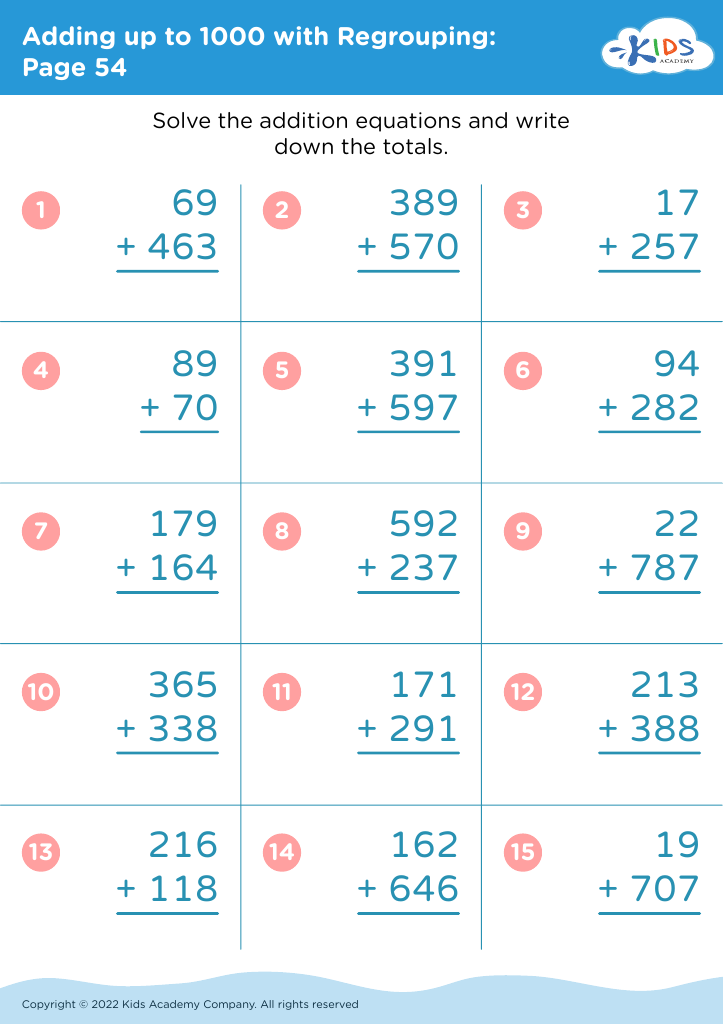
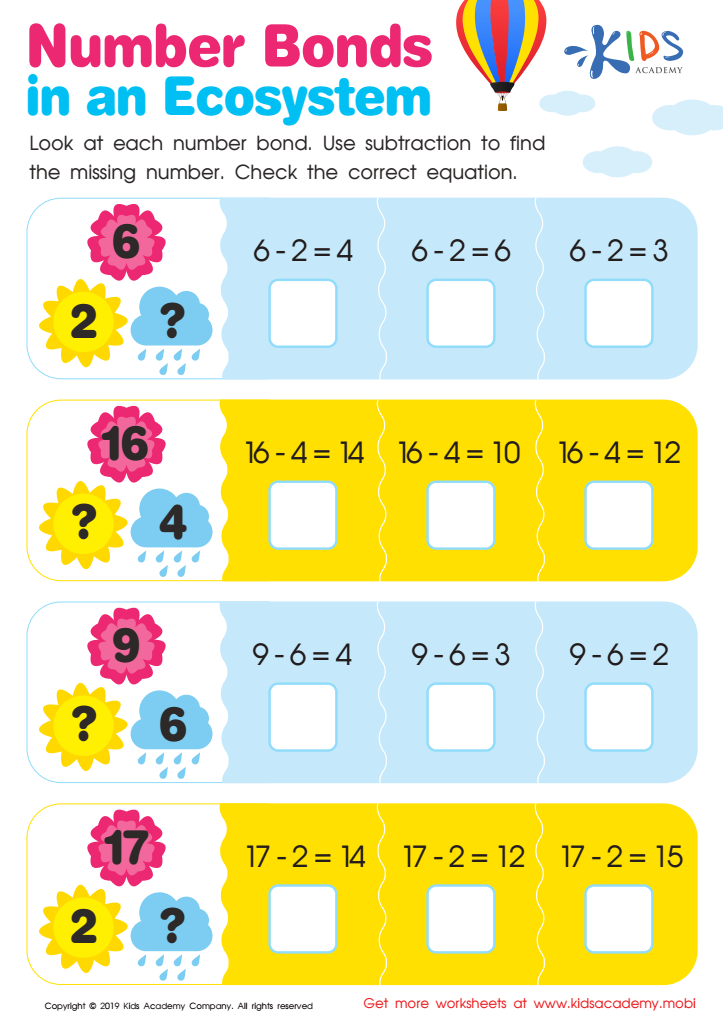
Number Bonds in an Ecosystem Worksheet
 Assign to My Students
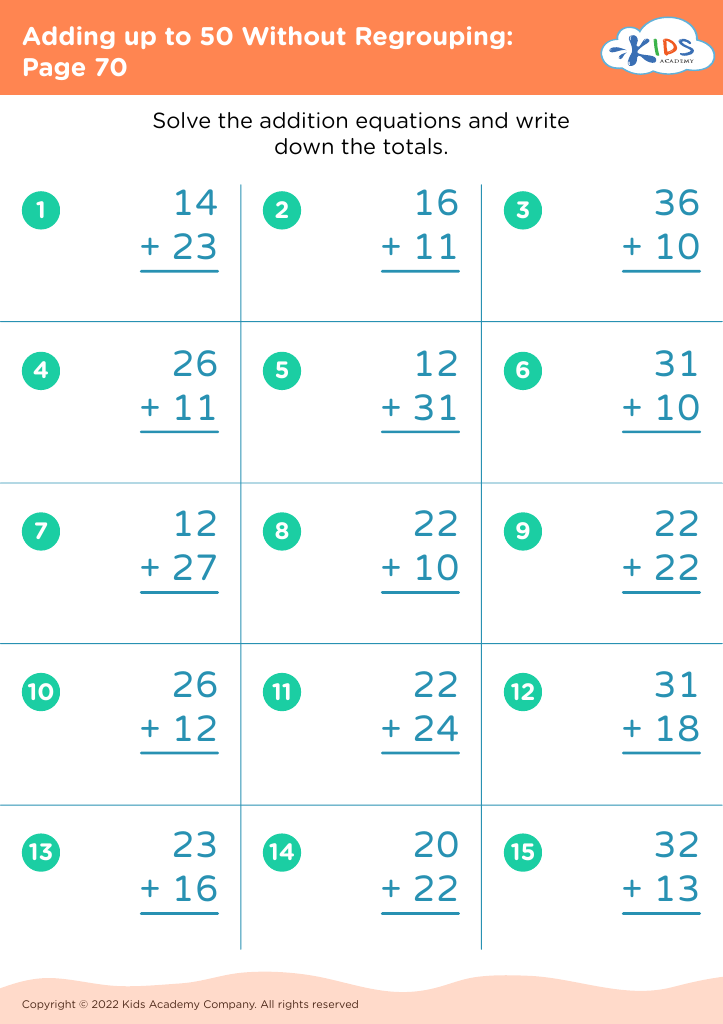
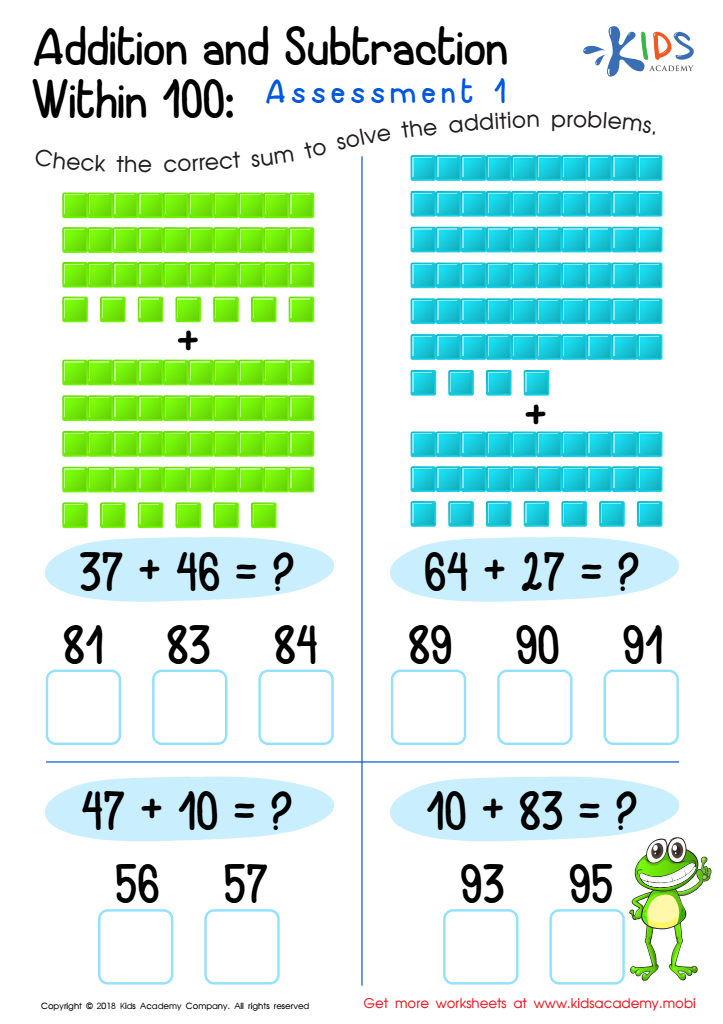
Addition and Subtraction Within 1: Assessment 1 Worksheet
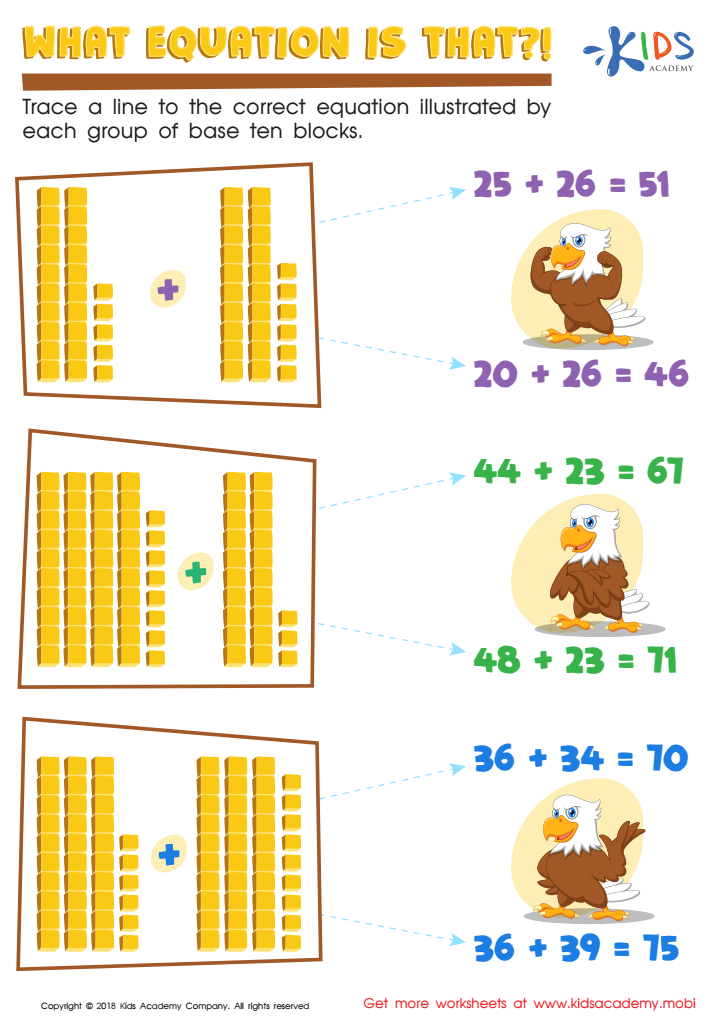
What Equation Is That? Worksheet








Developing problem-solving abilities in math for children aged 5-7 is essential as it lays the foundation for critical thinking and analytical skills. At this age, children are naturally curious and learn best through exploration and play. By engaging them in math-related problem-solving activities, both parents and teachers can stimulate their cognitive development, promoting a love for learning and fostering resilience when facing challenges.
Early math problem solving nurtures essential skills such as persistence, creativity, and collaboration. Children learn to approach problems from different angles and find multiple solutions, which enhances their adaptability—an invaluable trait in our rapidly changing world. Additionally, early exposure to math strategies supports later success in more complex subjects, potentially closing achievement gaps.
Moreover, problem-solving in math encourages communication and reasoning, teaching children to articulate their thoughts and understand others' viewpoints. This not only benefits their mathematical understanding but also enhances their social skills. Ultimately, nurturing these abilities in early childhood sets the stage for lifelong learning, ensuring that children become confident, capable problem solvers who can thrive academically and socially in the years to come. Therefore, parents and teachers play a critical role in supporting this vital aspect of early education.








