Differentiating shapes Math Worksheets for Ages 5-7
4 filtered results
-
From - To
Explore our engaging Differentiating Shapes Math Worksheets designed for children ages 5-7! These worksheets are perfect for developing young learners' ability to recognize and differentiate between various shapes. Each activity promotes critical thinking and enhances visual-spatial skills, ensuring that students not only identify shapes such as circles, squares, triangles, and rectangles but also understand their unique properties and differences. With colorful illustrations and interactive tasks, these worksheets make learning fun and effective. Whether in the classroom or at home, our differentiated materials cater to diverse learning styles and paces, supporting teachers and parents in fostering a solid mathematical foundation for young students.
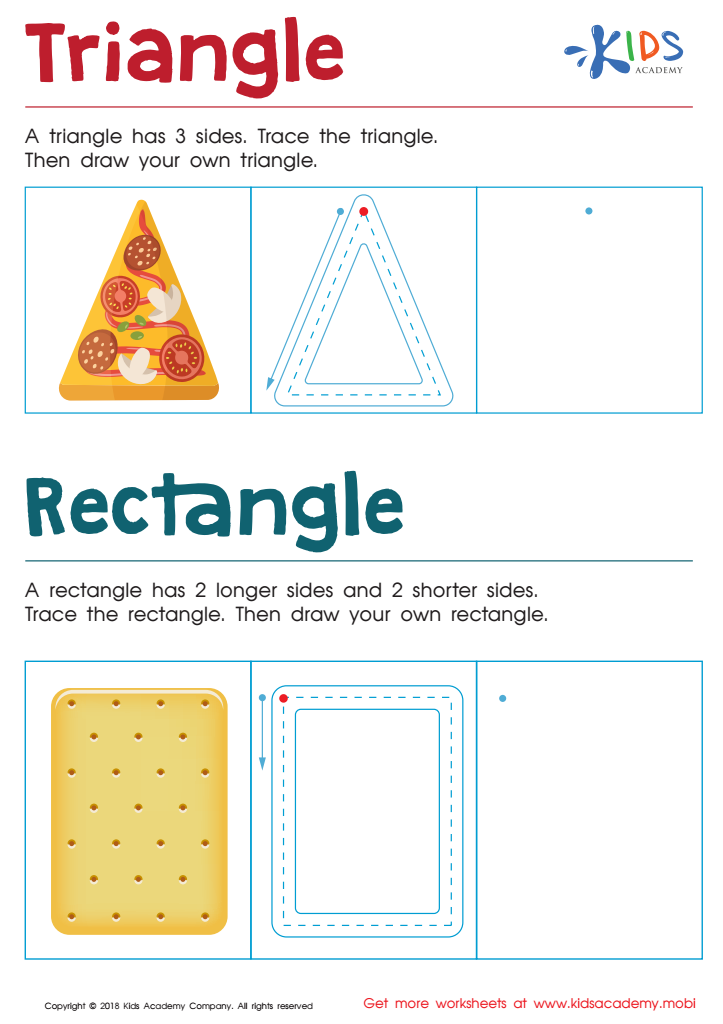
Triangle Rectangle Worksheet
 Assign to My Students
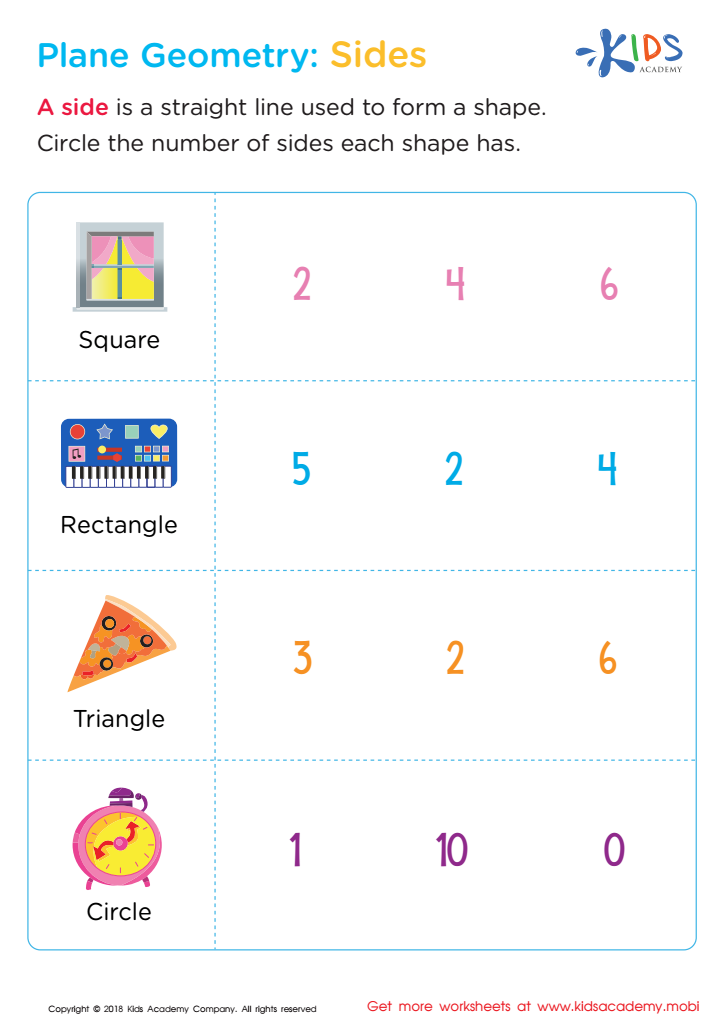
Plane Geometry: Sides Worksheet
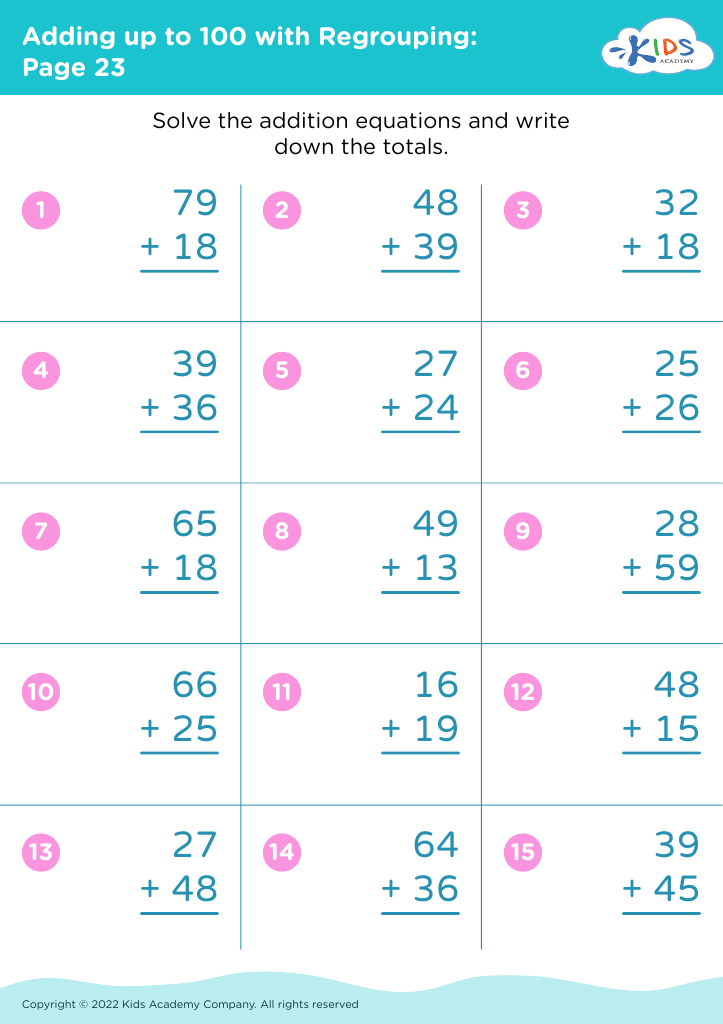
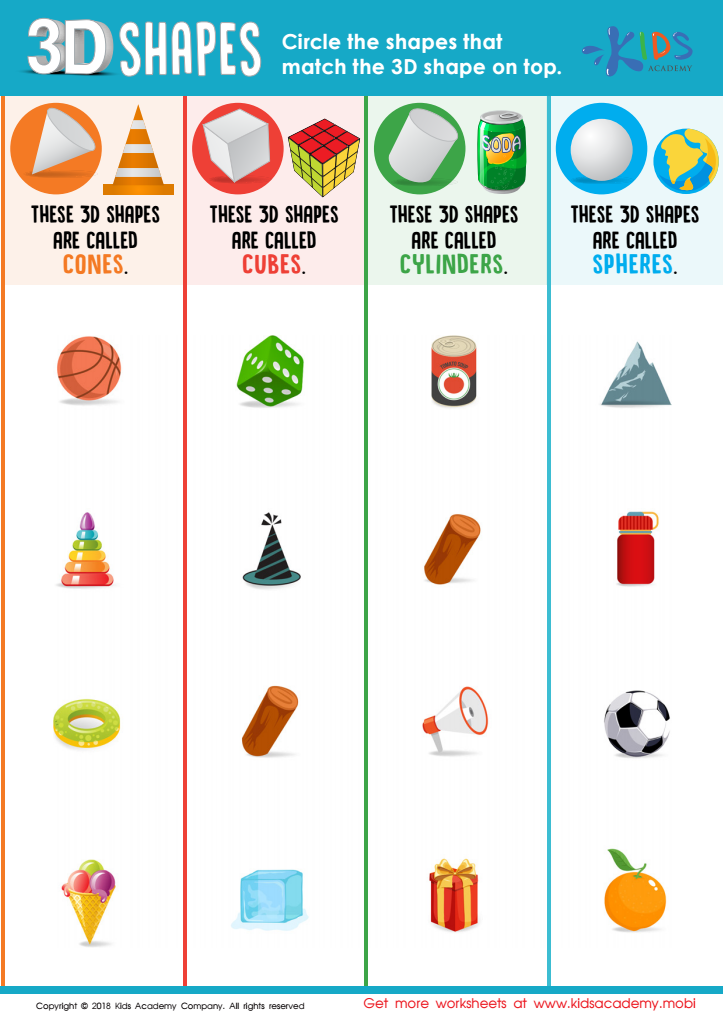
3D Shapes Worksheet






.jpg)

Differentiating shapes is crucial for children aged 5-7, as it forms a foundational aspect of their mathematical education and cognitive development. At this age, children are naturally curious and eager to explore their environments. Understanding shapes sharpens their spatial awareness, which is essential for skills in problem-solving and critical thinking.
Teaching kids to differentiate between shapes like circles, squares, and triangles enhances their ability to classify and compare, fostering their analytical skills. Parents and teachers should care because this knowledge is not only theoretical; it also has real-world applications. For example, recognizing shapes helps children describe their surroundings, understand patterns, and engage with artistic activities.
Moreover, differentiating shapes can also support language development as children learn to articulate their observations and understand mathematical vocabulary. By integrating shape differentiation into various activities—such as arts and crafts, games, or everyday scenarios—educators and parents can make learning enjoyable and relatable.
Furthermore, individualized instruction can accommodate different learning styles, ensuring every child grasps the concepts at their own pace. By prioritizing shape differentiation, adults help nurture children's holistic development, paving the way for future mathematical learning and everyday problem-solving skills.








