Enhance Vocabulary Math Worksheets for Ages 5-7
4 filtered results
-
From - To
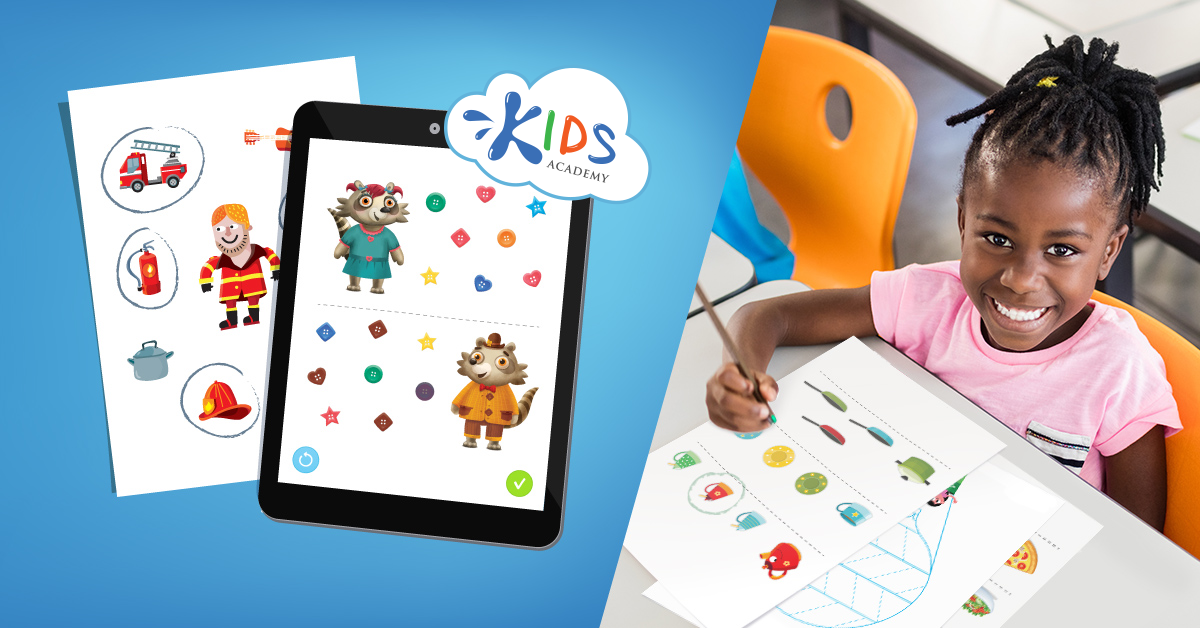
Boost your child’s mathematical vocabulary and understanding with our carefully crafted "Enhance Vocabulary Math Worksheets for Ages 5-7" from Kids Academy. Specially designed for young learners, these worksheets seamlessly blend math skills with vocabulary development, providing a dual benefit. Children will encounter and learn essential math terms within engaging, age-appropriate exercises—fostering both their numeracy and language skills. Ideal for sparking interest and building confidence in early math concepts, our worksheets are an excellent resource for both classroom and home use, supporting foundational learning during these integral years. Explore the benefits of integrated learning to give your child a head start!







Enhancing vocabulary in young children, particularly in the realm of math, is critically important for several reasons. Firstly, a strong mathematical vocabulary provides the foundational language that children need to understand and express mathematical concepts clearly. For ages 5-7, math words like "add," "subtract," "circle," "square," "greater than," or "less than" are essential. When children comprehend these terms readily, they can participate more fully in class discussions and problem-solving activities.
Secondly, an improved mathematical vocabulary bridges the gap between conceptual understanding and practical application. Young learners are more capable of performing operations and solving problems if they can follow the language used in instructions and questions. For example, understanding terms such as "total," "difference," or "measurement" can significantly reduce misunderstandings and errors.
Moreover, an enhanced vocabulary in math boosts overall academic confidence. Children are likely to perform better not only in math but across other subjects too. This confidence in language skills positively impacts their willingness to engage, take on challenges, and enjoy learning.
Encouraging vocabulary development addresses language skills in multiple ways: listening, speaking, reading, and justifying reasons which ultimately strengthen critical thinking. Both parents and teachers should prioritize this development to build a solid, lasting foundation in mathematics and beyond.








