Improving math skills Math Worksheets for Ages 5-7 - Page 2
32 filtered results
-
From - To
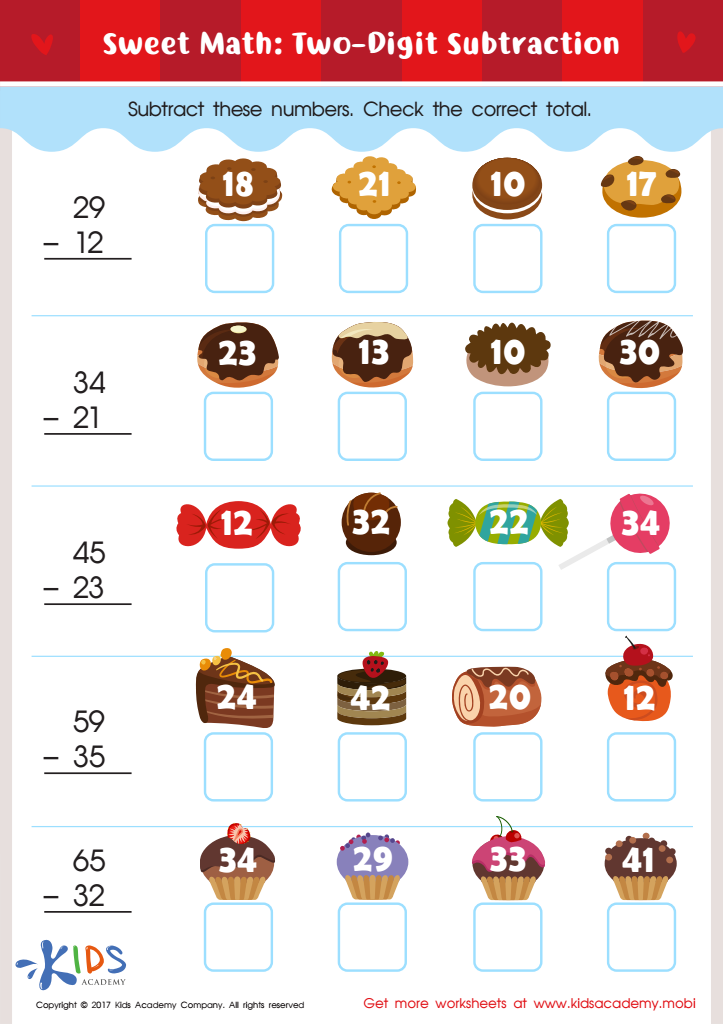
Two Digit Subtraction Worksheet
 Assign to My Students
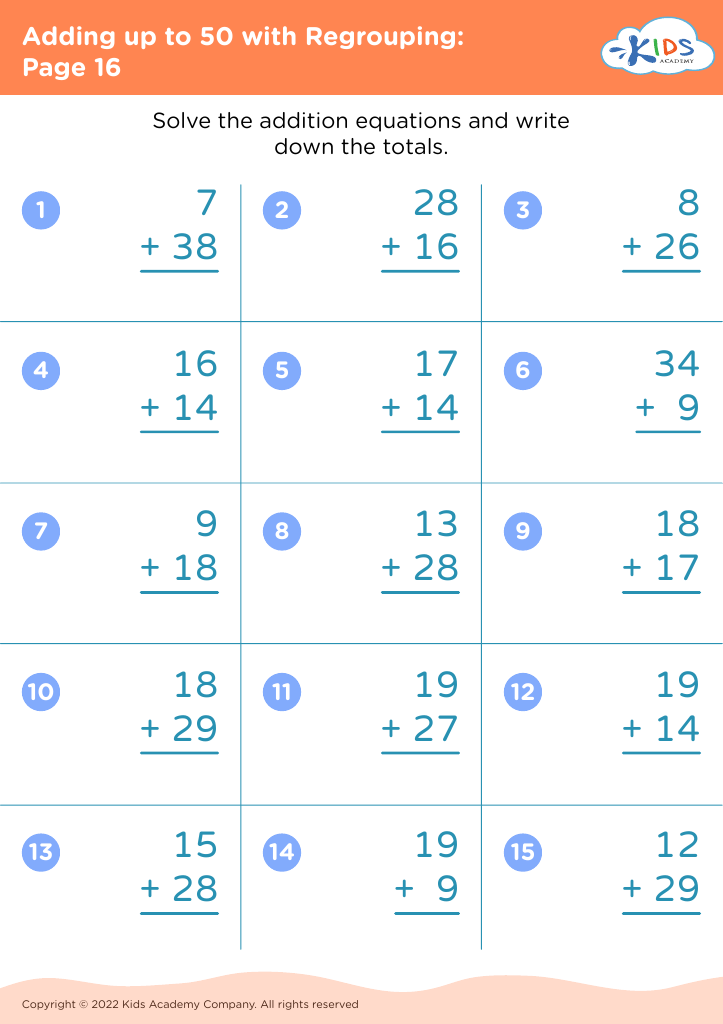
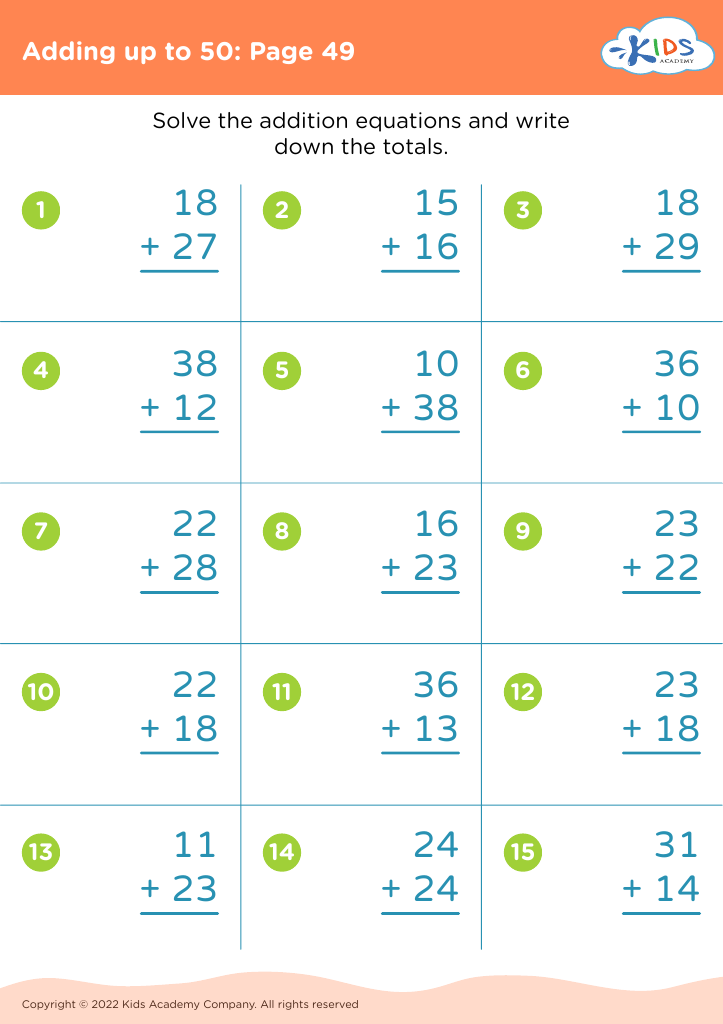
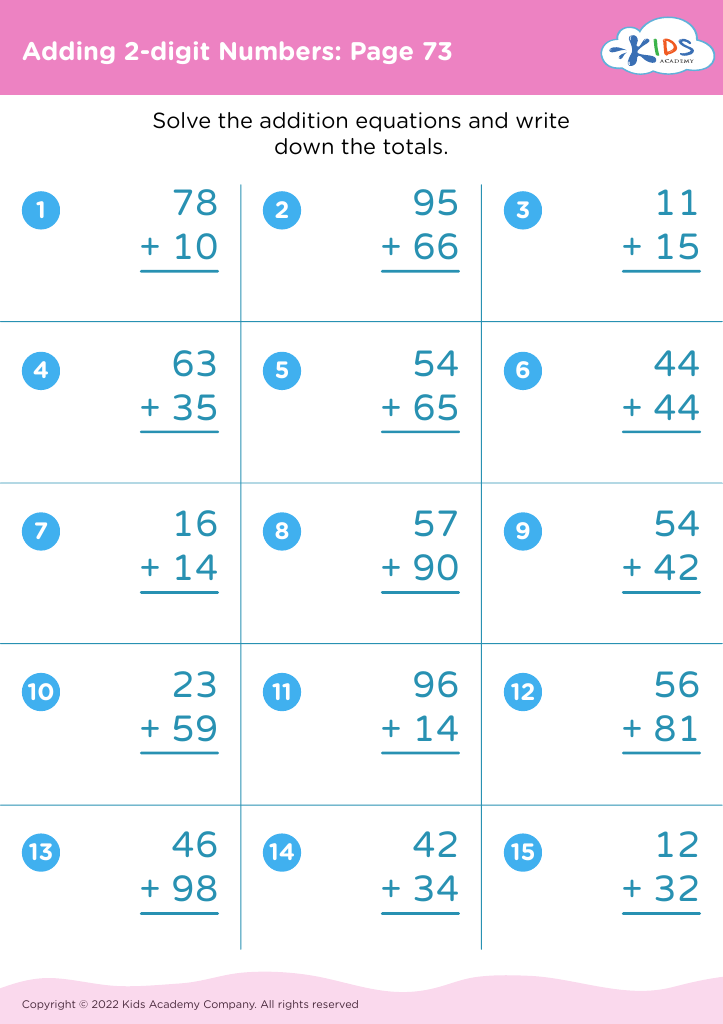
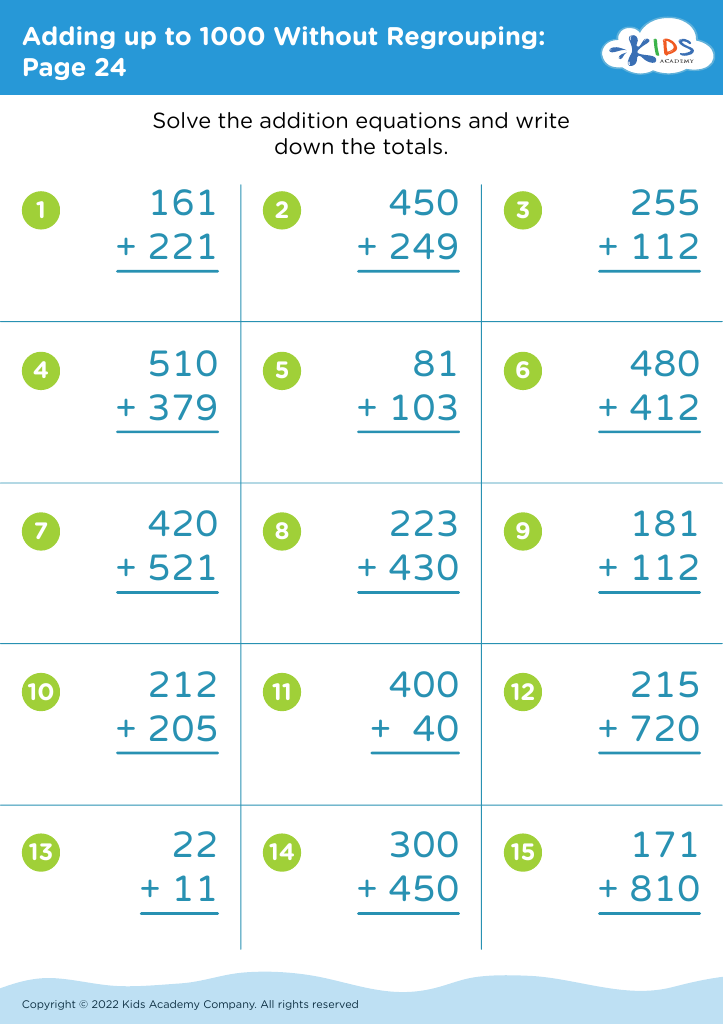








Improving math skills for children aged 5-7 is crucial for several reasons. At this formative stage, young learners develop foundational skills that impact their future learning and confidence in mathematics. A solid understanding of early math concepts—such as counting, addition, subtraction, and recognizing patterns—sets the groundwork for more complex subjects in later grades.
Math skills are not only critical for academic success; they also appear in everyday life. By fostering these skills early, parents and teachers can help children develop critical thinking abilities, problem-solving skills, and creativity. These attributes are essential in navigating daily tasks, such as handling money or measuring ingredients during cooking.
Furthermore, mastery of early math concepts significantly boosts children's confidence, reducing the likelihood of math anxiety later on. When children find joy in learning mathematics at a young age, they are more likely to pursue mathematical studies in the future.
Encouraging mathematical skills enhances children's cognitive development, promotes a positive attitude towards learning, and prepares them for a variety of life opportunities. By initiating engaging, age-appropriate math experiences, parents and teachers play a vital role in nurturing these essential skills, ensuring that children thrive both academically and in their daily lives.








