Learn addition Math Worksheets for Ages 5-7
3 filtered results
-
From - To
Explore our engaging "Learn Addition Math Worksheets for Ages 5-7," designed to make learning addition fun and effective! Tailored for young learners, these worksheets feature colorful visuals and interactive exercises that foster a strong foundation in basic math skills. Children will practice adding single digits through various activities, including puzzles and story problems, ensuring they stay motivated and excited about math. Our worksheets cater to diverse learning styles and skill levels, making it easy for parents and teachers to support their child's development. Download and start enhancing your child's math abilities today, turning learning into an enjoyable adventure!
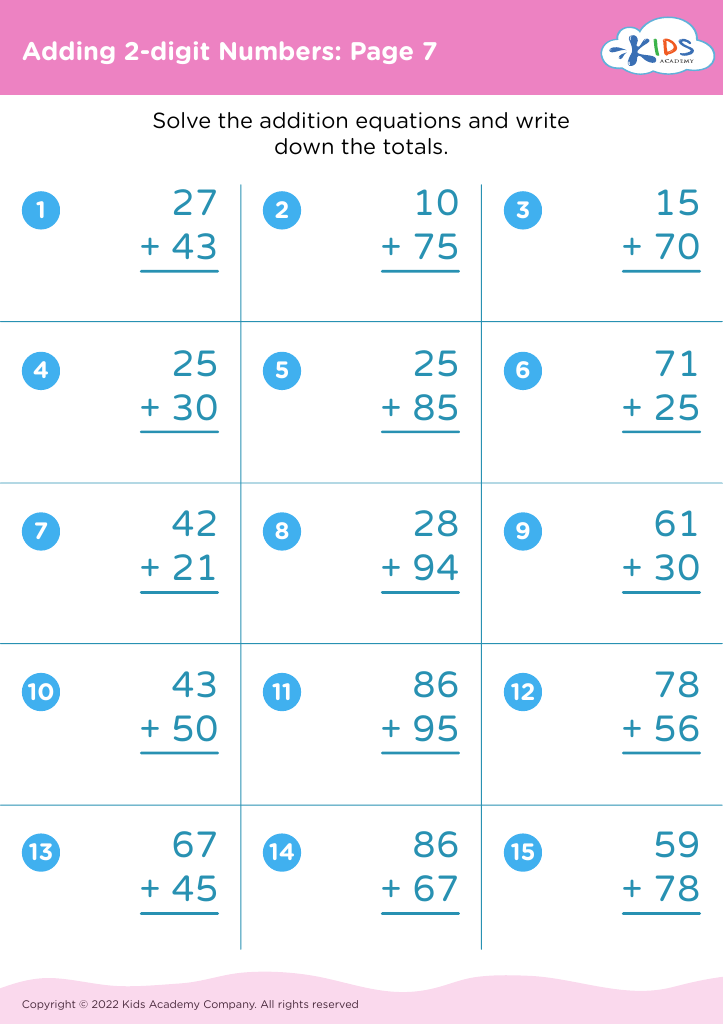
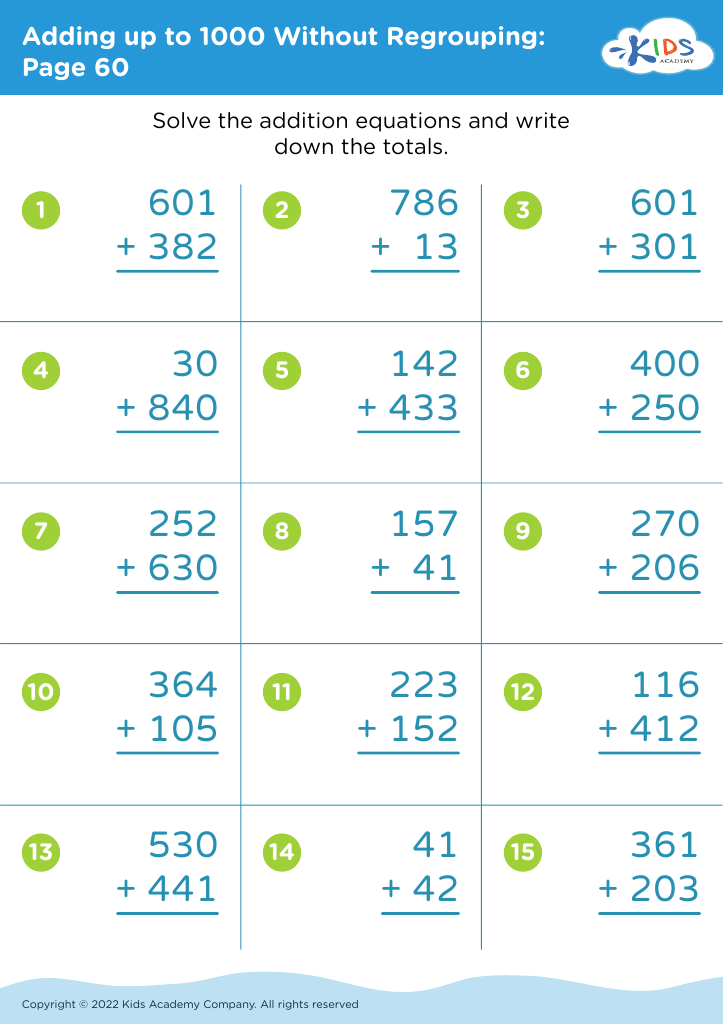
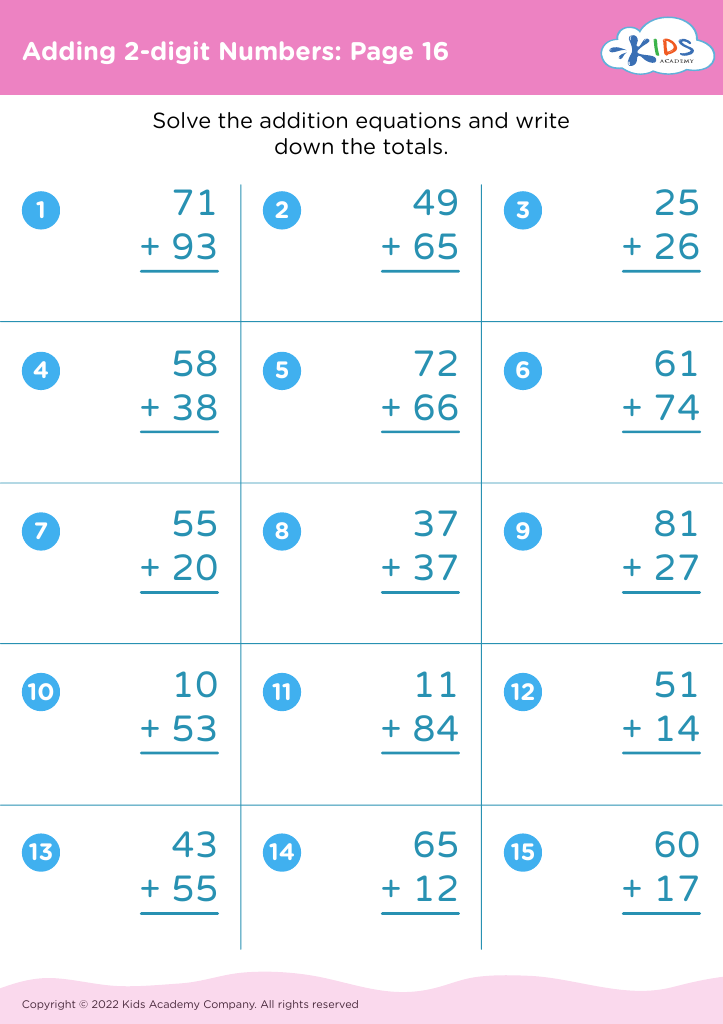








Learning addition is a foundational skill that plays a crucial role in a child's overall academic development. For children ages 5 to 7, mastering addition not only helps them understand basic arithmetic but also builds essential cognitive and problem-solving skills. When children grasp the concept of addition, they develop their ability to think critically and sequentially, laying the groundwork for more advanced math concepts in the future.
Parents and teachers should care about teaching addition at this stage because it fosters a love for learning and boosts confidence in children's abilities. Early mathematical experiences can shape a child’s attitude toward math, influencing their future interest and success in the subject. Engaging children through fun, interactive methods makes learning enjoyable and can lead to greater retention of concepts.
Additionally, addition is applicable in everyday experiences, from counting objects to managing money, preparing kids for real-life situations. By focusing on addition development now, adults can help create a strong mathematical foundation that will support children in academic and practical realms for years to come. In essence, prioritizing addition education for young learners encourages cognitive growth, confidence, and practical life skills, ultimately setting them on a path toward academic success.








