Mathematics skills Math Worksheets for Ages 5-7
3 filtered results
-
From - To
Boost your child's math prowess with our engaging math worksheets designed for ages 5-7. At Kids Academy, we focus on fostering a solid foundation in essential mathematical skills such as addition, subtraction, measurement, shapes, and counting. Each worksheet employs fun, interactive activities ensuring your child remains captivated and motivated while developing crucial problem-solving abilities. Ideal for both classroom settings and at-home practice, our printable resources cater to a variety of learning styles. Dive into a world where learning math becomes an exciting adventure, setting the stage for future academic success. Let’s make math fun and approachable together!
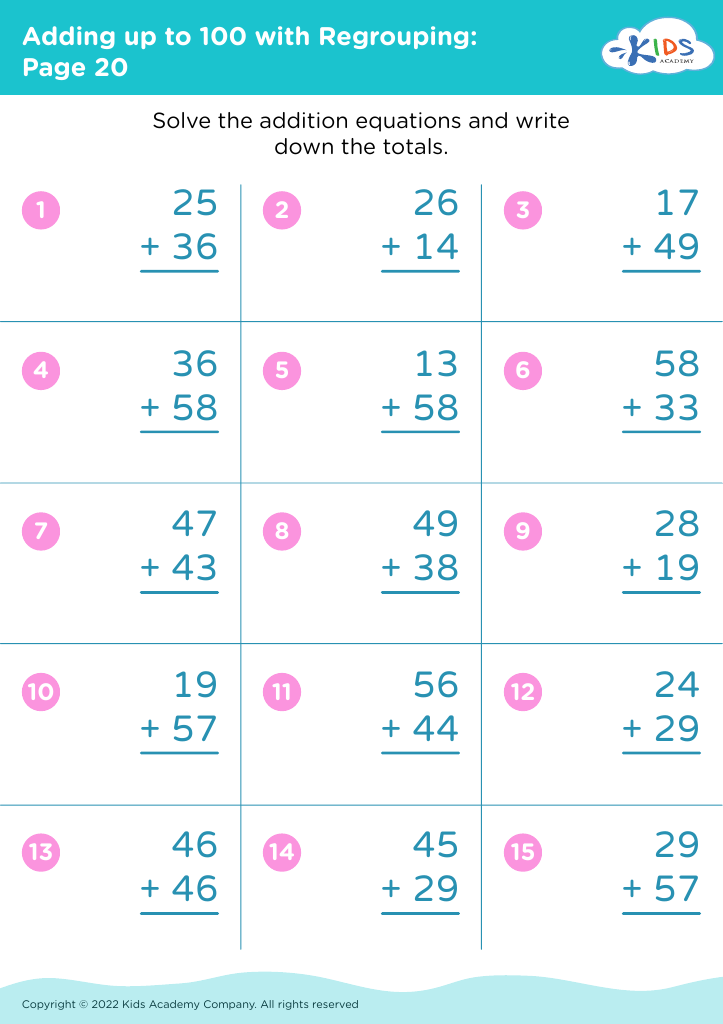
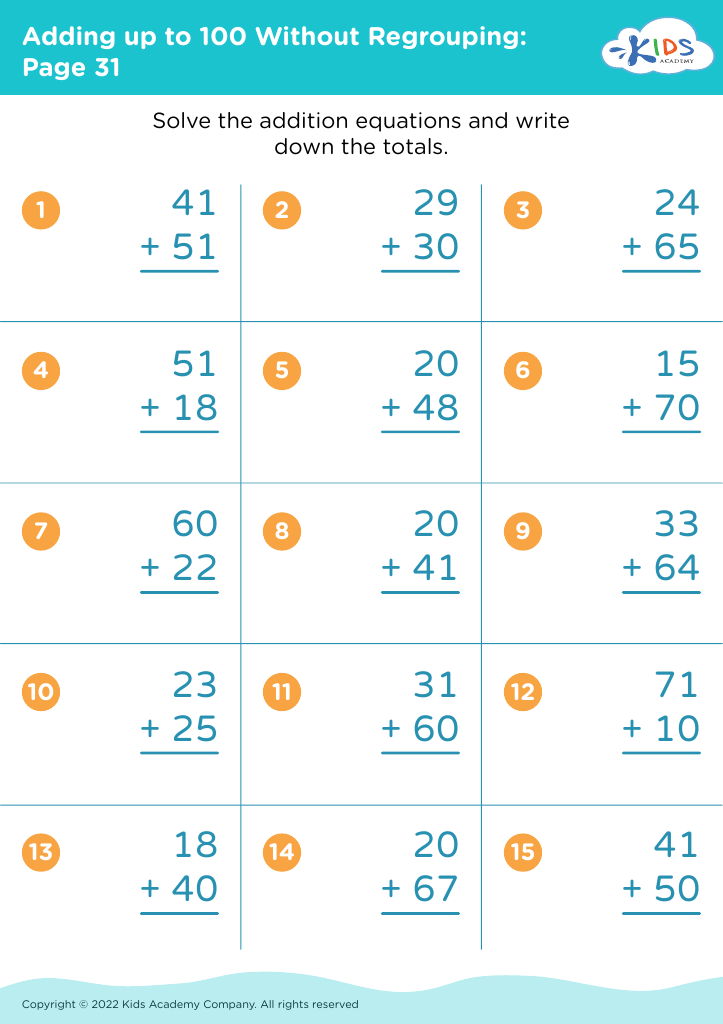
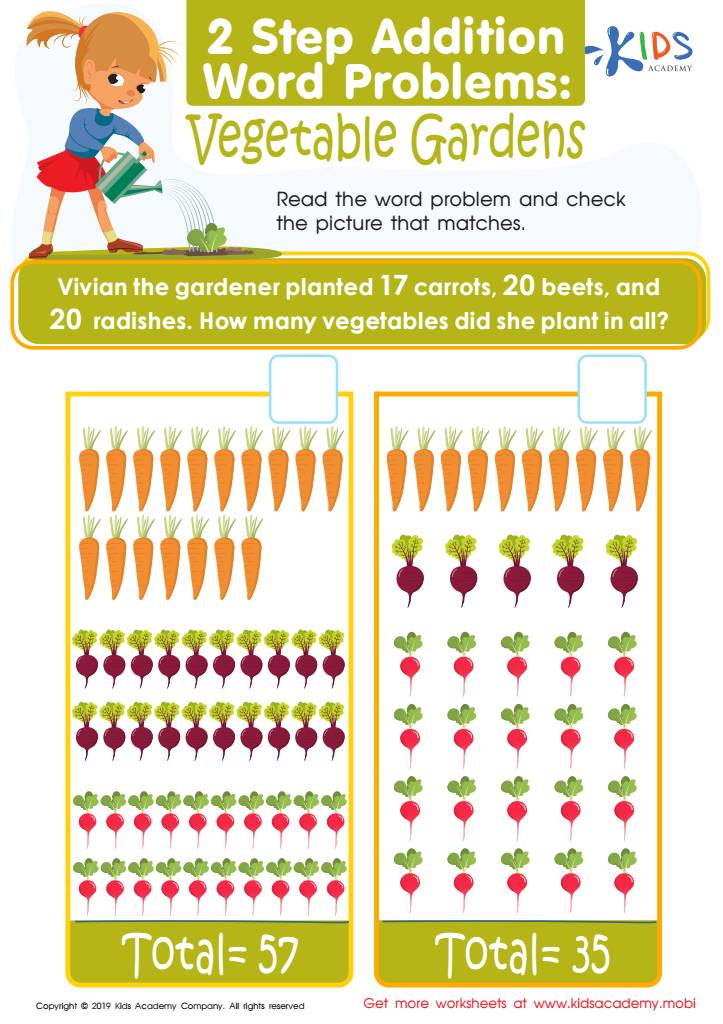
Vegetable Gardens Worksheet
 Assign to My Students








Mathematics skills for children aged 5-7 are of paramount importance, as they not only pave the way for more advanced mathematical understanding but also contribute significantly to overall cognitive development. At this early stage, children are naturally curious and capable of learning foundational concepts that will support them throughout their academic journey and beyond.
Firstly, early math skills, such as numbering, counting, sorting, and recognizing patterns, cultivate essential problem-solving abilities. These skills not only apply to mathematics but also enhance logical thinking and the ability to analyze and approach situations methodically, which are beneficial in everyday life.
Moreover, mastering basic math concepts boosts a child's confidence and sets a positive attitude towards learning. When children experience success in mathematics at an early age, they develop a growth mindset, believing that their effort can lead to improvement and success in difficult subjects.
Furthermore, early math proficiency is closely linked to future academic achievement. Studies have shown that competence in early math can be a powerful predictor of later success in both mathematics and reading. This foundational knowledge supports children as they progress to more complex math concepts and supports interdisciplinary learning.
Finally, fostering strong math skills can also promote teamwork and communication when children work on math-related activities in a group setting. This helps in developing social and collaborative skills that are vital in both academic and personal growth.
In short, prioritizing mathematics education for young children lays a critical foundation for future success, both in academics and in life skills.








