Money management skills Math Worksheets for Ages 5-7
3 filtered results
-
From - To
Discover our engaging Money Management Skills Math Worksheets designed specifically for children aged 5-7! These interactive worksheets introduce young learners to essential financial concepts, helping them develop a solid understanding of money. Through fun activities, kids will practice counting coins, understanding values, and making simple transactions, fostering early numeracy and money management skills. Aligned with early math standards, our resources promote hands-on learning and reinforce classroom teachings. With vibrant illustrations and age-appropriate challenges, these worksheets make mastering money skills enjoyable and effective. Equip your child with foundational financial literacy, setting them up for lifelong success. Start exploring our worksheets today!
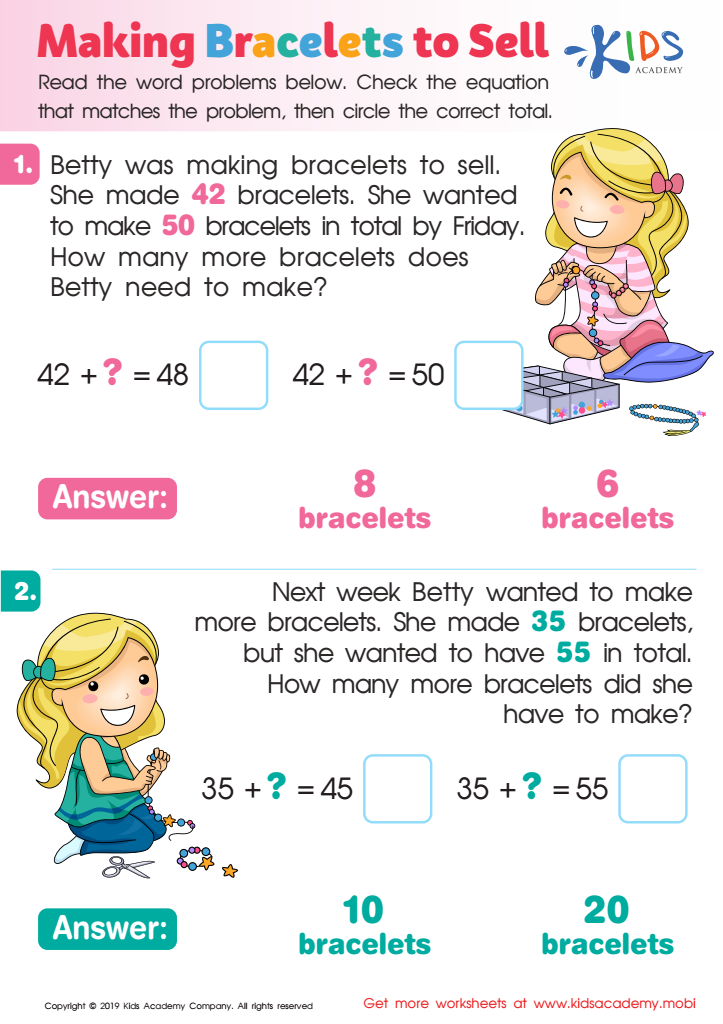
Making Bracelets to Sell Worksheet
 Assign to My Students
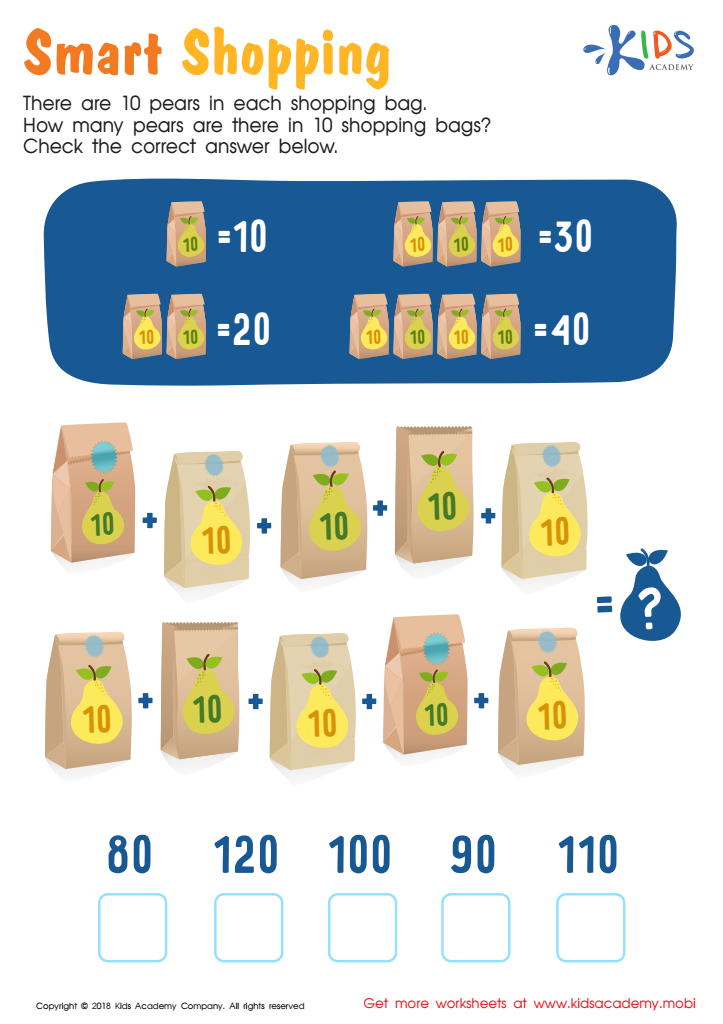
Smart Shopping: Trade Tens for a Hundred Worksheet
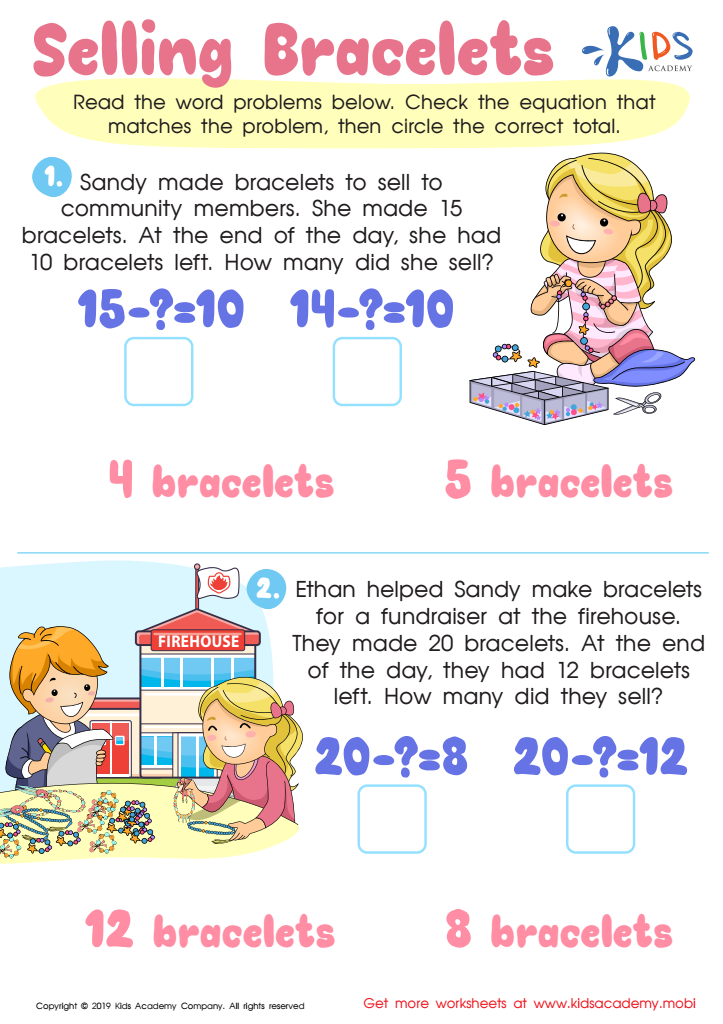
Selling the Bracelets Worksheet








Parents and teachers should prioritize money management skills in math for children aged 5-7 for several vital reasons. First, early exposure to these skills fosters a fundamental understanding of financial literacy, which is essential in today’s consumer-driven society. Young children learn to recognize coins and bills, grasp their values, and understand simple transactions through playful activities.
Integrating money management into math makes learning engaging by using real-life scenarios, such as playing store or counting change. This practical approach helps children develop critical thinking and problem-solving skills, which are intertwined with mathematical concepts.
Moreover, instilling these skills early encourages responsible financial behaviors as they grow. Children learn the value of saving, budgeting, and making informed choices about spending, setting the stage for healthy financial habits later in life.
In addition, mastering money concepts promotes confidence in math overall. As students practice counting money, they simultaneously enhance their number recognition and addition/subtraction skills.
Ultimately, teaching money management equips children with lifelong tools that empower them to navigate future financial challenges effectively, creating a foundation for successful adulthood. Thus, investing time in these lessons yields significant long-term benefits for both children and society as a whole.








