
Understand sequencing Math Worksheets for Ages 5-7
3 filtered results
Difficulty Level
Grade
Age
-
From - To
Subject
Activity
Standards
Discover our collection of "Understand Sequencing Math Worksheets" designed specifically for children aged 5-7. These engaging worksheets help young learners grasp the essential concept of sequencing, which is crucial for their cognitive development and mathematical success. Through a variety of fun activities, your child will learn to arrange numbers, identify patterns, and improve their problem-solving skills. Our worksheets are visually appealing and age-appropriate, making learning enjoyable. Perfect for homeschooling, classroom use, or supplemental practice, these resources will foster a strong mathematical foundation in your little one. Start exploring and support your child's journey in mastering sequencing today!
Favorites
With answer key
Interactive
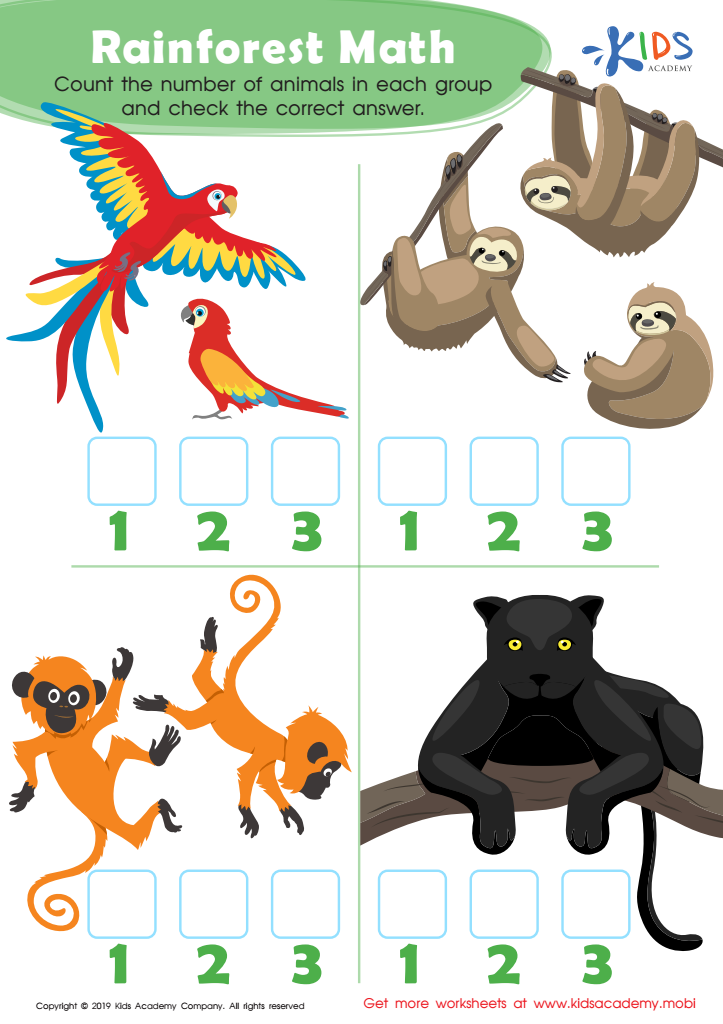
Rainforest Math Worksheet
Kids love learning about rainforest animals! This worksheet helps them with counting and number sense. It features recognizable rainforest animals and asks children to choose the correct number from the answer choices. It's a fun way for children to build their skills - without even knowing it!
 Assign to My Students
Rainforest Math Worksheet
Worksheet
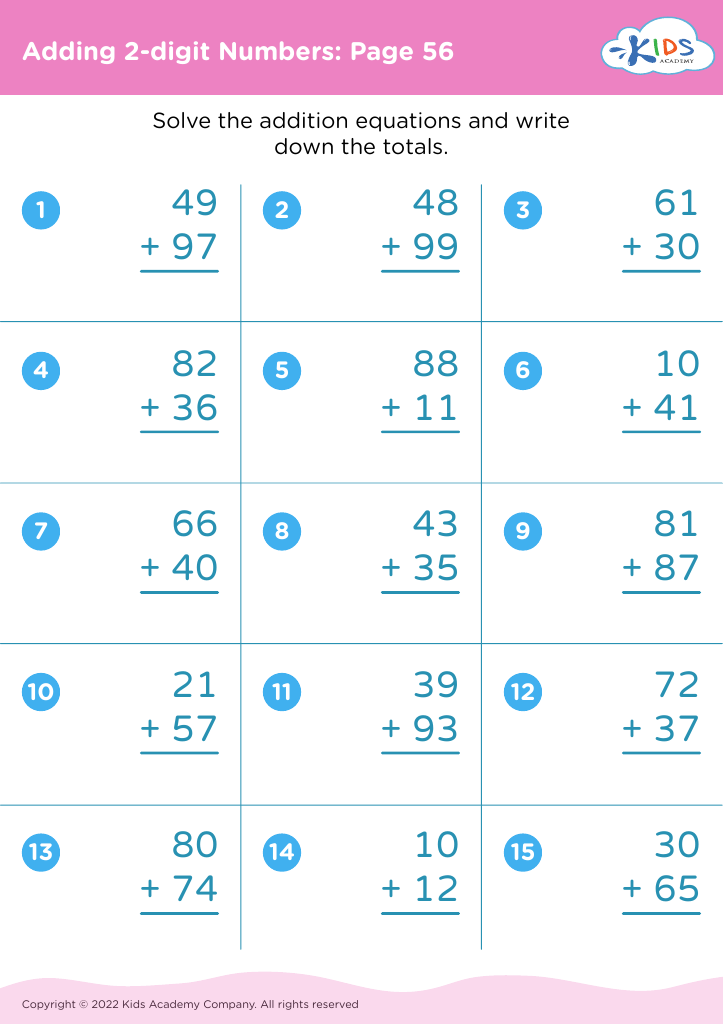
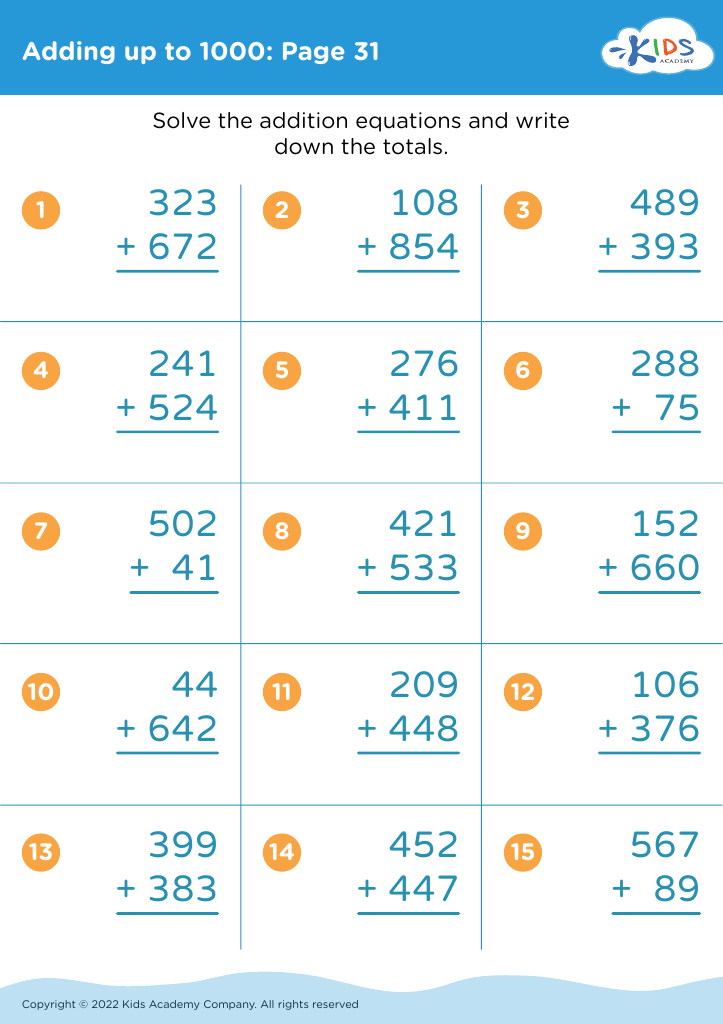
Join Kids Academy for Free
Who is primarily going to use this learning content?





.jpg)
Understanding sequencing in math is crucial for children aged 5-7, as it lays the foundational skills necessary for future mathematical competence. Sequencing helps children learn how to recognize patterns, which is essential for advanced topics such as addition, subtraction, and even algebra. When children grasp the concept of sequencing, they are better equipped to approach problems logically and systematically.
Additionally, sequencing enhances cognitive development by improving memory and organizational skills. For instance, mastering the order of numbers enables students to tackle multi-step problems and facilitates their understanding of mathematical operations. Parents and teachers play a pivotal role in fostering this skill through engaging activities like number games, story problems, and hands-on learning approaches.
When children understand sequencing, they gain confidence in their abilities, which encourages a positive attitude towards learning. This not only influences their math prowess but can also impact other subjects. Furthermore, early mastery of sequencing helps prevent future math-related anxiety, setting the stage for a lifetime of mathematical success. Hence, for both teachers and parents, prioritizing sequencing is vital in nurturing well-rounded, capable learners equipped for academic challenges ahead.








