Understanding fractions Math Worksheets for Ages 5-7 - Page 9
198 filtered results
-
From - To
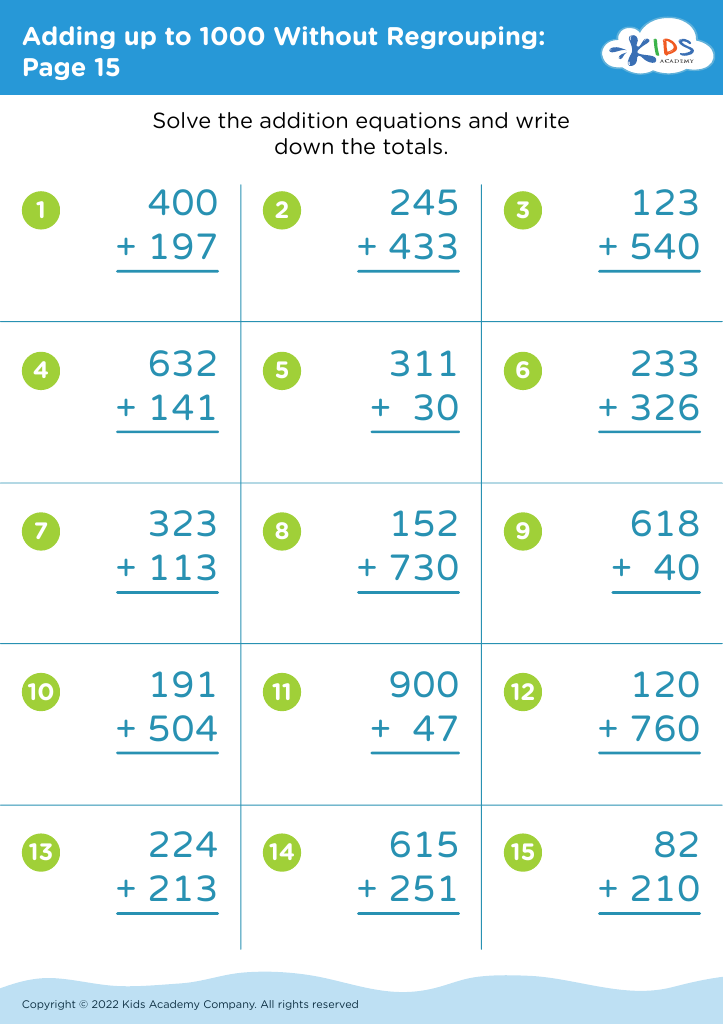
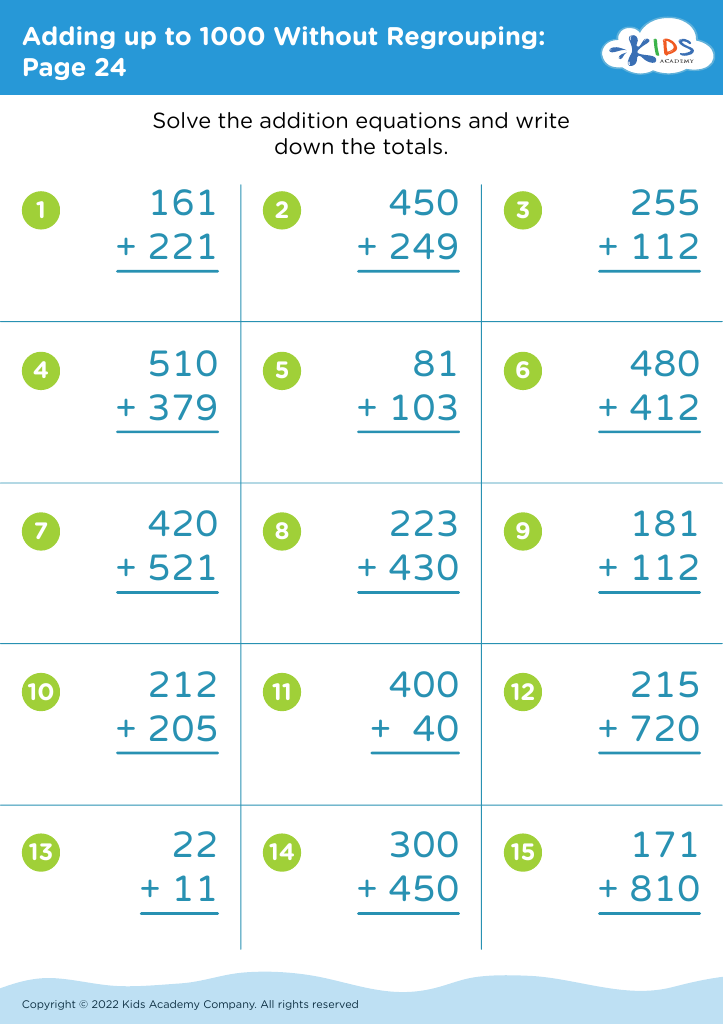








Understanding fractions is a crucial mathematical concept for children aged 5-7, and it holds significant value for both parents and teachers. At this early stage, kids begin to develop foundational skills that enhance their critical thinking and problem-solving abilities. Fractions introduce them to the idea of parts of a whole, fostering analytical thinking. As they learn to compare, add, and subtract fractions, they cultivate numerical fluency that will be beneficial as they progress in their mathematical journey.
Furthermore, mastering fractions supports their understanding of various real-life concepts, such as sharing, dividing, and measuring—skills they will encounter day-to-day. For instance, when slicing a pizza or sharing snacks, fractions come into play, making math tangible and relevant. This connection increases student engagement and enthusiasm for learning.
By promoting strong fraction skills early on, parents and teachers can help build confidence in students, enabling them to tackle more complex mathematical topics in the future. Establishing a solid grasp of fractions at a young age lays a critical foundation for overall academic success and helps children appreciate the interconnectedness of math within everyday life. This understanding ultimately supports lifelong learning and a positive attitude towards mathematics.








